Showing posts with label David Mamet. Show all posts

Wednesday, December 1, 2021

Glengarry Glen Ross

 SPOILER ALERT! The plot will be discussed.

Here is another post that comes out of a class discussion at the Bryn Mawr Film Institute. Glengarry Glen Ross (1992), based on David Mamet’s Pulitzer Prize winning play, focuses on the themes of the punishing aspects of capitalism, the line between legality and criminal behavior, and male toxicity.

The film begins with the credits displayed against passing subway cars. The images tell us that it’s an elevated train, which places us in Chicago, as one of the few cities that has this type of rail system. It also implies speed, which the real estate sellers in the story must adopt. As the audience soon discovers, they have to beat the clock or they will be fired. One of the rules in writing a play is to include a sense of immediacy to hold the audience’s attention.

The first part of the story takes place at night and there is a drenching rainstorm. The setting provides an atmosphere that suggests that dark deeds are about to transpire. One student noted that these elements are included in the film noir genre. However, our instructor noted that the noir element of a femme fatale is absent since these men do not need a conspiring female to corrupt them. (Mamet reverses the femme fatale character in House of Games where the con man subverts the female character).

The film starts in a restaurant with Shelley Levene (Jack Lemmon) in a phone booth inquiring about the health of his hospitalized daughter who has no insurance. In the phone booth next to him is Dave Moss (Ed Harris) who is trying to sell some properties. The story quickly sets up the theme that money is needed by these men not just to enrich themselves but so that they and their families can survive, which of course places extreme pressure on them. Following their calls they go into the men’s room and gripe (especially the vocal Moss throughout the film) about the bad “leads” they have. The company they work for is making them try to sell to people they have encountered before who are unwilling to buy property or don’t have the means to do so. The large financial institution that employs them is ordering them to make transactions that are almost impossible to finalize. It’s like Sisyphus trying to roll that big rock up the hill, and these men are also condemned to a fruitless task. The one salesman who has been successful lately is Ricky Roma (Al Pacino), who has an amazing gift of gab, and he is working on a sale at the restaurant to James Lingk (Jonathan Pryce).

At the office, Levene and Ross, along with George Aronow (Alan Arkin) are confronted with the crude and demeaning company representative, Blake (Alec Baldwin). (Mamet, who also wrote the screenplay, added this character and Levene’s phone calls to the movie, and many, according to the IMDb, believe the film script may be better than the play). Blake is brutal, telling the men that they are losers, and if they don’t go out into the literal (and figurative) storm and triumph over their adversity, they will be fired. Levene goes for a cup of coffee and Blake yells at the man, saying, “Put that coffee down! Coffee’s for closers only.” In this economic hell, even basic items are denied unless one meets the company’s demands.


There is a contest going on to determine who sells the most property. Blake says, “the first prize is a Cadillac El Dorado. Anyone wanna see second prize? Second prize is a set of steak knives. Third prize is you’re fired.” It’s sort of an all or nothing capitalistic game they must play. In the film Wall Street, the merciless Gordon Gecko points out two men on the street: one is well-dressed wearing a suit and carrying a briefcase, and the other appears homeless. Gecko says you can’t say that the difference between the two is just based on luck. The implication is that success is earned. That may be true, but is the alternative to winning mean that anyone who doesn’t finish first must sacrifice everything and become destitute? According to Blake, the answer is yes. Blake tells them the law according to their job is, “A-B-C... Always Be Closing!” He is saying that if they are not always making money on every deal then they are failures.

Moss complains that the “leads” are “weak,” Here is where Blake uses, as one of our students noted, emasculating language. He says, “The leads are weak? The fucking leads are weak? You’re weak!” He says that if they are good guys who just want to be with their families, they aren’t real men since they are not making the grade as salesmen. Blake flaunts his income, his expensive watch and car, setting them up as the measure not only of success but of what makes someone manly. He pulls out two metal balls attached to a string and places them in front of his crotch. He says, “It takes brass balls to sell real estate.” He calls them “cocksuckers.” The insults throughout the film accuse men of being homosexual or children, which, in this macho world, means they are not “real men” if they can’t close the deals. Blake holds up the Glengarry leads like they are a present, tied up in a bow. They will only go to the salesmen who can close the mediocre leads. It’s a sort of a Catch-22 because nobody can get the leads that will bring in money if they don’t already make the sales. It’s a version of the rich getting richer. The title of the movie, which also refers to other choice properties that were sold, thus becomes a symbol for the pot of gold at the end of a sullied mercenary rainbow.

John Williamson (Kevin Spacey) is the office manager (a job Mamet had in real life) who hands out the inferior leads. He is a bureaucrat who, like the others, is only out for himself since this survival of the fittest environment fosters that approach. Levene, worried about his daughter, feels driven to negotiate an unethical deal with Williamson so he can get some of the Glengarry leads, offering the office manager a cut of his earnings and payment for each lead. However, Williamson will not compromise on his price to meet Levene’s lean resources since he feels he must be highly compensated for taking a chance that might get Williamson caught. Human decency is not a factor here, as there is no sympathy shown for Levene’s daughter’s medical situation. After this rejection, Levene continues to cross over into unethical behavior as he pretends to be a busy big shot who is willing to throw some deals toward some potential customers. But, his high-pressured pitches fail to close on any properties.

There are extended scenes between Moss and Aronow which on the surface seem to be commiserating about how dire their fate is, and how badly they are being treated. The dialogue here illustrates Mamet’s signature style, with interruptions occurring between the speakers that sets up a rhythm that, as Arkin noted in an interview, is not subject to variation or improvisation. One student noted the musical score is jazzy, which fits in with Mamet’s writing style which has him riffing on a subject. IMDb states that Al Jarreau’s version of “Blue Skies” in the film refers to blue sky laws that aimed to prevent sales fraud, which is ironic given the unscrupulous actions occurring in this story.

Moss proposes that they stage a burglary at the office and steal the Glengarry leads from Williamson’s file cabinet and sell them to a competing firm. But Moss’s chumming it up with Aronow is just a ploy to get him to do the robbery since Moss, because of his vocal dissent, would be the prime suspect. Aronow does not wish to be part of yet another example of crossing over into illegal activity. But Moss, using the unscrupulous ploy of blackmail, says Aronow is already guilty since he has listened to Moss’s plan.

Roma does not try to strongarm his potential clients, as does Levene. He talks about all sorts of philosophical topics to ingratiate himself with his mark, because, as with other Mamet films, such as House of Games and The Spanish Prisoner, characters are trying to con others by achieving a personal connection. However, what Roma says to Lingk reveals a capitulation to a lack of a moral compass. He tells him, “You think you’re a thief? So what? … You cheat on your wife? You did it, live with it. You fuck little girls, so be it. There’s an absolute morality? Maybe. And then what? If you think there is, go ahead, be that thing. Bad people go to hell? I don’t think so. If you think that, act that way. A hell exists on earth? Yes. I won’t live in it.” Roma says it’s up to the individual how a person wants to live, but for his money, he doesn’t buy into rights and wrongs, He just wants to avoid the guilt that would hold him back from escaping from the hardships in life and enjoying whatever pleasures there are.


The story now enters daytime, where underhanded activities are revealed. The agency has been robbed, with the Glengarry leads taken. The audience might assume that Moss and Aronow did the deed, given their conversation. Roma is upset because he made a deal to sell property to Lingk and doesn’t want the burglary to mess up his first place standing that will get him the car and the good leads. Aronow and Moss are interrogated by the police concerning the theft, and Moss acts indignant about being suspected, which is deceptive considering we know he wanted Aronow to steal the leads.

Levene, however, is ecstatic because he sold property off of one of the inferior leads, and brags about his abilities. Roma admires the older man because Levene was his mentor. At that point Lingk shows up. He has talked the deal over with his wife. She contacted an attorney who told her the law says they have three business days to get out of the deal. Lingk haltingly tries to get out of the transaction. Roma, illegally trying to evade a termination of the contract, has Levine, who catches on quickly, to pretend he is an enthusiastic customer who Roma has to get to the airport. But Lingk stops him just before Roma leaves by saying he wants his money back. Roma tries to buy time to convince the Lingks to continue with the deal. Williamson, however, enters and doesn’t know what has transpired. He thinks he is helping by saying that he sent Lingk’s check to be cashed. Lingk is upset that he now has to take legal action to end the deal. He actually apologizes to Roma, and comes off as a pathetic character who allowed himself to be a victim, but now has been ordered by his wife to put him in this uncomfortable position. In this testosterone-fueled environment, he appears unmanly.


Roma then verbally attacks Williamson for opening his mouth when he shouldn’t, calling him a “fairy,” another example of the homophobic, emasculating attitude in this environment. After Roma goes into Williamson’s office to be interviewed by the police, Levene continues to insult Williamson, since he is angry at Williamson coldly dismissing him earlier when Levene tried to make a deal for the Glengarry leads. But, Levene slips up, telling Williamson he shouldn’t make things up if he doesn’t know what’s going on. Williamson then asks how would Levene know that Williamson didn’t send in Lingk’s check to be cashed. He and the audience now realize that it was Levene who broke in and stole the leads. In addition, Williamson says the people to whom Levene sold property are “crazy. They just like talking to salesmen,” and the check they wrote will bounce. His statement illustrates how futile their task is. The system is rigged to penalize these men if they aren’t unscrupulously slick enough to cheat their way to the top.

It is sad to hear Roma come back into the room and continue to praise Levene and talk about starting a partnership, not knowing that Levene will probably go to jail, not for doing something wrong, which is what would happen in an ethical world, but for getting caught. Aronow returns to his desk and starts making calls again, as the exploitative process continues.

The next film is The Station Agent.

Sunday, January 27, 2019

The Edge


SPOILER ALERT! The plot will be discussed.
Never thought of Anthony Hopkins as an action hero? Well, this neglected but noteworthy 1997 film will show you that he is an actor of many parts. David Mamet wrote the script, and, as noted elsewhere on this blog, he is a writer who explores on which side of “the edge” between civilized and uncivilized behavior people will choose to live their lives. Many of his stories present characters who must face whether they accept living by society’s rules, or want to cross the line into the realm of the renegade.
The film opens with wind howling. This sound always produces a sense of peril, something that is a threat to a sheltered existence. In contrast, a jet plane then appears, which is an image of humans conquering nature’s limitations by soaring above them, and fits in with later connections between flying and the main character. It also shows an incompatibility, with technology degrading the untouched natural beauty of the landscape. Charles Morse (Anthony Hopkins), his name possibly implying he wants to live by a code of behavior that he must decipher, is a billionaire. Robert Green, Bob for short (Alec Baldwin), is a friend. His name may point to inexperience, and could have to do with the fact that he lacks the knowledge needed to deal with the wilderness. He is a photographer who takes pictures of Charles’s wife, Mickey (model Elle Macpherson), who is not only gorgeous, but much younger than her husband. The plane mechanic says he’d like to get his hands on “that,” and Charles thinks he’s talking about his wife, but the man means the billionaire’s plane. Either way, Charles has concern about others coveting what is in his life. He is advised of dangers traveling in the small prop plane they will be using because of several concerns, including bird strikes (a foreshadowing, and there are several in the beginning of the movie). Charles, unlike Bob, knows how flying into flocks of migrating birds can cause damage to airplanes. We learn early in the story that Charles is knowledgeable about many things. He reads from a book an employee gave him as a gift, which is entitled Lost in the Wild (more foreshadowing).


The panorama of the mountainous, snow-covered terrain, with its awesome ruggedness dwarfs the individuals arriving at the lodge where Charles and his group arrive. Stephen (Harold Perrineau) is there to assist Bob. The proprietor of the lodge, Styles (L. Q. Jones), is a rugged guy who built the place by hand, and would be hunting bear with his native friend Jack Hawk, if not for the arrival of the guests. Styles, his plural name indicating the duality of his nature, has one foot in the civilized world, entertaining visitors at his rustic hotel, and the other foot in the world of mountain men. Charles shows his eclectic knowledge by suggesting the use of an ironing board to help get Styles’s rifle “sighted.” Bob has come here seeking the “unsentimental,” the uncivilized, which is outside of his comfort zone, but he has no clue how to deal with that world. He is there to vicariously provide hints of the primitive through pictures. Charles hasn’t lived in remote places, but he at least has sought out wisdom in how to exist off the grid. It’s as if he has been waiting to be tested, unprotected by his wealth.
Mickey (her name conjures up a cartoon character who lives in a make-believe world in contrast to the stark reality where she now finds herself) boasts that Charles is very well-read. Styles challenges Charles to say what is carved on the other side of an oar that has a panther on one side. Charles knows it is a motif from the Cree Native American culture. He rightly answers that there is a rabbit smoking a pipe on the other side. When asked why he is smoking a pipe, Charles says the rabbit is unafraid of the panther, because the rabbit is “smarter than the panther.” This line drives the story. How do physically inferior humans survive in the dangerous wild? Only by using their wits. Charles, though, admits that he has retained all of these facts, but he hasn’t had the opportunity to put them to use (again, foreshadowing).

It is Charles’s birthday (although he’s not sure if anyone has remembered that fact), and it is suggested that the story symbolically shows that he must be reborn in a trial by ordeal. Styles warns them to be careful of bears (foreshadowing), and advises not to leave any food out that may draw the animals. Charles’s wife says she is going to bed, and Bob leans close to her, smiles, whispers something, and she pushes him away playfully, implying that he said something sexually suggestive. Charles, looking serious, observes the two, and it appears that again he is on alert about attempts to steal his wife away from him.
In their bedroom, Mickey says that she got the “creeps” about the bear talk. She also says Charles is a “most excellent man,” and that is why she married him. The later knowledge of her infidelity makes the compliment especially hurtful. He says that she is the only woman he ever “wanted.” Here, he does not say “loved.” Is this how a very rich person sees things, as acquisitions? He says that it is a special day for him, and, since that is how he feels, she says he needs to get away more. Little does she know how far removed from city life he will be. She tells him that he is an angel, except for the wings (which foreshadows how the small plane will go down later). But, his knowledge, and determination, will allow him to fly above the adversities he will encounter.


Mickey asks him to get her a sandwich, but he finds the kitchen door open, with meat sitting out. Charles is quick enough to understand the precariousness of the situation, and we feel the suspense with him. However, his wife and the others are playing a prank on Charles. Bob covers himself in a bear skin, scaring Charles, and makes the stunt part of a surprise birthday celebration. Again, Bob’s act is a foreshadowing, and it shows how the others play at danger, but are unprepared for really facing it. Also, it hints at Bob being an actual threat to Charles later. They all sing happy birthday to him, and he (after regaining his composure) is pleased to see that his wife has remembered his “special day.” Bob says Charles is generous, and has a good nature (again compliments that also make his betrayal worse). Mickey says Charles is also brave, which we later see is very accurate. Mickey gives him an engraved pocket watch, which he will later use for survival. Also, there will be revealed another engraved statement later that Charles will discover, which will undermine this gift. Bob gives Charles a pocketknife, and Styles reminds Charles that he has to give Bob a coin, according to a tradition. Charles knows about the superstition, saying that without the coin giving, the gift of a knife “cuts the friendship.” We have another foreshadowing.


Bob and Mickey do a flashy photo shoot while Charles, in contrast, is being practical, using his new knife to peel an apple as he looks at his survival book. Mickey has facial markings and wears feathers, possibly emulating some indigenous people of the area, but there is no authenticity in a model pretending to be from a native civilization. This attempt by the sophisticated fashion world to present the primal reality of the wilderness highlights the shallow nature of Bob and Mickey’s actions. Bob is stressed out about not being able to have Mickey’s shoes look right in the shot. Again, Charles tries to show the practicality of using what you have to work with, and says the inside of a banana peel can shine shoes.


Styles sees Charles open his book to a picture of a Kodiak bear, and Styles says that the animal is a killing machine, especially if it has tasted human flesh. (More foreshadowing). Bob says he wants to photograph Jack Hawk, Styles’s friend. Bob continues to seek an elemental, basic subject for his photography, not a male model who happens to be sick and can’t be there for the shoot. Styles informs Bob that Jack Hawk has no phone or radio, and is probably hunting. He is out in nature, being part of it, sustaining himself. Bob is only hunting for a photo opportunity.

Charles continues his fascination with learning about how to survive without the material enhancements that have defined his life. He mentions that the book says that one can make a compass with a needle (which shows up later in the story). Styles, supposedly a man compatible with living in the wild and requiring only basic needs, proposes the idea to Charles of converting the local area into a resort. This attempt to cash in on the allure of the pristine frontier is a disappointment to Charles, who has come there to escape materialism, and those who want to use him for his wealth. Charles walks away as soon as the investment pitch occurs.


Mickey suggests that Charles go with Bob and Stephen to look for Jack Hawk. She says that he should get some air under his wings, another reference to Charles being an angel, flying above others, trying to help those who can’t help themselves. Charles looks at Styles, and goes along on the trip because the lodge has turned out not to be far enough to get away from the materialistic world. Their plane has pontoons, and they arrive on the lake next to Jack Hawk’s place, who has gone to a spot twenty miles away according to a note he left. Charles warns his comrades to avoid a deadfall near the cabin, a concealed pit used to catch bears (foreshadowing). Bob says, “let’s be bold” and go look for Hawk. He has no idea what he’s getting into.
As they fly, Bob says to Charles that it must be tough having all that money and never knowing who to trust, who values you for yourself or your money. Charles, though, is not one to complain about good fortune. He says, “Never feel sorry for a man who owns a plane.” It is funny, but reinforces Charles connection to flying, and wings. Bob says that he admires Charles’s style, and thinks his wife is pretty “cute.” Charles, having seen the attraction between Mickey and Bob, and wondering about why Bob wanted Charles on this trip, asks, “So how are you planning to kill me?” Then the plane is hit by a bird strike, loses its wing (making it less angelic), and it crashes into the lake, killing the pilot, Charles is the one who keeps his calm, rescues Stephen, and takes the bag with flairs. While he uses his knife to cut Stephen loose, Bob swims away to the surface, only thinking of his own survival. Charles does lose his survival book, and must rely on his memory to use what he has read. He revives Stephen with CPR. While Bob is still in shock, Charles is already in survival mode, asking for matches so that they can make a fire to get warm. His actions show that he tries to fly above adversity.

They have trouble getting a fire started, indicating that even with the matches brought from the civilized world, one can still be left in the cold in this harsh environment. Bob uses a flare to start a fire, despite Charles using foresight and saying they will need the flares to signal for help. Overnight, Bob shows his frailty by falling down on the job, allowing the fire to go out, and Charles again reminds him they will need the remaining flares. Charles thinks that others will go to Hawk’s cabin, see the man’s note and go looking for them. But again Bob has messed up, taking Hawk’s note with him. Charles again uses his book learning. He says a book he read said that people lost in the wild die of “shame.” They keep blaming themselves for doing the wrong thing, wondering what they should have done differently. What they need to do is not dwell on the past, but deal with what to do next by “thinking.” Which goes back to the tale of the rabbit and the panther.

Charles configures in the dirt where the lodge is in comparison to Hawk’s cabin, and says a search party will look for them in that area. His conclusion is that they have to head south. He knows that a watch with a compass built in will help. But, the gift he was given by Mickey is broken (implying his relationship with her is also damaged?). Bob says, after hardly looking, that his watch is also broken. It is a suspicious evasion, which is explained later. Charles must resort to using the tools available to him to make a compass. He gets a leaf, places it in water, takes a paperclip, magnetizes it by rubbing it on the silk in his clothing, and puts the paperclip on the leaf. It rotates to point north, supposedly, so Charles says the opposite way is south. They head in that direction. Charles seems pleased that he was able to apply his knowledge.

Charles, wanting to show how much information he has absorbed, tends to drone on, dispensing what he knows. At one point, Bob tells him to conserve his breath, politely implying he should stop talking. Bob brings up the line about trying to kill Charles, and asks why would he do that. Charles says for his wife, and that he has seen how they are together, appearing intimate, not professional. Bob says he can get his own girls. Charles says that he would also be going for the money. Bob’s reply is, “Rich man. All anybody wants is to take something from you.” Bob is right in his assessment, but Charles is also justified in being suspicious of others. Then Bob, kiddingly, says that Charles has some latent homosexuality, and suggests that he, Charles, and Mickey get into a hot tub together, and let things play out. Bob says this with a lisp, mimicking a stereotypical characteristic of a gay man. He uses the lisp again, supposedly mocking gay feminine traits, but his preoccupation suggests some hidden homosexuality that he is denying through ridicule. Bob may be joking on the surface here, but there is the suggestion that he feels some attraction for Charles.


Just as they seem to be unwinding a bit, their relaxed attitude is undermined when the trio hears the growl of an animal. They then see a Kodiak bear approach, like the one Styles commented on at the lodge. (By the way, this is Bart the Bear, the same one in another Hopkins film, Legends of the Fall). They try to escape it, but it follows them. They are stuck near a waterfall. Charles, always thinking, gets them to use a tree trunk to cross the water. Bob and Stephen make it over to the other side, but the smart bear (yes, animals have their own intelligence) shakes the tree trunk, causing it to shift, which knocks Charles off, and he falls into the rushing stream, losing the flares in the process. The other two save Charles, and the bear, unable to reach them, wanders off. Momentarily, Charles is the one who seems to give up, blaming himself for losing the flares. But Bob, learning, reminds Charles about how shame is a killer. Bob, adopting the power of positive thinking, says they will use the matches to build a signal fire. Charles is grateful, and is surprised that Bob helped to save him. Bob jokes, saying he needs Charles to help him get out. And, if he killed him, he’d have to kill Stephen too, and he’s the only one who knows how he likes his coffee. Stephen joins in with the humor, saying Bob wants his women to be like his coffee, “bitter and murky,” They are able to laugh, despite their predicament, or maybe because of it, having survived this specific challenge.
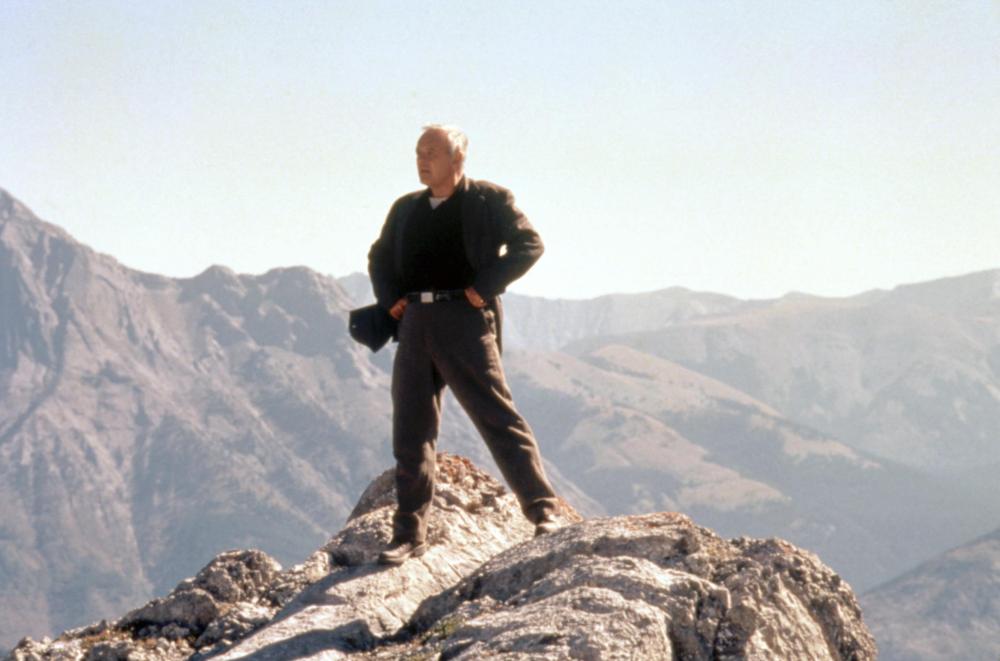
As they continue their journey, Charles climbs up a rock, trying to get his bearings. It also makes him look majestic, as he surveys and appreciates the majesty of the mountains. However, Charles’s overconfidence in his knowledge is a flaw, and they actually wind up back at their original camp. The paperclip was attracted to Charles’s belt buckle, affecting its behavior. Charles didn’t consider this contingency. The implication is that even when using one’s wits, there may be unanticipated possibilities. Stephen is desperate now, saying that they are going to die, that they have nothing to eat. Bob is also upset, but doesn’t break down like Stephen. Charles tries to get Stephen to focus on a task, giving him a long branch, and telling him to sharpen it with his knife to make a spear, so that they can catch fish. He says that they will be rescued, or they will walk out of the wilderness, surmounting the obstacles placed before them. Bob is frustrated and questions whether they will be rescued, even though, as he says, society usually doesn’t like their billionaires misplaced. Charles, being forceful again, asks loudly, what are they supposed to do, lie down and die? That is the alternative to giving into despair.
Unfortunately, Charles’s attempt to give Stephen something to do backfires, since Stephen is an unskilled man in a place that requires skills. The man cuts his leg deeply with the knife. Charles uses a scarf as a tourniquet, and tells Bob to bury the bloody part of the pants. Charles uses the stars to set a course for the next day to head south. Bob says he is gaining a new perspective, commenting how different it is where they now are compared to the world where he photographed beautiful women, and snorted coke off of a girl’s thigh. Charles says jokingly, to ease the seriousness, “In what way?” Struggling to survive makes other inessential activities seem less important.

In the pouring rain, while Stephen moans, maybe because he has an infection, Bob asks what really are their chances of getting back to safety. Charles tries to keep the tone optimistic, saying that the odds are good. To undercut what he just said, Charles then sees the ripped clothing that Bob didn’t bury and only hung from a tree. Charles immediately realizes Bob’s fatal mistake, as there is now blood in the air. The bear is there, he charges, and mauls the helpless Stephen. Charles courageously, though pointlessly, tries to attack the bear with a burning branch, but falls down. It is Bob here who realizes the futility of the rescue. He uses another lit branch to rescue Charles, but they must escape as Charles’s confidence is devastated by the loss of Stephen.

Bob and Charles are in a snowstorm, trying to stay warm, building another fire. Charles, back in cool survival mode, says they will navigate by the stars. He says that they will have to find the river and then follow it back to civilization. Charles uses his knife to fashion a cage and they trap a squirrel to eat. A helicopter flies by, but the angelic Charles is not capable of rising to the occasion to get noticed. Bob is ready to give up, and Charles goes into his pedantic professorial stance, asking how can ice be used to make fire. He is trying to get Bob to not dwell on the negative, but instead to quickly move on. Bob, in tears, rants at him, saying how “moneyed people,” who only seem to be able to play golf at the country club, can actually bloom in emergencies, because they are so “dense” as to the ramifications of the crisis, being so use to success. Charles is able to make a joke even in these circumstances, saying he’s not dense, just has no imagination. Bob laughs, but wants to hold onto the belief that the helicopter will return. But Charles, Mr. Practical, says no, they have scoured the area and will move on. Bob concedes, and asks the practical question about the ice. Charles says one can fashion the ice into a lens to concentrate the sun rays to start a fire. He again shows how thinking can be used to transform a helpless situation into a chance to succeed.

Charles wants to catch fish from the stream. He uses the chain attached to his watch to bait the fish. He says it’s made of gold and the whole world yearns for it. Even among the animal world, there is an attraction to the precious metal, connecting the various species. He uses the thread from his sweater as a line. Here, the rich man must now use his material gains for basic survival. Bob says he isn’t in the mood for humor when Charles mentions how the allure of gold can even attract a fish. He tells Bob, “Don’t go native on me.” Despite the struggle to survive, Charles wants to hold onto the civilized trait of humor. 

As he fishes, the sees that the bear has tracked them there. It charges after Charles, who goes through a bunch of tangled tree branches that impedes the bear’s movement. He gets to Bob and they throw burning branches around them to create a fire barrier against the animal. But his growls are heard in the night, creating a very primal scene of terror. Charles knows that they can’t exit the fire ring. But if they don’t, they will starve. Bob asks if Charles has a plan, and at first Charles is frustrated by how he must be the one who must come up with a strategy. He finally says, “We’re gonna kill him.” In the end, alternatives are reduced to one choice in the wild. It is survival of the fittest, which means in such a situation, one must die for another to live.
Charles says they will lure the bear with blood from a cut on his hand to the spot they want. They will use the creature’s weight against him. As was shown in the survival book, the bear will impale himself on one of the spears that they make as he tries to pounce on one of them. Charles says that Indian youths can kill lions with spears, and Native Americans go up and slap bears. He fires up the doubting Bob by saying that he will kill the bear because, “What one man can do, another can do.” He uses the phrase as a kind of mantra to show that they are as capable of doing what other courageous men have done. Charles looks primal as he has reached an elemental state ready to face his foe.


They have marked an “X” with branches to designate a spot where sharp branches swinging from a tree will pierce the bear. However, the pointy sticks only graze the creature. They have several spears which they use to stab at the animal. The bear knocks Charles away, then whacks Bob, and attacks him. He is injured, but Charles quickly recovers and gets the bear to go after him instead. Charles plants the spear on the ground which impales the bear when he tries to pounce, as Charles planned. The men now eat the dead creature’s meat and use his fur for clothing. They have won the battle in this deadly challenge and use their victim to help with their survival. Charles makes necklaces using the bear’s teeth to symbolize their triumph. Charles says that he always wanted to do something that was “unequivocal,” meaning something that was basic, with no compromises or complications; something that was definite. Bob says that in the past Charles would just call a lawyer to deal with this bear problem, but Charles, again inserting humor, says wittily, “No, I wouldn’t do that to an animal.” As they walk, they look like they have transformed into mountain men, wearing their bearskins, and, in a way now inhabiting the animal’s spirit, Charles says nobody he knows actually changed his life, but after this experience, he says he will start his life again. He is rebooting himself after finally putting all of his theoretical, untested knowledge into practice, and now has a broader perspective on life.


They come across an abandoned cabin. Now that he doesn’t need Charles to fight the bear, Bob finds a rifle, starts to load it, and is ready to put his plan to kill Charles into effect. The bear kills for food, but man kills for self-indulgence involving sex and money. There is a canoe outside, and they check out a map that is in the shack. Bob now feels he can get back on his own because he has directions and a means of transportation. Charles wants to light the stove, and looks for something to burn. He opens the box that held the watch that Mickey gave him. In a bit of plot contrivance, Mickey left the note to the watch inscriber that also contained one addressed to Bob “for all the nights.” This explains why Bob was unwilling to give up his watch, saying it was broken. Bob is drinking a bottle of whiskey in the cabin, trying to acquire liquid strength for his lethal undertaking. He taps a bullet on the rifle, a kind of contemplative gesture to show he is trying to make up his mind as to whether to carry out the killing. He says if he had his camera with him, he would have made his “fortune.” But instead of the camera, he can shoot another object, the rifle, and make his fortune a different way. Charles says, “Can’t do it sober.” Charles says he wants to see Bob’s watch, and now Bob knows that Charles knows about the affair. Bob tries to convince himself to do the deed by saying that Charles had no business with a gorgeous, young woman like Mickey. It was his money that led her to him, he says. Bob orders Charles to go outside. Charles says that he wants to know how long has the affair been going on, because, he finally says, he not only wanted Mickey, he loves her. Charles already told of a deadfall at the previous cabin, and approaches Bob, who falls into one, impaling his leg.
Charles could be brutally savage here, letting his enemy die, but they are not bears, and Charles rescues Bob. He tries to stop the bleeding, but is frustrated this time since he has no real means to help him other than a tourniquet. He puts them in the canoe. They go on shore to start a fire to keep Bob warm. Bob marvels at the fact that Charles is trying to save his life. He asks what he will do when Charles gets back to the lodge. Charles says he may not go back, because what does he have to go back to? All of his wealth has not really made him feel fulfilled, and his wife was unfaithful to him. Bob now uses humor by repeating what Charles said earlier, that he can’t feel sorry for someone who owns a plane. Bob says he is truly sorry and tells Charles that Mickey had no part in the plan to do away with her husband. Charles tells Bob, “don’t die on me.” Bob smartly says, “Don’t tell me what to do.” Charles hears a helicopter. He is able to draw the attention of those on board by adding branches to the fire. But it’s too late for Bob, who dies. Charles returns to the lodge, and his only display of pride in surviving occurs when he says to Styles, “Why is the rabbit unafraid?” Styles acknowledges Charles’s accomplishment when he answers, “Because he’s smarter than the panther.” When he reunites with Mickey, he hands her Bob’s watch which has the inscription, and she now realizes that Charles knows of her unfaithfulness. Charles has, almost like a biblical hero, gone into the wilderness to be purified, and now has returned. There are many reporters there. He generalizes his experience to others that go through their own ordeals when he says to the press, “We’re all put to the test.” When asked how his friends died, he says, “They died saving my life.” In this statement, there is magnanimity, as Charles does not take credit for having survived by his own wits. But, his journey with the other men led him to want to change the priorities in his life. So, in a way, they did save him.

The next film is Key Largo.

Sunday, July 2, 2017

Wag the Dog

SPOILER ALERT! The plot will be discussed.

This blog has discussed films such as A Face in the Crowd and Network which predicted the abuse of the media in a democratic society in order to manipulate the population. But, this 1997 satire, directed by Barry Levinson, presents that deceptive practice at the highest level of the American government, which uses modern cinematic technology to pull off the fraud.

The movie begins with a reference to the title. The written heading says that the dog can wag his tail because the dog is smarter than his tail. If the tail is smarter, than it will wag the dog. The story (co-adapted by David Mamet) implies that the expanse of the American population is being outsmarted by a few individuals who manipulate the masses to serve them, instead of the other way around.

The president is up for re-election within two weeks. In a despicable act, he is accused of molesting a young girl belonging to a Girls Scouts-like organization in the White House. The story immediately provides us with a person of low morality at the highest level of government. His campaign ad emphasizes that the people shouldn’t gamble by choosing someone new to the office, saying “Why change horses in midstream?” To modern ears, the slogan sounds corny, but Abraham Lincoln used it. His reputation of being  “Honest Abe,” ironically contrasts with how far the integrity of politicians has fallen. What follows stresses how honesty has become an almost extinct entity in current politics.


The White House brings in the ultimate fixer, Conrad Brean (Robert De Niro). Conrad’s default position is who knows what the truth is? He’s not concerned with the veracity of the scandal, because as he says, “What difference does it make if it’s true? If it’s a story and it breaks, they’re gonna run with it.” Thus, he knows that the press will flood the media with the allegation, because people love a juicy story, if it is real or fake. So, he immediately starts with small lies, so he has time to concoct larger ones. The whole goal is to distract the citizens, which he has found he can easily sway, away from the scandal long enough to get the president re-elected. The chief executive is in China, and Connie wants him to stay there while he works on the plan. First, he says the word to the press will be that the president is sick. This unknown man can now wield such power as to dictate what the president is to say and do. He says that the delay has nothing to do with the “B-3 bomber.” A White House aide says there is no such plane. Connie says, “I just said that. There is no B-3 bomber, and I don’t know why these rumors get started!”  Connie knows that just by denying something that no one has any idea about will trigger human curiosity. So, this “fake news” will then provide the diversion he needs. By propagating a negative, the speaker is protected from accusations of lying, since no positive position was claimed.

Connie decides that the best distraction would be a war. When he is told that we are not at war, he says “We’re gonna have the appearance of a war.” And, there is what passes for truth – appearances. If it looks true, or even better, if it feels real, then we embrace it. There is no longer a reliance on facts, because facts can be manipulated. What the news does not highlight is just as important as what it does. It comes down to accepting what we believe to be true. Perception becomes reality. Connie says we are at war with Albania. When asked why that country, his response is “Why not?” To prove a negative leads to never-ending futility, because anything can be hypothesized in the absence of some evidence. That is why science first observes phenomena, constructs a hypothesis based on concrete evidence, and then tests it. In addition, Connie appeals to emotion instead of concrete facts, saying nobody knows about Albania. He says, “They keep to themselves. Shifty. Untrustable.” He picks an obscure country so he can sow his seeds of mistrust on virgin unawareness. Again, the news release is framed to claim plausible deniability. Hostile actions with Albania are denied, so any references to the supposed B-3 bomber can’t be assumed to be connected to the hypothetical aggression. Connie has given the press and the people something to chew on, even if it is imaginary food for thought.

What better place to get help to present the “appearance” of a war than Hollywood, which has a long history of making war movies? So, Connie, accompanied by an assistant, Winifred Ames (Anne Heche), seeks the assistance of famous movie producer Stanley Motss (Dustin Hoffman, in an Oscar-nominated role). We first encounter him in a tanning bed, because appearance is what counts, not underlying substance, even if the appearance rests on fakery, like his tan. When Stan asks why him, Connie spouts out several war slogans, including, “54-40 or Fight” and “Remember the Maine!” He says that we recall the phrases, what we would now call “sound bites,” but can’t remember the wars. People remember the Marines raising the flag in WWII, or the naked girl involved in a napalm bombing in Vietnam, but not the story surrounding them. It is the catchiness of the slogans and the emotional visuals that capture the interest of the people. These elements are what Hollywood excels at. Connie emphasizes that television focused in on the one smart bomb going down a chimney in the Gulf War, out of all the missions conducted, to extrapolate the whole campaign from one visual. And from that one image the war was sold. He tells Stan, “War is show business.” To back up his argument, he says to Stan that what if that shot of the smart bomb was done on a film stage in Virginia with a scale model of the building. When Stan asks if that’s true, Connie’s consistent response about truth is “How the fuck do we know?” He later says that the first draft of the Warren Commission said that Kennedy was killed by a drunk driver. For Connie, everything is open to interpretation. Given the level of modern technology, how do we separate fact from fiction? If those in charge, the film is saying, are dishonest, then democracy is at risk, since voting should rely on informed decisions.

As Winifred and Connie watch a press conference with the White House press secretary, Stan begins to see Connie’s point. The journalists start to ask questions about the fictitious Albania conflict and the B-3 bomber, ignoring the presidential scandal. Stan asks to contribute to the White House stance, and the press secretary says exactly what Stan tells Connie, who relays it on his cell phone. But, Stan says that the press secretary didn’t “sell” the lines, which shows how Stan is joining the team that merges politics and show business. Winifred notes that Stan lives in a home larger than the White House, which indicates that fiction can be more powerful than fact.


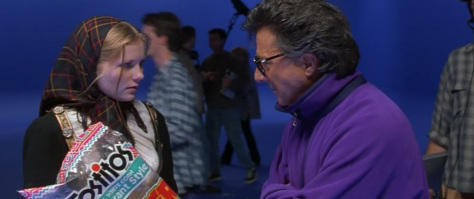
Stan now begins to concoct the story-line, supplementing Connie. He says that Albania has a suitcase nuclear bomb that they are trying to sneak into the United States through Canada, because the Albanian terrorists want to destroy our way of life. This story-line enlists patriotism. Stan then gathers people around him the way he does when he makes a movie. They call their production a pageant, which is a pretend spectacle. He recruits people, like Denis Leary’s Fad King, who helps with marketing war items so that the fake war can turn a profit. He enlists a country-western singer, Johnny Dean (Willie Nelson) to write a patriotic song that is produced like “We are the World.” There is a brief but telling shot which has Stan putting the president on hold as he tells his Cecil B. DeMille story. The point is the movie producer is running the show now, so the tail is wagging the dog. This idea is further demonstrated when Stan is filming the phony Albanian peasant girl escaping the Albanian terrorists. Stan wants her to appear to be carrying a calico cat, but the president wants a white feline. Stan’s response is “I hate when they start to meddle.” A man who produces make-believe stories is the boss now, turning the real political world into a fabrication. A bag of potato chips is digitally morphed into a cat, and a blue screen becomes an Albanian village. The state-of-the-art filmmaking process, if presented as reality, sabotages real life. Connie says, “It makes you glad to live this long” to see this kind of technology, a statement that combines an awe for scientific achievement undercut by the scary way it is being used in this story.

The people involved in this false production don’t care about the country’s democracy. They don’t even vote, except for the Oscars, says Stan, which shows how his business of creating illusion is more important to him than the actual well-being of the country he lives in. But the peasant girl, played by Kirsten Dunst, and anybody else in the production, can never say a word about their participation in the “pageant,” or else, Connie quietly threatens, people will come to their homes and kill them. It is a chilling moment when Connie threatens the actress, suggesting how easily a totalitarian state can come to exist.

Connie builds on the made-up story by wanting the president to land at an airport where it is raining. The president can then cover an Albanian girl and her relative, symbolically protecting them. The phony Albanians present a sheaf of a harvest based on some concocted version of a ceremony that Connie dreamed up that will show thanks to the president for protecting Albanians from terrorists. On the phone, Winifred asks if there is any way there can be rain at the American air base for the presidential landing. These people have so much power, they see themselves as god-like, believing they can alter the weather. This self-perception is encouraged by being around Stan, who as a filmmaker can manipulate the weather for a scene, and who tells Connie that he could have provided a rain-making machine, instead of diverting the plane to a city where there was wet weather.

Connie’s plans hit a snag when the CIA stop the car carrying him and Winifred. William H. Macy’s agent says that there is no war, there are no terrorist training camps in Albania, and no suitcase bomb exists, based on their intelligence gathering. Connie convinces him to let them go by giving a speech that predicts the type of war in which we are engaged today. He tells the CIA agent that if he doesn’t get with the program, then he isn’t doing his job, and will lose his employment. He tells him, “The war of the future is nuclear terrorism. It is and it will be against a small group of dissidents … and you can call this a ‘drill,’ or you can call it ‘job security,’ … And if there ain’t no war, then you, my friend, can go home and prematurely take up golf. Because there ain’t no war but ours.” Connie’s tail is wagging the heck out of this dog, claiming that no war takes place unless he says so. He can control the message through the media, which is the most dominant way to disseminate what he decides is the news. After his speech, Winnifred says Connie gave a “great performance,” which cements the idea that the political world and the show business world have become one.

But, Connie’s “agreement” with the CIA falls apart. The president’s electoral opponent says he talked with the CIA, and announces on network news that there is no war with Albania. A dejected Connie says the war is over, because he “saw it on television.” Whatever appears in the media is taken as truthful. However, Stan lives in a world of illusion, and can’t distinguish between fact or fiction. His producing powers, which have given him the control over life and death in films, makes him feel omnipotent. So, anytime things go wrong, he says, “This is nothing,” because he won’t allow himself to be subject to the limitations of actual life. He says that it is his war, and now it needs an “Act Two.” He sees life as a story, and he and the Fad King say that the tale of a war must have a hero. They invent a war hero who has been left behind enemy lines, like a discarded shoe, and who must be rescued. He needs a nickname, so they come up with “Old Shoe.” Connie gets Johnny Dean to come up with a ballad about loss and redemption, a favorite Hollywood plot. To add to the authenticity that the song was made a long time ago, and now remembered to fit the current situation, as opposed to appearing suspiciously produced recently, Connie says that the recording of the song should be scratchy. To show the extent of this conspiracy, they have it inserted into the Library of Congress, and one of Connie’s female aides sleeps with a journalist, so she can plant the idea of the old song matching the story. A video of the song shows a young girl crying as she listens to the words. Stan says they could have used fake tears, but the actress actually cried. This fact shows they have sold this falsehood so well, that the actors involved have deluded themselves, and accept the phoniness as real. Connie and Stan start to fling tied-together shoes onto electric wires as a sort of yellow-ribbon type of symbol symbolizing the hope for Old Shoe’s return. They can make money out of this activity by selling shoes and t-shirts, connecting the sales pitch to hero-worship. The Fad King says that they will say that Old Shoe ate little burgers in the field, and they will then sell these burgers at franchises, with the sales pitch that they are good to eat, “Behind enemy lines – or anywhere.” Fiction and politics produce profits in a capitalistic three-way.

Stand writes a speech for the president to deliver about the lost war hero. But, the chief executive doesn’t like it, calling it too corny. Stan meets with the president, sits at his desk in the oval office, and presents his speech to White House secretaries, who cry. The president is sold. When Stan sits in the White House in the president’s chair, it is a significant image because it shows how appearance, illusion, and fiction now control the country. Connie gets military records, and they come up with William Schumann (Woody Harrelson), his name being appropriate for someone being called “Old Shoe.” But, there is a mix-up, as the records accessed soldiers in “special prisons,” instead of “special programs.” The real Schumann is a far cry from the pretend one Stan invented. Harrelson’s sergeant is a psychotic inmate who raped a nun. The scene where they meet Schumann and put him onboard a plane flying to his supposed arrival back in the states becomes farcical, but is still very funny. Connie calls someone saying they are going to need a whole lot of Schumann’s medications. Schumann keeps saying he must get back to base so he can eat his “beans.” He randomly comes out with lines like, “I owned a Camaro,” and sings, “I like the night life/I love to boogie.” At times, he does not know how he arrived where he is. In a way, his out of touch with reality world presents the nightmare version of what happens when reality is altered, as is occurring deliberately here.

The plane crash-lands in a storm, and, luckily for the conspirators, the local rural owner of a gas station shoots and kills Schumann when the latter tries to sexually assault his daughter. There is a hero’s funeral for Schumann with the pretense that he sustained fatal injuries. Stan looks at the funeral from inside the airport terminal. He says, showing how reality and illusion are inseparable, that it is a complete fraud, “and it looks a hundred percent real. It’s the best work I’ve done in my life, because it’s so honest.” What a contradictory statement, because he associates exactitude in presenting a fiction for reality as being free from something fraudulent.

The jump in the president’s popularity is accurately attributed by one newscaster to the “spin” placed on events, not the actual events themselves. However, the media also attributes the president’s success to the “Why change horses in midstream?” campaign. This is too much for Stan, who previously expressed how producers don’t get enough credit for their work. Despite Connie’s pleadings, Stan leaves saying he is going to announce his part in the proceedings. Connie gives the nod to the security man, giving approval for Stan’s elimination. In this world, the manipulators of reality have power over life and death to protect the vision they project to the people.

Stan’s death is, of course, a lie, attributed to a heart attack. But then, he lived deeply in a life where illusion ruled. A news commentator says they are not sure of his age, since there are conflicting biographies. The film ends with a news report of violence in Albania. Is this real, or is the fraud continuing? Director Barry Levinson at the time of the making of the movie said that, because of technology, it is becoming difficult to tell the difference between real and fake news. Senior news journalist Tom Brokaw stated that we must realize that there is, as in other disciplines, a scale of reliable providers. We, using our objective reasoning skills, must assess the reputations of information providers, and believe those without resorting to bias.


The next film is Pressure Point