Showing posts with label infidelity. Show all posts

Wednesday, January 4, 2023

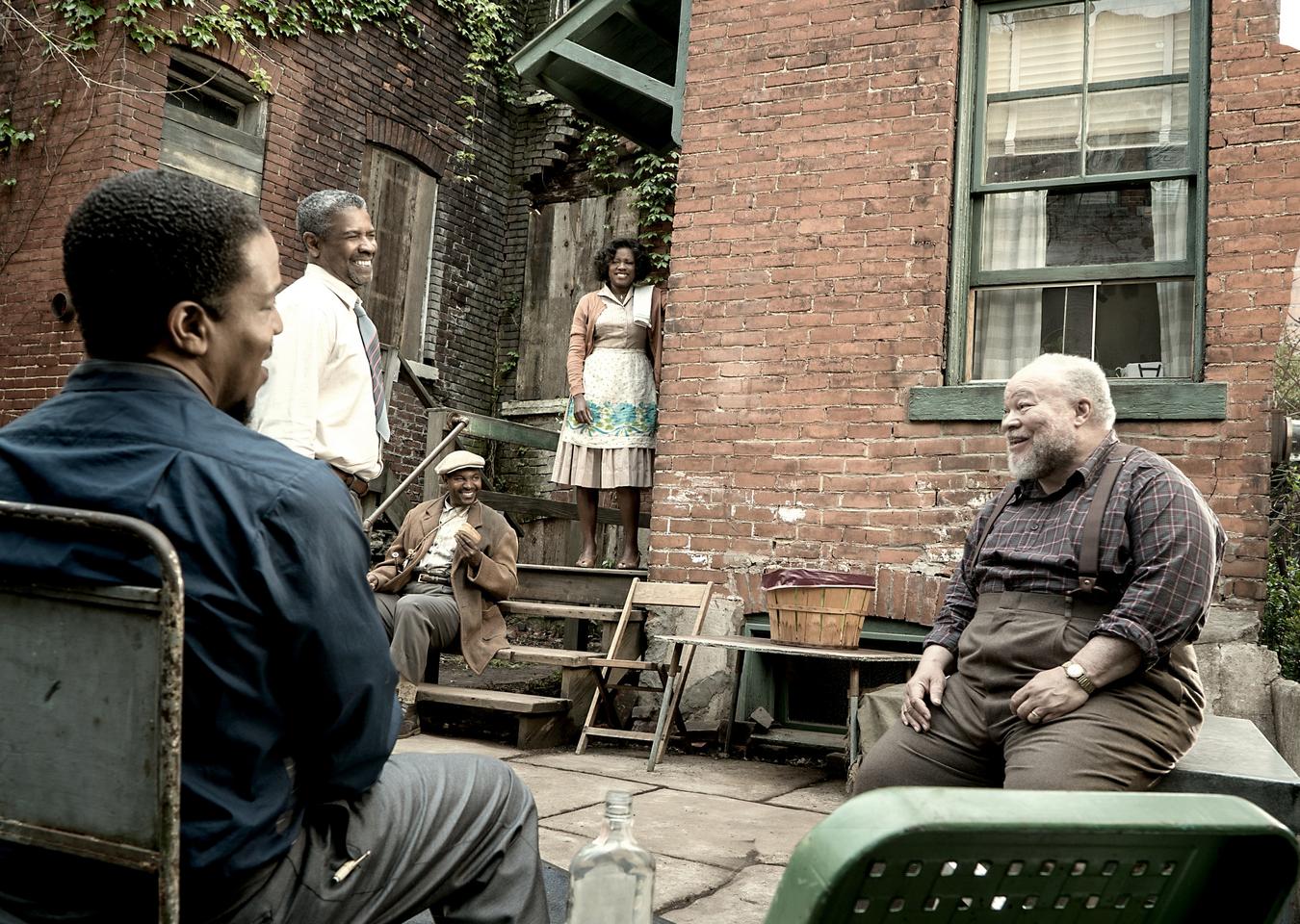
Fences

 SPOILER ALERT! The plot will be discussed!

Fences (2016), written by acclaimed playwright August Wilson, and directed by Denzel Washington, uses the title of the story to convey various meanings. The main character, Troy Maxson (Washington), was an aspiring baseball player. (Could the name referencing the epic by Homer suggest Troy feels like the besieged city?) A batter in that sport “swings for the fences” in the hope of hitting a home run. That means the player exhibits the hope of accomplishment. Actual fences are barriers erected for physical safety, but they can also be psychological shields that protect an individual emotionally. They may imply the desire to prevent others from escaping the control of the of one in power. Wilson richly employs the metaphor in various ways.

The film takes place in Pittsburgh, Pennsylvania, the scene of many of Wilson’s plays. It begins in 1956. Troy is a trash collector, and he works with his friend, Jim Bono (Stephen McKinley Henderson). The two talk about Troy’s complaint that there are no Black trash truck drivers, and Blacks always have to haul the refuse into the vehicle. Troy sees it as a racial issue, which it is in general because of social deprivation. We later learn that specific to Troy’s situation, he can’t read and does not have a driver’s license.

The conversation turns to Troy having bought some drinks for a woman who is not his wife, Rose (Viola Davis, an Oscar winner for Best Supporting Actress for this role). The character’s name reminds one of Spring, and rebirth, and she tries to get Troy to emerge from the dead past in which he likes to dwell. Bono implies that his friend is not just being polite, as Troy argues, when a man buys several drinks for a woman. Troy gets Bono to admit that he has never known Troy to cheat on his wife. However, no knowledge of a fact doesn’t make it untrue, as we subsequently discover.

They share a pint of whiskey (we find that Troy drinks too much, since Bono teases him about hogging the bottle). They engage is some crude sexual humor about a large woman from Florida. Troy says the woman’s girth “cushions the ride” like “Goodyear” tires. Even if that type of joke might be offensive to some, it fits the characters Wilson portrays. They are at Troy’s house and Rose comes out of the house and appropriately asks what they are “getting into.” She seems to have radar when it comes to her husband’s state of mind. She offers her own sense of humor. Troy says that when they first met, he told her he wanted to be her man, but didn’t want to get married. She said if he wasn’t the “marrying kind” then he should “move out of the way, so the marrying kind could find” her.  Bono shows the deprived plight of African American families when he talks about how difficult it used to be to get a home without an outhouse, and he thought indoor plumbing was reserved for white folks.

Troy is glad that his young son, Cory (Jovan Adepo), works at the supermarket because he is able to contribute cash to the family. Cory plays football in high school and Rose says a recruiter has approached him. Troy again says that race will be a factor, and Cory will not be allowed to play football because he is Black. He says that his boy should do something practical, like car maintenance, so he “can make a living.” Rose points out that Cory isn’t looking to make a career out of playing football; it’s just an “honor” to be recruited. Rose and Bono point out that things have changed and that there are many Blacks in professional sports now. Troy appears to be living in the past, and he has put a virtual fence that keeps out thoughts of exalted aspirations. He acts angry about prejudicial treatment, but feels nothing can be done about it. He implies one must give up on dreams and accept the unfair life that exists. It is at this point that we see where his anger derives. Troy was a very good baseball player, but he tried to rise up when he was too old, and failed to become a big leaguer. He will not admit he needed more time before attempting to become a baseball star. He is bitter about his failure to succeed.

Rose tells her husband that his excessive drinking will kill him. Troy says that Death visited him once when he had pneumonia, but he beat Death in a wrestling match. He personifies the loss of life so he can feel like he is in a contest between two men in which he can compete. He also talks about confronting the Devil, and Rose comments that anything that Troy doesn’t understand, he calls it the Devil. It’s as if Troy paints himself as a bigger-than-life Sisyphus-like character, constantly battling overpowering forces.


Lyons (Russell Hornsby), Troy’s older son from a prior relationship, arrives with his guitar. Troy sees him as another person who is not practical, only wanting to pursue his music. Lyons sees music as the reason for living; he says he needs a reason to exist, and music gives him that reason. Lyons asks for money, which is the only reason Troy says he is there. Lyons says his girl, Bonnie, is working and he’ll pay back the money. Troy says he can get Lyons a job picking up trash, but Lyons wants something better than that for his life. Many parents want their children to have jobs that are better than how they make a living. However, Troy represents those parents who feel their children look down upon the work that they do. Troy feels that he must carry the weight of dreamers on his labor-inflicted back, and thus, he begrudges the dreams of his offspring. He says that Lyons’s mother did a poor job of raising him. Lyons counters by saying that Troy was not around, so he doesn’t know how he was raised. He basically is indicting Troy’s hypocritical action since he talks about being responsible but abdicated his responsibility toward his son. Rose gets the complaining Troy to come up with the ten dollars Lyons asked for.

It's the weekend and Rose sings a hymn as she hangs laundry to dry. The words of the song ask Jesus to be a “fence” around her. Here is where the title of the story involves the wish for protection. Rose talks about playing the “numbers,” an illegal form of gambling before state-run lotteries came into being. Troy calls the betting foolish. He again expresses his contempt for seeking a dream-like impractical way to escape the plight of the deprived.

Troy continues this rant by saying Cory wanted to escape working on a fence on his property by going to football practice. Here, the fence could be a metaphor for Troy trying to keep his son from escaping Troy’s control over him, and thus, depriving Cory the luxury of holding onto his aspirations. Rose tells her husband that he’s “off,” complaining about everything. She takes the saying about getting up on the wrong side of bed and wittily refreshes it by telling Troy to go back to bed and get up on the other side.

Troy’s brother Gabe (Mykelti Williamson) walks down the street yelling about selling plums that he does not have. He acts child-like, and it is obvious that he has mental deficits which we learn was due to receiving a serious head injury in the military. Despite his impairment, Gabe has religious visions about hellhounds, St. Peter, and Judgment Day. It’s as if he is an uncomplicated vessel that carries a divine message about the evils around him and urges preparation for the apocalypse to come (perhaps that is why he has the name of the angel Gabriel who. with his trumpet. announces God’s wishes). He wanders off urging others to get ready for God’s arrival. He recently moved out of Troy’s house and Gabe says that he wanted to get out of Troy’s way. Gabe is a gentle soul in contrast to his brother, and appears intimidated by Troy, wondering if his brother is angry with him. Gabe received $3,000 when he left the service and Troy used that money to buy his house. So, despite Troy talking about having to earn one’s own way, he used his brother’s disability to get what Troy wanted. Troy did take care of his brother until he moved out. Troy expresses regret and anger that life is so unfair that the only way he could have his own place was because of his brother’s life-threatening injury.

Troy says he is going to work on the fence, but he goes to the local tavern and comes back drunk. He says he is going to fix things around the house but escapes into his drinking instead. At the same time that he rants about Cory not doing his chores, the boy is actually home ready to take care of his responsibilities. Troy is always on the offensive about the way he sees the world vexing him. What follows is a universal exchange between the self-indulgent but life-enjoying child and the practical adult. Cory says his father should buy a TV. Troy points out that the money that would buy a TV must go to fixing the roof. Troy humorously says what good is the TV if the roof leaks water onto Cory’s brand-new television.

As the two work on the wood for the fence, Cory talks about the Pittsburgh Pirates. Troy, always wearing that chip on his shoulder, says that Roberto Clemente isn’t allowed to play all the time because he is a man of color. Cory corrects his father’s limited perspective by telling him Clemente plays a great deal. Troy adds that the baseball leagues play mediocre white men while Black players must be great to get a chance. Cory, trying to add fairness to the argument, mentions exceptional white and Black ballplayers, including Hank Aaron. Troy dismisses the great Aaron by saying any player can do well once he gets his timing, and says that Troy had hits off the great Negro League pitcher Satchel Paige. Troy appears to need to compensate for a lack of success by knocking down the accomplishments of others.

From baseball the two move on to Cory’s football aspirations, of which Troy again says his son has unachievable dreams. Cory quit his weekday job at the grocery store, but will continue to work weekends. The owner will hold his job until after the football season. Cory can go to college because of his football abilities and good grades. That’s not enough for Troy, who still views his boy’s hopes as a longshot because Troy interprets his failure at sports as being due to a continuing systemic racist system that will also affect Cory. He demands that Cory try to get his job back, or find a new one, and give up his dream of playing college sports. Troy tells his son to learn a trade so he will not have to haul trash like his dad. He wants his son to succeed, but in a pragmatic sense.

A dejected Cory, trying to comprehend why his father is denying him a chance at happiness, asks if Troy likes him. Troy reduces even family relationships to practical transactions. He says there is no “law” that says he must like Cory. He has a duty to take care of him because he is his son. He said having him did not include in the bargain liking him. He tells a now seething Cory that his son should stop worrying about being liked and focus on who “is doin’ right by you.” Troy’s reducing family relationships to a pragmatic contract involving duties not only leaves no room for liking someone but also excludes love, the real glue that binds a family together.

Rose again tries to break through the “fence” of Troy’s self-delusion that the only reason that he didn’t succeed in sports was because of racism, and not his age. She tries to tell him that he is enclosed himself in the bitterness of the past and doesn’t want to see that things have changed, implying that there are more opportunities in sports for African Americans at the time the story takes place.

Instead of getting fired for complaining about there being no Black truck drivers, Troy instead becomes the first African American trash truck driver (despite having no license). He celebrates with Bono and Troy tells Rose the good news. That’s one instance of Troy being wrong about how he sees the world. Immediately after that, there is a second example. Lyons arrives and wants to pay him back the ten dollars he borrowed. Instead of acknowledging his son’s responsible action, he tells him to hold onto the money for the next time he needs a handout instead of coming to his father. Troy assumes his son will continue to be a burden instead of admitting that maybe things can change.

Gabe shows up with more announcements about Armageddon and the Devil, who Troy says he did battle with. Gabe calls Lyons, because of his name, the king of the jungle and they both growl. However, for Troy, his musician son is no force of nature. Outside, Troy (drinking again) says his father cared about himself first and his eleven children came afterwards. He did stick around when others left their responsibilities behind. Still, Troy says his dad was “evil,” as he tried to take advantage of Troy’s girlfriend after beating Troy. It was his mother who left the family because of the father’s ways. Yet, he understood his father, saying his dad was caught in a trap, working at picking cotton and having many mouths to feed. Troy sees life as a trap. Troy ran away from home at age fourteen and turned to robbing people to get by. He was in a confrontation with a man who shot him. Troy killed the man and was in prison for fifteen years. That time in prison is the reason why Troy started his baseball career too late. One can understand that Troy suffered traumatic experiences that contributed to his view of how harsh life is. His stories about the old times along with those of his old friend, Bono, affirm what Rose says about him being ensnared in the past.

Lyons invites his father to hear him play but Troy refuses. He can’t find it himself to take pride in his son’s impractical artistic nature because he perceives Lyons as just another weight he must carry. Cory comes home angry and throws his helmet which bounces off the house porch. Cory says Troy told the coach he can’t play football anymore. Cory says something that hits at the core of his father’s mindset when he says that his father is jealous of his son succeeding when Troy couldn’t. In Troy’s mind, his son can get a good job if he works hard, but he will not accept the possibility that his son could hit the occupational lottery when Troy couldn’t. Troy uses a baseball metaphor when he says that the thrown helmet was “strike one” because it missed Troy. He warns his son that he better not “strike out.” He is threatening Cory with physical violence at this point.

The next day Cory practices hitting a baseball hanging from a rope on a tree with a bat. He tells Rose he will not quit football. Is he metaphorically making sure he will not strike out against his father, the seasoned ballplayer? Bona says that Troy is paying too much attention to another woman. As Cory helps Troy and Bono saw wood for the fence, Bono, referring to what he said about the other woman, announces the central theme of the story when he says, “Some build fences to keep people out and other people build fences to keep people in. Rose wants to hold onto you all.” The implication is that Troy is divisive, and Rose works as a force to balance Troy’s ways, so her song to God is echoed here where a fence is symbolic of protection.

Bono takes Troy aside and tells him he has learned a great deal from Troy and he knows whether or not someone’s telling the truth. He says that he doesn’t want to see Rose hurt. Troy here admits to his extramarital affair and says that he can’t shake this other woman loose. Troy is breaking his marital vows, and Bono reminds his friend that he should practice what he preaches about accepting responsibility.


After what Bono said, Troy is feeling guilty and he decides to confess to Rose. But there is more to the story than what Bono knows; he tells Rose he is going to be a “daddy” again. Rose gets hit with both barrels at once concerning Troy’s infidelity. Rose almost falls to the floor from the emotional wounds that Troy has inflicted on her. She runs outside toward the existing metal fence, as if trying to flee the barrier that she thought protected her. She drops the rose that Gabriel gave her, possibly signifying the relinquishing of hope for the future that her name suggested. He tries to defend himself by using extensive baseball metaphors, using the tools he knows. He says that he was born with two strikes against him, most likely being Black and poor. However, he avoided that third strike by getting married, having a family and a job. But, he says the other woman gives him an escape from the pressure of his work and family responsibilities, and he says he can’t give up that feeling of freedom. Rose says that it’s her job to alive pressure, and he shouldn’t be looking for someone outside the family. In baseball language, that would mean the relief pitcher should be someone on the same team. He says that he feels like he has been standing still. Her angry response is, “Well, I’ve been standing with you!” She has been supporting him and has given up moving on by committing to her life with Troy. Just like his boys, Troy has tried to kill Rose’s wants and dreams. She says she buried her desires “inside” her husband, hoping happiness would grow there, but she found she planted her hopes on rocky soil. She calls him out on his selfishness since he always talks about what he has sacrificed and forgets how much he has taken, most likely implying how much he has deprived her of her wishes. He becomes angry about being accused of taking and not giving back, and grabs Rose’s arm. As she cries out that he is hurting her, Cory comes outside and slams Troy into the fence, threatening that barrier of authority between father and son. Troy says that Cory now has two strikes against him, and he implies there will be violent retribution against his son if he gets that third strike.

We get a montage of images that show time passing as the weather turns cold with snow falling. Troy continues to build the fence alone; Cory works out in the basement as he keeps his dream alive of playing football; Rose seeks refuge in the embrace of fellow females at her church; Gabriel visits the grave of his mother who died young. The family members are isolated from each other. At least until Rose shows up at Troy’s workplace and tells her husband they must talk. He says it's been six months since she hasn’t wanted to have a conversation with him. She wants him to come straight home after work, implying he should not visit his lady friend, Alberta. After some evading, Troy says he just wants to stop at the hospital because Alberta may be having the baby early. Rose’s face reflects her anguish and criticizes Troy for signing papers that would send Gabriel to an institution (something he said he wouldn’t do) and would award him half of his brother’s disability check. Yet, he would not sign the agreement to have Cory play football at a college. Troy can’t read, so it’s possible he is truthful when he says he didn’t know anything about what Rose reports, which again stresses how his lack of an education has hindered him. Most likely out of guilt Troy feeds his brother at the asylum, like a nurturing father giving food to a baby.

Rose answers the phone in the middle of the night. She reports to Troy that Alberta gave birth to a girl, but she died during childbirth. When Rose asks about what’s to be done next, Troy reverts to his usual complaint about being burdened by life. After Rose leaves him alone, Troy rants at Death, saying he’s going to finish the fence, to keep Death at a safe distance until it’s his time, and then they will battle. He tells Death not to come at him through others, like Alberta. We again have a mythological level to the tale, as Troy addresses primal forces. It is as if he is delivering a dramatic soliloquy, like Shakespeare’s King Lear. However, Troy’s speech shows how he is an egotist, as if everything revolves around him.

The next scene has Troy coming home with his infant daughter. He tells Rose she is an innocent child with no mother. He is asking for help to raise her, but the suffering Rose says there is no point telling her that. He goes outside and is quietly defiant saying to the baby he is not sorry for what he has done because he felt his actions were right for him. He says he was homeless before, but not with a baby. Rose hears Troy basically saying that he will have to care for his child outside of his home. Davis shows Rose’s anguish just from her back as she drops what she is holding into the sink and stretches her arms as if to support her emotional heaviness. Troy now comes straight out and asks that Rose help take care of the baby. Rose agrees, because she knows that the child is innocent, and should not inherit the sins of the father. Rose has always valued the other family members above her own needs. She says his daughter is no longer motherless, but he is womanless, stressing that she has not forgiven his sins against her.

A short time has passed as Troy comes home to find Cory leave the yard as soon as he sees his father. Rose leaves to bring a cake to the church and left Troy some dinner. He goes to the local bar and talks to Bono who he hasn’t seen for a while because Troy is now driving in a white neighborhood. Troy is losing his family and his friend due to his actions. He sings about his dead dog, again seeking solace in the past. Cory stops at a Marine recruiting office, so we know Troy has lost his son even though he tried to keep him inside his fence.

When Cory comes home the drunken Troy blocks his entrance, and Cory refuses to say, “Excuse me,” because he says his father, due to his actions, doesn’t count anymore. Troy then reverts to the same list of material things he has given his son, but Cory states how his father only made him fear him, and was never supportive. They have a physical confrontation, with Troy overpowering Cory, and taking the baseball bat away from him. Troy comes close to choking and slugging his son. He kicks Cory out of his house, which Cory reminds him is not really his since Gabriel paid for it. Troy says Cory’s belongs will be on the other side of the fence, which emphasizes how Troy’s world is shrinking as he alienates everyone around him. But Troy is defiant in his emptiness, swinging his baseball bat, invoking Death again, saying he is ready to fight the Grim Reaper. He is ready for death as an escape now, but he will still deal with his demise as he has lived his life, kicking and screaming.

The next scene takes place several years later, and Troy’s daughter, Raynell (Saniyya Sidney - Could her name suggest a “ray” of sunshine and the hope for a better future?), is a youngster taking care of a garden outside. The greenery may represent the influence of Rose, the person with the regenerative name. Bono is there with Lyons. They are dressed up in black, as is Rose. We know they are going to Troy’s funeral. Cory shows up looking impressive in his Marine uniform, wearing a corporal’s stripes, and has been in the service for six years. He has been away since his father kicked him out, since Raynell doesn’t know that he is her half-brother. Lyons tells Cory that he is finishing up a three-year prison sentence for cashing other people’s checks (his father was a thief when he was young), and the penitentiary let him out for his dad’s funeral. He reminds the bitter Cory that Troy used to say, “you got to take the crookeds with the straights.” He recounts how his father would strike out and then hit the ball out of the stadium, and after the game two hundred people wanted to shake his hand. Despite his shortcomings, Lyons is saying that Troy was a force of nature. Lyons still plays music, keeping what feeds him emotionally in his life. Troy’s sons may not have played baseball, but they played music and football, and refuse to give into defeat.

In the kitchen are pictures of John F. Kennedy, Martin Luther King, Jr., and Jesus, individuals that inspire and keep Rose going. She tells Cory outside that Troy was swinging his bat at the ball tied to the tree when he fell over and died. He went down swinging, as he said he would when Death came for him. Cory tells Rose that he has to say “no” to his father just once and will not go to the funeral. Rose is outraged and says that is not how she brought him up, and he must put his animosity aside. She says her words with the baseball hanging between them and the fence Troy built in the background. These images show how Troy’s legacy of placing boundaries between people continues to divide lives despite Rose’s wish to bring the family together.

Cory says that his father was like a “shadow,” suggesting it was like a black plague that infested his life. Rose says that Cory can’t escape his father’s influence, but he must deal with it. Troy was a man of contradictions, but she believes he wanted to do more good than harm. Her words show that conflict between wanting to help but not knowing how to deliver it. She says that sometimes when he touched someone, he “bruised” them, and when he held her, she might feel him “cut” her, both in an emotional sense. He most likely wanted Cory to be far from what Troy was in his failures, but also to be like him in his strength.

She says that Troy was a bigger than life character who filled up the house and all the “empty” spaces in her. But, she admits that didn’t leave much room for her own individuality to thrive. She does take responsibility for choosing Troy, and she has turned the negative events that brought Raynell into the world into a positive. The girl is a symbol of rebirth, giving Rose a new energy, which refueled Rose, who is a life force herself.

Raynell and Cory sing Troy’s song about his dog, Blue. After they are done, she hugs him. The institution let Gabriel out for the funeral of his brother, and he shows up with a trumpet, living up to the angel whose name he carries. He blows one clear note, and the sun shines through the clouds, which Gabriel takes as opening the gates of heaven for Troy. Raynell holds Gabriel’s hand. Troy’s child is able to accomplish what he couldn’t do in life, which is to bring the family together.

The next film is Stand by Me.

Sunday, June 23, 2019

Blood Simple


SPOILER ALERT! The plot will be discussed.
Well, here is another film, after last week’s The Last Picture Show, which takes place in Texas. Blood Simple (1984) is the Coen Brothers’ first feature film, and with it they pay homage to the elements in the noir tradition, but also subvert them. The noir derived from James M. Cain novels, such as Double Indemnity and The Postman Always Rings Twice, contain a wife’s infidelity in the plots, with the woman acting as femme fatale as she manipulates the men. Even though we do have a philandering wife here, and she is a strong character, she is as much in the dark about what is happening as her lover. Usually in film noir stories, the private investigator, although usually a type of anti-hero, still has a code he follows as he tries to unravel a mystery, such as in The Maltese Falcon or Chinatown. Here, the PI undermines the tradition by having no moral center, but instead is a nihilistic killer just out to satisfy his own greed.

The first shot of the film is of a road, but there is a piece of tire tread on it, which fits in with the voice-over by the cynical PI, Loren Visser (M. Emmet Walsh) who says life doesn’t come with a guarantee, and it doesn’t matter who you are, no matter how powerful or important, “Something can all go wrong.” But, he says people still whine as if they expected things to work out okay. He says the Russians at that time declared that their system of governing was based on everyone supposedly taking care of everyone else. But here, in the United States, he says, if you complain to a neighbor, “just watch him fly.” He says he knows Texas, “and down here, you’re on your own.” He is expressing the downside of the American belief that individualism reigns supreme. There is then a cut to a car by itself on a road, at night, in the rain, epitomizing that lonesome individuality.
Ray (John Getz) is driving Abby (Frances McDormand), but there appears to be a car following them which is a Volkswagen Beetle. Abby says that for their first anniversary, her husband, Julian Marty (Dan Hedaya), gave her a gun. It is pearl handled, a sort of Texas version of jewelry. (If you introduce a gun in a story, as Anton Chekhov said, the writer better fire it later in the tale, and that is what happens here). Abby is planning to escape to Huston because, she says, that if she stayed, she would probably use the weapon on her husband. Her remark is sort of a version of “If you live by the sword, you will die by the sword,” or any other lethal device. (The fact that she refers to her husband by his last name shows the lack of emotional connection between them). Ray works at Marty’s bar, and says he tolerates the man because he’s not married to him, so he hasn’t had murderous feelings toward Marty. This statement is ironic considering what happens later in the film. But, Abby’s remark here about shooting her husband later comes back to haunt Ray. She asks why he offered to drive her, and he says that he likes her. She says they just passed a motel sign. It’s an implied suggestion to have sex. They are next seen in bed with trucks and cars whizzing by, casting ominous shadows, showing transience, not stability, and a noisy, not peaceful, coupling.


In the morning, Marty calls the motel room, surprising Ray that he knows of the infidelity. Marty is then seen with Visser who has taken pictures showing Ray in bed with Abby. Visser is cruelly sordid as he says, “I know where you can get those framed.” He seems to delight in commenting on the decadence of the world, like a man viewing the failings of humans as a sort of entertainment show. He has a cigarette lighter that has an inscription which reads, “Elk Man of the Year,” an ironic title, showing that there isn’t much in the world worthy of praise if Visser is receives an award (the lighter will be important later). Marty doesn’t like that Visser stayed there to watch the lovemaking, and he comments that there was no need for taking pictures since the PI reported that the two were together. Visser probably likes seeing Marty suffer by looking at the photos. Marty, in a threatening response to Visser saying he was just doing his job, says in ancient Greece they would cut off the head of the messenger that brought bad news. Visser laughs and says that doesn’t make sense. Marty agrees, but he notes that it made them feel better. Visser says that he isn’t a messenger, he’s an investigator, and that in Texas, killing is against the law (another ironic statement considering what Visser does later). He also says that the news could have been worse, because Marty expected Abby’s lover to be black, which shows the racism of the husband, but also Visser’s nasty comic sense. Even though Visser is the cynical one, he states with ironic humor that Marty is a pessimist, “always assuming the worst.” Marty throws his payment at the man, and tells him not to show up again. He says if he needs Visser, he’ll know what rock to look under. Visser just laughs and says Marty’s line is a good one. Visser isn’t even insulted, because he knows what he is, and doesn’t see the need to feel shame given how despicable people are, including himself. 


At Marty’s bar a black bartender, Meurice, puts on “It’s the Same Old Song” by the Four Tops, an African American group, and the local whites shake their heads, which provides a feel for the prejudice in the community. But the title of the song also points to the Coens paying homage, as Adam Nayman says in his book, The Coen Brothers, to the noir stories that preceded this one. There is a young woman at the bar named Debra (Deborah Newman), who says she is an old friend, and that she has known Meurice for ten years, when in fact they just met. It is a ploy to keep Marty at a distance. Marty still tries to pick her up, probably to get revenge for Abby. Marty says to Debra to tell Meurice she can’t meet up with him later because she has a headache. But she says wittily of the headache excuse, “It’ll pass.” He persists but then she tells him flat out she doesn’t want anything to do with him. Marty is a loathsome, pathetic character who is continually humiliated during the course of the film.

In a scene at Abby’s place, ominous music plays consisting of bass sounds interspersed with steel-like instrumentals that sound like death knells. Abby goes through her purses looking for bullets and the anniversary gun, which suggests she may, as she noted earlier, ironically respond by shooting the person that gifted her the weapon. She secretly loads the pistol with three bullets. Ray says he has to see a guy, and Abby knows what he’s thinking and warns him not to go to the bar.

But Ray goes to the bar anyway. “Sweet Dreams” is playing in the background, which is obviously in counterpoint to what is happening here. Marty looks at the workers burning trash behind the establishment, the inferno mirroring Marty’s state of mind. A bug zapper is heard crackling, an unpleasant, destructive sound that reflects Marty’s emotions. Ray confronts Marty who says he doesn’t want to talk to him. Ray says if he’s not getting fired he might as well quit. Marty then asks him if he’s enjoying himself, an obvious reference to the infidelity, and Ray is now the one who doesn’t want to talk. Ray has the audacity, given the circumstances, to say he’s owed two weeks wages. Smoldering Marty says, “No,” but goes on to say that he thinks it’s funny Ray believes Abby just cared about him. Marty says she had her followed because he believes she has been unfaithful with other men. Marty predicts she will act innocent when Ray confronts her about her promiscuity. Marty warns Ray that he’ll shoot him if he shows up there again. We have a violent atmosphere growing here, but the violence plays out in unexpected ways.

Marty sits back in his chair and looks at the ceiling fan, with its suggestion of life going in circles and getting nowhere, a frustrating symbol of existence. He tells Meurice that he isn’t going home but just will remain where he is, in hell, which fits the fire imagery and reflects a depressing vision of life. He calls Abby at Ray’s, but doesn’t say anything, trying to be intimidating. Ray, made suspicious by Marty’s statement about Abby’s alleged sexual affairs, asks if the call was for her. She says she doesn’t know because “he” didn’t say anything. Ray, his jealousy growing, asks how she knew it was a “he” calling. She asks, jokingly, if Ray has a girl, and was she “screwing something up” for him. He then turns her remark back on her, asking was that what he was doing, implying that maybe he isn’t her only lover. Suspicion and mistrust inhabit these characters, which goes along with Visser’s statement about how in the end we are on our own. She says she can be out of his hair, and he says if that’s what she wants, telling her she can leave. She then says she can sleep on the couch, showing how Marty has created doubt between them.

The soundtrack now uses a piano to show the contrasting bass and treble sounds introduced earlier. Marty is again looking at the ceiling fan, and we see Abby looking at the one where she sleeps. It is Texas, which is hot, so the actual heat coincides with the passions of the characters which overcome reason, and no fan can cool the drives of lust and revenge. Abby goes to Ray’s bed, and he reaches for her, his attraction overcoming his reservations about Abby’s motives.


The next morning, Abby gets out of bed, thinking she is safe, but Opal, Marty’s dog is there, so she realizes so is her husband, and he grabs her before she can call for help. She reaches for her purse but the gun spills onto the floor. He says let’s go outside and “do it in nature,” suggesting the base, animalistic aspect of what drives these people, also symbolized by the dog being there. As the two struggle, there is the further connection to the bestial side of people as there is a sound that mimics the dog breathing quickly. Abby twists around, breaks Marty’s finger, and kicks him in the crotch, inverting the initial appearance of her being the weaker individual. The image of Abby’s attack is one suggesting castration which adds to Marty’s humiliation process. He drags himself away, vomits, and then Ray comes out with the gun he picked off of the floor, as Marty slinks off and drives away. Ray points out how Marty appears even more ridiculous because he drove in the wrong direction toward a dead end, which is a foreshadowing of what is to come.

There is a shot of Marty’s middle finger in a splint, another emasculation image that reflects his cuckolded status. He meets with Visser in a parking lot next to his Volkswagen, so it is confirmed that he was the one following Abby and Ray to the motel. He has a doll hanging from his rearview mirror that has breasts that light up when the chain is pulled. He also asks if Marty injured himself by sticking his finger up the “wrong person’s ass.” The PI’s low moral personality is always on display. He goes on to tell a joke about a man who broke one hand, and then injured the other one protecting the first. Visser told the man that he has found true love if his wife will wipe his behind for him. For Visser, that is how low the measure of love has sunk.

Marty has a job for the PI. At first Visser says, “if the pay’s right, and it’s legal, I’ll do it.” When Marty says, “it’s not strictly legal,” (quite an understatement), Visser ethically edits his requirements by saying “if the pay’s right, I’ll do it.” Visser cackles all the time, but as he realizes Marty wants him to kill Abby and Ray, he is very serious. He doesn’t say he wouldn’t do it, but calls Marty an “idiot.” He believes Marty has been thinking about hurting his wife and her lover too much and, “it’s driving you simple.” The title of the movie comes from a Dashiell Hammett novel, Red Harvest, where “blood simple” refers to how people enter a state of mind that has regressed because of fear and violence. In this film, the characters, because of lust, jealousy, suspicion, and revenge, commit stupid acts, as Visser implies. But, the PI now refers back to his musings on Russia where people are supposed to stress the social good, and only make fifty cents a day. Marty offers to pay him ten grand. So, the “on your own” American way kicks in. Visser tells Marty to go fishing out of town and get noticed, so he has an alibi, and to hide the money transaction. Marty says to burn the bodies in the incinerator behind his place, which reflects his rage that has led him to his personal hell.

Abby finds an apartment to rent on her own, so her relationship with Ray has not been finalized. Abby is in bed at Ray’s place, wondering if she hears Marty. She tells Ray they would probably not hear him because Marty is “anal.” Instead of saying “anal retentive,” to show compulsiveness to detail, Abby unwittingly demeans her husband when she says Marty once said to her, “I’m here, I’m anal.” She points to her head, which makes the gesture imply that Marty is a shithead. She says that Marty doesn’t talk much, but when he does, it’s nasty, whereas Ray’s leanness of speech is “nice.” So, the same quality can be malevolent or benevolent, depending on the situation, which emphasizes how everything is relative, and not predictable. Outside the bedroom window there is at first nothing, but then we see Visser’s Volkswagen, the alternating shots helping to develop the menacing atmosphere.


Visser breaks in and takes Abby’s gun, which Marty probably told him about. He sees the couple sleeping together. The next shot is of the PI calling Marty, telling him the job is done. They meet at Marty’s bar after closing late at night. Marty, back from his alibi trip, slaps some dead fish on the table, their corpses creating an association with the murder plot. The PI again hands some photos to Marty. They appear to show Abby and Ray bleeding from gunshot wounds. Marty feels sick even though he ordered the hits, and vomits in the bathroom, which reflects on the disgusting events occurring. There is a fly buzzing around Visser near the dead fish, symbolizing the corrupt nature of the business at hand. Marty gets the money out of his safe and pays Visser. The PI says that doing this kind of killing is risky, to which Marty says then Visser shouldn’t have done it, which is exactly why we learn that Visser didn’t kill the lovers. He has a different type of murder planned that he thinks will protect his interests. The PI then shoots Marty with Abby’s gun, wipes it, and leaves it there, saying to Marty, “You look stupid now,” which is his view of humanity. There are camera shots of Marty through the circling blades of the ceiling fan, reminding us of the pointlessness of the actions of these characters, and as Nayman says, along with the repetition of “It’s the Same Old Song,” the vicious cycle of deaths that results from betrayals and violence. (The fan may be a nod to the noirish ceiling fans in Casablanca).
Ray then shows up at the bar to again try to secure his back pay, but there’s only change in the cash register. He goes in the back and accidentally kicks the gun on the floor, and the weapon discharges, jolting him out of a feeling of safety into a world of danger. He sees the blood dripping down Marty’s arm. He looks for the gun underneath the desk, which has the barrel pointing at him, which is another foreshadowing. He retrieves the pearl-handled pistol, that he knows belongs to Abby. Ray probably thinks he’s covering up Abby’s murder, but he’s not too bright in his attempt. He puts his fingerprints on the gun as he places it on the table next to the dead fish, linking the weapon to its deadly purpose. He tries to soak up the blood with his jacket and wash the garment in the sink, an almost impossible task. There is now talk outside the office and Meurice’s voice can be heard. He tries to wipe the wet floor, but it’s pointless. He at least takes the gun, but puts it in Marty’s jacket pocket instead of his own. He then hauls Marty’s body into his car. He drives by the furnace, its flames showing how Ray is now in the hell on earth that Marty mentioned earlier. But, he doesn’t burn the body, which creates problems, and shows how people immersed in violent events abdicate their reason.

As he drives, there is that lonesome ride on the road at night again, revisiting the opening scene, and reminding us of Visser’s comment about being “on your own.” On the radio is an evangelist, which adds detail to the setting, but it also is a reminder of the sins that are being committed. Also, the preacher is talking about how the end of the world is coming, which adds to the atmosphere of doom in the story. This talk is followed by the almost horror story effect of Ray hearing Marty breathing and groaning in the back seat. This realization freaks Ray out, as if he has been visited by a ghost, which is a reminder of how departed spirits are considered representative of wrongful deeds revisited on the living. As Nayman points out in his book, characters that are alive are believed to be dead. Such was the case with the doctored photos of Abby and Ray, and now, here, Marty is not dead yet. It’s similar to Gregor Samsa in Franz Kafka’s Metamorphosis acting like a cockroach before he actually becomes one, or Bottom (the name says it all) in Shakespeare’s A Midsummer Night’s Dream being an ass prior to turning into a real jackass.
Ray stops the car and runs out of it. When he goes back to the vehicle, Marty is not there. He is crawling on the road. Ray backs up the car and acts like he’s going to run him over, but stops, most likely thinking that might be a too messy way of finally ending Marty. He takes a shovel instead and is ready to use it. The shovel scraping on the ground produces a sound that grates on the nerves. Marty grabs Ray’s leg, implying that Ray is being dragged into the hell that Marty’s violent plans have precipitated. A truck’s headlights are in the distance, and Ray drags Marty into the car, trying to cover-up his actions. He digs a hole in which to bury Marty. The man is not yet dead, writhing in the grave as Ray starts to cover him with dirt. But Marty pulls the gun out of his pocket and tries to shoot Ray, his anger and violence now infecting even his last actions on earth. But, there are only two bullets left in the revolver, so there are several empty chambers. Ray takes the pistol from him as Marty keeps pulling the trigger. Marty screams as Ray piles on the dirt, the ground pulsing under the surface as Marty moves, adding to the macabre, scary movie effect of the scene.
As day breaks, Ray drives off on that lonely road again. An approaching driver flashes his lights at him, which could signify a sort of warning, and is also consistent with a feeling that anything can now be thought of as a threat. But the driver is just telling Ray that he has left his lights on. As he passes, the other driver, in a Texas style greeting, smiles and points his fingers like a gun, which takes on an ominous feel given the circumstances. The shaken Ray calls Abby from a gas station, and tells her he loves her. He returns to his place with a smiling, unaware Abby in bed.

Meanwhile, Visser is burning the original photos. He pulls out a cigarette and realizes his Man of the Year lighter and the doctored photos are missing. He, too, has gone “simple” in this criminal activity, and his judgment has suffered. We then get a shot of a ceiling fan again, reminding us of the futility of actions.

Ray didn’t sleep in the bed with Abby, worrying about what has transpired. He is on alert, but maybe he is a little afraid of his lover. He tells Abby he went back to the bar and covered things up. He says that they have to be careful, and not go off “half-cocked,” which is a gun metaphor, and is an appropriate image for what happened to Marty. He says they have “to be smart,” which is the exact opposite of how these people are behaving. Ray says that if someone shoots a man, “you better make sure he’s dead,” as if giving Abby advice about what he thinks is her botched murder attempt. He was in the service, and says that the only thing worth learning there is that if you don’t kill the enemy, he can get up and kill you, which reveals his fearful state of mind. Abby is totally confused by what he is saying. The phone rings but all that is heard is that ominous ceiling fan. Abby says it must be Marty on the phone. Ray laughs, thinking Abby is trying to deceive him about Marty’s death, and says “I’ll get out of your way,” thinking that Marty might have been right, and it was one of Abby’s other lovers on the phone. He places the gun on the end table and says she “left her weapon behind.” He is assuming she shot Marty, which is what Visser wants others to believe. This world is full of treachery which spawns fear and suspicion.

There is a brief scene which shows how Marty, after returning from his fishing trip,  left a voice message accusing Meurice of stealing from his safe and wanting to talk to him and Ray. This story was how Marty was going to explain the missing cash he was actually giving to Visser for the murders. There is a cut to Ray checking out the blood stains in his car as Meurice shows up. Ray quickly covers the blood as Meurice tells him he’s sloppy for stealing the money since he, along with Meurice and maybe Abby are the only ones, other than Marty, who know the combination to the safe. Here again deception leads to false conclusions. There is a bit of dark, foreboding humor as Meurice flicks the cigarette out of Ray’s mouth saying they are like “coffin nails.” He then lights up one himself as he leaves. There is more humor as Meurice also drives the wrong way toward the dead end of Ray’s street, as did Marty, which suggests how all people are heading to a “dead end” on their earthly journeys.

Looking for his lighter, Visser goes to the bar and sees that Marty’s body is not there. He hides when surprised by Abby, who sees that the back door window has been broken and the bolt slid open. To emphasize the “simple” nature of these people wrapped up in their irrational states of mind, she slides the bolt closed, reminding one of the saying about closing the barn door after the horses have escaped. She discovers a hammer that Visser was using to break the safe. The spooky-looking dead fish are staring at her, looking like animal ghosts. She returns to Ray’s place, probably thinking that maybe it was Ray who tried to steal money from the safe and possibly killed Marty. Nothing is as it seems in this morally compromised upside-down world.

It appears Abby wakes up and hears heavy footsteps as she washes up in the bathroom. The creaking of the bathroom door adds to the list of creepy sounds as she sees Marty somehow still alive sitting in the living room, saying, “Lover boy ought to lock the door.” He tells her he loves her. She tells him that she loves him too, but he says that she is just saying it because she is scared. He repeats Ray’s words about how she “left her weapon behind,” but he tosses her a make-up compact, emphasizing her role as a film noir femme fatale. But she, unlike others fitting the genre type, never plotted to actually kill her husband, and is not especially manipulative. Marty then throws up gallons of blood and Abby wakes up as this scene turns out to be a nightmare, but not one far removed from what is happening in the waking world of the story.
Abby returns to Ray’s place. He is packing up and says isn’t that what she wants. He does ask if she wants to go with him. They don’t know what’s happening because they are unaware of Visser’s role in the goings on, so they suspect each other. He says he can’t sleep or eat. He then says that Marty was alive when he buried him, which confounds Abby. Ray finds the altered pictures at the bar that pretend to show he and Abby were shot. He sees the Volkswagen outside that he saw in the first scene, and Ray drives away. Abby enters her apartment and Ray is there. He tells her to turn out the lights, so as not to be an easy target, since he now knows that someone is threatening them. Visser, believing Ray and Abby are a threat to him now after discovering what he left behind at the bar, is outside with a gun. Abby turns the light back on, and they say they love each other just as Ray is shot. She jumps out of the way and knocks out the light with her shoe. She hides. Visser gets into the apartment and is searching Ray for the lighter. He clubs Ray to make sure he’s dead.


The PI looks for Abby. He has gloves on to cover up his crime. He tries to open a window to the room next to the bathroom where Abby is hiding. She grabs his hand, slams the window down, and puts a knife through his hand. Nayman points out that his bleeding extremity could mean he has been caught red-handed. But, Except Abby doesn’t even know whose hand she has impaled. He starts shooting holes through the wall erratically, which is another of several references to impotence, as Nayman notes. Then he just bangs against the wall making howling sounds since he is caught like an animal in a trap, emphasizing the evolutionary reversal that takes place when violence turns people “simple.” He breaks through the wall and pulls the knife out of his hand. Abby finds her gun. She steadies herself on the floor and shoots him through the wall. She says, “I’m not afraid of you Marty,” because she knows nothing about Visser, and has no idea that her husband is actually dead. He just laughs out loud and says, “If I see him, I’ll sure give him the message.” Once violence predominates, and the “blood simple” factor kicks in, his parting remark paints life as just one dark, absurd joke.

The next film is Before Sunset.

Sunday, August 14, 2016

Moonstruck

SPOILER ALERT! The plot of the movie will be discussed.


Everyone who has seen this 1987 film knows it is a comedy. But, for a movie which serves up quirky characters and funny lines while people consume food in an affirmation of life, the story is preoccupied with morbidity and the associated fear of impending death, and the consequences of passion, such as infidelity. Being of Italian descent, all I can say is welcome to my world.
The Oscar-winning writer, the Irish John Patrick Shanley, and the director, Norman Jewison, know how to deliver the pizza when it comes to evoking the world of these New York Italian Americans. The opening shot is of the Metropolitan Opera House, which foreshadows where the action will take place later. We then see Loretta (Cher, who received the Oscar for Best Actress) walking on the street as vans carrying scenery to The Met pass by with their cargo for the production of La Boheme, the opera she will see later. The musical work chosen is appropriately composed by an Italian, Puccini, and fittingly tells a story of love and death, with a dash of unfaithfulness.
Loretta works as an accountant for some of the businesses in the area, and the first one she stops at is, yes comedy lovers, a funeral home. The director brags how he makes the deceased look better than they did when they were alive, which is funny, but also is a sad commentary on the living. Loretta feels as if she has been scorned by life because her husband was hit by a bus (again with a death reference) after being only married for a short time, preventing her from having children. She later says she waited for true love and that romantic notion has pushed her back on the pendulum of affection to a place of cynicism and practicality. While going over a florist’s business records, the owner says the man who sends roses really knows about romance. Loretta scoffs, and says he's just paying money for things that will die. He says if everyone thought like her it would be bad for business. But, we see that her romanticism is not dead. She says she likes flowers, and after he gives her a rose, she smiles. In fact, there are two instances, one in the flower shop and later in her mother’s bedroom, that we see Loretta reflected in mirrors, suggesting that she really wants to have an alternate romantic reality free of the self-imposed restraints of her pragmatic lifestyle.
Loretta has been dating Johnnie (Danny Aiello). He proposes marriage to her at the appropriate place, an Italian restaurant, because romantic appetites and digestive ones are very much linked in the Italian culture. Ironically, here, there is no passion on Loretta’s part. There are signs that there is no combustible chemistry between these two. He is afraid he will ruin his suit if he gets down on his knees to propose. He has no engagement ring, and she demands he use his pinkie ring, which he reluctantly gives up. It is not that Loretta wants to hold onto romantic notions. She just doesn’t want to accept that bad things can happen when passionate love is involved. Instead, she blames her husband’s death on “bad luck” because the wedding was at city hall and there was no reception. She now rationalizes that bad luck can be prevented if they perform the traditional matrimonial actions. Johnnie is flying to Sicily the same evening he becomes engaged, practically running away from the commitment, to be at the death bed of his mother (another reference to The Grim Reaper). To solidify her peace of mind about preventing more bad luck in her life, she gets him to promise to marry her in a month. As the plane takes off, Loretta encounters an old lady (Gina DeAngeles), who says she is putting a curse on the plane because her sister is on it and she wants her to die for stealing away her lover long ago. Loretta says she doesn’t believe in curses and the old lady says, “Neither do I.” We have the theme of unbridled passion which can lead to infidelity coupled with the desire for deadly revenge. Yet, the woman placing a curse and then saying she puts no faith in them makes this scene darkly comic, which means it goes beyond comedy or tragedy, to an absurd place where the world, even its horrors, are not taken seriously.
When Loretta returns home to tell her father, Cosmo (Vincent Gardenia), that she has news, the first thing he says is “let’s go into the kitchen,” the place where appetite-sustaining and life-perpetuating food is prepared and consumed, making it the center of Italian family home life. Contrarily, when she tells him she is getting married, his response, instead of one of appreciating the joy life offers, is to assume the worst can happen. He questions why she would commit the act again, since marriage doesn’t work out for her. When they go to wake Loretta’s sleeping mother, Rose (Olympia Dukakis, Oscar winner for Best Supporting Actress), to tell her the news, the first words out of the lady’s mouth are “Who’s dead,” which are funny in their extreme nature, but which show how the tendency here is to immediately expect something morbid has occurred.
There are plentiful references to animals in the movie, emphasizing the instinctual mating drives of animals, including humans, and these allusions to the bestial part of people undermines Loretta’s attempt to abandon reckless passion for a peaceful, rational relationship. When Loretta shops at the liquor store, the wife of the proprietor of the store accuses him of leering at another woman, and says when he looked at the woman she saw in him a “wolf,” and we see this observation is noted by the eyebrow-raising of Loretta. The man counters by saying when he looks at his wife he sees the woman he married, not the older woman she has become. The implication is that animalistic passion creates an unreal world outside the sphere of rationality. This scene is echoed when Loretta’s Aunt Rita (Julie Bovasso) says to her husband, Rose’s brother Ray (Louis Guss) that he looks twenty-five years old in the moonlight (we’ll get back to the use of the “moon” in the movie later). The next day, after the two made love, she says he was a “tiger” and she was soft as a “lamb,” almost equating sex with a predatory devouring (appetites again) act. 
Johnnie made Loretta promise to contact his brother, Ronnie (Nicholas Cage), and get him to come to their wedding. He mentions that there was bad blood between them. Loretta’s seeking balance in her life through rationality and practicality is upended when she encounters Ronnie. When she calls him to invite him to the wedding, he roughly dismisses her. She labels him an “animal’ after he hangs up on her. We then see Ronnie sweating as he stokes the fire for the ovens to make bread at his family bakery. These images of heat and food associated with Ronnie imply he is a man driven by passion and appetites, not cool rationality. When Loretta goes to the bakery to talk with Ronnie, he tells her he lost his hand in a slicer because he was distracted when cutting bread for his brother. His fiancé then broke up with him because of the mutilation. She says that was not Johnnie’s fault. But, Ronnie is really angry at fate, similar to Loretta’s blaming bad luck, and does not take responsibility for his part in his accident. He says, “You want me to take my heartache, put it away and forget?” He then says he wants a big knife so he can kill himself (more talk of death in this comedy). 
When Loretta suggests they go upstairs to his place to talk, she tells him that he is a “wolf,” echoing the conversation she overheard in the liquor store. We smile at the shot of Cage with his scraggly head of hair, beard and hairy chest making him look wolf-like. She says that he was like an animal that gnawed off its foot to escape the trap of marrying the wrong woman. He says that Johnnie made him look away and he lost his hand, and she may lose her head. Ronnie then throws the table aside, grabs Loretta and kisses her passionately. First she stops, then gives into the irrational chemistry between them. He takes her to the bed and both say they were dead, their animalistic passion now releasing them from their self-imposed prisons which they labeled bad luck and injustice.
When they awake in the bed in the light of day, Loretta is alarmed by her actions and slaps Ronnie, telling him to “snap out of it,” after he says he loves her. She wants to treat their night of passion as a dream-like trance from which they must awake. She says, again with a death reference, that they will take this secret about their lovemaking to their “coffins.” He gets her to agree to have one night with him at The Met. Despite her protests, she gets the gray taken out of her hair, sports a sexy hair style, and buys alluring clothes. But, as she exits the store, she bumps into a group of nuns, reminding her of her unfaithful ways to Johnnie. (While she tries on her clothes at home and puts on lipstick, she also sports a crucifix hanging from a necklace around her neck, and goes to the priest to confess her sexual betrayal. Most Italians are Catholic, and they are pulled on the one hand by passion and on the other by the animalistic-appetite-denying teachings of their church). After going to the opera, Ronnie maneuvers her back to his bed, saying he may be a wolf, but she “runs to the wolf,” because for a woman like her, playing it safe is the most dangerous thing she can do. Her conservative lifestyle, not indulging her passionate nature after her husband’s death, was unnatural. As to her marrying Johnnie, he asks, “Why you wanna sell your life short?”
Paralleling Loretta’s unfaithfulness to Johnnie, we have the subplots concerning her father and mother, which reinforce the primary themes. Cosmo can’t sleep, because “it’s too much like death.” Rose says he is cheap, because he thinks if he holds onto his money, it will keep him tied to this world and he will escape death. He has taken a mistress, Mona (Anita Gillette), and we seem them, of course, in a pastry shop, food again the symbol for sexual desire. Rose suspects the affair. She hypothesizes that men chase women because of the fear of death, which Johnnie affirms when she asks him, supposedly making them feel more young and vital, and thus fooling themselves into thinking they can delay the inevitable. Rose has a flirtation at, where else, the same local Italian restaurant, the domain of satisfying appetites, with a college professor (John Mahoney) who also has been chasing women, in his case young students. She does not allow a physical consummation to occur because, unlike Cosmo, she says she is married and she knows who she is.
The scene of the grandfather, with his dogs, howling at the large moon ties together the lunar motif of the film with that of instinctual animal behavior. The baying reminds one of the wolf allusions, maybe even the unreality of the werewolf, whose bestiality is released by the full moon. Rose’s brother, Ray, says he saw the same full moon when Cosmo, who was going to marry his sister, showed up near his house. Loretta are intimate the night of the huge full moon. Thus, there is an association of the moon with love, sex, passion – all emotional, non-rational drives. Because of the irrational influence attributed to the moon, we say unbalanced people are “lunatics,’ and when someone is infatuated with another, we say someone is “crazy” for that person.
The main characters in this film are moon “struck,” implying that love here is not a soothing experience, but more like an assault. The story is sort of an anti-fairy tale. The date at the opera is a type of ball, similar to the one attended by Cinderella. In fact, we see Loretta, while preparing for her night out, holding up a single shoe, suggesting Cinderella’s fated slipper. If one observes Ronnie’s false hand it resembles Pinocchio’s, which may suggest Ronnie’s transformation from feeling dead to becoming a real boy. But, there is nothing sweet about their pasts and the cheating surrounding the beginning of their relationship. This unsavoriness is emphasized when Loretta sees her father at the opera with his mistress, at the same time she is with her illicit lover. Ronnie annunciates the unsentimental true reality of romance: “Love don’t make things nice – it ruins everything. It breaks your heart. It makes things a mess. We aren’t here to make things perfect. The snowflakes are perfect. The stars are perfect. Not us. Not us! We are here to ruin ourselves and to break our hearts and love the wrong people and die. The storybooks are bullshit.”
In the end Rose gets Cosmo to abandon his mistress and reaffirm his commitment to their marriage. Johnnie returns from Sicily to say he can’t marry Loretta because his controlling mother recovered and he superstitiously believes the marriage will kill her. So, Ronnie and Loretta become engaged, and the Italian emphasis of the family over the individual takes center stage.
When asked if she loves Ronnie, she tells her mother she loves him “awful,” which sort of echoes Ronnie’s idea of the cataclysmic impact of romantic feelings. Rose’s response is “Oh, God, that’s too bad,” because, as she said earlier, “When you love them they drive you crazy because they know they can.” If you’re going to sacrifice your wits for someone on your way to the grave, the best you can hope for is that the person you join up with is worth the pain. I guess, when it comes to this movie, the laugh is on us.

The next film is Rain Man.