Showing posts with label film noir. Show all posts

Saturday, May 20, 2023

The Big Lebowski

 SPOILER ALERT! The plot will be discussed!

As I have done in the past, this post derives from a Bryn Mawr Film Institute class on The Coen Brothers’ The Big Lebowski (1998). It is a funny movie that deals with masculinity and politics in a story that is a variation on film noir and the Western.

  A tumbleweed blows across the screen at the beginning of the movie to the song “Tumblin’ Tumbleweeds.” We then see the city of Los Angeles, and California is as far west as you can go on the continental United States. But, LA is a far cry from what the Old West was. In a way the film is about the passage of time and what vanishes and what endures.


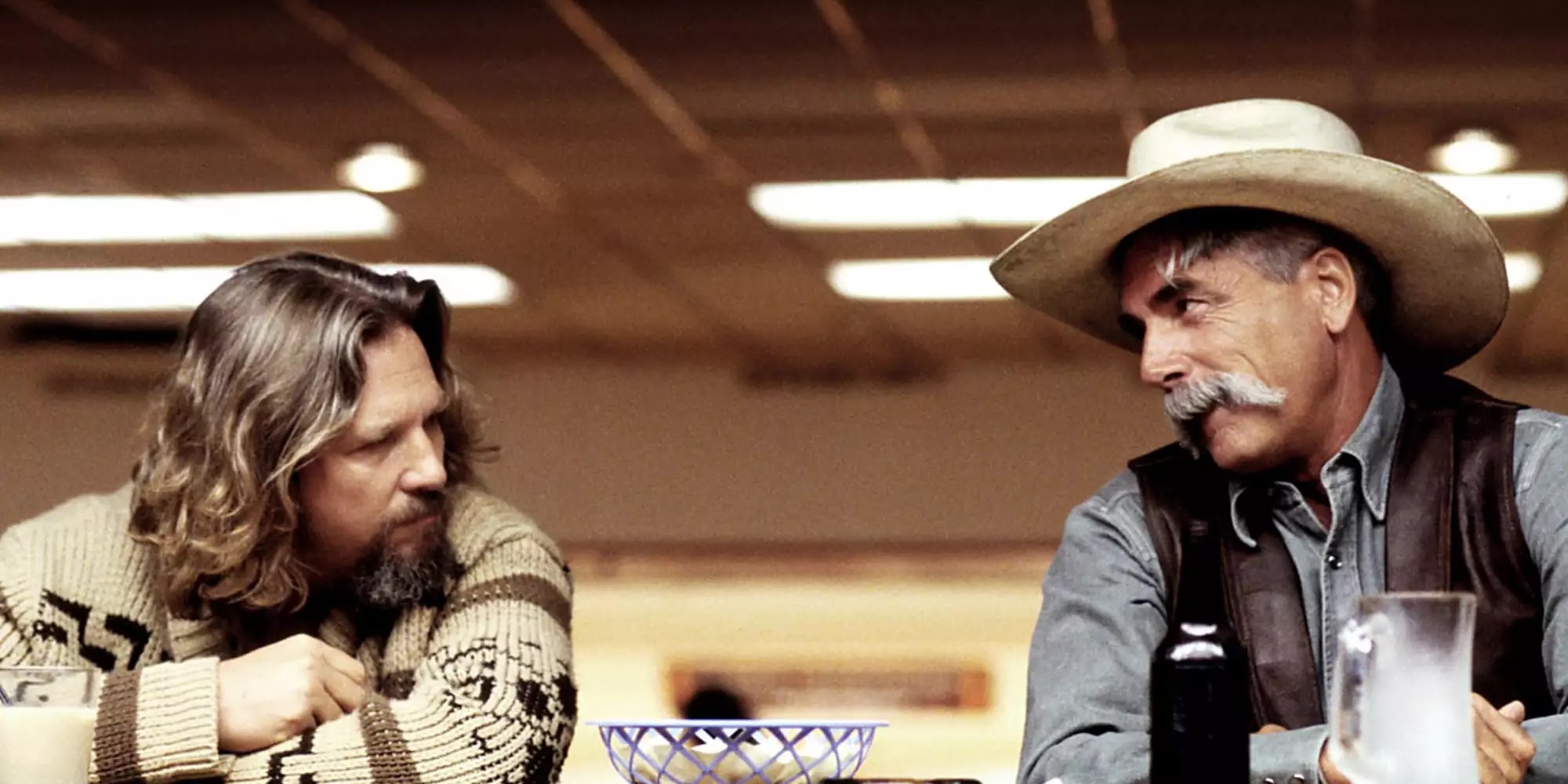
The main character is the Dude (a hilarious performance by Jeff Bridges). He is a stoner, a modern-day tumbleweed, just floating along, but surviving with little resistance against the forces around him. The Stranger (Sam Elliot), with a Texas drawl, narrates this story, which adds an anachronistic touch to the tale. A “dude” was originally the term for a “city slicker,” someone who dressed in a fancy manner and was out of his element on a ranch. So, the Dude would not fit in with cowboys. But he certainly doesn’t dress like a fashionable gentleman. He likes wearing pajamas and a bathrobe, and he’d rather be in bed or just hanging around his apartment relaxing, smoking a joint.  


His chill life is violently interrupted by a couple of goons from pornographer Jackie Treehorn (Ben Gazzara) who burst into his apartment and start banging things up, demanding that Jeffrey Lebowski (the Dude’s name) pay money that is owed by his wife, Bunny. Here is where the film noir aspect comes in. The Coens said that they wanted a comic variation on writer Raymond Chandler (movie titles like The Big Sleep and The Big Heat influence the title of this film). The Dude tries to explain that they have the wrong man because they think he is rich. These guys are not too bright because just looking at the Dude and where he lives would show he is not wealthy. The Dude demonstrates he is a witty guy even under duress, like a film noir detective. When one of the thugs keeps pushing his head into the toilet asking where is the money, the Dude says, “it’s down there somewhere, let me take another look.” When one of the thugs picks up a bowling ball and asks what it is, the Dude replies, “obviously you’re not a golfer.” When the Dude comes out with these occasional cool lines he mirrors the stylized dialogue of a Noir story. Before the henchmen realize the mistaken identity problem, one pees on the Dude’s Oriental rug. The Dude laments this action because, as is repeated in the story, the rug “really tied the room together.” Despite his foggy life, the Dude still wants to have focus where the strands of what’s happening are “tied … together.”

 During the movie, we get some of the Dude’s backstory. He mentions that when he was in college, he “occupied” buildings. He was a protester against “the establishment,” someone associated with the 1960’s radical group Students for a Democratic Society, known as the SDS. He later wants to be represented by lawyers William Kunstler and Ron Kuby who defended radical leaders during that protest era. His activist ways eventually changed into his current go-with-the-flow lifestyle, possibly because his past ventures didn’t generate the change he hoped for.


He discovers who is the Big Lebowski (David Huddleston), visits him, and asks for reimbursement for his rug since he is the innocent victim as a result of the borrowing excess of Bunny, the “trophy wife.” Dude can’t escape how the current political scene is dominated by Republicans. Lebowski’s servile aide, Brandt (Philip Seymour Hoffman), shows pictures of Lebowski’s connection to people like Nancy Reagan. Dude even repeats President George W. Bush’s statement on television that Saddam Hussein’s “aggression will not stand.” The Dude, however, is talking about his rug, and it is ironic that he is quoting a Republican leader. There is a framed mirror on Lebowski’s wall that has the tag of Time Magazine’s Person of the Year, which turns out to be one’s own reflection. Probably Lebowski sees himself that way when he views his own face. Here we see the Dude looking at himself. It is a complicated image. Is the Dude a doppelganger of his rich self? Has he ironically become a member of the Republican collage? We also see a picture of Richard Nixon bowling in the Dude’s apartment. Has he come to identify with his old nemesis because the Dude has taken up bowling? Or, as The Stranger asks, is the Dude “the man for his place and time,” and currently represents the time of the film, the early 1990’s, and deserves to be on the cover of Time?

 Lebowski is elderly and paralyzed in a wheelchair. Does his disabled status reflect the current dysfunctional state of the union? He states that the “bums” like the Dude “lost” the battle to subvert the status quo. But we find out later from his daughter, Maude (Julianne Moore), that her father’s wealth comes from her mother, and Maude manages the money. Lebowski lectures the Dude about how he is a self-made man, but he is the phony who is the “bum.” As one of our class’s instructors noted, Lebowski uses the word “achieve” a great deal. For this rich guy, achievement is measured in wealth, not what one does in life irrespective of accumulated funds. The Dude walks out and steals one of the rugs in the mansion as reimbursement for his loss, exercising his own version of ethics.


The Dude finds refuge from the world at the bowling alley with his friends Walter (John Goodman) and Donny (Steve Buscemi). As stated in the class, here is a place where these men can “achieve,” by bowling a good game and possibly winning a tournament. Interestingly, we never see the Dude bowl. Does that mean he can’t escape past failures? The Dude is not laid back when it comes to Walter, who infuriates him with his aggressive actions. The Coens said they saw these two acting like a turbulent married couple. Walter makes everything about his past as a soldier in Vietnam. He is a stickler for rules, which majorly contrasts with the easy-going Dude. It may be that the chaos of America’s failure in the Vietnam War causes Walter to overreact in post-war life as he can searches for order after chaos. For instance, Walter pulls out a gun to threaten a bowler who crosses the foul line but still wants his roll to count. The Dude sides with the bowler and wants to relax the rules. Walter also has converted to Judaism, and wants to comply with its religious dictates.


Lebowski hires the Dude to deliver a million dollars in ransom for the supposed kidnapping of wife Bunny. He says he thinks the culprits are the same guys who broke into the Dude's place, so the Dude can confirm they are the culprits. Despite his unfocused mind, the Dude channels the film noir private eye and concludes that there is something not right about what appears to be a crime. He knows Bunny needs money and he believes she is faking her own kidnapping to extract a ransom.

 Walter complicates the money drop by going along for the ride and substitutes his dirty underwear in a suitcase for the money bag. He wants to confront the crooks. The whole episode is like the Keystone Cops, ending with the Dude crashing his car which eventually gets stolen out of the bowling alley parking lot, with the money suitcase in it. Lebowski says he heard from the kidnappers that they didn’t receive the ransom, and Lebowski points the finger at the Dude, who is now in trouble with the kidnappers.


However, it is not Treehorn’s men who come to threaten the Dude, but a bunch of “nihilists,” including Karl Hungus (Peter Stomare), a porn star who worked with Bunny in adult films (his work name indicates his attribute for the job). These guys want the ransom money from the Dude. They drop a marmot in the Dude’s bathtub as they threaten to cut off his “Johnson.” One of the film’s main themes centers on threatened masculinity. There is the Bob Dylan song that talks about “the man in me.” After Bunny is kidnapped, Lebowski muses about what is the right thing a man should do. When the Dude has his dream sequence, he sees himself being pursued by these nihilists coming at him with castration-threatening enlarged scissors. A huge bowling ball comes at him, ready to squash him. The story implies the use of the bowing pins and balls as symbols of male genitalia. Walter plays the role of the aggressive male, perhaps to compensate for his impotence in not being able to save his fellow soldiers in Vietnam. The Dude may also be suffering from testosterone failure in his inability to bring about change in society in his past. The loss of masculinity is also referred to by the passing of the cowboy era, including the fact that the fictional writer of the TV series Branded is in an iron lung when the Dude and Walter search for the missing money. Even the cab driver tells a story about a woman “bustin’ … agates.”


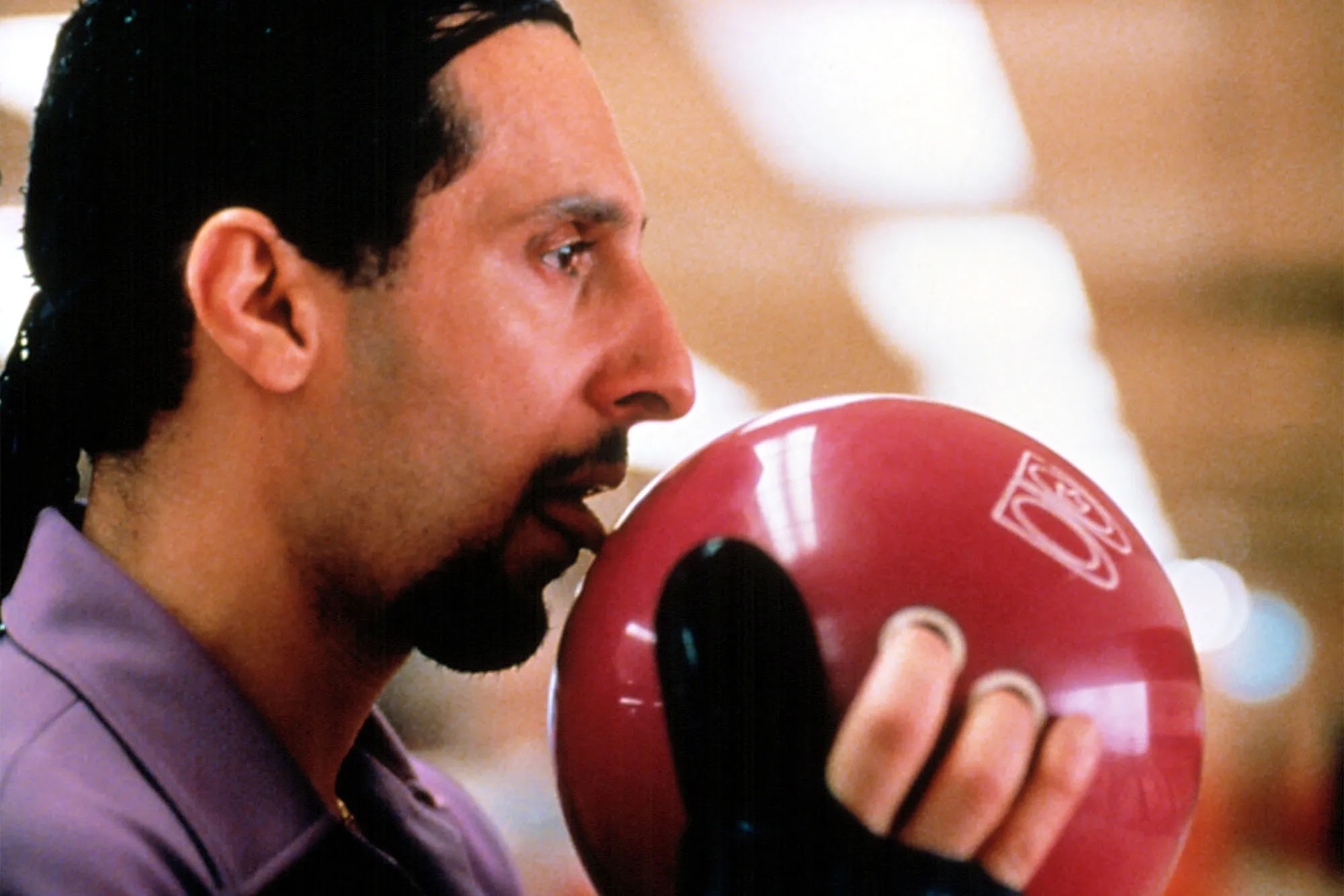
The ironically named character of Jesus (John Turturro), a fellow bowler, is a demonic figure who invades the sanctuary of achievement of these men whose masculinity is on the line. He has partially sheer socks and a painted baby fingernail, which depicts him as more traditionally effeminate than male (Bunny paints her toenails), which may suggest why he overcompensates with his overly machismo posturing. He licks his bowling ball which could be symbolic of a testicle. Walter tells the Dude that Jesus is a pederast, with a record of exposing himself to an eight-year-old child. There are several references to anal intercourse, including Jesus saying he'll take Walter's gun, stick it up his butt and pull the trigger. Our discussion noted that the Coens deflate Jesus’s character by making him look ridiculous in his exaggerated boasting. (As one of our instructors rightly noted, the comical allusions to homophobia probably wouldn’t make it into a film today as being politically incorrect).


Maude takes back the rug that the Dude stole from the Lebowski mansion, which he subsequently was allowed to keep. The Dude is on a search for an object, similar to the hunt for the Maltese Falcon. Maude invites the Dude to her artist’s studio where she tells him that the rug was a gift from her mother, so her father had no right to let the Dude have it. Maude says that those so obsessed just with sex do not love, and she puts Bunny is this category. So, there is a distinction drawn here between proving sexuality and the ability to show true emotion in the form of love. She shows the beginning of a porno film that has Bunny in it with Hungus. The film has Hungus as a cable guy visiting the scantily clad Bunny. The Dude delivers one of his funnier lines when Maude says one can imagine what happens next in the film, and the Dude says, “He fixes the cable?” It is here that Maude mentions her father’s lack of personal funds and that he embezzled a million dollars from a charity for children to get the ransom.


Treehorn wants his money. He drugs Dude when he doesn't get the right info from him, which gets the Dude in trouble with cops so Treehorn can toss the Dude’s place to look for the cash. In film noir movies the private eye usually gets knocked out. As one of our instructors noted, the Coens fill the blackouts with dreams. The Dude's dream here is like his carpet because it ties the story together. Many of the images already shown in the movie appear here. For example, there are the bowling pins and balls, and the outfit that Hungus wears in the porno (there are numerous other examples on IMDb). The Dude is more of a swaggering male here, dancing suggestively in a Busby Berkeley inspired erotic musical called Gutterballs. He drifts between the legs of the short-skirted dancers, looking upwards. However, there are then the scissors that undermine this macho wish-fulfillment.

The Dude deduces that Lebowski didn’t care what happened to Bunny, and actually wanted to get rid of her because of her gold-digger ways. So, the suitcase he gave them didn’t contain any money and Lebowski was keeping the cash for himself. The twisty noir aspect of the story continues when Bunny shows up drunk, crashing her car into the Lebowski fountain. (There are several car accidents in the film, suggesting how chaos upends order or calmness). She wasn’t kidnapped and was just on a holiday in Palm Springs which she didn’t tell anybody about. The nihilists just used her absence to try to extort money. The Dude confronts Lebowski, correctly concluding that the old man was setting the Dude up as the patsy for the missing money.


In a comical confrontation with the nihilists, Walter gets to do battle one more time and helps defeat the fake kidnappers. But, sadly the innocent Donny has a heart attack in the middle of the confrontation, and dies. There was a foreshadowing of this event, as IMDb points out, since he always threw strikes until just before his demise. There is a humorous burial as Walter allows Donny’s ashes, carried in a coffee can, to blow all over the Dude when Walter attempts to toss them into the ocean.

At the bowling alley, the Dude meets up with the Stranger, and issues his famous line about how, despite everything, “the Dude abides.” The Stranger, addressing the audience, says, “the whole durned human comedy keeps perpetuatin’ itself down through the generations.” IMDb notes that the word “abides” in the script may come from the Bible’s Ecclesiastes, which reads: “One generation passes away, and another generation comes: but the Earth abides forever.” The Dude had sex with Maude, and the Stranger says that the Dude will become a father. Despite all the craziness in the world, life still goes on.

The next film is The Accidental Tourist.

Sunday, July 3, 2022

Night and the City

 SPOILER ALERT! The plot will be discussed!

The first shot of Night and the City (1950), directed by Jules Dassin, is, of the London Tower Bridge. It is nighttime and we see only the silhouettes of people, as if just the dark sides of individuals exist here. The opening voice-over announces, “The night is tonight, tomorrow night, or any other night. The city is London.” The joining of continual darkness and the setting of a city epitomizes elements of film noir, where the underside of humanity thrives (although Dassin, in a 2004 interview, said he didn’t know about film noir elements when he made the movie).


The first scene after the credits starts with an overhead shot showing a person running, trying to escape from danger, which is always present in this world. The image of “running” and the repetition of the word becomes a motif in the film. (Dassin said producer Darryl F. Zanuck warned him to leave the country because he would be targeted by the House Un-American Activities Committee and its “blacklist” of alleged Communist sympathizers, so he fled to London. That running away had its influence on the film).  The fleeing man is Harry Fabian (Richard Widmark). He runs through narrow, twisting alleys and streets. The impression is one of a maze, a puzzle that is meant to thwart a solution.


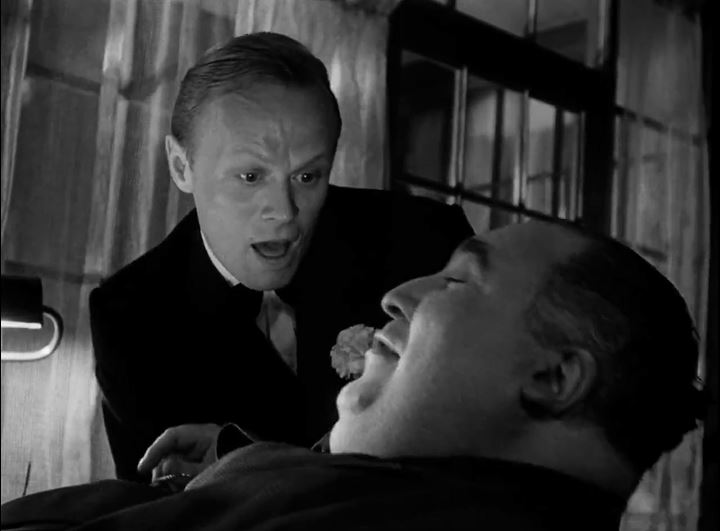
Harry’s pursuer follows him to his flat and stays outside. Harry places a flower in his lapel that he dropped on the street. It’s as if he is trying to clean up for appearance’s sake the dirty part of himself. He enters the flat and calls for his girlfriend, Mary Bristol (Gene Tierney). (Zanuck, unlike some of the characters in the story, showed compassion by wanting to help Gene Tierney who was suicidal after a disastrous love affair. He wanted her cast in the movie, according to Dassin). When she doesn’t answer, he picks up her purse. She then surprises him, saying there isn’t money there. We immediately realize that she is aware of his seedy nature, but, contrarily, still is with him, showing how illogical relationships can be. His first response is anger, and his face is ugly as he accuses Mary of spying on him, as if she is the one doing something wrong, not him. He then quickly switches to a charming smile and tries to cover up his transgression by saying he was just looking for a cigarette. It’s a lame excuse since there is a whole glass full of smokes next to the purse.

She asks who he was running from now, and he acts like that doesn’t happen to him, although we know otherwise. She was worried that he was the victim of foul play since he was gone for three days. He says he was away trying to become a partner in a greyhound racing track operation. She knows he wants her money for the investment. She says they have been through this routine “a thousand times.” It appears that Harry is always looking for a get-rich-quick scheme at the expense of others to satisfy his selfish wants. In contrast to Harry’s pie-in-the-sky activities, she is working hard at a bar to make a decent living. She holds up a happy picture of the two of them in a boat. She describes them as if they were strangers, good people who wanted to lead “decent” lives. It’s as if they have left that part of themselves behind, and what’s left are just empty shells of their former selves. However, the boat they are in is still an object of movement, suggesting the hope for stability was an empty dream. His response to her words is, “I just want to be somebody,” a self-centered statement given that she was talking about their life together.

Mary knows Harry is hiding from Phillip Nosseross (Francis L. Sullivan) and she sees the man Nosseross sent to follow Harry at a phone booth below the window of their place. (“Nosseross” sounds a bit like “rhinoceros,” a large, dangerous, charging animal, something one would run to escape from. Harry says that Nosseross is heavy, equating him with the large creature).

Harry needs five pounds to discharge his debt to Nosseross. While Mary goes out of the flat to see if she can get some money from a neighbor, Harry appears sad as he looks at the photo of the two of them that Mary held, and probably sees something of his past self in that picture. Mary goes to the flat of Adam Dunn (Hugh Marlowe) who has burned his spaghetti and Mary helps douse the flame. He is a designer, and he may have designs on Mary since he says he wishes that they had different schedules. He works during the day (which probably means he is not a creature of the night, like Harry). Does the fire show that he has the “hots” for her, and only she can douse his passion? She works at night at Nosseross’s club, not because she wants to go to the dark side, but has been dragged there by Harry.

Mary says it’s difficult to resist Harry’s charismatic imagination and zeal for his projects. Adam says, “Harry is an artist without an art.” He explains that Harry wants to express himself but doesn’t have the “means,” the specific skill or outlet, to put his imagination into concrete form. Adam says that can “make a man very unhappy,” creating a frustration that may be “dangerous.” He is suggesting that the search to make Harry’s dreams a reality can lead him to the criminal underside of society. In contrast, Adam is artistic in his designs of objects, including figurines and a replica of a bank that holds his money and plays music. Adam has been able to focus his imaginative skills in a creative and not destructive way.

Harry goes to Nosseross’s club, the Silver Fox, where his wife, Helen (Googie Withers), firmly sets the rules for the young women workers as to how to get the male customers to spend more money. The attractive women are the pleasant exterior which hides the mercenary practices in which they are engaged. Nosseross also assigns Harry to engage in a deceptive practice of drumming up business for his club. Harry gets information about a trio of successful American businessmen at a venue. He acts like he found a lost wallet, which is really his, and turns it over to one of the employees there, who is on the take. This action makes it appear (the operative word) that Harry is an honest fellow. He then pretends that he knows an acquaintance of the three men, and thus bonds with the men. It is then he suggests they go to a “private” club for some entertainment. Harry retrieves his wallet just before the three gentlemen depart for Nosseross’s club.

Harry goes to a wrestling match to hustle more customers. However, a bouncer recognizes him and prepares to toss Harry out. Harry says it’s a public place, and the bouncer says, “so is the morgue,” a darkly witty line that suggests that is where Harry may end up. There is an outburst by a man named Gregorius (Stanislaus Zbyszko), a once world-famous wrestler who is there with a young wrestler named Nikolas (Ken Richmond). He yells at his son, Kristo (Herbert Lom), for bringing them to an inferior match. Gregorius blames his son for the extent to which wrestling has declined.

Harry sees a financial opportunity in Gregorius’s displeasure, and stages an outburst where he demands his money back for such a terrible “spectacle” as Gregorius and Nikolas pass by. His rant and some subsequent flattery endear him to the ex-champion. He gets them to have a drink with him. Meanwhile, at the Silver Fox, Nosseross gives a silver fox fur to his wife and asks for a kiss in return. Helen is looking away from him and displays a look of revulsion, but she allows the kiss. The large Nosseross grabs her and is rough with her as she breaks away from him. His base nature here rises and transforms his sophisticated surface.

Harry bursts in and says he can control professional wrestling in London, but Nosseross loudly laughs at him, and Helen wants Harry thrown out. Harry is angry at the dismissive way Nosseross treats him, and says he will get 200 pounds on the condition Nosseross will match it for the investment. Harry goes to the underbelly of society seeking funds from beggars, forgers, and those operating in the black market since he resides in the illegitimate area of finance.

There is a scene where Nosseross and Mary do not know where their romantic partners are. Harry is at a bar and Helen finds him there. Harry is angry at her for forcing him to put up the 200 pounds before Nosseross will commit to supplying some cash. Helen kisses Harry, and we realize there was an intimate connection between the two, and that is why Harry feels betrayed by Helen’s prior statements. However, she has the 200 pounds which causes Harry to be elated. But, she wants him to get the other 200 from her husband to get her a license for her own nightclub which she bought unknown to Nosseross. She can’t tolerate her husband anymore and needs to break away. She says she knows all about running a nightclub since she currently does all the work. She wants Harry to scam her husband and Gregorius. He says he’ll go along with her schemes, but we wonder if he will. So, there is deception upon deception here.


Fergus Chilk (Aubrey Dexter), Kristo’s lawyer, along with a henchman, pay a visit to Nosseross. The attorney tells the club owner that Kristo is “disturbed” by Harry’s attempt to be a rival wrestling promotor, and Chilk wants to meet with Harry. (Nosseross’s office looks like a cage, with bars for its ceiling. The design conveys a feeling of entrapment, as if those dwelling in the darkness of the city create paths that lead to confinement. Similar images are in Alfred Hitchcock’s The Birds, where people, instead of the winged creatures, are caged. Think of Tippi Hedrin in the phone booth, the car, the attic, etc.).

When Helen returns, her husband says he wants to sell the club, and that he has more wealth than she knows. He wants them to travel and enjoy life. But, escape from the world he has attached himself to is not possible. He’s a parasite feeding off a dark part of society, and he can’t leave the host. Helen latched onto him and doesn’t want to leave, since she wants to draw what she can from his nefarious enterprises to start her own. Harry shows up with the money and expects Nosseross to match the sum and they will be wrestling promotion partners. But Nosseross is suspicious as to how Harry attained the cash, and finds that some of his stash is missing. He concludes that Harry and Helen are conspiring against him. Nosseross gives Harry the money, but says he is to be a “silent partner,” and wants the business only in Harry’s name. He doesn’t want any evidence that he was competing with the powerful Kristo. Nosseross rips up the lawyer’s card as he talks to Harry. Nosseross is preventing Kristo’s warning from reaching Harry and is supplying the rope for Harry to hang himself.

It appears that Harry has double-crossed Helen as he has established Fabian Promotions and has his own office and gym for wrestlers to work out. Gregorius and Nikolas are there. He is thrilled to get a desk sign in the mail that announces he is in charge, since feeding his ego has dominated his life. One of Kristo’s wrestlers, The Strangler (Mike Mazurki), shows up to intimidate the men there on behalf of Kristo, but Harry gets him thrown out. However, Kristo shows up in person with his lawyer and tells Harry that he can’t promote matches in England. Kristo rips up Harry’s promotional contract for an upcoming match just like Nosseross ripped up the lawyer’s card that Nosseross was to hand to Harry. The tearing image suggests how there are no ruled to abide by in the world of film noir. However, Kristo thought his father left for Greece and doesn’t know that Gregorius is now Harry’s partner. When Harry reveals this fact, Kristo tells his father that Harry is a swindler. His dad takes no heed of this warning and Kristo tells Harry that if he continues to do business, he better not try and cheat Gregorius. As Harry and Kristo talk, Harry hits a punching bag and Kristo tries to grab hold of it. The action shows the violent interaction present, and the situation is so precarious that even the relationship between father and son takes on sinister connotations.

Harry calls Helen and says that he has her nightclub license, but then tries to dodge a meeting to hand it to her since he is not telling the truth. She is talking to Harry secretly, thinking her husband is asleep (more deception). But Nosseross overhears the conversation, which adds evidence to how Harry and Helen are working against him. Harry pockets the fee from Helen that he says he needs to secure the license, but instead he gives her a forged paper. Everybody here is using everybody else for personal gains.

Despite Nosseross trying to keep his name out of Harry’s business to avoid repercussions, Kristo knows Nosseross’s money is behind Fabian Promotions. Kristo says Harry has promised to conduct wrestling matches in legitimate Greco-Roman fashion. Kristo says Harry will fail from a business standpoint because the public wants showmanship type of wrestling matches. His cynical observation shows how corruption is preferred and prevails in the dark side of life. But economic failure is not enough for Kristo. He wants to defame Harry in Gregorius’s eyes so that Kristo’s father will leave Harry. Nosseross no longer fears Kristo because he openly wants to help him reach this goal.

To do Kristo’s bidding, Nosseross tells Harry that he is pulling out and will not provide extra money for licensing. He says that Greco-Roman wrestling be a failure financially. He says he will only back Harry if he has big names in a match, and suggests booking The Strangler. Harry knows that Gregorius hates The Strangler’s style that panders to the audience’s baser instincts and will leave Harry’s business. Nosseross knows that Harry is only in it for the cash and has no ethics, so Harry promises to set up a match with The Strangler.

Harry attempts to create enough animosity between The Strangler and Gregorius that the latter will agree to a match between The Strangler and Nikolas. At a restaurant he makes The Strangler overhear his remarks about how Gregorius scared The Strangler away at the gym, and that Gregorius demeaned him. The Strangler runs to the gym, threatens Gregorius, and wants to fight right there. Harry passionately tells Gregorius that they should have Nikolas crush The Strangler in the ring and end The Strangler’s cheap form of wrestling that dishonors the sport. (There’s no argument here that Widmark really chews up the scenery in this role). Gregorius agrees. So, Nosseross was right – Harry is a swindler and will lie and manipulate for his own selfish reasons.

Harry goes to Nosseross to supposedly tell him the good news that he has The Strangler signing up for a match that Harry is promoting. Nosseross makes a call to talk to Kristo to Harry’s shock. Nosseross says that he will tell Kristo that Harry stole The Strangler from Kristo. There is now honesty as Nosseross admits that he wants Harry dead because he stole something he paid for. Harry understands that he means Helen, which her husband views only as dehumanized goods. Of course, Helen only married Nosseross so she could inherit his wealth. There is no morality to be seen anywhere. Harry reveals that Gregorius wants the match, so Kristo didn’t put a wedge between his father and Harry. But, Nosseross refuses to give Harry the money to pay The Strangler’s manager for his client’s participation. Without backing, everything Harry planned will fall through. Nosseross calls Harry, “a dead man,” and this conclusion about Harry continues in the story.


Again not caring about the feelings of others, Harry calls Mary to say he’s in trouble to get her out of the flat so he can steal her money to make the wrestling match possible. But Adam sees Harry go into the apartment after Mary leaves and when he runs into Mary tells her that he saw Harry at their building. When she finds him rummaging through her things, she warns him that others are “killing” him. This remark is another reference to declaring Harry as a dead man figuratively and literally in a foreshadowing way.

Harry goes back to the gym and The Strangler is there, drunk, and he taunts Gregorius who is training Nikolas. They begin to fight (the restrictive area of the wrestling ring is another symbol of imprisonment). In an attempt to protect Nikolas, Gregorius tosses him out of the ring, accidentally breaking Nikolas’s wrist. The Strangler’s agent, Mickey Beer (Charles Farrell), says they can’t stop them now because the wrestlers are “like mad bulls.” Civilized rules have been stripped away in this underworld zone and only brutality remains. Gregorius gets The Strangler in a bear hug (more animal imagery) and causes his opponent to temporarily pass out. Kristo arrives and Gregorius says that is what he does to his son’s “clowns.” But the fierce struggle is too much for the older wrestler and he dies. Before that happens he tells Kristo that he should preserve the “art” and “beauty” of Greco-Roman wrestling. Gregorius comes to represent the lofty accomplishments of ancient cultures that have fallen into decay in the modern world, which is mirrored by his own descendant’s corruption.

Harry doesn’t stick around. Krsito does not seem to blame The Strangler. He most likely sees Harry as using him as a tool in to implement his schemes. Beer confirms this suspicion when he confesses to Kristo that Harry taunted The Strangler by making up antagonizing remarks that he attributed to Gregorius. Harry gave The Strangler booze, adding fuel to his irrational rage. The Strangler hears what Beer says and he sees that Harry manipulated him. Kristo puts a bounty on Harry’s head of 1000 pounds and the word goes out to the denizens of the underworld to hunt Harry (an earlier equivalent of what happens to John Wick).

The Strangler barrels through Nosseross’s china shop club like that mad bull that Beer called him. The image of him wrecking the place is very effective in showing how the dark drives of humans can subvert the attempt to suppress them. The Strangler warns Nosseross that he better not be protecting Harry, and says it was not himself but Harry that killed Gregorius. Harry’s selfish ambitions have caused a domino effect that has destroyed lives.

Helen is packed and tells Nosseross her club permit is now her “birth certificate,” implying she can be reborn into a new life. When she tells her husband that she will partner up with Harry, he doesn’t go into details, but he tells her there is no future with Harry. She says she can control Harry, another instance of how people in the film noir story seek power over others. He tells her she will fail and come crawling back to him. But he does not show anger here; it is more like describing the sad inability to escape the vicious circle which the darkness of the city inflicts upon individuals.

That futility in not being able to break free from this dangerous wheel of fortune is stressed by seeing Harry running again through the rat maze of the city streets, repeating his activity at the beginning of the movie. Harry reaches out to Figler (James Hayter), the leader of the city’s beggars, for help. Harry has not shown caring for others so there is no help for him. Figler is just as deceptive as Harry. Even though he pretends to offer sanctuary for Harry, he calls Kristo with information about Harry, hoping to collect the reward.

As Helen prepares to open her new club a police officer stops by saying he received no word that the establishment was cleared for business. Helen shows him her license and offers him a drink. The officer says he is on duty, but he can have some ginger ale. He remarks that he is a new recruit. He represents innocence that has not been corrupted, at least not yet. When he puts his glass down its condensation blurs the print on the license and he concludes that it may be fraudulent. He says he will have it checked out. A dejected Helen returns to the Silver Fox, trying to renew her prior meal ticket, just as Nosseross predicted. But, Nosseross has committed suicide, death apparently being the only way to escape the festering corruption thriving here. Molly (Ada Reeve), a lowly, older worker at the club, who Helen treated badly earlier, informs her that Nosseross left his estate to her. Perhaps it was Nosseross’s last attempt at to repent for his sins. Helen’s hope of being born into a better life is aborted.

Harry goes to Figler’s place. Harry knows the selfish ways of people, it taking one to know one. When Figler acts too protective of him, assuring Harry it wouldn’t be safe if he should leave, Harry gets suspicious. After Figler receives a cryptic phone call, Harry knows he is being sold out and knocks out Figler and leaves. He winds up at the shack of Anna O’Leary (Maureen Delaney) near the riverfront. He is exhausted and says he has been running his whole life, from “welfare officers, from thugs, my father.” It appears that his whole life has felt like a trap from which he has tried to escape. He says he can’t run anymore, and in this fallen world with no way out, that makes him a dead man walking.

Harry mourns the fact that he was so close to achieving the acclaim he sought, but then “an accident” occurred (the fight between the wrestlers) and “everything fell apart.” The best laid plans, etc. But, Harry set those wheels of chaos in motion. He seems to get some insight into his bad actions, repeating, “The things I did.” He says that he hurt Mary, who loved him.

Mary shows up and Harry can’t even look at her. He is so ashamed, as he says to her, “Don’t be kind to me” when she offers him money to get out of London. Admiring his “brains” and “ambition, she generously tells him, “You could have been anything, anything.” (Her words sound like Marlon Brando’s speech in On the Waterfront,” when he says he could have been a “contender,” instead of a “bum”). However, Harry always chose “the wrong thing.” The implication is that when one goes down certain paths a person can lose one’s moral way.

Harry tells Mary he can sacrifice himself and make it look like she betrayed him so she can collect the 1000 pounds. He is duplicating what Nosseross did, attempting a last act of repentance for his misdeeds. She, being a decent person, tells him goodbye, wanting no part of the blood money. Harry still tries to get her the reward by yelling so that Kristo will believe that Mary deserves the bounty. The Strangler appears and lives up to his name, choking Harry and throwing him into the river, granting Harry’s death wish. Adam arrives with the police who supposedly will arrest The Strangler who again has been treated like a tool used by others.

Kristo observes all this activity standing high up on a bridge, like a demonic god ruling over this fallen place where even those who survive are still tainted by the darkness of the nature of this world.

The Next film is If….

Monday, May 24, 2021

Miller's Crossing

 SPOILER ALERT! The plot will be discussed.


Miller’s Crossing (1990) has the Coen Brothers again delving into the darkness of the film noir genre. The world is corrupt, with politicians on the take as gangsters rule. There is the stylized, sharp dialogue, and a femme fatale. But the Coens, as usual, imprint their own slanted, often humorous, style onto the conventions of this type of story. It is a tale that uses hats, heads, and hearts symbolically to address themes surrounding masculinity versus vulnerability, and intelligence versus emotions.


 The film opens with a shot of a fedora hat blowing in the wind in a forest. In literature, the forest is a hidden place where deeds are done that are outside the laws of the civilized world (think of the movie Deliverance). This image will be revisited during the story as it takes on more meaning. There is a shift to the gangster Johnny Casper (Jon Polito) who is in a struggle for control of the city (unnamed, but may be New York during the 1920’s). Casper has an adviser whom he trusts, Eddie “The Dane” (J. E. Freeman). But, as was noted on this blog concerning the film The Grifters, when laws are made to be broken, one becomes suspicious of everybody. Casper is an ironically morally conflicted character, since, although he flaunts the law, he desires that there should be honor among thieves. So, he tends to contemplate questions involving the correct way to behave. He says, “You double-cross once, where’s it all end? An interesting ethical question.” He and The Dane are talking about Bernie Bernbaum (John Turturro), a grifter who is selling information about the boxing matches that Casper is rigging so he can collect on the prearranged outcomes. Bernie is cutting into Casper’s profits. The angry Casper says, “It’s gettin’ so a businessman can’t expect no return from a fixed fight. Now, if you can’t trust a fix, what can you trust?” If you must rely on “chance,” Casper says, “you’re back with anarchy, right back in the jungle.” He wants to violate society’s rules so he can gain financially, but contradictorily wants prohibitions on anyone else not following established guidelines, even if they are corrupt standards. 


Casper asks the opposing criminal leader, Leo O’Bannon (Albert Finney), to allow him to kill Bernie. This request is troublesome for Leo because he is romantically involved with Bernie’s sister, Verna (Marcia Gay Harden), who is the femme fatale of the story, and most likely has attached herself to Leo to protect her equally scheming brother. Everyone is working an angle in this alternate outlaw realm. Leo refuses the request and after Casper leaves, confers with his confidante, Tom Reagan (Gabriele Byrne), who is the film’s main character. The movie had a working title of “The Bighead,” which was to refer to Tom. He is mostly a thinker and a plotter. Tom is the supreme manipulator among the many schemers in the movie. But his intellect can’t compete with the world of chance (where “anarchy” exists according to Casper) which he keeps trying to beat by gambling. He constantly loses and is in debt to a loan shark. During the course of the film he sustains multiple beatings which shows he can’t always outsmart the “jungle” world Casper is worried about.


 Tom is practical and tells Leo that he should let Casper get rid of Bernie. But Leo, unlike Tom, is ruled by his heart. The next morning Tom wakes up after a night where he lost his hat in a card game. Since hats are worn on the head one of their symbolic meanings in the story refers to brain power. So, when Tom gambles, he loses his money because his mental ability can’t help him beat the odds. His loss of the hat means his intelligence has been defeated. But when it comes to people, Tom is quite adept at planting ideas in the minds of others to sway their behavior. As Adam Nayman points out in his book, The Coen Brothers - This Book Really Ties the Films Together (the subtitle obviously referring to the Dude’s carpet in The Big Lebowski), Tom is described as “the man who walks behind the man and whispers in his ear.” The first shot of him, Nayman points out, has Tom in the background, suggesting he is the “power behind the throne.” 


To support Casper’s paranoia about the proliferation of the double-cross, we learn that Tom is having an affair with Verna. One evening, Leo shows up at Tom’s place and confides that he can’t find Verna. He hired a private detective to track her, a man named “Rug” Daniel. He has that name because he wears a hairpiece. There is a later scene where a boy finds the corpse of Daniel and pulls the wig off of the man. (Was he killed by Verna or Bernie?). Nayman says that head coverings are also symbols of masculinity in the film. So, the fact that Daniel didn’t have real hair and he was killed shows he wasn’t manly enough to survive in this unlawful world. The removal of the wig could imply being scalped, which is a sort of symbolic emasculation. Even though Tom is Leo’s close friend, at that moment while he is visiting Tom and is worried about Verna, she is actually in Tom’s bedroom. It shows how Tom’s loyalty is not what it seems on the surface in this universe which lacks “ethics,” and people keep their motives hidden, like under one’s hat. As Tom says at one point, emphasizing the lack of transparency that is prevalent, “Nobody knows anybody. Not that well.”


Tom finds Leo in a meeting with the corrupted mayor and chief of police. Leo is escalating the conflict with Casper’s organization by informing the city officials about Casper’s illegal clubs so they can shut them down. Tom warns against increasing hostilities and again advises Leo to turn Bernie over to Casper. The snappy film noir dialogue is present here as Tom tells Leo to think about the cost of protecting Bernie. Leo says, “Oh, come on Tommy. You know I don’t like to think.” Tom’s response is, “Yeah. Well, think about whether you should start.” The exchange also contrasts Tom’s “big head” approach with how Leo follows his feelings. 


Casper meets with Tom and suggests he’ll take care of Tom’s gambling debts (he already refused the offer from Leo, showing his independence) so that Tom will work for him. Tom is sarcastic with Casper, who does not like anybody snubbing him, or as he puts it giving him “the high hat.” The use of this term again associates the head covering with masculine hierarchy, and, as Nayman notes, connects to the image of the floating hat in the first scene. Casper has his men beat up Tom, who is saved by the cops raiding the place, courtesy of Leo’s complicity with the police. 


 In retaliation for the raids, Casper sends hitmen to kill Leo at his home. This scene is a terrific action sequence as it shows that the older Leo retains his cool and lethal capability. He is relaxing comfortably in his upstairs bedroom in his pajamas and robe when he notices smoke coming through the floor which is a result of a burning cigarette in the fingers of a dead bodyguard. Leo calmly extinguishes his cigar, puts on his slippers, and then shoots the bedroom invader once in the foot and then in the head, ironically mimicking Casper’s rule to take down the enemy first and then put “one in the brain.” The stress on shooting a bullet in the head again brings up the motif that suggests a symbolic death due to decapitation of one’s manhood. After all, the penis has a “head,” and in the Mafia, “capos” translates to “heads,” which are leaders in that gangster organization. Leo takes the hitman's Thompson machine gun, slides down the roof of the house, and opens fire, killing his assailants. In an over-the-top image Leo shoots a hood in his bedroom, and the man discharges multiple rounds from his automatic weapon as he dies, as if merging the medieval connection of sex and death, as he literally “shoots his load.” Feathers rain down from the blasted pillows, which as Nayman says, joins violence with softness in Leo’s character. After Leo fires at a retreating car driven by one of the thugs, it explodes in flames, accentuating Leo’s success at self-defense, which he celebrates by pulling out his cigar (another phallic symbol) to show his triumphant manliness. 


 After this attack, Tom again presses Leo to give up Bernie because he knows there will be further attempts on Leo’s life. When Tom realizes he can’t convince Leo to change his mind, he puts a plan into action which at this moment isn’t obvious to the audience. He admits that he and Verna are having an affair. The outraged Leo follows Tom out of his office and proceeds to punch him in the face - Tom’s head getting a beating, which again shows Leo’s high testosterone potency. Since he’s breaking ties with Tom, he says it’s “the kiss off.” Even as he is saying goodbye to Tom, the expression suggests a loving relationship that has gone bad. Nayman says that if Miller’s Crossing is a love story, it's between “Tom and Leo.” 


Tom meets with Casper again because as we eventually learn Tom’s public break with Leo allows him to convincingly accept Casper’s previous offer to join his side of the fight. This way, Tom can undermine Leo’s enemy. But The Dane doesn’t trust Tom, and we get more of those tough film noir exchanges. When The Dane asks Tom how he got a “fat lip,” which was courtesy of the loan shark’s men, Tom’s response is, “Old war wound. Acts up around morons.” There is more homosexual subtext involving The Dane and Mink (Steve Buscemi), Casper’s bookie, who is double-crossing (no “ethics” again) Casper by giving Bernie information on the fixed fights. Also, Mink may be intimately involved with Bernie. In any event, Casper wants Tom to prove his loyalty by telling him where to find Bernie and then killing him.


After acquiring Bernie, Tom rides out with Bernie and two of Casper’s thugs, Frankie (Mike Starr) and Tic-Tac (Al Mancini) to Miller’s Crossing, a forest, divorced from society, that we saw in the initial image of the film, where illegal actions can take place. Frankie tells Tom to take Bernie out into the woods and to carry out Casper’s two-shot assassination rule. As Nayman notes, Tom has his hat on, a sign of masculine power, and Bernie’s head is uncovered, indicating his weakness. Bernie is on his knees pleading for his life, asking Tom to look inside his “heart.” Tom fires two shots, deliberately missing Bernie, and tells him to leave town. He is Verna’s brother after all, and if he is gone, Tom probably figures Verna will stop using Leo. Tom returns to the car and tells Frankie and Tic-Tac that Bernie is dead.


Casper tells Tom that Mink is missing and The Dane goes to Verna’s place to find out where Leo is. He shoots two of Leo’s men who show up after finding out Leo’s location from one of them. The Dane tells Verna that she doesn’t have to concern herself with Tom anymore since Tom killed Bernie. So, Verna believes she has been betrayed. The very much alive Bernie sneaks into Tom’s apartment instead of running away as Tom told him to do. Bernie gets satisfaction out of saying he fooled Tom with his tearful plea for mercy. Bernie figures he has leverage over Tom who he wants to kill Casper. Otherwise, Bernie will divulge that Tom let him go, and Casper would then kill Tom for not killing Bernie. We now get how Tom acts in a situation that is similar to what happened to Leo. Tom was smoking a cigar, as did Leo, before someone entered his place. Both men have their homes invaded. As Bernie leaves, Tom slips out his window, as did Leo. But Tom’s attempt to ambush Bernie is unsuccessful as Bernie trips him and kicks him in the face. Nayman notes that Leo wore slippers when defending his home, but Tom is barefoot, implying Tom “can’t fill Leo’s shoes.”


The Dane is skeptical that Tom killed Bernie when he finds out that Frankie and Tic-Tac didn’t witness the shooting. He obviously wants Bernie dead for personal reasons given his jealousy concerning Mink. He forces Tom to go back to Miller’s Crossing to make sure there is a body there, because if there isn’t one, The Dane says that Tom’s corpse will do. As they walk into the woods, Tom’s fear gets the better of him. He becomes faint and he vomits. He loses his hat in this scene which goes along with the motif that an uncovered head is a sign of male weakness or impending doom. Tom gets a reprieve because Casper’s men do find a body, but the man was shot in the face. He is dressed like Bernie so The Dane assumes it is Verna’s brother. However, we discover later that Bernie shot Mink and left him there to make it look as if Tom killed Bernie. As Nayman stresses, there are many duplications of scenes in this film. As was noted, there are the home invasions of Leo and Tom. Here we have two scenes set at Miller’s Crossing. There are the Tom-Leo-Verna and The Dane-Bernie-Mink love triangles. The scene where Leo has a meeting with the city’s on-the-take officials is repeated with Casper in control. Nayman says that this repetitiveness points to all the double-crosses that take place in this lawless underworld that exists below the social appearance of legality.


 There is an earlier scene between Tom and Verna that also involves the hat symbolism. Tom says he had a dream that the wind blew his hat away. Perhaps the opening shot was a dramatization of Tom’s dream. Verna tries to psychoanalyze him, saying he probably chased the hat and when he caught it, “it changed into something else, something wonderful.” Tom is dismissive of her interpretation, and says, “It stayed a hat and I didn’t chase it.” He then adds, “Nothing more foolish than a man chasin’ his hat.” In spite of himself, Tom is revealing his own insecurities concerning his manhood by way of the hat symbolism in the film. As Nayman points out, Tom’s Irish accent makes “hat” sound like “heart,” and that sets up a metaphorical “dichotomy” between Tom’s brainy side versus his emotional one. He cares about Leo and he let Bernie live. Verna says to him, “Admit it isn’t all cool calculation with you … that you’ve got a heart - even if it’s small and feeble and you can’t remember the last time you used it.” But she knows how his cold side can take over when she says to him, “I’ve never met anyone who made being a son-of-a-bitch such a point of pride.” 


 Tom uses an ex-boxer, Drop Johnson (Mario Todisco), who Bernie was placing bets with, as a go-between to contact Bernie. When he gets in touch with Bernie he sets up a meeting at Tom’s apartment. At Casper’s house, Tom acts as if the dead Mink, who double-crossed Casper by divulging the fixed fights, is still alive and will be at Tom’s place at the same time Tom told Bernie to show up. The Dane and Mink were very close and Tom exploits that closeness to undermine The Dane. The Dane found out from Drop Johnson that Bernie is still alive and he wants to kill Tom. But, Casper slams him with a fireplace shovel, and repeats his slogan, “Always put one in the brain,” as he shoots The Dane in the head. As Nayman says, Tom figuratively “put one in the brain” of Casper, planting the idea that The Dane helped Mink double-cross Casper. As was said earlier, Tom is the fellow who “walks behind the man and whispers in his ear.”


Casper says he will go to Tom’s place and kill Mink himself. Tom walks to his apartment and allows his plan to play out. He knows that there will be a confrontation between Bernie and the surprised Casper who thought he was going after Mink. He hears shots and finds Casper dead on the stairs since Bernie killed him. Tom takes money out of Casper’s wallet and asks Bernie to give him his gun so they can frame The Dane. But, after he has the pistol, he says The Dane is dead, and Bernie will take the blame. Tom points Casper’s gun at Bernie who, yes, duplicates his earlier performance, asking Tom again to “Look in your heart.” But, Tom wanted Bernie gone before to ease tensions between the warring factions and his response this time is, “What heart?” He shoots Bernie and makes it appear as if Casper and Bernie killed each other. Tom also uses Casper’s cash to pay off his gambling debts. 


 At Bernie’s burial, Verna now knows for sure that Tom killed her brother, and she is hostile and drives off leaving the two men to walk back, stressing that the love story is between these two men. Leo acknowledges to Tom what a “smart play” Tom concocted to protect Leo’s interests. Even though he is going to marry Verna, Leo is the one with the “heart,” since he is willing to “forgive'' Tom concerning his affair with Verna. Nayman says the “queer subtext” appears as Leo tells Tom, “I need you.” But Tom says he didn’t ask for forgiveness and he doesn’t want it, and refuses to go back to work for Leo. Leo looks like a scorned lover as he walks off angry. The last shot is a zoom in on Tom as he tugs on the rim of his hat. He has his virility, but his refusal to allow himself to be open to affection, which carries with it being emotionally vulnerable, means he must go it alone.


The next film is A Hard Day’s Night.