Showing posts with label survival. Show all posts

Sunday, August 25, 2019

The Road


SPOILER ALERT! The plot will be discussed.


The Road is based on a Cormac McCarthy novel. He paints bleak pictures of what’s left of benign humanity struggling to exist in a world in decline, as he did in No Country for Old Men. The first shot here is of beautiful flowers, trees and the sky, filled with brightness and colors. The Man (Viggo Mortensen) and the Woman (Charlize Theron) look happy, accompanied by a horse, which stresses what has been lost as there is then a jump forward in time. (Only one person has a name in this story to show how individuality has been stripped away, and people are reduced to their essential roles.) The brightness and color turns into the darkness of the nighttime with ominous fires glowing in the background. There are frantic voices in the distance. The Man starts to fill the bathtub, not to enjoy getting washed, but to store water, which shows how life’s priorities have altered. (Water is also used as a symbol for actual and symbolic cleansing in the movie)
The Man then wakes up as he had a dream of what happened in the past. He now looks scruffy and he is bundled up in tattered clothes next to a sleeping boy (Kodi Smit-McPhee), his son, in a cave. They are next to a waterfall, but the skies are gray and gloomy, and the landscape looks barren and ravaged, with stripped, fallen trees and no vegetation. The man reassures his boy that the noise they hear is just another earthquake.
We get inside the father’s head periodically as he provides narration in a slow, elegiac voice. He says the clocks stopped at 1:17, and there was “a long sheer of bright light, then a series of low concussions.” So, we are in a post-apocalyptic world. His description can imply that there was a nuclear event, or something like a meteor hit the planet. It could also have been the culmination of some environmental event. The man thinks it’s October, but he’s not sure, because there are no changes in the seasons anymore, and he says he hasn’t “kept a calendar for years,” which lets us know that things have been awful for a long time. He says each day is grayer, and it is getting colder, “as the world slowly dies.” He goes on to say that “No animals have survived, and all the crops are long gone.” If there is no future source for food the only option left is to scavenge for the little there is left to eat. What we are left with is the absence of hope for the future, not only for individuals, but for civilization in general.
What we see is a world that is a graveyard of its former self, littered with the rotted corpses of buildings and cars. The man says, “the roads are peopled by refugees towing carts,” as if today’s homeless people were a foreshadowing of what we all would become in the future. He also says there are “gangs carrying weapons,” as life has degenerated into a survival of the meanest. There are signs of a hellish madness taking hold, as he reports having heard “deranged chanting.”  There are ominous religious messages written on road billboards, literal and metaphorical “signs” of what is happening. The man says there has been cannibalism, which he said is the great fear, suggesting that it poses the main reason for killing others. Everything is reduced to being focused on the basics, such as getting food, avoiding the cold, and finding shoes since they have to keep walking to search for what they need to survive.


He tries to tell his son stories of “courage and justice,” using them as myths that encourage the urge to continue. He says the boy is his “warrant,” which suggests that it is a command issued by God to carry out fatherly duty. He says of his son, “if he is not the word of God, then God never spoke.” All of the man’s purpose is focused on taking care of his boy, or else there is nothing for him to live for, or to believe in. As he reads story books to his son there are shadows on their sleeping tent which appear like paintings on a prehistoric cave wall, as if the world has reversed its evolutionary progress.
They wake to forest fires, a hellish inferno that forces them to push on. They go to a barn, but they can’t find food there. They see family members that committed suicide by hanging. The boy asks why did they kill themselves, but the dad says his son knows why. The next scene is very dark, showing that suicide is the measure that must be considered if they want to prevent suffering in the end. The father shows that his gun contains a bullet for each of them. He demonstrates how to put the gun in the mouth and shoot upwards. He has spoken of this alternative before given the constant threat of either a gruesome or lingering death, but the boy is still shaken by the possibility.

There is a flashback to when the man’s wife was still alive, and pregnant. But she is despondent, crying out “what kind of life is this” in which to bring a child. So the boy has only known this dying, brutal world. The father and his son were sleeping in a car, but they hear a truck coming and hide in the woods as the truck overheats and the men riding in it stop. One of the gang members (Garret Dillahunt) goes off to urinate, but sees the two hiding. The father says he will kill the gang member if he says anything. The man thinks the father won’t pull the trigger and has never killed anyone. The gang member acts like they have food, but the father suspects not, and probably thinks they are cannibals. When the father is diverted by some noise from the truck, the gang member grabs the boy and puts a knife to his neck. The father shoots the man, but the boy is in shock and has blood on him. His fatherly dedication is evident as he picks up and carries his son away from the men. As they hide, he does hope that the boy will be able to pull that trigger if it comes to it. He later returns to the scene of where he shot the man and finds him decapitated, confirming his belief that the roving gang practiced cannibalism.
In another flashback, the man’s angry, dejected wife says they should not have waited until they only had two bullets. They should have killed themselves, because she believes, with all laws and decency no longer in force, that others will come to rape her and the boy, and then kill all three of them for food. He keeps saying he will do whatever it takes, but she doesn’t believe there is anything to be done. She is furious at him and says she should empty the bullets in herself and leave him with no option. She says there isn’t anything to talk about, and that her heart “was ripped from me the night he was born.” We have an upside-down world where hope for the future at the time of the birth of a child is replaced by despair due to the horror of the present. He says they will survive, but she counters with, “I don’t want to just survive.” The movie offers various ways to react to such a dire situation. In a possible dark reference to the Robert Frost poem, the ‘road” traveled on may be one of basic survival, another may be to try to hold onto the old ways as long as possible, and another might be to turn to suicide, to escape the inevitable, impending suffering and death that they all will face. The mother asks that she take their son with her. He says that she is crazy, but she points out that other families have chosen that option. She later bathes her son in an act that shows a yearning for a civilized world, but also symbolically represents a baptism to restore the innocence of a pre-fallen time. (The father’s washing of his son after he is bathed in the gang member’s blood also emphasizes the attempt to cleanse humankind’s sins).
In the present, the father says that it was necessary to shoot the gang member since there aren’t many good guys left. He says they have to keep carrying the “fire,” by which he means “the fire inside you.” The boy asks if they are the good guys, which the father says they are and always will be, implying that they will continue to carry that “light” which represents civilized humanity. The man brings the boy a treat, an unopened soda bottle, a great gift given the circumstances. But they are still hungry. They are heading south, for the coast. The boy still mentions his mother, but the father says they have to stop thinking about her, probably because he knows that the grief will just make them weak. But, conversely, it is also a part of the humanity he says they should hold onto. They are at a crossroads between retaining what makes them the “good guys” and letting those attributes go.
Despite what he preaches, the man can’t stop thinking about his wife. There is a flashback of her playing the piano, which stresses how music, and the arts in general, are elements that comprise a civilized society, and which point to what the wife meant by saying she didn’t want to “just survive.” The father stands on a bridge, representative of his being caught between letting the memory of his wife go and staying attached. He has a photograph of her and throws it off the bridge in a symbolic attempt to move on without her haunting him. There is a flashback of him pleading that she stay for one more night. She looks dead in her soul, and only says that they he and their son should go south since they won’t survive another winter. He says she went off to die “somewhere in the dark,” and there are no more tales to tell of her, suggesting stories cease when life ends. Back in the present, he leaves his wedding ring on the bridge, and says the “coldness” of her departure was her “last gift,” implying an emotional goodbye would have hurt more.


Father and son find another waterfall, and seeing the rainbow colors in the mist and taking their clothes off and experiencing the falling water provides an interlude of joy that they can share. (Again, we have water used as an image of washing away the evil of the earth, and the fact that they are heading south toward the ocean adds to the metaphor). They enter a house, but there are ominous signs there, including a collection of shoes and boots, a locked basement, large kettles outside, and a device with a meat hook on it. The man finds an axe and he breaks into a locked basement, hoping for some supplies, presumably thinking the house has been abandoned. They find emaciated people there, held hostage, and one says they will be taken to the “smokehouse.” So cannibalism is occurring here. It seems that lurking beneath the possibility of something positive is the reality of danger. The owners come back and the man and his boy hide upstairs where there are gruesome remnants of the peoples’ actions. The father, assuming they will be captured, realizes his son will not kill himself if the father is taken, so he is ready to shoot the boy first. But the homeowners are distracted by the people in the cellar trying to escape, and the boy and the father sneak out.


In the woods, they eat some roasted crickets and keep warm by a fire. The boy wants to be reassured that no matter how hungry they get, they won’t eat anybody. The father says they will never eat anyone, and they haven’t so far even though they are starving. The son says they are the good guys, and they are “carrying the fire,” which pleases the father, as the boy repeats what the father told him earlier, and the boy holds up a piece of wood with a flame, symbolizing the vow.

They return to the house where the man grew up. He shows his son where they used to place the Christmas tree and hang stockings. We feel sadness that the boy never had the joyful opportunity of celebrating holidays. The son says they shouldn’t be doing this, similar to how his father said they had to forget about the mother to move forward without sadness to defeat them. The child later believes he sees a young boy running around a building. The father chases his son and restrains him as the boy says he needs to find the other child. This scene shows the boy’s need for companionship and that he aches to be with someone his own age. He most likely was experiencing a hallucination created out of hope which still lives in the boy.

In his narration, the man says the boy hopes that he’ll find other children as they journey south toward the shore. The father probably just sees the journey as just something to do, a direction to go in a world without purpose. The boy asks about the father’s friends, and he tells them that they are all dead now, emphasizing that the father really has nothing to live for except to keep his son alive. He narrates that he just tries to “dream the dreams of a child’s imaginings.” He probably feels this way because future possibilities are the fuel which drives a youth forward in life. But the earth no longer offers no goals to head toward. The father is coughing often and the son asks if they are going to die now. The man tries to shed light on how things end for individuals that die of starvation, that it takes some time. In the narration he says he is trying to get the boy used to when he is gone since he admits to slowly dying, just like he earlier described what was happening to the earth.

The father says every day is a “lie,” since the body wants to survive, and it keeps looking for a chance to live another day, even though there is no point in the attempt. Alone, the father breaks down as the futility of his actions catches up with him. The boy calls to him and says he looked in a window of the abandoned house they are in and realized how “skinny” they look. Many times, the mind does not want to accept the cruel reality of what is happening. The father uncovers a piano in the house, and tries to play, again trying to resuscitate his past life with his wife, and a world that now no longer has music to inspire it.
Outside the house, the dad steps on a metal hatch door, which leads to an underground room. The boy remembers the cellar where those practicing cannibalism lived, and doesn’t want his father to go down the ladder. But, this time, the results are beneficial, reversing pessimism to optimism, and suggesting that one never knows what lies down “the road.” The father finds an underground shelter that has cans of food. The boy asks if it’s okay to take this food, since they are supposed to be the good guys, and are not thieves. The father says it’s okay, and paints it as an altruistic act of the former owners, so they should say a prayer of thanks. He covers the metal opening with an old mattress so nobody else will find the place. They eat and the boy sleeps. The father empties out his son’s belongings. Despite all of his attempts to forget his wife, he discovers one of her hair clips, reminding him of an evening out with his wife at a concert, another reference to a lost world of culture and refinement. 
In the house, just getting washed (more water baptismal imagery) with soap and shampoo, using toothpaste, and cutting their hair and his beard makes them feel human again. He smokes a cigarette which seems odd to the boy since it just makes the father cough more. He comments that his son probably thinks his father comes from another world, which the boy agrees. And in a way the father does, since it was a time “before,” when everything was different, and to which the boy cannot relate.


They hear a dog, which is surprising, since he noted earlier that no animals survived. The father anticipates that someone is with the dog, so the place is no longer safe. He says they must leave and take what they can. The boy, weary of being in fear and running all the time, says his dad is always negative, yet they found this place full of food. The father insists they leave and they find a large cart and fill it with supplies. Always in the background are rumblings, like the shifting of the earth in its deathbed.
They come across an old man (Robert Duvall), who can barely stand upright, and who uses a cane. He says he has nothing, and the father assures him they are not robbers. The boy wants to give the old man some food, but the father’s first response is negative. But the benevolence of the boy influences the father, and he eventually agrees to offering one can of food. The father anticipates his son asking that they take the old man with them, and again he initially says no. But, he relents again, and invites the old man to have dinner with them. 

The father is inquisitive about the age of the old man. He says he’s ninety, but the father believes that is what he says so people won’t hurt him. The old man says yes, and also acknowledges that others hurt him anyway, which shows that compassion is almost nonexistent now. After eating at a campfire, the old man says his name is Ely. It is significant that a very old man is the only person in the story with a name, suggesting that soon even individual identity will become extinct. Ely says when he saw the boy, he thought he saw an angel. He never thought he would see a child again. The father says his son is an angel, or more like a god to him. The old man finds that it’s sad that a god would be traveling on this road (the road to one’s death?), a sort of comment that even the gods have fallen prey to how horrible life has become. To stress the bleakness of their situation, Ely says that “if there is a God up there, he would have turned his back on us by now. And whoever made humanity will find no humanity here.” So he tells the father, “beware,” meaning there is no goodness left, and no God to rescue them. Ely says he saw this apocalypse coming, though many called it fake, which points to those being in denial, even in the face of scientific facts, who reject the truth for psychological, or possibly selfish reasons. The father asks if Ely ever wished he would die? The old man says no, and in a bit of dark humor, adds, “It’s foolish to ask for luxuries in times like these.” Death would be a gift and there is only a purgatory that one must endure now.

Ely leaves them, and the boy points out that the old man is going off to die (reminiscent of what happened to his mother) and says the father doesn’t care. The father reminds the boy that when the two of them run out of food he’ll think about things differently as to why they must tend to themselves first. But the son says the old man was not a bad person and now the father can’t even tell the difference between the good guys and the bad ones. The father only feels an obligation toward his son in the long run, while the son thinks in the short term that they can be generous. The peril that the father speaks of is emphasized in the next scene as they see footprints in the snow and hide as men hunt a mother and daughter. As they flee this danger they encounter another as there are more earth tremors and trees begin to uproot and fall, almost crushing them.


By now the father’s coughing is increasing. He says in the narrative that when one has bad dreams, one still has fear, which means a person continues to want to live. When one has good dreams, one is giving up, which means that in this inverted place, good dreams are bad omens. When they finally get to a southern beach, the father says he’s sorry the water is no longer blue, the drainage of color mirroring the absence of the old world’s beauty. The boy asks if there is anything on the other side of the sea. The father at first says there’s nothing, but then pulls back from his nihilism by saying there may be a father and son sitting on a beach on the other side of the ocean. The boy has a fever and throws up. It then storms, adding to the gloominess. The boy asks the father what would he do if the boy died? The man says he wouldn’t want to live, and confirms the boy’s statement that he would die so he could be with his son in death. The father here confirms that, for him, there is no point in existing without his son, the only connection he has to being human.


The father discovers a shipwrecked boat not far off the beach and tries to swim to get some supplies. While the boy slept, a thief (Michael Kenneth Williams) came by and took all their supplies. The father grabs the boy and goes after the robber, who looks in poor health himself. The man has a knife, and is at first defiant. But the father threatens him with the gun. He then throws down his knife. The father tells the thief to take off all his clothes and put them in the cart. Although the boy pleads for the man’s life and wants to be generous, the father, in a sort of Old Testament “eye for an eye” justice, says the thief would have left them with nothing. He warns his son how he won’t be around forever to protect him, and he has to learn how to survive. The boy’s response is that he doesn’t “want to learn,” what the father is teaching him if it amounts to being cruel toward others. He is echoing, even though he didn’t actually hear it, what his mother said about how just surviving is not enough.

The boy says the man was so afraid, but the father says he is afraid, too. He tells his son he is the one who has to worry about everything. But the boy yells that he is the one who must worry. In a way the boy, carrying “the fire,” is the conscience of humanity, so that is why he must worry about everything. He convinces the father to go back and leave some clothes and food for the man if he shows up where they left him.

Near some houses, hope seems to appear as they find a beetle and see a bird flying in the sky. But, as if to undermine that feeling of optimism, the father is wounded by an arrow coming out of a house window. The father shoots into the window and we hear groans. He gets inside the house and sees that he killed the man who shot at him, and the man’s female companion curses the father. People shoot first, and don’t even ask questions later. It is interesting that the father, Ely, the thief, and now this woman all ask why were they following each other. But nobody is hunting anyone; they are all just suspicious of everyone as fear of others has replaced all feelings of community.
The father pulls the arrow from his leg as he yells in agony. Because of his failing health, he can’t drag the wagon anymore. He looks at the water and remembers being in a car with his wife as she rested by the sea. (The flashbacks of happier times are full of brightness and color). In his narrative, he says if he were God he wouldn’t have made it any different so he could have “you,” as he thinks of his wife and then he looks at his son. Despite the hell that has been visited upon the earth, the father would not change anything since he is still grateful for the love for his family. The boy gives him water and keeps him warm. The father says he doesn’t know what will be “down the road.” In the end, “the road” is all there is left. He gives his son the gun, tells him to continue to head south, look for the good guys, but be on guard. The boy doesn't want him to leave and asks that he take him, too. The father thought he could end their lives together because he promised not to leave his son alone. But he can’t do it. Declaring his love for his son, even in such adverse times, he tells his boy that he always had his father’s “whole heart.”

After the father dies, the boy takes the gun. A man, carrying what looks like a military rifle, and is called the Veteran in the script (Guy Pearce), walks toward the boy along the shore. He has lost some fingers (in a battle, which shows he is a warrior who has the ability to protect?). After he finds out that the father is dead, he says the boy can come with him. The man has a wife and a boy and a girl. He says he doesn’t eat people, and says, yes, he is one of the good guys. Even though he must guess at what the boy is saying, he says that he tries to carry the “fire.” The family has a dog, the one they heard near the shelter filled with food. The Motherly Woman (Molly Parker), the Veteran’s female companion, appears with the couple’s son and daughter, children his own age who he longed to connect with. The Motherly Woman, contrary to what the others declared, says they were following the boy and his father. But, they were doing so only to look after him in case the father could no longer care for the boy. They are like guardian angels. The boy asks how does he know if the Veteran is a good guy. The Veteran says the boy will just have “to take a shot.” The phrase contains feelings of trust and suspicion. But, the boy, carrying that “fire,” opts for optimism. Here is where humanity still exists, in the hope and faith in each other.

After a Labor Day break, the next film is Milk.

Sunday, January 27, 2019

The Edge


SPOILER ALERT! The plot will be discussed.
Never thought of Anthony Hopkins as an action hero? Well, this neglected but noteworthy 1997 film will show you that he is an actor of many parts. David Mamet wrote the script, and, as noted elsewhere on this blog, he is a writer who explores on which side of “the edge” between civilized and uncivilized behavior people will choose to live their lives. Many of his stories present characters who must face whether they accept living by society’s rules, or want to cross the line into the realm of the renegade.
The film opens with wind howling. This sound always produces a sense of peril, something that is a threat to a sheltered existence. In contrast, a jet plane then appears, which is an image of humans conquering nature’s limitations by soaring above them, and fits in with later connections between flying and the main character. It also shows an incompatibility, with technology degrading the untouched natural beauty of the landscape. Charles Morse (Anthony Hopkins), his name possibly implying he wants to live by a code of behavior that he must decipher, is a billionaire. Robert Green, Bob for short (Alec Baldwin), is a friend. His name may point to inexperience, and could have to do with the fact that he lacks the knowledge needed to deal with the wilderness. He is a photographer who takes pictures of Charles’s wife, Mickey (model Elle Macpherson), who is not only gorgeous, but much younger than her husband. The plane mechanic says he’d like to get his hands on “that,” and Charles thinks he’s talking about his wife, but the man means the billionaire’s plane. Either way, Charles has concern about others coveting what is in his life. He is advised of dangers traveling in the small prop plane they will be using because of several concerns, including bird strikes (a foreshadowing, and there are several in the beginning of the movie). Charles, unlike Bob, knows how flying into flocks of migrating birds can cause damage to airplanes. We learn early in the story that Charles is knowledgeable about many things. He reads from a book an employee gave him as a gift, which is entitled Lost in the Wild (more foreshadowing).


The panorama of the mountainous, snow-covered terrain, with its awesome ruggedness dwarfs the individuals arriving at the lodge where Charles and his group arrive. Stephen (Harold Perrineau) is there to assist Bob. The proprietor of the lodge, Styles (L. Q. Jones), is a rugged guy who built the place by hand, and would be hunting bear with his native friend Jack Hawk, if not for the arrival of the guests. Styles, his plural name indicating the duality of his nature, has one foot in the civilized world, entertaining visitors at his rustic hotel, and the other foot in the world of mountain men. Charles shows his eclectic knowledge by suggesting the use of an ironing board to help get Styles’s rifle “sighted.” Bob has come here seeking the “unsentimental,” the uncivilized, which is outside of his comfort zone, but he has no clue how to deal with that world. He is there to vicariously provide hints of the primitive through pictures. Charles hasn’t lived in remote places, but he at least has sought out wisdom in how to exist off the grid. It’s as if he has been waiting to be tested, unprotected by his wealth.
Mickey (her name conjures up a cartoon character who lives in a make-believe world in contrast to the stark reality where she now finds herself) boasts that Charles is very well-read. Styles challenges Charles to say what is carved on the other side of an oar that has a panther on one side. Charles knows it is a motif from the Cree Native American culture. He rightly answers that there is a rabbit smoking a pipe on the other side. When asked why he is smoking a pipe, Charles says the rabbit is unafraid of the panther, because the rabbit is “smarter than the panther.” This line drives the story. How do physically inferior humans survive in the dangerous wild? Only by using their wits. Charles, though, admits that he has retained all of these facts, but he hasn’t had the opportunity to put them to use (again, foreshadowing).

It is Charles’s birthday (although he’s not sure if anyone has remembered that fact), and it is suggested that the story symbolically shows that he must be reborn in a trial by ordeal. Styles warns them to be careful of bears (foreshadowing), and advises not to leave any food out that may draw the animals. Charles’s wife says she is going to bed, and Bob leans close to her, smiles, whispers something, and she pushes him away playfully, implying that he said something sexually suggestive. Charles, looking serious, observes the two, and it appears that again he is on alert about attempts to steal his wife away from him.
In their bedroom, Mickey says that she got the “creeps” about the bear talk. She also says Charles is a “most excellent man,” and that is why she married him. The later knowledge of her infidelity makes the compliment especially hurtful. He says that she is the only woman he ever “wanted.” Here, he does not say “loved.” Is this how a very rich person sees things, as acquisitions? He says that it is a special day for him, and, since that is how he feels, she says he needs to get away more. Little does she know how far removed from city life he will be. She tells him that he is an angel, except for the wings (which foreshadows how the small plane will go down later). But, his knowledge, and determination, will allow him to fly above the adversities he will encounter.


Mickey asks him to get her a sandwich, but he finds the kitchen door open, with meat sitting out. Charles is quick enough to understand the precariousness of the situation, and we feel the suspense with him. However, his wife and the others are playing a prank on Charles. Bob covers himself in a bear skin, scaring Charles, and makes the stunt part of a surprise birthday celebration. Again, Bob’s act is a foreshadowing, and it shows how the others play at danger, but are unprepared for really facing it. Also, it hints at Bob being an actual threat to Charles later. They all sing happy birthday to him, and he (after regaining his composure) is pleased to see that his wife has remembered his “special day.” Bob says Charles is generous, and has a good nature (again compliments that also make his betrayal worse). Mickey says Charles is also brave, which we later see is very accurate. Mickey gives him an engraved pocket watch, which he will later use for survival. Also, there will be revealed another engraved statement later that Charles will discover, which will undermine this gift. Bob gives Charles a pocketknife, and Styles reminds Charles that he has to give Bob a coin, according to a tradition. Charles knows about the superstition, saying that without the coin giving, the gift of a knife “cuts the friendship.” We have another foreshadowing.


Bob and Mickey do a flashy photo shoot while Charles, in contrast, is being practical, using his new knife to peel an apple as he looks at his survival book. Mickey has facial markings and wears feathers, possibly emulating some indigenous people of the area, but there is no authenticity in a model pretending to be from a native civilization. This attempt by the sophisticated fashion world to present the primal reality of the wilderness highlights the shallow nature of Bob and Mickey’s actions. Bob is stressed out about not being able to have Mickey’s shoes look right in the shot. Again, Charles tries to show the practicality of using what you have to work with, and says the inside of a banana peel can shine shoes.


Styles sees Charles open his book to a picture of a Kodiak bear, and Styles says that the animal is a killing machine, especially if it has tasted human flesh. (More foreshadowing). Bob says he wants to photograph Jack Hawk, Styles’s friend. Bob continues to seek an elemental, basic subject for his photography, not a male model who happens to be sick and can’t be there for the shoot. Styles informs Bob that Jack Hawk has no phone or radio, and is probably hunting. He is out in nature, being part of it, sustaining himself. Bob is only hunting for a photo opportunity.

Charles continues his fascination with learning about how to survive without the material enhancements that have defined his life. He mentions that the book says that one can make a compass with a needle (which shows up later in the story). Styles, supposedly a man compatible with living in the wild and requiring only basic needs, proposes the idea to Charles of converting the local area into a resort. This attempt to cash in on the allure of the pristine frontier is a disappointment to Charles, who has come there to escape materialism, and those who want to use him for his wealth. Charles walks away as soon as the investment pitch occurs.


Mickey suggests that Charles go with Bob and Stephen to look for Jack Hawk. She says that he should get some air under his wings, another reference to Charles being an angel, flying above others, trying to help those who can’t help themselves. Charles looks at Styles, and goes along on the trip because the lodge has turned out not to be far enough to get away from the materialistic world. Their plane has pontoons, and they arrive on the lake next to Jack Hawk’s place, who has gone to a spot twenty miles away according to a note he left. Charles warns his comrades to avoid a deadfall near the cabin, a concealed pit used to catch bears (foreshadowing). Bob says, “let’s be bold” and go look for Hawk. He has no idea what he’s getting into.
As they fly, Bob says to Charles that it must be tough having all that money and never knowing who to trust, who values you for yourself or your money. Charles, though, is not one to complain about good fortune. He says, “Never feel sorry for a man who owns a plane.” It is funny, but reinforces Charles connection to flying, and wings. Bob says that he admires Charles’s style, and thinks his wife is pretty “cute.” Charles, having seen the attraction between Mickey and Bob, and wondering about why Bob wanted Charles on this trip, asks, “So how are you planning to kill me?” Then the plane is hit by a bird strike, loses its wing (making it less angelic), and it crashes into the lake, killing the pilot, Charles is the one who keeps his calm, rescues Stephen, and takes the bag with flairs. While he uses his knife to cut Stephen loose, Bob swims away to the surface, only thinking of his own survival. Charles does lose his survival book, and must rely on his memory to use what he has read. He revives Stephen with CPR. While Bob is still in shock, Charles is already in survival mode, asking for matches so that they can make a fire to get warm. His actions show that he tries to fly above adversity.

They have trouble getting a fire started, indicating that even with the matches brought from the civilized world, one can still be left in the cold in this harsh environment. Bob uses a flare to start a fire, despite Charles using foresight and saying they will need the flares to signal for help. Overnight, Bob shows his frailty by falling down on the job, allowing the fire to go out, and Charles again reminds him they will need the remaining flares. Charles thinks that others will go to Hawk’s cabin, see the man’s note and go looking for them. But again Bob has messed up, taking Hawk’s note with him. Charles again uses his book learning. He says a book he read said that people lost in the wild die of “shame.” They keep blaming themselves for doing the wrong thing, wondering what they should have done differently. What they need to do is not dwell on the past, but deal with what to do next by “thinking.” Which goes back to the tale of the rabbit and the panther.

Charles configures in the dirt where the lodge is in comparison to Hawk’s cabin, and says a search party will look for them in that area. His conclusion is that they have to head south. He knows that a watch with a compass built in will help. But, the gift he was given by Mickey is broken (implying his relationship with her is also damaged?). Bob says, after hardly looking, that his watch is also broken. It is a suspicious evasion, which is explained later. Charles must resort to using the tools available to him to make a compass. He gets a leaf, places it in water, takes a paperclip, magnetizes it by rubbing it on the silk in his clothing, and puts the paperclip on the leaf. It rotates to point north, supposedly, so Charles says the opposite way is south. They head in that direction. Charles seems pleased that he was able to apply his knowledge.

Charles, wanting to show how much information he has absorbed, tends to drone on, dispensing what he knows. At one point, Bob tells him to conserve his breath, politely implying he should stop talking. Bob brings up the line about trying to kill Charles, and asks why would he do that. Charles says for his wife, and that he has seen how they are together, appearing intimate, not professional. Bob says he can get his own girls. Charles says that he would also be going for the money. Bob’s reply is, “Rich man. All anybody wants is to take something from you.” Bob is right in his assessment, but Charles is also justified in being suspicious of others. Then Bob, kiddingly, says that Charles has some latent homosexuality, and suggests that he, Charles, and Mickey get into a hot tub together, and let things play out. Bob says this with a lisp, mimicking a stereotypical characteristic of a gay man. He uses the lisp again, supposedly mocking gay feminine traits, but his preoccupation suggests some hidden homosexuality that he is denying through ridicule. Bob may be joking on the surface here, but there is the suggestion that he feels some attraction for Charles.


Just as they seem to be unwinding a bit, their relaxed attitude is undermined when the trio hears the growl of an animal. They then see a Kodiak bear approach, like the one Styles commented on at the lodge. (By the way, this is Bart the Bear, the same one in another Hopkins film, Legends of the Fall). They try to escape it, but it follows them. They are stuck near a waterfall. Charles, always thinking, gets them to use a tree trunk to cross the water. Bob and Stephen make it over to the other side, but the smart bear (yes, animals have their own intelligence) shakes the tree trunk, causing it to shift, which knocks Charles off, and he falls into the rushing stream, losing the flares in the process. The other two save Charles, and the bear, unable to reach them, wanders off. Momentarily, Charles is the one who seems to give up, blaming himself for losing the flares. But Bob, learning, reminds Charles about how shame is a killer. Bob, adopting the power of positive thinking, says they will use the matches to build a signal fire. Charles is grateful, and is surprised that Bob helped to save him. Bob jokes, saying he needs Charles to help him get out. And, if he killed him, he’d have to kill Stephen too, and he’s the only one who knows how he likes his coffee. Stephen joins in with the humor, saying Bob wants his women to be like his coffee, “bitter and murky,” They are able to laugh, despite their predicament, or maybe because of it, having survived this specific challenge.
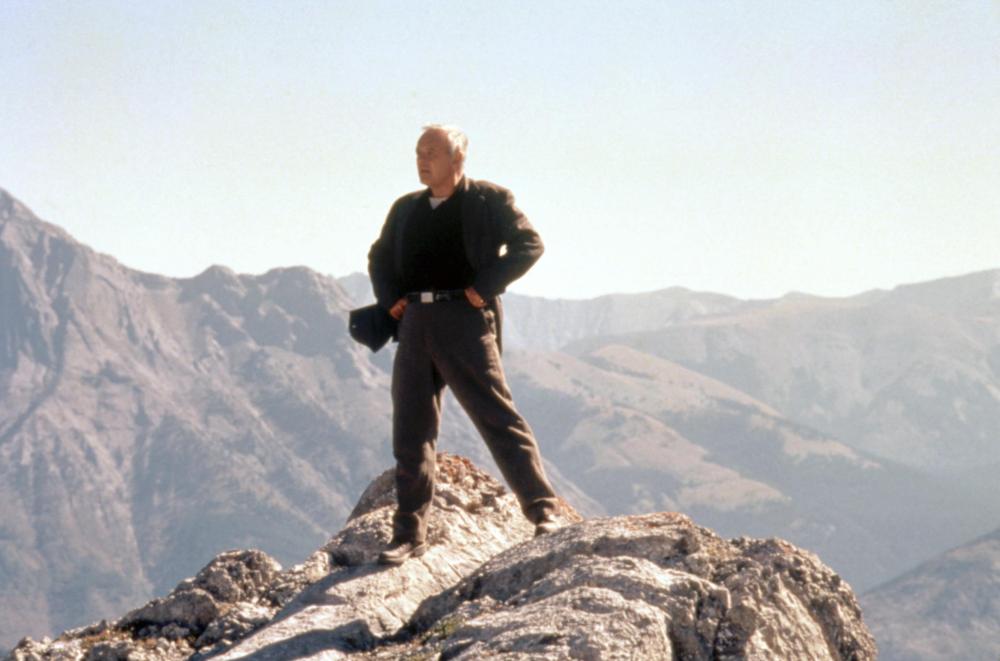
As they continue their journey, Charles climbs up a rock, trying to get his bearings. It also makes him look majestic, as he surveys and appreciates the majesty of the mountains. However, Charles’s overconfidence in his knowledge is a flaw, and they actually wind up back at their original camp. The paperclip was attracted to Charles’s belt buckle, affecting its behavior. Charles didn’t consider this contingency. The implication is that even when using one’s wits, there may be unanticipated possibilities. Stephen is desperate now, saying that they are going to die, that they have nothing to eat. Bob is also upset, but doesn’t break down like Stephen. Charles tries to get Stephen to focus on a task, giving him a long branch, and telling him to sharpen it with his knife to make a spear, so that they can catch fish. He says that they will be rescued, or they will walk out of the wilderness, surmounting the obstacles placed before them. Bob is frustrated and questions whether they will be rescued, even though, as he says, society usually doesn’t like their billionaires misplaced. Charles, being forceful again, asks loudly, what are they supposed to do, lie down and die? That is the alternative to giving into despair.
Unfortunately, Charles’s attempt to give Stephen something to do backfires, since Stephen is an unskilled man in a place that requires skills. The man cuts his leg deeply with the knife. Charles uses a scarf as a tourniquet, and tells Bob to bury the bloody part of the pants. Charles uses the stars to set a course for the next day to head south. Bob says he is gaining a new perspective, commenting how different it is where they now are compared to the world where he photographed beautiful women, and snorted coke off of a girl’s thigh. Charles says jokingly, to ease the seriousness, “In what way?” Struggling to survive makes other inessential activities seem less important.

In the pouring rain, while Stephen moans, maybe because he has an infection, Bob asks what really are their chances of getting back to safety. Charles tries to keep the tone optimistic, saying that the odds are good. To undercut what he just said, Charles then sees the ripped clothing that Bob didn’t bury and only hung from a tree. Charles immediately realizes Bob’s fatal mistake, as there is now blood in the air. The bear is there, he charges, and mauls the helpless Stephen. Charles courageously, though pointlessly, tries to attack the bear with a burning branch, but falls down. It is Bob here who realizes the futility of the rescue. He uses another lit branch to rescue Charles, but they must escape as Charles’s confidence is devastated by the loss of Stephen.

Bob and Charles are in a snowstorm, trying to stay warm, building another fire. Charles, back in cool survival mode, says they will navigate by the stars. He says that they will have to find the river and then follow it back to civilization. Charles uses his knife to fashion a cage and they trap a squirrel to eat. A helicopter flies by, but the angelic Charles is not capable of rising to the occasion to get noticed. Bob is ready to give up, and Charles goes into his pedantic professorial stance, asking how can ice be used to make fire. He is trying to get Bob to not dwell on the negative, but instead to quickly move on. Bob, in tears, rants at him, saying how “moneyed people,” who only seem to be able to play golf at the country club, can actually bloom in emergencies, because they are so “dense” as to the ramifications of the crisis, being so use to success. Charles is able to make a joke even in these circumstances, saying he’s not dense, just has no imagination. Bob laughs, but wants to hold onto the belief that the helicopter will return. But Charles, Mr. Practical, says no, they have scoured the area and will move on. Bob concedes, and asks the practical question about the ice. Charles says one can fashion the ice into a lens to concentrate the sun rays to start a fire. He again shows how thinking can be used to transform a helpless situation into a chance to succeed.

Charles wants to catch fish from the stream. He uses the chain attached to his watch to bait the fish. He says it’s made of gold and the whole world yearns for it. Even among the animal world, there is an attraction to the precious metal, connecting the various species. He uses the thread from his sweater as a line. Here, the rich man must now use his material gains for basic survival. Bob says he isn’t in the mood for humor when Charles mentions how the allure of gold can even attract a fish. He tells Bob, “Don’t go native on me.” Despite the struggle to survive, Charles wants to hold onto the civilized trait of humor. 

As he fishes, the sees that the bear has tracked them there. It charges after Charles, who goes through a bunch of tangled tree branches that impedes the bear’s movement. He gets to Bob and they throw burning branches around them to create a fire barrier against the animal. But his growls are heard in the night, creating a very primal scene of terror. Charles knows that they can’t exit the fire ring. But if they don’t, they will starve. Bob asks if Charles has a plan, and at first Charles is frustrated by how he must be the one who must come up with a strategy. He finally says, “We’re gonna kill him.” In the end, alternatives are reduced to one choice in the wild. It is survival of the fittest, which means in such a situation, one must die for another to live.
Charles says they will lure the bear with blood from a cut on his hand to the spot they want. They will use the creature’s weight against him. As was shown in the survival book, the bear will impale himself on one of the spears that they make as he tries to pounce on one of them. Charles says that Indian youths can kill lions with spears, and Native Americans go up and slap bears. He fires up the doubting Bob by saying that he will kill the bear because, “What one man can do, another can do.” He uses the phrase as a kind of mantra to show that they are as capable of doing what other courageous men have done. Charles looks primal as he has reached an elemental state ready to face his foe.


They have marked an “X” with branches to designate a spot where sharp branches swinging from a tree will pierce the bear. However, the pointy sticks only graze the creature. They have several spears which they use to stab at the animal. The bear knocks Charles away, then whacks Bob, and attacks him. He is injured, but Charles quickly recovers and gets the bear to go after him instead. Charles plants the spear on the ground which impales the bear when he tries to pounce, as Charles planned. The men now eat the dead creature’s meat and use his fur for clothing. They have won the battle in this deadly challenge and use their victim to help with their survival. Charles makes necklaces using the bear’s teeth to symbolize their triumph. Charles says that he always wanted to do something that was “unequivocal,” meaning something that was basic, with no compromises or complications; something that was definite. Bob says that in the past Charles would just call a lawyer to deal with this bear problem, but Charles, again inserting humor, says wittily, “No, I wouldn’t do that to an animal.” As they walk, they look like they have transformed into mountain men, wearing their bearskins, and, in a way now inhabiting the animal’s spirit, Charles says nobody he knows actually changed his life, but after this experience, he says he will start his life again. He is rebooting himself after finally putting all of his theoretical, untested knowledge into practice, and now has a broader perspective on life.


They come across an abandoned cabin. Now that he doesn’t need Charles to fight the bear, Bob finds a rifle, starts to load it, and is ready to put his plan to kill Charles into effect. The bear kills for food, but man kills for self-indulgence involving sex and money. There is a canoe outside, and they check out a map that is in the shack. Bob now feels he can get back on his own because he has directions and a means of transportation. Charles wants to light the stove, and looks for something to burn. He opens the box that held the watch that Mickey gave him. In a bit of plot contrivance, Mickey left the note to the watch inscriber that also contained one addressed to Bob “for all the nights.” This explains why Bob was unwilling to give up his watch, saying it was broken. Bob is drinking a bottle of whiskey in the cabin, trying to acquire liquid strength for his lethal undertaking. He taps a bullet on the rifle, a kind of contemplative gesture to show he is trying to make up his mind as to whether to carry out the killing. He says if he had his camera with him, he would have made his “fortune.” But instead of the camera, he can shoot another object, the rifle, and make his fortune a different way. Charles says, “Can’t do it sober.” Charles says he wants to see Bob’s watch, and now Bob knows that Charles knows about the affair. Bob tries to convince himself to do the deed by saying that Charles had no business with a gorgeous, young woman like Mickey. It was his money that led her to him, he says. Bob orders Charles to go outside. Charles says that he wants to know how long has the affair been going on, because, he finally says, he not only wanted Mickey, he loves her. Charles already told of a deadfall at the previous cabin, and approaches Bob, who falls into one, impaling his leg.
Charles could be brutally savage here, letting his enemy die, but they are not bears, and Charles rescues Bob. He tries to stop the bleeding, but is frustrated this time since he has no real means to help him other than a tourniquet. He puts them in the canoe. They go on shore to start a fire to keep Bob warm. Bob marvels at the fact that Charles is trying to save his life. He asks what he will do when Charles gets back to the lodge. Charles says he may not go back, because what does he have to go back to? All of his wealth has not really made him feel fulfilled, and his wife was unfaithful to him. Bob now uses humor by repeating what Charles said earlier, that he can’t feel sorry for someone who owns a plane. Bob says he is truly sorry and tells Charles that Mickey had no part in the plan to do away with her husband. Charles tells Bob, “don’t die on me.” Bob smartly says, “Don’t tell me what to do.” Charles hears a helicopter. He is able to draw the attention of those on board by adding branches to the fire. But it’s too late for Bob, who dies. Charles returns to the lodge, and his only display of pride in surviving occurs when he says to Styles, “Why is the rabbit unafraid?” Styles acknowledges Charles’s accomplishment when he answers, “Because he’s smarter than the panther.” When he reunites with Mickey, he hands her Bob’s watch which has the inscription, and she now realizes that Charles knows of her unfaithfulness. Charles has, almost like a biblical hero, gone into the wilderness to be purified, and now has returned. There are many reporters there. He generalizes his experience to others that go through their own ordeals when he says to the press, “We’re all put to the test.” When asked how his friends died, he says, “They died saving my life.” In this statement, there is magnanimity, as Charles does not take credit for having survived by his own wits. But, his journey with the other men led him to want to change the priorities in his life. So, in a way, they did save him.

The next film is Key Largo.

Sunday, April 15, 2018

Lifeboat

SPOILER ALERT! The plot will be discussed.
Here’s another movie from my favorite American director, Alfred Hitchcock. This 1944 film, based on a story by John Steinbeck, presents complex characters brought together on a lifeboat after the freighter they were on was sunk by a German submarine. The attitudes of these people and how they clash and also work together serve as a microcosm for America’s citizens and those with whom they are at war.
The opening of the film establishes the circumstances. There is a ship sinking, its smokestack spewing thick, dark smoke. We know right away the situation is perilous. There are numerous objects floating in the water, including a Red Cross crate (something meant to help others but which has been rendered useless because of war), an issue of the New Yorker magazine, playing cards, and eating utensils. These adrift items point to how objects which are part of a civilization have been torn away from their users by the violence of war.

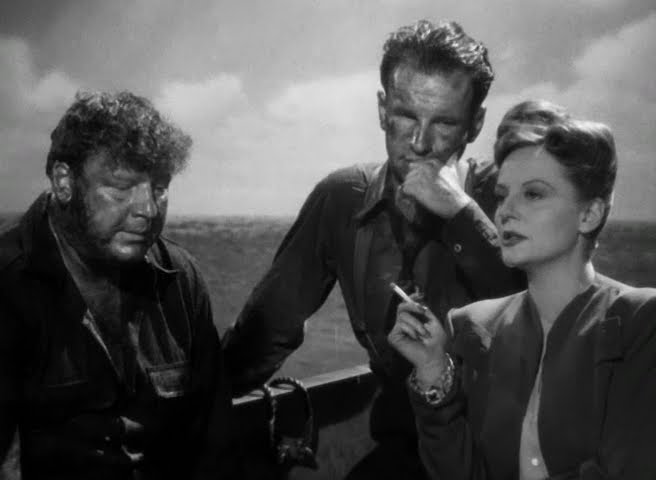
Connie Porter (Tallulah Bankhead) is a vain journalist who tries to maintain the appearance of someone whose personal appearance and lifestyle have not been tarnished by the catastrophic ordeal surrounding her. Her hair looks stylish, and she wears a fur coat. She is more concerned about the run in her stocking than in the vessel that has sunk. Her priority is getting news footage on her camera before helping a survivor get onboard the lifeboat on which she has taken refuge. The man who joins her on the escape craft is John Kovac (John Kodiak), and in contrast to Porter, he is filthy, smeared all over with oil because he worked in the engine room. He is very aware of the differences between them as he points out that she doesn’t look like she has been in a shipwreck. We note her cold detachment to the horror of the situation as she is excited by her recording of how the Germans had even shelled the lifeboats. She also recorded people getting sucked down into the water, and tells Kovac that the German U-boat was also sunk. Kovac quickly sees that Porter is self-involved with sensationalist journalism, and when a baby’s milk bottle drifts pass them, and she wants to get a shot of it, he says to her, “Why don’t you wait for the baby to float by.” He sums her up when he tells her that her observations of events show that she only describes them in terms of how they relate to her. He later tells her that she basically views the war as if it were a stage show for her amusement, and that if enough people die, she might give it a rating of “four stars.” Kovac accidentally knocks Porter’s camera into the sea when he lunges for an oar to try and rescue another survivor. Porter again is only worried about her story and her things as she is incensed about losing her recordings as opposed to saving another human being. Kovac’s sarcastic comment about her complaints is, “Maybe we can arrange another shipwreck for you sometime.”


More people find safety on the lifeboat. Stanley Garrett (Hume Cronyn), nicknamed “Sparks,” was the radioman. Charles J. Rittenhouse (Henry Hull), known as “Ritt,” is a rich industrialist, and he has had prior dealings with Porter. Gus Smith (William Bendix), has an injured leg which is especially worrisome to him since he is a man who loves to dance the jitterbug, and has a girl named Rosie who is also a dancer. Joe Spencer (Canada Lee) was trying to rescue a woman, Mrs. Higley (Heather Angel) and her baby, but he says that she fought him, as if wanting to drown. Another woman, Alice MacKenzie (Mary Anderson) is a military nurse, and she quietly lets the others know that the baby did not survive. Apparently the mother was traveling to show the father the baby for the first time, which shows the heartbreak that war inflicts as it separates and destroys families. Porter shows more to her personality than selfishness as she offers her mink coat to Mrs. Higley, who is at first in denial about the baby’s death, but then later becomes unhinged by the loss of her child.
One last person climbs up onto the lifeboat and he is not recognized by the others because, as we find out, he speaks German and is a survivor from the German U-boat. His name is Willi (Walter Slezak). Porter speaks German and questions the sailor. He says that he is not the captain. He helped fire on the lifeboats even though they posed no military threat because he was “just following orders.” Of course this is the now maligned excuse offered by ex-Nazis to justify their horrific actions during WWII. The way each person responds to the enemy soldier epitomizes a diversity of human reactions. Kovac immediately wants the man thrown overboard for his participation in the deplorable sinking of their ship’s survivors. At first Gus says that Willi is a German and can’t help his being of the same heritage as the country whose leaders chose to fight the war. Kovac counters by saying, “Neither can a snake help being a rattlesnake if he’s born a rattlesnake. That don’t make him a nightingale!” Of course the argument is simplistic, since animals are more instintual than humans, who can exercise more free will. Gus then sides with Kovac, noting that he changed his name from Schmidt to Smith, and is ashamed that he has a German background, since what the Nazis did desecrated his heritage. Here we find that although America is a nation of immigrants, the importance of being an American who is defending the belief in liberty in a time of war outweighs ethnic considerations. Sparks and Porter say that Willi is their P.O.W, and should be turned over to the authorities once they are rescued. When others say it is against the law to basically murder the German, Kovac says of their situation, “there is no law.” Ritt tells Kovac that if they treat Willi like the Nazis treat others, then they are just as bad as their enemies. This argument brings up the question of whether people should, and need to, maintain the laws enacted by society even when there is a breakdown of the social status quo, and it is more expedient and practical to enact immediate measures. MacKenzie voices a higher moral, compassionate perspective as she says that she doesn’t understand why people go to war at all and hurt each other. She joined the military not to fight, but to patch up the wounded.

However, patriotism can become exaggerated to the point of paranoia in a wartime situation, as is seen in the character of Kovac. He becomes suspicious of Porter’s fluency in German. He says she seems to have been well prepared for the attack on the freighter, since she brought all of her belongings, including her suitcase. He says that she may have known the Germans were coming. Porter says she just responded to having to be in a lifeboat. Ritt now makes the connection between them and the outside world when he says, “we’re all sort of fellow travelers in a mighty small boat, in a mighty big ocean. And the more we quarrel, criticize and misunderstand each other, the bigger the ocean gets and the smaller the boat.” Sometimes a change in perspective, as happens here, by shrinking the world down, makes more clear how the actions of individuals do have a direct impact on the population as a whole, and working together is necessary to keep all of us out of harm’s way.
Joe, the African American steward, is perhaps the most praiseworthy one of this bunch. He risked his own life while trying to save Mrs. Higley and her baby. He shows defiance against racism when he says he does not like being called “George,” and wants to be addressed by his given name. (As IMDb points out, that nickname derives from the many black servants who served on George Pullman passenger trains). When the survivors vote on who will lead them, Joe is asked how he wishes to vote. He is surprised that he would get a chance to give his opinion. His response illustrates the effect on African Americans for being deprived of their civil rights for so long. He says, “I’d rather stay out of this.” He has seen how some of the people on the boat have acted in a selfish and vengeful manner, and his reaction implies that he would rather not be part of the white world that has caused so much pain. He is also the most spiritual one as he knows by heart the “The valley of the shadow of death” lines from the 23rd Psalm of the bible when they perform a burial at sea for the dead baby. At the end of the story, he is the one who has pictures of his family, showing him to be someone who has been able to commit to others.

That quality can’t be applied to Kovac who has tattoos with the initials of all his female conquests. Porter, who has used men for her own monetary gain, shows scorn for them, while at the same time, admiring the canvas on which they are painted. When she asks how many skin illustrations of these kind does he have, Kovac’s sexually charged response is, “Remind me to show you the rest of them some time.” Even the humanitarian MacKenzie is in love with a married man in England, and is afraid to go back to England because of the temptation to transgress. However, her feelings of guilt do not resonate with the self-centered Porter. She, in reference to the man being married, says, “You call that a problem?”

Being stranded in the lifeboat affects its occupants differently. Sparks and Gus have been through the predicament before, suggesting that war’s punishments seem to never cease. Sparks and MacKenzie seek comfort from the bleakness of their fate by reaching out to each other affectionately, eventually promising to get married. The survivors replace the lost playing cards with improvise ones out of pieces of paper in order to hold onto some form of entertainment. Mrs. Higley is driven mad by the loss of her child, and stares off into the vastness of the sea which she believes is her child’s infinite resting place. While the others sleep, she joins her baby, going overboard. Porter’s first reaction to the suicide is typical for her, complaining that the woman took her fur coat with her. In addition to Porter’s camera, she also loses her lipstick, and later her typewriter and suitcase in a storm. She must free herself of her worldly possessions so she can participate as a contributing member, working with others.

Before that happens, there are references to class struggle in society. Because of her fur and jewelry, Porter seems high class to Kovac, while he struggled working in the stockyards section of Chicago. Previously, Porter asked Kovac to fix the catch on her bracelet, treating him like a lower class laborer. But during the storm he holds onto her and says they’ll go down together. Afterwards Porter comments on how reaching out for each other while almost losing their lives in the storm was a kind of intimacy. She says, “Dying together’s even more personal than living together.” Her observation is insightful because people draw closer to one another when they must face adversity together. She admits that she is from the same area near the stockyards. She says, “You’re a low person, darling. Obviously, out of the gutter.” But, since she is also “out of the gutter,” they are attracted to each other. But, Kovac doesn’t believe at this point that she is sincere about any long-standing connection to him given her rise above her station. He sees her coming on to him as a form of “slumming.” The wealthy Ritt says to Sparks that he doesn’t have to call him Rittenhouse, but can use his nickname because, “We’re all in the same boat.” This phrase usually applies in a figurative sense, but here that usage is reinforced because it is also literally the case here. And the fact that all of these people are cut off from society at large and the playing field is level should mean that they can leave behind the things that separated them. But, Ritt can’t do that himself, having been a captain of industry. He assumes the role of leader, assigning tasks to the others. They, in turn, are defiant. When Kovac asks what Ritt knows about a ship, Porter says, “Among other things, he just happens to own a shipyard.” Kovac then says sarcastically, “Has he ever been in it?” With the approval of others, Kovac assumes command, illustrating that those at the top of the social chain may not be the ones to rely on to do the dirty work of actually getting the job done.
The German sailor, Willi, one would think would be someone who can leave behind the war and focus on joining the others as equal members of the human race as they try to survive. It seems that way at first, since he appears to know the best way to get to Bermuda. He also was a surgeon in civilian life, and says that Gus’ leg is so bad, he must amputate it or else the man will die. Porter does perform a couple of decent acts here as she gives Gus a large bottle of brandy to drink so that he will pass out during the surgery, and a cigarette to smoke. She also gives him a big kiss as a kind of affectionate good luck gesture before the operation. They all work together to help Willi with the procedure, and Gus survives the amputation. Hitchcock spares us the grisly aspects of the operation, and all we see is Kovac tossing Gus’ boot aside, symbolic of the lost leg. (Hitchcock uses close-ups to great advantage to provide visual variety in such a claustrophobic setting. He also gets in his a trademark cameo of himself in a weight loss ad in a newspaper that depicts before-and-after photos of himself).
Porter suspects that Willi is not just another seaman, and calls out the word for “captain” in German. When Willi responds to the title, they realize he was the one who was issuing, not following orders. They also learn that he can speak English. However, despite his deceptions, and Kovac’s objections, the majority of the survivors put their trust in Willi since he knows about sailing. Willi also gets them through the bad storm, and he uses his strength to row the boat after the mast is destroyed in the strong winds. However, he now appears to waver on which is the right direction they should be heading. We also see him pull out his own compass in secret (the Americans’ compass was broken). As the survivors become more weak through dehydration and hunger, Willi takes more control. Sparks realizes, by noting the positions of Venus and Mars, that they are heading away from Bermuda. Also, MacKenzie saw what she thought was Willi’s watch (but which was really the compass) and yet the man asked the time of day. They discover the compass and now know that he is rowing them toward a German supply ship. They are now his P.O.W’s. But given the low supply of provisions, Willi convinces them that going to a supply ship is their best bet.
But Willi is not able to leave the war behind. Gus has been drinking sea water, and he becomes delusional, thinking Rosie is there. Gus sees Willi drinking from a bottle. Willi, afraid that Gus will expose the fact that he has brought drinking water with him, feels he must get rid of Gus. While the others are sleeping, Willi talks to him, pretending to comfort him, but when Gus comes closer, Willi pushes him overboard. Sparks now realizes he heard Gus speaking, and they suspect Willi of doing him in. They see that Willi is sweating, so he must have water to do so. They find his bottle of water, and he admits that he also brought with him salt and food tablets. In a rage, they beat Willi and throw him overboard. Ritt, exercising poetic justice, but which also has a touch of irony, pummels Willi with Gus’ boot, which is fitting since Willi killed Gus, but it also is a reminder that the German first saved him with the surgery. Porter comments that Willi was like Hitler, because both took advantage of desperate people. Ritt, disillusioned with Willi’s behavior after they rescued the man and trusted him, asks, “What do you do with people like that?”
The survivors show a range of feelings. Porter is angry about losing her things and now feeling hungry and thirsty. She turns on Ritt, blaming him for losing the food in the storm. He says she can write a book about her tribulations, because everything is always about her. Kovac and Ritt play cards, and Ritt accuses Kovac of cheating. Ritt later has regrets that he joined the mob action of tossing Willi overboard, and bemoans never having children. When many of the survivors are ready to give up, Porter rallies them. She gives up her diamond bracelet, the object that Kovac felt symbolized her selfishness, so that it can be used as a lure to catch a fish for food. Porter jokes about her greed when she says about the bracelet, “I can recommend the bait. I know … I bit on it myself.”
Just as they are about to land a fish, the German supply ship appears and sends out a smaller craft to collect them. But then an Allied ship shows up, and fires and sinks the boat and then the German ship. A young German sailor climbs aboard the lifeboat. Again, some are ready to help him. But, he has a gun, which they are able to take away from him. He asks if they are going to kill him. And so, the ending of the story is like the beginning, with a ship and its boats being destroyed, this time by Allied forces. Another German appears, and people can’t forget about being enemies so that they can work together. Despite some altruistic actions, it appears that humans are caught in a vicious cycle of selfishness, mistrust, and violence.
After the encounter with the new German, Sparks repeats Ritt’s question: “What do you do with people like that?” Kovac says, “I dunno. I was thinking of Mrs. Higley and her baby. And Gus.” Porter’s pessimistic comment is, “Maybe they can answer that.” The living can’t say why humans are so self-destructive, and the dead can’t speak. We are left with an unanswered question.

The next film is Fahrenheit 451.