Showing posts with label Edward G. Robinson. Show all posts

Tuesday, February 14, 2023

The Cincinnati Kid

 SPOILER ALERT! The plot will be discussed!

I recently watched The Cincinnati Kid (1965) for the first time in many years and decided to write about it after realizing how much talent is involved in the production. It has Steve McQueen, looking like Mr. Cool, as usual. The supporting cast includes Edward G. Robinson, Ann-Margret, Karl Malden, Tuesday Weld, Joan Blondell, Jack Weston, Cab Calloway, and Rip Torn. The story was adapted by Ring Lardner Jr., and Terry Southern. And Norman Jewison directed the film. Not too shabby.

The film opens with The Cincinnati Kid (McQueen) walking next to a New Orleans funeral, which, of course, is not a somber event, with a band playing. Does this scene symbolically predict that the Kid will be participating in his own figurative burial? He meets a young shoeshine boy who has challenged him at pitching coins before and asks for another chance. The Kid beats him and says the youth is not ready for him yet. In a subsequent scene, he bests the boy at a coin toss and says the same thing about being ill equipped to beat the Kid. At this point the Kid is an undefeated winner.


The movie is a sort of card gambling version of The Hustler, with McQueen playing the Paul Newman role and Robinson assuming the position of the Jackie Gleason character. The Kid is the upstart, a pretender to the crown worn by the best stud poker player. He has marks on everybody since he has beaten everyone, but he still lives in a lowly apartment since he hasn’t really cashed in on the big time yet. In contrast is senior citizen Lancey Howard (Robinson), the reigning poker king. He dresses stylishly and stays at a luxurious New Orleans hotel, where everybody knows his name. A one-time great player is Shooter (Malden), who is known for his honesty and ethical behavior. He is the go-between who wants his friend, the Kid, to get his shot at Lancey.

The Kid has a girlfriend, Christian (Tuesday Weld). She is not living a chaste life with the Kid, but her name is significant since she represents the possibility of the Kid leading an ethical life with her. She tells a salacious tale in which men “cared more about their lives than they did about their honor. Does that seem right to you?” His response is a selfish one as he says, “what good is honor if you’re dead.”

The story is a battle between the ethical, generous world and the selfish one. Shooter is married to the seductive Melba (Ann-Margret). (Shooter’s name suggests he is a “straight shooter, a righteous man). But he has married Melba who goes through the movie in sexy outfits and plays the archetypal Eve role, chomping on an apple. She is putting together a puzzle by trimming the pieces so they will fit. She is a cheat in more ways than one. She goes shopping with Christian, who is tempted to follow in Melba’s path. But she is reluctant to go down that road as she tells Melba that she can’t see herself wearing a provocative bathing suit.

Shooter arranges a card game with a rich, arrogant man named Slade (Torn). After he loses to Lancey, his arrogance gives birth to revenge in his mind, and he wants to pay Shooter a large sum of money to help the Kid when he plays Lancey. Shooter is very reluctant, but he knows he can’t hold onto Melba, who he already suspects of cheating on him. Indeed, she attempts to seduce the Kid, who shows some morality in not succumbing to her charms so as not to betray his friend. Shooter has business and asks the Kid to take Melba to a cock fight (a sexual reference to show Melba’s carnal nature?). The brutality of the event is repulsive as people show how ugly they can be as they bet on which bird will kill the other. After the event, the Kid brings Melba back to her place where she says she needs a drink because of “all that dust at the pit. I always feel so dirty after one of those things.” The Kid knows what type of person Melba is and says, “Brings out the best in you, Melba.” The best of the worst.

Christian, realizing the Kid loves card playing more than he could a woman, leaves him. He appears distraught by her decision, but when he hears her intention, he grabs her bag to help her on her way out. His selfishness is showcased here. Christian comes from a pastoral life and goes back to be with her parents, who are farmers. It represents the moral, upstanding life in the country as opposed to the decadence of the city. Eventually the Kid visits Christian at the farm. It’s as if he is torn between the world of spirituality and materialism and selfishness. Christian’s parents are stern and judgmental concerning their daughter’s relationship with the Kid. However, the Kid wins them over with a card trick. It’s as if he has brought trickery with its seductive aspect that has the potential to corrupt this innocent environment.


 The anticipated game between the Kid and Lancey begins. Just as with the game involving Slade, Shooter is the dealer because of his highly regarded reputation. The Kid does quite well, and at one point Lancey’s age seems to catch up with him as he almost keels over. But, he is a resilient man and keeps playing. The Kid is no dummy, and he realizes he has been getting too many good hands. He gets Shooter alone who confesses that he has been bought by Slade to swing the game. The Kid is honorable enough (despite his earlier negativity toward honor) to want to only win on his own merits. He tries to get some sleep between poker rounds. Melba slips into his bed and since his hero, Shooter, has become corrupted, he no longer values the friendship, and he has sex with Melba.

In a case of exceptionally bad timing, Christian returns to be with the Kid and arrives at the room just as Melba is leaving. She leaves too and it seems that all the Kid has left is the game. In a conversation, Lancey advises the Kid that to be the top gambler one can’t get involved in serious attachments. Lancey may be the best there is, but he is in the end a lonely man.

To keep the game above board, the Kid says Shooter was sick all night and there should be another dealer. Lady Fingers (Joan Blondell) takes over, and the game reaches a climax when Lancey has a possible straight flush and the Kid has a full house with aces on top. The Kid goes all in and loses because Lancey indeed has the straight flush.


The Kid exits the game broke and mentally defeated. The shoeshine boy asks him to play once again at coin toss. The Kid decides to compete to desperately show himself that he hasn’t turned into a loser. But the boy beats him and throws his words back at him, telling the Kid he isn’t ready for him yet. In the original version, that is the end of the film, with the Kid walking away. A subsequent version has him walk and run into Christian. She embraces him. This ending adds a redemptive quality to the story by suggesting The Kid had to undergo a Fortunate Fall, He had to reach rock bottom in order to be saved from a corrupt life.

The next film is Stand by Me.

Sunday, February 14, 2021

The Stranger

 SPOILER ALERT! The plot will be discussed.


The title of this 1946 movie, The Stranger, directed and starring Orson Welles, who also contributed to the script, suggests the unknown, which by its uncertainty can be a threat. It also implies that what we think we know about a person may not be the truth, and if one has placed trust in a false appearance of reality, betrayal of that trust is possible in the situation. The credits display over a large Gothic clock, which refers to the preoccupation of the villain in the story and points to his mechanistic mind. It may also be a metaphor for how the intricate parts of the mind of the protagonist works in solving a mystery to find the antagonist. The clock is part of a church which symbolizes religious purity on the surface, but evil and danger may exist below the outward appearance of things. There is also a cemetery situated near this church which reminds us of how death is close by. 


Government agent Wilson (Edward G. Robinson) forcefully insists to set a trap for a Nazi war criminal by releasing the unsuspecting Konrad Meinike (Konstantin Shayne) from jail who will lead them to the man they seek. (Wilson breaks his pipe while being emphatic, and the use of the pipe reappears later). Meinike travels to South America under an assumed name. There is a man whose face is hidden by a sign, implying that we can’t know all that is happening around us. He sends a woman, who is his wife, to secretly follow the man. The hidden fellow now is only shown in a black silhouette as he calls Wilson, who he and his spouse are working for. We have an atmosphere of suspense as the black and white photography stresses that secret activities lurk in the shadows. The spy tells Wilson that Meinike is going to have a passport photograph taken.


Meinike is reflected in the camera lens of the photographer (John Brown), which emphasizes that what we see in life and art is viewed through a lens controlled by subjective manipulation, which alters the perception of reality. Meinike demands that the photographer tell him where is Franz Kindler, who is the Nazi Wilson is pursuing. The photographer is frightened and says Kindler is dead (a deception). Meinike states he represents a supreme authority, another lie as it does not turn out to be some Nazi official as we might assume. The photographer tells him that Kindler is indeed alive and hiding in a proper Connecticut town named Harper as Professor Charles Rankin, another sham. 


The photographer hands Meinike a postcard which has a picture of a church with the clock we saw at the start of the movie. The next shot neatly replaces the picture with the actual church and town, a reference to how the postcard is a version once removed from reality, and we are watching a movie that is another step removed from truth. Wilson is on the bus arriving in Harper with Meinike who is also a passenger. As they disembark, Wilson drops his pipe (there it is again) on the seat that Meinike sat on, and Meinike appears shaken, as if the pipe is a warning, and he realizes he is a marked man. Potter (Billy House), who owns the store where the bus stops, listens to a comedy routine on the radio and his continuous laughing contrasts with the seriousness surrounding the two men who have arrived. 


 Meinike runs off to a school after looking up an address in a phone book, and Wilson tails him. Meinike knows he is being followed and leads Wilson into the gymnasium where he lets loose a rope with an attached ring that knocks Wilson to the ground. He appears to be dead (but remember appearances are deceiving in this story). Meinike then goes through a door that warns about using gymnasium equipment at one’s own “risk.” It’s as if the movie is saying that once one enters this realm of intrigue, danger is imminent. 


Having discovered the address from the phone book, Meinike practically bursts into Rankin’s house. He then softens his approach (more dissembling) and asks his wife-to-be on that day, Mary Longstreet (Loretta Young), if he can wait for the absent Rankin. Meinike decides to wait outside and encounters Rankin (Welles) by calling him Kindler. Rankin immediately wants to hide his association with the man and tells him to go into the woods (the archetypal place which represents the hiding of wrongful deeds), and follow the path near the church, the religious façade masking their dark motivations. In their meeting, Meinike tells Rankin he is a changed man. But Rankin says he is, too, but his change is superficial. He has destroyed all documents that could disclose his true identity. He says he is about to marry the daughter of a Supreme Court justice. He notes her lovely appearance, and adds everything is a perfect “camouflage,” which is meant to cover up his despicable past “til the day when we strike again.” He is in hiding until there is another war when he can fight as an enemy from within the country he has deceived. But Meinike has become a born-again Christian and says war is an “abomination.” He says God opened all doors for him and allowed him to be free. The clever Rankin realizes that the authorities allowed Mienike to escape to lead them to Rankin. Meinike admits he was followed but he believes he killed Wilson. He asks Rankin to pray on his knees and confess his sins in order to be forgiven by God. As they kneel, Rankin repeats holy words but as a diversion and he strangles Meinike to eliminate being found out (think of the contrast between Michael Corleone’s religious words at the baptism scene versus his simultaneous murderous commands being carried out in The Godfather).


As Rankin and Mary are getting married, Wilson recovers after being knocked out, and retrieves his pipe, which could be a reference to the detective work of Sherlock Holmes. He questions Potter, since he is the town clerk, and says he knows everybody living there. They play checkers, which Potter wins by diverting Wilson, and the game of opponents playing against each other mirrors what’s happening in the plot. For instance, Rankin used deceptive ploys earlier as he led some of his college students away from Meinike’s body and covered the corpse up after the wedding ceremony. 


 Wilson finds out about the wedding and then asks Potter questions relating to recent residents in the town. He then begins to eliminate those people as suspects as he narrows in on his prey. He goes into the church and finds Noah Longstreet (Richard Long), Mary’s brother, cleaning the inside of the building. Wilson knows about clocks and discovers from Noah that his brother-in-law, Rankin, will be returning from his honeymoon in time for examinations at the school where he teaches, and will be working on the clock. By hardly saying anything, he allows Noah to convey all of this information, including the exact day of the couple’s return. Noah does not look too happy about his sister’s marriage, suggesting he is not a fan of Rankin.


 Wilson, who is knowledgeable about antiques, discusses a Paul Revere item (symbolic of the American fight for freedom?) in the study of Judge Adam Longstreet (Philip Merivale), Mary’s father, when Mary and Rankin (who would not be a fan of Revere) arrive. By pretending to be an antiques specialist, Wilson is also hiding the truth, but his deception is an undercover act to reveal a criminal. Noah is there as well as is Dr. Jeffrey Lawrence (Byron Keith), who treated Wilson for his head wound. This fact is mentioned, and Rankin, the clock specialist, hesitates eating as his mind starts to click into gear. He most likely suspects Wilson based on his recent arrival and Meinike’s relating how he attacked his stalker. The Judge was talking with someone who reported that there were Germans about who wanted to revive Nazism. Wilson deliberately asks Rankin, who is a history instructor, what he thinks of these stories. Rankin seems to be making an objective psychological examination of the German psyche, but he is actually declaring German resolve against defeat. He argues that the German does not link himself to others who have found a broader sense of truth, and has not “come to know for whom the bell tolled.” He says the German still sees himself as a victim of other countries who he considers “inferior,” and recalls the greatness of his Teutonic ancestry embodied in German myths, as he waits for another Hitler who will be his messiah. Wilson says that Rankin must not believe that governmental reforms will work in Germany. Rankin says external concepts of liberty and democracy can’t be imposed from outside and will not take root in Germany. He believes the only solution is “annihilation.” Mary finds it difficult to believe that her husband holds that only a “Carthaginian peace,” which means a total domination of a defeated people, is what is needed to stop the zealously dedicated Germans from rising again. When presented with the concepts of Karl Marx who theoretically wanted to reform and unite the Germans, Rankin says that Marx was a Jew, not a German. Mary invites Wilson to a faculty event, but he declines, saying he will be leaving the town. 


Wilson says in a phone call that he agrees with the person on the other end that Rankin is “above suspicion.” Meanwhile, at home, Mary says it is coincidental that her husband and Wilson are both interested in antique clocks. Rankin already is suspicious of that similarity, and asks to take the family dog for a walk. It is night, which is a time of concealment, and Rankin is being sneaky again among the shadows of the trees as he checks out Meinike’s shallow grave. However, he was not thinking by taking the dog, Red, with him, who starts to dig up the corpse. Rankin attempts to drive the dog away, even kicking the poor animal (offscreen, of course), which shows his cruelty. 


The remark about Marx wakes up Wilson from his sleep, and he calls Washington, D. C. He says that a Nazi would call Karl Marx a Jew, and not a German, which shows condescension toward the communist theorist because of his Jewish heritage. So, Wilson decides not to return to Washington yet. Rankin appears like a black ghost as he approaches Mary in the dark of their bedroom. She wakes up startled and says she had a dream about the “little man” (Meinike) who came to their house. She says in the dream the man moved but his shadow remained behind and began to spread. It could signify the danger that his appearance brought to her false world where appearances seemed benign. Red cries because Rankin put him in the cellar and says during the day he must be kept on a leash. From a practical stance, Rankin doesn’t want the dog near the grave again. But the action also shows his propensity to hide the truth.


Wilson visits Noah who has Red with him since Mary most likely showed her opposition to having the dog restrained. They go out on a boat and Wilson states he can see that Noah does not like his brother-in-law. Wilson divulges he is a sort of “detective” because he wants someone in the Longstreet family he can trust, someone who is not devious and can be open to believing about Rankin’s notorious past. Wilson wants Noah to do some digging to bring to light Rankin’s activities on the day of his wedding. 


Wilson goes to Potter’s store and asks about the bag Meinike left there and has not come back to retrieve. He tells Potter he can open it up given how long ago it was left. Wilson is there waiting for Rankin’s regular stop at the store, and Wilson knows Potter will mention the bag. When Potter describes Meinike, Mary recognizes the description and Wilson observes Rankin grabbing his wife’s arm as if to restrain her from asking any further questions. Her hesitancy reveals to Wilson that Meinike went to see Rankin. Noah shows up and says Red keeps running off into the woods, most likely checking out the grave. Wilson shares his conclusions with Noah, and tells him that his sister must discover who her husband really is. He wonders what excuse Rankin is fabricating (more duplicity) to cover up why he didn’t want Mary to ask Potter about the visitor to the house.


The segue to the next scene answers that question. Rankin says he was a student in Geneva and a woman fell in love with him. They were on a boat and she said she would drown herself if he didn’t commit to her. She jumped off and he says he dived in but couldn’t save her. He says that Meinike was the girl’s brother, knew they were on the boat, and extorted him so he wouldn’t implicate Rankin in her death. He showed up again on their wedding day and he says he gave Meinike more money and the man went away. Mary seems to buy his explanation, but she astutely asks why didn’t the man take his belongings. Rankin offers that once he had money he probably felt he could buy better possessions. He tells Mary that he wants to work on the church clock for a while because it calms him. She says he doesn’t have to walk her home because, “in Harper, there’s nothing to be afraid of.” The line reminds one of the apparently safe town in Alfred Hitchcock’s Shadow of a Doubt, where beneath the illusion of security lurks the existence of evil.


Noah finds Red and he is dead. He and Wilson take him to the doctor who determines that the dog was poisoned. Wilson uses his detective skills to conclude that the mud and leaves on the front paws of the dog indicate he was digging. He calculates how far the animal was found from where he was poisoned based on the doctor’s account of how fast the poison worked. Wilson correctly deduces that Red was digging up Meinike’s body. The dog’s unearthing the corpse fits as a metaphor for what Wilson is doing, exposing what has been hidden below the dissembling surface. 


Rankin learns from Potter that Wilson and Noah took the dog to the doctor and that there is a search for the man who left his bag at the store. Rankin returns home and Mary finds him packing. Rankin truthfully tells her that he is not the man who she believes she married. His existence has been a disguise. She insists he is the man who she fell in love with. But he confesses to killing Red, and says, “murder can be a chain, Mary, with one link leading to another until it circles your neck.” It is an apt metaphor about how violence breeds violence until it claims the one who began its inception. He also admits to killing the man who visited her (Meinike) with the same hands that embraces her. It is an ironic contrast that the parts of the body that show love and tenderness can also be used to destroy life. It points to the duality of human nature. But, Rankin uses the truth to fortify his previous lie, making it appear as if he was protecting Mary and her father. He says that Meinike knew Mary's father was wealthy and wanted more of a payoff which prompted Rankin’s attack on the man. He has manipulated her feelings and, since there is nothing to connect him to the dead man, she promises to keep his secret. Through his deception she is now complicit in his crime.


The body is discovered, and Wilson underestimates the story that Rankin has concocted, believing that what he told Mary would contradict his initial statement about Meinike. But Rankin has been consistent about the extortion lie. Wilson says that Mary must now learn the whole truth about her husband. Meanwhile, Mary is getting nervous, worried about having to identify the body. Rankin attempts to calm her to make sure she provides a consistent story. He fakes his intention to confess to the police if she can’t handle the situation just to reassure her of his devotion to her. Mary’s father calls her and wants to see her alone. While the couple talk, Rankin fiddles with the clock in the room and says he will go work on the church clock while Mary sees her father. The references to the clocks stress that time is running out for Rankin.


Mary finds Wilson with her father. Mary lies when she says she doesn’t recognize Meinike’s photograph. Wilson tells her that she is protecting a murderer. He now reveals his own hidden agenda. He works for the Allied Commission for the Punishment of War Criminals. He says that Meinike ran one of the Nazi concentration camps. Wilson then shows her footage of the mass graves and gas chambers. He says that Franz Kindler conceived of the plan to exterminate as many of Germany’s enemies as possible so that the country would emerge superior to other nations at the end of World War II. He shows the horrors of the camp to convince Mary that she is harboring the monster that created the Nazi death machine. Kindler was an anonymous partner in the genocidal plan so there is no way to identify him, except that he had a mania for clocks. The cold efficiency of how the concentration camps carried out the executions resembles the precise mechanism of how parts of a timepiece work together. Wilson tells Mary that he had Meinike released so he would lead Wilson to Kindler and that only the person who knows who Meinike came to see in Harper can identify Kindler. Mary is stunned and in denial, not believing that Rankin could be Kindler. She denies that anyone visited her on the day Meinike arrived, and says that they are trying to involve her in “a lie.” But a lie is exactly what she has become part of, only it is not Wilson’s but her husband’s deceitful web in which she is entangled. After Mary runs off, Wilson tells Judge Longstreet that his daughter is grappling with the facts versus her not wanting to believe she could fall in love with a monster. Wilson says that if she is unreliable as Rankin’s ally, then he may attempt to kill her. He is using her as bait, and he admits to his manipulation of the Judge’s daughter, but in essence he is fighting coldness with coldness. 


After Wilson states his plan, the church clock chimes, emphasizing the precision of both actors in the cat-and-mouse game and how the contest is coming to an end. Mary runs to the church and climbs the stairs to the clock tower. She tells Rankin the meeting was a trap, but she divulged nothing and that they can prove Rankin isn’t who they say he is by verifying his attendance at the school in Geneva where he said he knew Meinike and his sister. They walk out among the crowd that has assembled to congratulate Rankin for getting the clock to chime. The John Donne poem, referenced earlier by Rankin, comes to mind, which reads, “For Whom the Bell Tolls/It tolls for thee,” indicating that death impacts all of humanity, not just those singled out as victims.


Mary starts closing the drapes in her house, symbolizing her desire to cover things up and not let the light reveal what is going on. Rankin is at Potter’s store. He finds out that Wilson has picked up the ice cream that was ordered for the party at their house that night. He hurries home, most likely worried that Mary might divulge something about the dead man. At the party there is much talk about the murder which greatly upsets Mary. Someone mentions Ralph Waldo Emerson’s statement about crime. Wilson knows the quote which says, “things are arranged for truth and benefit, and there is no den in the wide world to hide a rogue.” There are always clues left behind because, “The laws and substances of nature - water, snow, wind, gravitation - become penalties to the thief.” So, despite efforts to hide wrongful acts, the truth will be revealed, which is consistent with the theme of the film about appearances attempting to conceal reality. 


Mary’s denial of her husband’s guilt is starting to break down as she becomes agitated, cries, and rips off a necklace of pearls, the beads spilling on the floor representing how her defenses protecting Rankin are falling apart. The housekeeper, Sara (Martha Wentworth) reports this incident to Wilson, Mary's father, and Dr. Lawrence. Wilson knows that as she reveals her lack of resolve, Mary will become more of a target for her husband. So, he tells Sara she must be vigilant and relate all incidents. Mary’s father essentially tells Sara that Mary is walking through a minefield of the everyday where a planned attack may appear (that word again) as an accident. 


From that warning we nicely segue to Rankin sawing cuts into the ladder that leads to the church clock tower. He also announces at a meeting that he will soon finish the work of the German clockmakers who preceded him concerning the church timepiece. Metaphorically, his statement sounds like he wants to continue the work of the Nazi genocide machine. This idea is reinforced as he draws a swastika on a piece of paper as he calls Mary to go secretly to the church tower. It is clever that Potter then plays Rankin at checkers and says to Rankin that it’s his move, which Rankin has just made regarding Mary.


Sara makes a fuss about Mary leaving, and pretends (again a charade, but for beneficial purposes) that she is ill. Mary calls Noah and asks that he go to the church to tell Rankin she will be late. She wants Noah not to divulge his activity, which would draw her brother behind Rankin’s veil of deceit. But, Noah calls Wilson and they go to the church while Rankin is still with Potter. Wilson grabs one of the sawed rungs and it gives way. Luckily, he recovers with Noah there to help. Wilson can even smell the glue where the wood was temporarily attached. 


 When Rankin returns home and finds Mary is still alive, he is stunned and becomes unhinged, fiddling with his grandfather clock like it is a security blanket that will restore order. When she explains that she sent Noah to the church he becomes enraged that she told someone of the meeting. He blurts out that if Noah was killed it would be her fault. Mary then becomes frightened as she realizes her husband was attempting to kill her. She now sees that who she thought was her husband is really “the stranger,” and yells, like an accusation, his real name, “Franz Kindler!” Kindler escapes just before Wilson arrives with Noah, and Mary faints out of relief that her brother is still alive. 


Mary awakes in the night and goes to the church, climbing up the bell tower, suspecting that Kindler is hiding there. She came by way of the cemetery (an ominous path) and does find her husband there. She says she was not followed. Wilson and the others discover that she left, and Wilson suspects she is heading for the clocktower. She is carrying a box, but it is a decoy to make Kindler think she had something to give him so he would help her up. She also can play games of strategy. She says that she is there to kill him, but he says she will die instead. She is okay with that if she takes him with her. He says from that height he can see the goings on below, like “God,” and compares the citizens to “ants.” His statement reveals the deluded “master race” belief of the Nazis. But Wilson appears and tells Kindler that he only has to look outside to see all of the people rushing to apprehend the Nazi, which sounds like the citizens of the town that went to destroy Frankenstein’s monster. Kindler says it’s a trick, and Wilson angrily says he doesn’t need tricks, which Wilson says is what Kindler is all about. His bag of deception has now been ripped apart. Wilson says that the world for Kindler has shrunk to the town of Harper and now to the bell tower. Wilson seems to be saying that the Nazi’s area of existence is approaching the size of a prison cell. Wilson notes that the people whom Kindler belittled are now there to take him down.


Kindler uses that lame Nazi excuse that he was “just following orders,” but Wilson points out that Kindler was the one giving the orders. He is able to knock the gun away from Kindler, and Mary grabs it and starts shooting, wounding Kindler. He manages to climb out onto the exterior of the church clock. (This use of mayhem on a place that symbolizes law and justice echoes Alfred Hitchcock’s use of Mount Rushmore in North by Northwest and the Statue of Liberty in Saboteur). One of the large rotating figures, an angel with a sword chasing, appropriately, a demon stabs Kindler, the real evil creature. He is ironically done in by the mechanism he worshipped, and falls to his actual death and symbolically topples from his delusional belief in his superiority.


The next film is It Happened One Night.

Sunday, February 3, 2019

Key Largo


SPOILER ALERT! The plot will be discussed.
Humphrey Bogart and John Huston made some memorable movies together. There have been previous discussions here on The Maltese Falcon and The Treasure of the Sierra Madre, both of which deal with human greed. This 1948 film is relevant today since it presents a feeling that America has lost sight of its democratic and ethical ideals.

The story starts out with rushing music, perhaps reflecting the breaking waves that crash onto Key Largo just off of Florida’s southern coast. A police car chases and stops a bus. So, contrasting with the natural beauty of the area is the suggestion of some criminal activity. However, the cops are after the wrong crooks here, implying justice has been misdirected. The authorities are looking for two “Indians” who escaped from custody, and they are believed to be heading for their home on Key Largo. Frank McCloud (Bogart) is on the bus, and there is a shot of him reflected in the bus side-view mirror. Mirrors usually symbolize that there are two sides to someone, one of which is usually darker psychologically. In this instance it represents McCloud’s disillusioned view of his country that has led to a cynicism and a belief that looking out for oneself is all that matters. His first name suggests that he values honesty. His last name implies that he is living in a gloomy state of mind. The high esteem in which he once viewed his country is now being obscured by the corruption blocking out a sense of moral vision. He traveled to an island, which suggests that he feels cut off from the beliefs that once grounded him.


McCloud enters the Largo hotel. There is a guy, Toots Bass (Harry Lewis), in the lobby who looks like a hood, wearing suspenders and a brimmed hat. Another thug hanging around is Ralph Feeney (William Haade). Bass says the hotel is closed, as is the bar. But the boozy woman at the bar, Gaye Dawn (Claire Trevor, winning the Best Supporting Actress Oscar for this role), who has an ironically happy name, is more hospitable, saying “give him a drink.” Despite her being the main gangster’s woman, she shows a bit of rebelliousness here. The very hot summer weather matches the tensions and heated exchanges to come. A buzzer sounds for service to one of the rooms. The man behind the bar, Angel Garcia (Dan Seymour), says, “It’s him,” referring to Al Capone-like criminal, Johnny Rocco (Edward G. Robinson). Gaye says that she’ll bring the drink to him. Bass says when he wants Gaye, he’ll send for her. It shows that Rocco is running things, and the woman is under his control. Gaye bets at horse racing, and likes playing the long shots. Maybe this implies that she may be willing to bet on an underdog later. Angel, Curly Hoff (Thomas Gomez), and Bass want McCloud to leave, emphasizing that the place is closed, and Curly says that they are there only by special arrangement. McCloud says he isn’t staying, but just wants to see Mr. Temple, the proprietor. He’s told he’s at the boathouse.


James Temple (Lionel Barrymore), whose name suggests something sacred, but who is infirm and in a wheelchair, thus showing that spiritual inspiration may be in disrepair, recognizes McCloud’s name, addressing him as a major. So, we learn McCloud was in the military, shortly after World War II. Temple’s daughter-in-law, Nora (Lauren Bacall), is there. Nora’s husband, George, who died in the war, served with McCloud, and McCloud knows a great deal about the Keys from talking to George. Nora said she wrote to McCloud, but he was hard to reach, having been traveling around a great deal. His drifting implies instability in his life. Temple is funny about how the Keys are livable, “except for the tourists,” for a few months out of the year when the temperature drops “only” to a hundred, (I can attest to the heat, with the real feel temperature around a hundred degrees even in December on Key West). This part of the world is alluring in its beauty, but the weather also can be punishing.
McCloud says he was just passing through, but Temple and Nora give him a reason to stay. Temple wants to talk more about George and asks McCloud to stay the night in George’s room. From the interested way Nora looks at McCloud it seems like he may become George’s replacement. Sheriff Ben Wade (Monte Blue) and Deputy Clyde Sawyer (John Rodney) are looking for the Osceola brothers, the escaped Native Americans. Temple tells McCloud that the two were pals of George, and got drunk and rowdy, talking about taking Florida back for the Indians. Their action points to wanting to gain justice for having their land taken away from them, and thus restoring decency as to how to treat others.

Curly roughly pushes Gaye into another room, and tells Nora and McCloud that she sees things when she’s drunk, and one can only handle her by punching her in the face. The man is obviously despicable, and his meanness is acknowledged in the concerned looks exchanged between McCloud and Nora. Curly makes a lame explanation for being rude, saying they came for deep sea fishing and then their boss brought Gaye, who is constantly drunk and comes onto the other men, which makes Rocco angry. Curly offers to buy McCloud a drink, but McCloud doesn’t like the guy and doesn’t want to get chummy, so he refuses. Nora tells McCloud that Curly offered to rent the whole hotel for a week and Temple couldn’t turn down the money. Even the upstanding Temple is subject to the temptations of monetary gain. Rocco is going under the name of Mr. Brown, a deception which is consistent with his nature. He never comes out of his room, using others to do his bidding, which is how authoritarian figures operate. McCloud is suspicious as to why these men were spreading so much money around in summer when places are closed. Meanwhile, Nora gets a call saying a hurricane is coming, which adds to the atmosphere of turmoil at the hotel.

Temple wants to know more about George’s military service. McCloud says he was a born hero, always looking to serve above and beyond his duty. He was pinned down on a hill and talked to McCloud on the phone, trying to keep awake. McCloud learned a great deal about Temple and Nora from those conversations. George told McCloud that his father told him that before he was born, he knew all the secrets of life and death, and an angel sealed his lips, which was shown by the hollow above his mouth. It was a fairy tale Temple told him when he was ten. This story presents George as a person touched by God, who held the meaning of life inside of him, but which is unavailable to the rest of fallen humankind. It is significant that he no longer exists in the world, as if his goodness and wisdom have been erased from current times.

Frank tells Nora he came down to work on the sea. Life became too “complicated” on land, which emphasizes his outsider outlook since serving in the military. Before the war he was circulation manager for a newspaper, so what was happening around the world was important to him once. He’s waited on tables and drove a taxi since the war, jobs which do not point to long-term economic stability. He’s been unmoored since the war. But, he knows about boats. He helps to secure one at the dock, showing that he may have found a place that he can anchor himself.

Curly notes the large boat near them (it’s been rented by Rocco), but McCloud warns that they better watch it doesn’t get damaged along the reef when the winds kick up. This exchange shows that these shady visitors aren’t schooled in the ways of this territory. Native Americans approach in a small boat. Nora says one of them is Charlie Wenoka, who comes from a long, royal line of Seminoles, going “back to the gods.” But, he has been reduced to “selling seashells by the seashore.” These Native Americans represent a noble American past that has been vanquished by selfish interests. Nora says that the Native Americans always seek shelter at the hotel, because they seem to instinctively, almost magically, know early on when a bad storm is brewing, which adds a sense of mystery to these people that raises them above the flawed men who took their land away from them. Tom and Johnny Osceola (Jay Silverheels, who would go on to play Tonto in The Lone Ranger, and Rodd Redwing), the missing Indians, also arrive. They say they received Temple’s message and, based on his advice, are willing to give themselves up.

Nora says that she met George at a USO dance when he was lonely. She felt that life didn’t make much sense before finding George. She tells him, “I never had much of a home. And I didn’t like what I had.” She, like the way McCloud now is, was unattached to anything. But George gave her “roots.” Now she is like one of the “mangroves.” So, the roots took hold there, and she is happy. She is a model for what can happen to McCloud.


Nora and McCloud start to prepare the hotel as the storm starts to brew. Curly wittily says that in a hurricane, “The wind blows so hard the ocean gets up on its hind legs and walks right across the land.” Pretty good use of personification for a gangster. Bass (whose name could imply he is a fish that should be hooked) laughs at a joke about how one con tries to sell a pen to another, saying the “pen is guaranteed for life.” He is an unjailed crook who can make jokes about being incarcerated, and it is ironic that the Native Americans are willing to give themselves up for some minor rabble-rousing while the real criminals are free. Temple wonders why a police car is outside since Wade and Sawyer had left earlier. He sees no sign of the cops. Curly takes a call from the police, not allowing Nora to answer the phone. Curly lies, saying Temple and Nora aren’t available. Nora and McCloud exchange worried looks as they realize these men who have taken over the hotel are seedy characters, and possibly dangerous. When Nora tries to get the phone, Curly pushes her away. McCloud tries to intervene, but Curly and Bass pull out their guns.

For the first time we see Rocco, who even when not visible, was a strong presence. He crawls out of the water in the bathtub, like a reptile. Deputy Sawyer is stretched out on a bed, unconscious, blood drying on a head wound. Temple is hurling insults at Bass, and Rocco enters, telling everyone to cool down, saying that it will only be a couple more hours they’ll have to be together. Instead of calling them prisoners, which is what Temple says he, Nora and McCloud are, Rocco says they are his “guests.” It makes him in charge, reversing the normal order of things, taking away Temple’s authority. Sawyer wakes up. He says, “You won’t get away with it, Rocco.” McCloud recognizes Rocco’s name, and so does Temple, who says he thought the hoodlum was deported. Rocco says that after he lived in the United States “for more than thirty-five years, they called me an undesirable alien. Me. Johnny Rocco. Like I was a dirty Red, or something.” The thrust here is that those who had political leanings inconsistent with mainstream America should be considered more deserving of punishment than criminals. Temple says that instead of deporting Rocco, they should have “exterminated” him, like a dangerous insect. McCloud cynically heaps praise on how far Rocco’s criminal empire stretched, how he was able to commit many crimes, including murder. Therefore, Temple should realize what an important man Rocco is and not have old-fashioned ideas about returning to a time when the country, “could get along without Johnny Rocco’s.” There is a perception here that America has fallen into decay, and the depiction of a demoralized war veteran and a famous hoodlum emphasizes the decline from the decent past into the corrupt present.


Rocco acknowledges that he was a big shot. When he spoke people listened, and his orders were carried out. Now, he says he will be back, stronger than ever. When Rocco questions McCloud about the soldier’s life, McCloud says he was not very brave and not sure why he stuck his neck out for others (hints of Rick in Casablanca?). But he believes he fought in the war because of the words of President Franklin Roosevelt, who said, “We’re fighting to cleanse the world of ancient evils, ancient ills.” McCloud once had that hope, like Temple, for a better time. The storm rages in the background, possibly representing the wrath aimed at those “ancient evils” that Rocco represents. Temple gets up out of his wheelchair, takes a swing at Rocco, as the gangsters ridicule the invalid, and he falls down. Nora said that the Native Americans respected Temple’s ethical ways, and thought “he was America,” which means the country was supposed to stand for those lofty ideals. But, those ideals have been crippled by men like Rocco. Nora starts to strike Rocco, but he stops her from doing any harm, restrains her and then forcibly kisses her, showing him to be a depraved, sexual bully.
Rocco gets a phone call from someone named Ziggy (Marc Lawrence) who appears reluctant to go through with whatever scheme Rocco has planned. Rocco tells him to not worry and that their deal has to be carried out that night. In contrast to Temple who stands for a welcoming America, who lets the Indians in to give them shelter from the storm, Rocco tells his men to keep the natives out of the hotel. The captain of the boat (Alberto Morin) Rocco hired says that he has to move his craft or it will get wrecked on the coral reef, as McCloud had warned. Rocco points a gun at him, which is the way Rocco thinks he can have whatever he wants, and says he’ll blow the man’s brains out if he moves the boat. Rocco is such a megalomaniac he thinks he can defy nature.

Sawyer tells McCloud, Temple, and Nora that he came back looking for the Osceola brothers. He ran into Angel and Bass, questioned them, and thought their answers were a little “fishy,” which again is a reference to the sea as a place to be tested. The deputy tried to call Ben Wade, but the electricity went out. Bass found out what he was doing and knocked Sawyer out. He woke up and recognized Rocco. He then says the “lights” went out on him, again, meaning he was knocked unconscious a second time. Bass, in a film noir line (although this film is not a typical noir film, given its setting), says, “I’m the electrician.” Rocco, lounging around in his robe, like he’s in his own house, sits down for a shave, as Angel obediently tends to him. Rocco tells Sawyer that the deputy thinks he can stop him, but Rocco will soon be pulling strings to get politicians elected, and notes that men in office “owe everything” to him. He says he took an unknown person, told him what to say, put his name in the newspapers, paid for campaign expenses, bought groceries and heating fuel for voters, got them out to vote, and counted the votes until they came out with the results he wanted. But when the pressure was on, the politician turned on Rocco. Rocco, through the mirror, sees Nora, and talks about how she resembles a feisty young woman, who even stuck him with a knife once. He changed her name for “professional” reasons, which means he made her into a showgirl. He is talking about Gaye, whose violence in the past reveals her potential to bring Rocco down. He sees the possibility of turning Nora into another Gaye, but it is Rocco’s dark side he sees in the mirror, not that of Nora. He whispers obviously salacious remarks into her ear. She spits in his face. McCloud moves her away. Rocco is livid and asks for a gun. McCloud uses his wits, saying just smacking Nora, as Bass suggests, isn’t enough. He’d have to kill her, then kill all of them for witnessing the murder. But, that would be too messy, because he needs Bass, Curly and Angel. So, Rocco holds off.
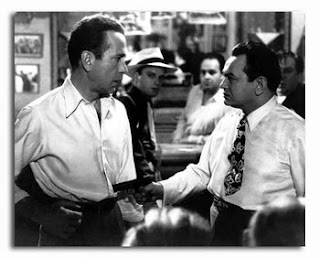

Gaye yells that she wants her door unlocked. Rocco says to let her out. She sees that Nora has been crying and is protective of another female, knowing how she has been mistreated. Gaye wants another drink, but the “Boss” says no. She yells, but sees that Sawyer has been roughed up and notices that one of the men has a gun out. So, she quiets down.

Rocco calls McCloud a “wise guy” for coming up with his argument not to kill them. But McCloud admits that he doesn’t have the practical knowledge that Rocco has. Rocco says even though he knows that McCloud is being insincere, and actually thinks he’s better than Rocco, the gangster asks how come he’s the one who was so successful. McCloud says Rocco knows what he wants, which is “more.” Rocco says enthusiastically, “That’s it! More.” It sounds like James Brolin’s character in Wall Street; Money Never Sleeps. Some may say the line is prescient as it links crime with big time capitalists. When asked if he’ll ever have enough, Rocco says it never has. McCloud says that he wanted something once, a world without Johnny Rocco’s, but he gave up on his dream, showing his pessimism.

Rocco gives McCloud a gun and has a face-off with him. He can kill Rocco but he’ll have to give up his life, too, since Rocco has a gun pointed at McCloud. Sawyer and Temple, standing for righteous retribution, urge McCloud to sacrifice himself for the greater good, and shoot. After thinking about it, he lowers the gun, and Rocco says McCloud doesn’t want his dream enough. McCloud says, “One Rocco more or less isn’t worth dying for.” In his practical cynicism, McCloud knows there will always be another weed springing up. Temple wants the gun, but Rocco, reading his opponents pretty well at this point, says that he knows Temple will shoot, implying he knew McCloud wouldn’t. Rocco, trying to deflate any admiration she has for McCloud tells Nora, “So much for your war hero.” Sawyer grabs the gun and tries to get out, saying he’ll be able to kill Rocco if they don’t let him leave. But, Rocco wasn’t really being honest (hey, he didn’t become an Al Capone level gangster by being noble) and the gun was unloaded. Rocco shoots and kills Sawyer so he wouldn’t run away and warn the authorities.

Temple tries to make excuses for McCloud, saying that he could tell the gun wasn’t loaded by its weight, and he wasn’t really scared. McCloud, living up to his first name, honestly says he didn’t know it was empty and he was scared. He asks why should he die to stop Rocco? He doesn’t see the point and doesn’t care. He yells that Rocco can become president for all it matters to him, the line suggesting that a crook can become the head of the government, because trying to fight to protect others is futile. He says, “I fight nobody’s battles but my own.” The word “battle” here is significant since it is associated with war, and McCloud has had enough of war, and losing men he fought with, for lofty ideals that he has seen wither into decay. Nora, defiant against surrendering to a life of not caring for others, calls McCloud a coward, and she declares that she would rather die than believe like he does. Temple, his moral resolve faltering, says to Nora that maybe McCloud is right. The look on McCloud’s face shows he is sorry that his actions may be eroding Temple’s will to hang onto his beliefs.
Rocco is on the phone trying to complete the deal to sell a shipment he brought before he escapes to Cuba. The lights start to go out, and the storm still rages. They head downstairs to where Nora lit candles. Gaye looks frightened of Rocco and goes to the bar. Rocco, looking repulsed by the woman he has warped, says that he hates a drunk woman. He says she had class, looks, was a singer, but turned into a lush. She says he gave her her first drink, but he dismisses any responsibility, saying just because someone has a first drink doesn’t mean that a person has to turn into a drunk. He says that she has changed for the worse, but she says he hasn’t changed at all, meaning he’s just as nasty as ever. Rocco is manipulative, and degrades people, again setting up a fake wager. He says if she sings she can have a drink. She sings a song which appropriately is about a man treating a woman badly. He won’t give her a drink because she was “rotten” singer. McCloud, defying his own avowed selfishness, gives a drink to Gaye. Rocco slaps McCloud for defying him, but McCloud calmly accepts the punishment without escalating Rocco’s anger.


The storm gets worse, and Rocco finally looks worried that he may not be able to have control over his surroundings. When asked how bad the hurricane can get, Temple says, almost matter-of-factly, enjoying seeing Rocco squirm, that the worst storm they had knocked railroad cars off the tracks with two hundred miles per hour winds, created tidal waves that wiped out towns, and left five hundred bodies behind. Nora apologizes for calling McCloud a coward, as he could have been killed for giving Gaye a drink. She admits that the world may be “rotten,” but says, “a cause isn’t lost if someone’s willing to fight.” (This line very much is in harmony with one of the themes in Casablanca). McCloud says that he’s not that “someone.” She argues that he is, because she knows from George’s letters that the story McCloud told reversed what really happened in the war, and it was McCloud that was on the hill, talking to George.
McCloud also enjoys seeing Rocco worry. Gaye, too, sees the mobster’s concern growing, and she acts more confident as Rocco appears weaker. Rocco doesn’t want it so quiet in the hotel and asks them to keep talking. He doesn’t want to hear the wind howling, diminishing his boastful confidence. He says he doesn’t believe Temple about how bad the storm can get. McCloud taunts Rocco, asking him why doesn’t he take out his gun and shoot the storm, emphasizing Rocco’s method of getting his way, and showing its absurdity when facing the god-like power of something as huge as nature. Temple says a prayer asking that the storm kill Rocco. The gangster is ready to shoot Temple, but McCloud confronts him. Rocco points his weapon at McCloud, pulls the trigger, but it is the unloaded gun he originally handed McCloud. So, the tables have turned, and it shows that Rocco is the one who has become disarmed by his fear of the holy wrath swirling around him outside. A tree crashes through the large window in the lobby to stress the natural forces at work, and the Native Americans outside huddle together against the onslaught.

The storm starts to pass. Temple, wanting to help McCloud find a place that will settle him down, tells McCloud that he should stay on with them. Nora asks if he has any family. McCloud doesn’t, so Temple says he should see them as his family. The gangsters realize that their getaway boat has left. Gaye, almost enjoying the turnaround in Rocco’s circumstances, begins to live up to her name, and starts to laugh at the news. The Seminoles, not knowing the reality of what has been happening inside the hotel, feel betrayed and yell at Temple for not granting them sanctuary. Temple is angry at Rocco for not really sending the natives away to find shelter elsewhere. Temple says they could have died, but Rocco’s cruel, inhumane response is “So what?” Rocco, after learning that McCloud can pilot a boat, wants him to get the gangsters to Cuba in a smaller craft which is still secured to the dock. Rocco threatens him with torture, and plays to McCloud’s cynicism, reminding him that he was wise in his practicality earlier to say that he didn’t care what happens to Rocco.

Ben Wade shows up asking about Sawyer. Wade mentions the Osceola brothers, and so the gangsters use that information to say the deputy must have gone looking for the brothers. As Wade is ready to leave, he sees Sawyer’s body in the swampy water. Rocco says the Osceola brothers were there, thus implying that they could have killed Sawyer. Wade goes to the dock where the Seminoles are, and those in the hotel lobby hear gunshots. Wade comes back in and says he killed the brothers trying to get away. He accuses Temple of lying about not seeing the brothers and knowing they killed Sawyer. He says he plans to press charges. The innocent Native Americans, symbolizing a noble culture, are once again being punished and the evil ones are getting away with their crimes at this point. So, it seems that McCloud’s cynicism is justified.

Ziggy and his men show up to buy a bag full of counterfeit money. It is significant that the crime involves fakery, a pretense of legitimacy, which is what men like Rocco have presented to the public to hide the corrupt practices of politicians that they have used for their own gain. Ziggy’s men check out the goods and pay Rocco. In the other room, McCloud looks, possibly with guilt, at the medal awarded to George. Gaye and Nora tell him to just try and make a run for it when he gets outside because Rocco and his men will kill him once they get off the boat in Cuba. McCloud tells Nora that she was right, “When your head says one thing and your whole life says another, your head always loses.” Despite cynical practicality, McCloud feels he must fight because he has lived his life by a code of honor. Temple says if you’re a fighter you have to fight. Even though McCloud says that one Rocco more or less isn’t going to change things, an individual still has to do the right thing if that is what gives meaning to his life.


Gaye grabs onto Rocco and hugs him, begging him to take her with him after he says he’s leaving her behind. It looks pitiful, but she actually steals Rocco’s gun while holding onto him, and she gives it to McCloud, who goes with the crooks. The gangsters hear on the ship radio that the authorities are looking for the boat they have stolen. Rocco, down below, says they won’t find them in the fog, another symbol of misdirection. Curly wonders if Gaye will be angry about being left behind and send the authorities after Ziggy. But that is Rocco’s plan, and his pledge to work together with the other criminal groups was another in his series of false promises. Bass, untrue to his name, is seasick. McCloud, also using misdirection, but in order to foil the bad guys, tells Ralph to see if any kelp got caught in the motor. As the man hangs over the edge of the craft, McCloud swirls the boat, sending Ralph overboard. McCloud then shoots Bass, who gets off a shot that wounds McCloud. McCloud then shoots Curly coming up from the cabin below. Rocco realizes that Gaye took the gun and armed McCloud. He takes Curly’s gun and tells Angel to go out and confront McCloud. He refuses, so Rocco, used to having his commands met, shoots his own man despite it being counterproductive. McCloud climbs on the roof of the boat and positions himself above an opening looking down on the deck near the entrance to the cabin below. Rocco tries to bribe McCloud, since money is the only motive he understands. He then says he’ll give up his gun. Rocco gets one of the other guns and throws it out in the open. Rocco comes out pointing his own gun, but McCloud, symbolically placed in a higher position, equipped with a broader vision, shoots Rocco dead, as if dispensing divine justice from above.


McCloud, no longer feeling the need psychologically to be at sea, heads back into shore. At the hotel, Sheriff Wade says that Ziggy was caught because of the information that Gaye supplied, and she will testify against them, as more justice is now dispensed. Wade is extremely sorry for spilling innocent Native American blood, but Temple says the inheritors of America always seem to harm the natives who were here first. Nora gets a call from McCloud. She opens the windows in the hotel lobby, letting in the sun after the hurricane. The image suggests that they have weathered the storm, and McCloud is coming back to them, as hopefully are the principles that America is supposed to stand for.

The next film is Legends of the Fall.