Showing posts with label suicide. Show all posts

Monday, June 21, 2021

Whose Life Is It Anyway?

SPOILER ALERT! The plot will be discussed.


 The question in the title of the film Whose Life Is It Anyway? (1981) revolves around the question of suicide. It is considered a sin in some religions and against the law in many places because it involves the taking of a life. But, the counter argument is that it should be the choice of the individual, if that person is deemed rational, and if performed so no one else is harmed. This movie presents the discussion of whether or not to keep an individual alive artificially if the quality of life under those circumstances is intolerable to the individual.


The story centers on the character of Ken Harrison (Richard Dreyfuss, giving an Oscar-worthy performance). His young life is made meaningful by his work as a creator of modern sculptures. The first shot is of him putting the finishing touches on a large piece situated on a building. He is joyful and playful as his girlfriend, Pat (Janet Eilber), says he produced a big pile of “sticks,” and he jokes as he says he used her as a model. That ecstatic feeling is demolished in a moment as he drives away and a truck runs a traffic light, causing his sports car to crash under the massive vehicle. 


The ambulance evacuates Ken to a hospital emergency room. He has multiple fractures, a collapsed lung, and injuries to his spleen and kidneys. The attending physician, Dr. Michael Emerson (John Cassavetes), immediately yells at the almost unconscious Ken that he has to “Fight!” With that one exhortation the film establishes the conflict that will develop between Ken and Emerson as to how to deal with these tragic circumstances. As Emerson and the surgeon look over the x-rays, they conclude that the most serious injury is a neck fracture, and the surgeon says that realistically the best they can hope for is quadriplegia. Emerson’s primary goal however is that he wants the man “alive,” despite the immense deprivations involved.


Ken deals with his awful condition by using humor, which is many times dark, because it allows him and the audience to tolerate the situation. When the nurse asks if she can get him something, he asks for a “martini,” and says he thought everyone in intensive care got “gin” instead of water. He is brought into his room inverted and says he would recognize Pat anywhere by her “shoes.” He tells Pat that they’ll have to tell those holding a scheduled dinner-dance that the two of them will “be late.” Even though this joking is a safety device, it keeps him from facing the dire position he is in and does not allow him to confront his true feelings, at least not until later. 


The image of his recent sculpture is displayed and its physical completion contrasts with Ken’s current bedridden state which suggests that the piece of art will be the last work he will ever finish. Six months have passed. Nurse Rodriguez (Alba Oms) introduces him to a new nurse, Mary Jo Sadler (Kaki Hunter). He continues to make jokes, including ones that are sexually suggestive, such as saying he used to dream about “being massaged by two beautiful women.” He uses this humor to compensate for his current lack of ability involving intimacy. But his sadness creeps in when Rodriguez says they don't want him on the floor, and he says that being had on the floor would be “incredible,” but more likely “improbable.” He says that he went skateboarding with a lovely nurse the night before, but he was the skateboard. He is rolled over and hints how lovely it is that Mary Jo is rubbing his ass, but it’s really only his ankles. He kids about not wanting the fantasy destroyed, but the sad thing is that he can’t feel anything, so the only pleasure he can have is in his imagination. Pat visits, and we discover she also uses her body for artistic purposes since she is a dancer. She tells him she still loves him, but what joined them is no longer there. 


John, the Jamaican orderly (Thomas Carter), is compatible with Ken since John offers no sentimentality. While he trims Ken’s beard he says he wants to see him tap dance. Ken voices that he wished he could at least masturbate, let alone have encounters with women, which is what John can do. It shows how much we take for granted until we are deprived of those joys of everyday life. John has a band, and he mimics playing the xylophone, pretending Ken’s body is the instrument (artistic imagination stressed again). He says the patient’s knee needs some “tuning.” His playfulness is a welcome diversion for Ken, who vicariously enjoys hearing about another artist's pursuits. 
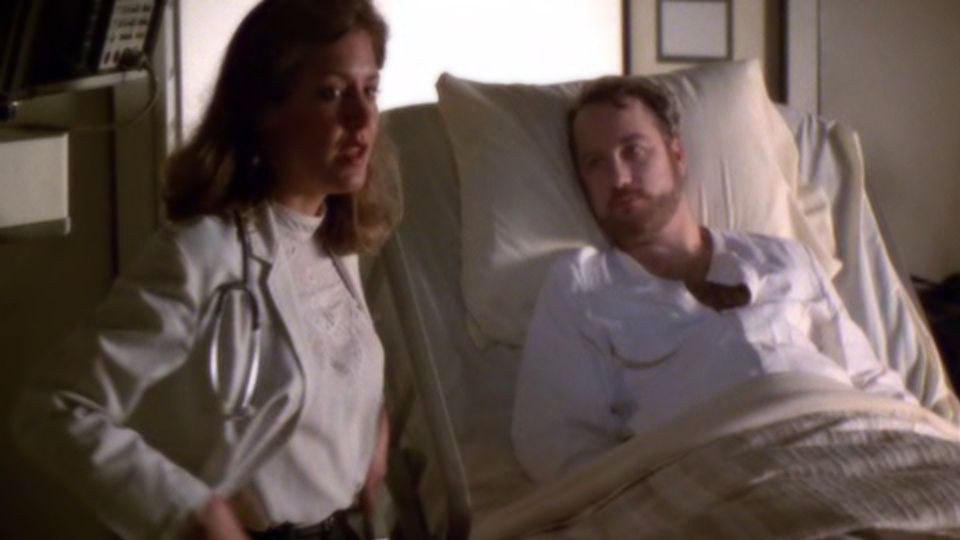


 Dr. Clare Scott (Christine Lahti) next visits Ken and she presents an upbeat demeanor as she talks about increasing his physical therapy so that he can lead a more “normal life.” Ken sees no purpose in her plan, and sarcastically asks if it will mean “I can resume my basketball career?” Ken realistically sees that he will never be able to regain what for him was “normal.” She is able to come up with a comical comment saying that he is too short to play basketball which makes him smile and pull back on his edgy attitude. Ken heard that Emerson was doing rounds and he asks if the doctor will be doing it while “walking on water.” Ken obviously thinks that Emerson makes god-like decisions that do not allow for the patient to determine his own treatment.


On his rounds with third year medical students, Emerson comes across a man of fifty-six years of age who just died. He questions the intern to make sure everything was done to save him. Emerson is an “extreme measures” sort of doctor. When one of the students yawns, Emerson is outraged that he isn’t sick that they lost a man under seventy years of age. He calls death the “enemy,” and that if they care more about patients than money then they should feel ill when the enemy has won. 


Nurse Mary Jo tries to give Ken a drink that he clearly doesn’t want, as he says it looks like somebody “already drank it.” He turns his head and knocks the liquid all over himself. He tries to kid about how a person “who can’t move a muscle” can still make a mess. She is flustered and embarrassed by her actions and moves him around quickly to end the incident. He says something about being like Charlie McCarthy, the puppet in a comedy routine, because that is how powerless he feels. He makes another dark joke by asking, “How did the quadriplegic cross the road? He was stapled to a chicken.” This gallows humor is the only way some can deal with the unthinkable. She then pushes him to the side too far and he almost falls off the bed. He keeps saying how it was not Mary Jo’s fault and it was “just an accident.” He is there because of an “accident,” but it doesn’t make what happens any easier to accept. Not only the patient but also those that care for him feel defeated by what has happened. 


Emerson shows up and the humiliated Ken doesn’t want the student physicians to see him so compromised. Emerson examines Ken’s neck movements and tells him “You’ll be fine.” Ken’s response is “Are you kidding?” These two are definitely not on the same page. Emerson says that he is approaching discharge, which Ken wants probably so he can have some autonomy, but then he finds out he will be going to a rehabilitation facility. Ken is sarcastic when he says, “You just grow the vegetables here. The vegetable store is somewhere else.” When he asks directly for the first time if he will ever regain the use of his limbs, Emerson says he will not. Despite the shock of this reality, Ken thanks the doctor for his “honesty.” However, the doctor says that people learn to accept things. But that generalization, like many, is not always true.


Dr. Scott and Dr. Emerson prescribe an increase in Ken’s sedatives, and when Scott brings the Valium, he says he doesn’t want it. He wishes to hold onto his anger and freedom which includes being noisy if he so desires. He tells her just because they can’t fix him that “does not mean I’m the one that has to get tranquilized.” It's as if they want to cover up their being uncomfortable with their lack of success by quieting him down. He says point-blank that all he has left is his “consciousness” and he doesn’t want “that paralyzed as well.” He is trying to hold onto what’s left of his individuality. 


At lunch, Scott is becoming Ken’s advocate and tells Emerson that Valium isn’t emergency medicine, and she questions how it will help Ken. Emerson, acting all-powerful here, says that Ken isn’t ready to accept his predicament yet, and the sedatives are to calm him until he is ready. He adds that it is their job to get him to accept his new life. Emerson, although meaning well, does not take into account the feelings, ideas, or wishes of the patient. He gets a syringe of Valium and prepares to inject it into Ken. Ken says he no longer wants to live, and Emerson, unable to accept that, says it is Ken’s depression talking. Ken specifically tells Emerson not to inject him, but Emerson ignores his request under the reason that it is medically necessary. Ken is outraged at this violation of his freedom. Emerson says he is just like Ken when he is sculpting, because he, too, refuses to give up on a project. But Ken rightly points out the difference between manipulating an inanimate object and a person, accusing Emerson of treating him like a “lump of clay.”


While he is sedated, Ken has memories of how he sketched and sculpted renditions of Pat. These images show how their lives intertwined and were full of movement, which just accentuates his current anguish as he looks at his unresponsive hands. When Pat comes the next day he refers to himself in the past tense, and says that he is no longer the person she loved. He wants her to leave and not come back because he wants her to have a real life with someone who can love her back. He says if their roles were reversed he would leave her “flat.” Most likely he is being cruel to be kind. He argues that when she visits every day it hurts him because it is a reminder of “what I will never do again.” Her presence is “torture” to him, despite her loving intentions. So, instead of providing him with positive feelings, her visits have the opposite effect. Ken will not even allow her to kiss him goodbye. She is upset and when she grabs her things to leave, she knocks over the vase of flowers she always brings and it crashes on the floor. It is a symbol of how their love has been dashed to pieces. 


Emerson scheduled Ken to see Mrs. Boyle (Kathryn Grody) and again Ken has no choice in the matter. He jokes that if he doesn’t see her, Emerson will “dissolve” the woman and “inject” her into him, as he makes a reference to how the doctor gave him the sedative without Ken’s consent. He tells Boyle he “used to be” Ken Harrison, as he now feels he is only a ghost of his prior self. She tries to counter his decision to not have any more treatment by noting how other artists who were nearly blind or crippled still did not give up. Boyle says he will be able to read and write with machines and express his artistic vision through teaching and creating poetry. He says you can’t just switch artistic abilities. He says his imagination “spoke” to him through his “fingers,” which cannot happen anymore. He is sarcastic and says he wants the first book he reads to deal with how to sculpt without hands, and be “Self-Taught.” She is ready to leave saying he isn’t ready for the present discussion, and he says she should treat him like a human being who wasn’t paralyzed and get angry at him for his rudeness instead of hiding behind professionalism. It is a form of condescension that makes him want to end his life even more.


Ken becomes so exasperated that he has a breathing spasm and John whisks him away to get some help. Ironically, he can’t die without the help of others, whose own impulses are to save him. John gets Ken to laugh at a joke, which allows Ken to enjoy living, if only for a moment. Scott shows up and Ken notes she has “amazing breasts.” She is a bit embarrassed, and he is funny when he says it isn’t the usual thing to say when only one of the persons is in the bed. He makes an interesting point about how relaxed a woman can be when there isn’t “a man around.” The implication is that he is not a sexual threat or someone to desire, so she is free to not be self-conscious. However, it just reinforces the loss of his own sexuality. He sees the sadness in his overcompensating with suggestive banter because of his body’s inability to perform sexually. He says the only reason her moral view of not letting him die bests his view is that “you’re more powerful than me. I am in your power.” It has nothing to do with the merits of the situation from his perspective. 


Ken requested the automobile insurance company’s lawyer, Carter Hill (Bob Balaban), to talk with him. He wants Hill to get him discharged from the hospital so that he can die by ending medical assistance. He can’t feed himself or drink without help, and it was noted earlier that he requires kidney dialysis. Hill is reluctant to accept the request, but Ken says that if lawyers represent those they know are guilty, then he should have the same rights of representation as “an axe murderer.” (It is interesting that Dreyfuss plays a lawyer representing Barbra Streisand’s character who is trying to prove she is mentally sound in the film Nuts).


The unsure Hill tells Ken that he wants to meet with Emerson first before representing Ken. But Emerson’s one-sided way of looking at things moves Hill toward arguing for Ken’s hospital discharge. Emerson says his duty is to preserve life which he feels outweighs Ken’s individual wishes. He says that Ken is in a state of depression and is incapable of making decisions about his life and death, and he shows hostility toward Hill’s participation in the matter. Hill says he will bring in his own psychiatrist to get an objective opinion as to Ken’s state of mind. Hill tells Ken that if Emerson can get two psychiatrists to agree that Ken is mentally unbalanced then Ken's hospitalization becomes an involuntary commitment. Others always seem to be deciding Ken’s fate.


Emerson meets with psychiatrist Sandy Jacobs (George Wyner) about Ken’s case as Scott walks in. Emerson’s old-fashioned belief is that wanting to commit suicide automatically means that a person is of unsound mind. Scott is outraged and she says, “Aren’t we talking about his life here.” Emerson says Ken’s decision violates medical responsibility. Thus, we have the basis for the title of the movie. Scott argues that Ken has lost his “privacy” and his “dignity,” and she wonders if she would want to go on living if she was in his position. So, she says just because Emerson disagrees with Ken it doesn’t make the patient mentally incompetent. She says that Emerson is not just acting like a doctor but also like a “judge.” The film does show how the legal and the medical worlds are sometimes at odds with each other. Seeing that Scott is partial to Ken’s thinking, Emerson threatens Scott with an autopsy if Ken dies and Emerson suspects there was an assisted suicide.


In the dialysis unit, Ken jokes with a young girl named Lissa (Abigail Hepner), saying he will be playing for the Boston Red Sox at the shortstop position. He then says actually he will just be wearing red socks. He is thrilled to hear that her treatments are being cut back and he probably sees a full life ahead for her. The short scene contrasts how medical treatment for some is hopeful and for others, hopeless.


Jacobs meets with Ken, who is very clever as he points out that medical knowledge about his condition helps him make a decision, but it’s still his decision. He likens doctors telling him what to do with a sculptor trying to determine what a client should buy. Jacobs says that Ken’s intelligence works against him because it shows he has more reasons to keep living. Ken points out the Catch-22 aspect of Jacobs’s argument, noting it states because he is intelligent enough to make decisions it shows he is too smart to warrant death. While they talk, Jacobs tidies up and folds a towel, and Ken points out the man’s obsessive-compulsive tendencies. It is funny, as the layman Ken becomes the diagnostician. 


Ken then has an interview with Hill’s psychiatrist, Dr. Barrows (Mel Stewart), and he continues to demonstrate his wit (as to tests, Ken assures him he is “rotten” at running the hundred-yard dash) and anger (mad about how conspiring doctors stick together while requiring him to prove he is sane, a difficult task for anyone). Barrows, like the other “professionals,” retreats when Ken responds in a perfectly normal emotional way instead of dealing with him on a basic human level. 


Scott goes to see Pat and observes the works of art Ken has created, which most likely makes her understand what he no longer can accomplish. Statues are immobile, but they can capture a moment of movement which Ken has done concerning Pat’s dancing talent. Pat holds up a piece of a hand. In a way it symbolizes his situation. Ken’s body is now like one of his works, frozen in time. Scott says that she is there to talk about a way to help Ken. But Pat has taken Ken’s words to heart. She talks about him as the “late Ken Harrison.” She is wrapping up his business affairs concerning selling and storing his work, as if it is part of an estate of someone who has passed away. She is also getting ready for a date, so she has accepted his demand that she move on. To Scott, Pat seems cold at first, but Pat says the real Ken is in his art, not in what remains in the hospital. She respects Ken and that is why she honored his wishes. She says if Scott respects the man, “Then just let him do what he wants to do.” 


Scott visits Ken after hours and she tells him that she went to his studio and admired his sculptures. She was going to place one of the works in his room but he says that instead she can have any one of the pieces she wants. She just so happens to really like the hand and she brought it with her. Ken says it is the best one, but not his. It is a representation of Michelangelo’s painting in the Sistine Chapel of God creating life. While they laugh because Scott is embarrassed about not recognizing the piece, the incident points to how the creation of something out of imagination is how an artist is god-like. She points out that he seems to be enjoying himself and he admits feeling human for the first time in a while, but he is sure he wants to end things. The film implies that there may be moments of enjoyment, but in the long run, such an extremely limiting life would be intolerable to someone who experienced existence so completely.


 To provide him with one of those fun instances, Orderly John and Nurse Mary Jo sneak Ken into the basement where John’s Jamaican band, The Rebel Rockers, perform for him and he smokes some marijuana with them. When a security guard hears them and the band runs out, the stoned Ken asks the guard, “Isn’t this dialysis?” It is an example of how well the script makes the heavy moments palatable with some comic relief.


Hill tells Ken the next day that he will represent him, and he says that instead of a competency hearing he wants to apply for a writ of habeas corpus. As Hill says, “It is against the law to deprive anyone of his liberty without due process.” So, if due process has not been provided, the person, or “body,” must be relinquished. Ken voices his variation on Shakespeare’s play title by saying, “All’s well that ends,” leaving off the final “well” to stress that his “end” will make things “all well” for him. 


 As he is wheeled into a room at the hospital for his hearing, John and Rodriguez will not wish him luck because they don’t want him to die, while others, such as Mary Jo, do. Even his own lawyer, Hill, said it was a case he wouldn’t mind losing. The disparity in opinions mirrors the population in general as to the split feelings about suicide due to incurable medical reasons. Judge Wyler (Kenneth McMillan) presides over the informal meeting. Emerson testifies that it is impossible to suffer such extensive injuries without mental trauma, and he concludes, although he is not a psychiatrist, that Ken is clinically depressed. Hill stresses that despite Emerson’s experience, he is not officially trained to justify his impression of Ken. The psychiatrist Barrows states that Ken is reacting in a normal manner to his circumstances, and is not clinically depressed. The attorney representing the hospital, Mr. Eden (Ward Costello), asks if Barrows thinks Ken is making the right decision to end his life. Even though the psychiatrist does not have to answer that question, he volunteers that he believes Ken is wrong in what he is trying to do. That, however, is a subjective impression, and does not contradict Barrow’s earlier statement that Ken is acting in a rational manner. Again, the question is who gets to choose concerning Ken’s life or death path? 


Wyler says he would like to ask Ken some “noninflammatory” questions. Ken’s sharp comment is that he would prefer “a hanging judge.” Wyler sees himself in that role no matter which way he rules, since Ken is in a no-win situation. It’s just a matter of which way to lose is worse. The physicians who side with Emerson’s opinion say that Ken is “not capable of making an informed, intelligent decision.” Ken refutes that decision, basically saying it has been used to support the doctors' desire to keep patients alive. Ken says he is already dead and wants that recognition. Ken argues against Wyler’s assertion that Ken is legally alive because life must “include the idea that it be self-supporting.” He states that he isn’t asking anyone to end his life, only to leave the hospital so he can die naturally. He emphasizes that his freedom of choice is being denied. But the decision to end his life comes so unnaturally to many people that they can only conclude that it is not a coherent decision, and they want no part in playing a role in what will lead to the end of a person’s existence, especially one that shows so much intelligence and wit. 


For Ken, staying in the hospital just to maintain his mind without any ability for him to control his life is an act of “cruelty.” He argues that is especially true for him because his work as an artist was the most important part of his life and only having his mind intact without being able to utilize his imagination has turned his consciousness into his “enemy,” which “tortures” him. He loved experiencing women and now he can’t tolerate their presence because it is so punishing not to be able to respond to them in any fulfilling way. He states he is in a state of “outrage” that they can decide to continue this hell just “because you cannot see the pain,” as it is in the mind and not the body. He says that he would like the same mercy one would show a mutilated animal on the road while at the same time not asking anyone to resort to an act of violence. Otherwise, in about five years Ken implies that they will see how they have damaged him irreparably.


Wyler needs time to deliberate and when he returns he cites cases that would allow for choosing one’s own destiny. He also states that if Ken is clinically depressed then he would not be able to make a rational decision. Wyler concludes that Ken is a brave and thoughtful man and is capable of making an informed choice. He rules that Ken should be allowed to end his hospital care. Ken is grateful while those who have become close to him have mixed reactions. Emerson says Ken can stay at the hospital without treatment so he can be around familiar surroundings and people until he passes away, which Ken agrees would be easier for him. But Emerson admits that he hopes Ken might change his mind.


John wheels him into his room and inserts some dark humor by pulling the sheet over Ken’s head, making him look like he is already a corpse, which makes Ken laugh. After John leaves, Scott enters and she strokes Ken’s face, but when she moves in to kiss him, he turns his head, pleading that she not continue, since it only emphasizes what he wants but can never have. She leaves in tears, and Ken is alone as the sounds of the hospital surround him, showing how life can go on for others. The last shot is of Michelangelo’s hand of God that perhaps here suggests that sometimes one’s life should be in one’s own hands.


The next film is The Stunt Man.
Sunday, March 7, 2021

The Slender Thread

 SPOILER ALERT! The plot will be discussed.


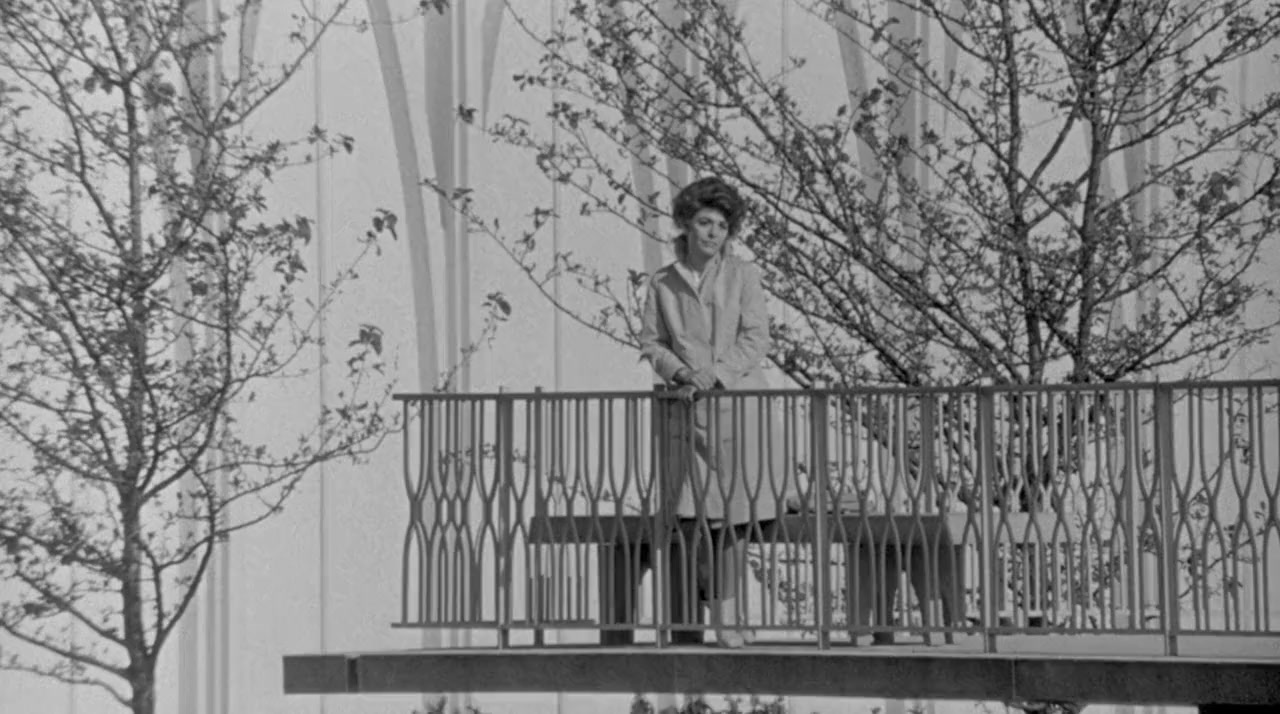
The Slender Thread (1965) is future Oscar winner Sydney Pollack’s motion picture directorial debut. The screenwriter is Stirling Silliphant, who will go on to write the Oscar winning In The Heat of the Night. The movie’s establishing shot is an aerial view of Seattle (the Space Needle tells us the city). The camera moves from the general to the specific by zeroing in on one individual, Inga Dyson (Anne Bancroft). (Does her last name sound like “die soon”?). The implication is that there are many stories in the city, and here is one of them. The music changes from soothing sounds to jazz-like instrumentals that sound somewhat discordant, which fits the sad look on Inga’s face as she stands alone next to an outside fountain. The soaring water and the rising elevator on the Space Needle contrast with Inga’s depressed mood.


The camera pulls back to its original height and the placid music returns until the shot pulls in on Alan Newell (Sidney Poitier). (His last name could suggest that he will try to help someone break away from old feelings and make her a “new” person who feels “well” again). He is a psychology student who is leaving classes at a university. The music switches back to jazz as Alan walks past protestors with pickets announcing a union debate. It appears that the film is saying that things may appear fine from a distance but when we look closely, we see that problems exist. He drives in his car away from the campus to his volunteer telephone position at a “crisis clinic” that has a suicide hotline.


The camera pulls away once more to introduce another character, Mark Dyson (Steven Hill), who is at the city’s pier. He hands over some documents to a harbor official and we see in his wallet a photo of Inga, which portrays her smiling broadly, a sharp contrast to the woman we have just seen. Mark is her husband and a commercial fisherman. 

 Inga is driving erratically on the same road as Alan, which is an indication of how their separate paths will merge that evening. Inga’s car has a plastic flower attached to its radio antenna. Could it be that with this image of the flower coupled with the reckless driving we have something hopeful that encourages one to hang onto the “slender thread” of life and works to fend off the impulse to seek oblivion? The happy feeling the flower suggests contrasts with the desperate look on Inga’s face. 


 At the clinic Alan encounters Dr. Joe Coburn (Telly Savalas), who wants to leave to have some time with his child (his desire to be with his family will contrast with Inga’s estrangement from hers). Alan juggles several books and is hoping for a quiet night so he can study for his finals which take place the next day. No such luck. Even secretary Marian (Indus Arthur) leaves after she finishes preparing coffee for Alan. Marian tells him that it has been a silent night. But Alan can’t settle in as a drunk barber calls who is just using the clinic to complain. Then Alan receives a call from Inga who says she needs to talk to someone. Alan can tell immediately by the somber sound of her voice that she requires his attention. He tries to get information from her as he puts her voice on a loudspeaker system so he can perform other actions when he isn’t using the handset. She does indicate that she is a “Mrs.” not a “Miss,” is thirty years old, and mentions Mark’s name. He tries to gently coax information out of her, and Inga says he seems adept at handling “disturbed” people. She says she can make that disturbed state go away with the right amount of “pills.” He is concerned now and asks if she is thinking of taking “barbiturates.” She says she isn’t thinking of taking them. He seems relieved at that remark, but she says she has already swallowed them. The story now introduces a ticking clock which builds suspense as we become invested in the race to save Inga. 


Alan has Dr. Coburn’s phone number in case of an emergency, but Inga is saying “Goodbye” so he must act on his own. Alan says he needs to talk to her, just like she called because she needed to talk to someone, so he asks if they can deal with those needs together. He admits he is just a student volunteer, which lets her know that he is not a jaded shrink who uses standard psychiatric techniques, and that he actually wants to connect with her. After being frank, he pretends to need a cup of coffee, and goes to another line to trace the call. He tells the telephone operator to contact Dr. Coburn for him so he can stay on the line with Inga. He gives the phone company authorization to locate Inga (this is 1965, so finding the location of someone on the line is time-consuming given the existing technology. The behind-the-scenes look at the telephone machinery here is repeated in Pollack’s excellent Three Days of the Condor). 


Alan is again truthful when he says he really doesn’t know how to handle the situation despite training to develop a “rapport” with the caller. He has made a rudimentary sketch of her so he can better relate to Inga in a more concrete way. She admits he has a nice voice but is still ready to hang up. He pleads with her to stay on the line and asks why she wanted to end things that day. Instead of just talk, Pollack dramatizes her words. She says it wasn’t anything significant that happened. She was going to work that morning, carrying flowers (that symbol of hope), and she was smiling as she left the elevator at her office where she is employed. She puts the flowers on a tray with coffee for her boss, but he calls her and says he is extending his skiing vacation. It’s a disappointment, and she seeks to have lunch with a colleague, Jinny (Kay Doubleday), who adds to the negativity by saying she is supposed to meet someone else. 


Alan’s frustration is mirrored in his pacing around the room like a caged animal. He is incredulous that the circumstances she recalled would cause her to want to kill herself. Inga says it was just that she was trying to keep busy so she wouldn’t have to “think,” which means she was already precariously troubled. She questions how he knows her name, but she did tell him during her narration of what occurred earlier in the day. Nevertheless, she is suspicious that he is trying to trace where she is. He lies when he says he doesn’t know anything about tracing. He is dishonest at the same time he is asking for trust because he instinctively thinks the deception is for the greater good of trying to help this person. He asks when she took the pills, most likely to ascertain how much time she has left. She wonders why he cares. After all, she is just the disembodied voice of a stranger. Alan again is honest as he admits he doesn’t know why, just like she can’t state the exact cause of why she chose that day to end her life. Finding the cause of each effect is not an easy task.


The phone company finds the call is coming from a spot close to the airport, but they need to send a person there to verify the trace. An operator calls Alan and gives him the above information, along with the fact that Dr. Coburn’s phone is busy. Alan tells the operator that they should have a police car go to Coburn’s house. Alan is in the stressful position of jumping back and forth between phone connections to get help and still keep Inga on the line. She is suspicious why he was so short with the other caller, and he again alternates between truth and lies. He makes her laugh and says she would like to have met him under other circumstances. He asks that she tell him where she is so they can become acquainted, but the only response he gets is resigned silence. He tells her how much it upsets him that she should die, but she says she is not afraid and feels “wonderful,” her voice almost sounding elated due to being liberated from her worries.


 He presses her for more context as to why she has made this choice. As she tells her story we again get a dramatization which shows Inga going home and seeing her twelve-year-old son, Chris (Greg Jarvis), outside. When Inga goes inside the house her husband looks dejected and is angry because an inheritance check was sent to Chris from his dead “father.” We realize Inga was involved with another man and Chris isn’t Mark’s son. Inga is stunned that this secret was revealed. She says she was seeing another man just before marrying Mark, and pretended that the child was his but was born premature. (Inga is worried about Alan being truthful with her because she knows from her own actions how deceitful people can be). Mark is furious and, before he storms out of the house, says that a person is owed the truth. Yet we see that in this movie that sometimes total honesty may hurt others.


Inga, probably feeling as if she has lost her family, walks to the edge of the beach and heads into the water, trying to drown herself. But, a young couple who are making out see her and prevent her death. Inga is then hospitalized and medicated. When Mark visits her, she is sarcastic when he says he went to church and she asks if he informed the “congregation” about her suicide attempt. She wonders if she should apologize for “not dying.” When he starts to go, she drops the attitude and asks him to stay. She says they could start to make things right by him bringing her flowers. They are again a symbol of life and hope for her here. She says in time Mark can forget about the paternity problem since nobody has to know, not even Chris. She is employing here what Alan does which is to tell a falsehood for the general good. But the religious Mark wonders what rules she lives by. He says to her, “Do you think that not getting caught in a lie is the same as telling the truth?” (The same line is delivered by the moral character played by Robert Redford in Three Days of the Condor). For Mark, it’s a matter of personal ethics, not just how things appear. 


Inga cries after telling that segment of her story, and it sounds as if she drops the phone. That sound energizes Alan as he calls out to Inga because he probably thinks she passed out due to the medications. She hasn’t, but was just reaching for tissue. She says it’s not “natural” that he’s “so kind.” That is a viewpoint of someone who has become very cynical about humanity. He again is forthright with her, saying he’s not kind and that he sits by the phone at the clinic because it’s part of the curriculum. She laughs about how he can use what’s happening to write about the “crazy” lady who killed herself. It’s gallows humor she is employing, which is the default type of joking when there is no hope in sight.


 Dr. Coburn arrives, but doesn’t want his presence revealed since it would interrupt the trust that Alan is developing with Inga. He says that if he starts talking to Inga she will hang up. So, in a way, his pretending not to be present is also a deception. Coburn says Inga’s “capacity” for dying is greater than their ability at the moment to keep her alive, and Alan has been able to have her hold on up to this point. Coburn tries to gather information on another line while he listens to what Inga is saying on the loudspeaker. She has put on the TV and there is a laugh track heard. Inga wonders about the lack of sincerity in getting paid to laugh, which brings up the problem about honesty again. (The prompting to have a person laugh on command comes up later). She says the laughter of a person can live on after the individual dies because he or she was recorded. It’s as if she is searching for some type of life after death, or she may be being sarcastic about how the expressed joy is tarnished since the employed laugher eventually dies. 


The phone company and police department investigations continue. Based on the information Coburn provided, Sergeant Harry Ward (Paul Newlan) calls the clinic to inform them of Inga’s last name. Also, Detective Judd Ridley (Ed Asner) volunteers to search for Inga based on facts relating to her identity and where they have traced the call thus far. There is a medical technician (Jason Wingreen) who has arrived at the clinic to monitor Inga on the phone connection, and Marian returns to help out. They hear an airplane that is either landing or taking off on the speaker, which tells them Inga is near an airport, which seems fitting since she wants to escape from her life.


 Inga sounds sleepy as she says she can’t visualize her own death. She tells Alan that she feels numb and it's dark. These are physical observations, but they can also reflect her mental state. Alan gets loud, telling her time is running out and that she can’t think her decision is the right choice for her. She tells him not to deliver a sermon, because that was what Mark made her listen to. There is a flashback to when Mark took her to church, and during the mass she says it seemed like she was a child being spanked, which suggests that she felt as if her husband was belittling her. She says her family looked like a “picture of togetherness,” but the surface appearance was deceiving. The priest’s sermon talks about one being “shipwrecked” if there is no “pilot,” which means one's moral compass must rely on God to set the direction. Mark looks pensive as he hears these words and exchanges glances with Chris. Mark is probably thinking about what he should do concerning his wife’s secret and the knowledge that he is not the true father. The mass ends but Inga remains in the pew alone, which shows her isolation from her family. Mark approaches her and she asks why he brought her there. He says it’s a place of “faith” which he hoped would help them both. She obviously is not a churchgoer and he is, but neither have received the help that he hoped for. He can’t forgive her, even though that is what his faith preaches, and she can’t forgive herself, as she says she feels “evil,” an attitude Mark has fostered. With that belief, is it a wonder that she became suicidal? As he leaves the church, Chris tries to give him a departing hug, but Mark is not warm toward the boy he raised but does not see as his own. Mark goes off to his job as a fisherman (St. Peter was a fisherman who initially turned away from Jesus after the crucifixion), leaving Inga with her primal doubts about her worth as a person.


Back in the present, the medical technician says Inga’s breathing is decreasing and he gives her thirty minutes to live, which increases the tension in the story. Inga is philosophical now, as she wonders if there is an afterlife, which in this context means she is looking for justification for ending her present life. Alan is frustrated and his anger comes out as he berates her for giving up because she made a mistake like so many others do. She is upset with his preaching, and Dr. Coburn warns Alan that he will lose her if he continues “moralizing.” Even though he put his hand over the phone, Inga thinks she heard another voice, and he must lie again to reassure her that it is just the two of them. She shows her dark humor by saying they just had their “first fight,” making them sound like a couple under these morbid circumstances.


The police know where Inga lives and they go to her house but find she asked someone to stay the night with Chris while her husband is away fishing and she may be driving to Portland, Oregon. Mark’s boat is called The Provider, which fits in with the traditional role of the man being the primary earner in the family. But, it also ironically shows that he hasn’t been an emotional “provider” for his wife, who subsequently seems to be psychologically out to sea. 


Alan is sweating now as Inga’s respirations are almost half of what they should be. He says she is making the situation like a game, but her winning the smaller contest will mean she will lose the bigger one involving her life. He isn’t getting anywhere with her as she says he must be tired of repeating the same argument. She just wants him to be “sweet,” but he says he can’t give up, because he now has come to care about her. She has given up on others while he will not give up on her, which suggests that type of caring may be the reason that makes life worth living. She asks if he would have forgiven her for her past mistake, and says when Mark came back from his fishing run he “almost” forgave her. We have another enactment, as Inga waits for Mark’s boat at the pier. She bought a “soft” dress, (to fight his hardness?) which is white (to suggest the innocence of a bride?). They try to joke, but it seems forced. He suggests going with fellow fisherman Charlie (Dabney Coleman) and his wife, Edna (Janet Dudley), to a club, where there is rock music and wild dancing. The people there are full of life (the opposite of Inga’s present state) as they gyrate along to what the band plays. Inga is enjoying herself, but feels as if she can’t go on the dance floor, probably for feeling she doesn’t deserve to have fun, even though Charlie and Edna join in, and Mark suggests the two of them dance also. His doubts about Inga show on his face again. There is a daydream on Inga’s part as she sees herself and Mark in silhouette as they appear to be ready to make love. She is caught between what she hopes for and what is.


Back home, Mark hesitates before entering the house, not sure if he is ready to go in. The two wordlessly go to the bedroom. He changes into his pajamas and robe in the bathroom, and she has bought a nightgown for this night. She turns to him to unzip her dress, but he doesn’t react sexually to her. As she goes into the bathroom to change, he sits on the bed, looking tense, unsure as to what he should do concerning his resentful feelings toward Inga. He gets into bed with his hands behind his head, implying he will be keeping them off of her. Her face as she leaves the bathroom goes from hopeful to disappointed. After she is in bed, he says, “I’m sorry,” and turns away, so she is left with his quiet condemnation of her.


We are back in the present, and Inga is fading as she says her legs feel like “anchors,” she can’t wiggle her toes, and she slurs her words. She tells a joke, but there is a hopeless slant to it. Alan doesn’t laugh, and she says she wants to hear his laugh. She seems to want to have a fun, positive moment with someone who is a stranger but with whom she has made a meaningful connection in life just before her death. He is put into the position of those paid to laugh for soundtracks. At first he can’t, but then becomes hysterical, as if letting out all his frustration at the absurdity of the situation. The others in the room start to quietly chuckle, as we know laughter can be contagious. But because it goes on, Inga’s stern voice orders Alan to stop, perhaps because she feels as if her situation is being ridiculed, or that the extreme response contrasts too sharply with the fact that this conversation may be her last. 


 Detective Ridley finds Inga’s car and Art Foss (Steven Marlo), a telephone company employee, arrives at the station on the city's outskirts to verify the trace. Inga says Alan will be a “celebrity” on campus the next day for trying to talk down a “stupid” person. Inga’s words continue to mirror her husband’s and her own view of her worthlessness. Alan personalizes their link by saying he doesn’t have many “friends,” thus admitting he feels she is now one of them. He goes on to tell her that she will have no legacy, because there will not be any “history,” or “love” or “beauty” connected to her life, and her story will not be heard. Even though it isn’t explicit, his being an African American connects her to him because he expresses that he knows what it’s like to be marginalized. He calls her a “good” person, and says the world needs more of those. He offers her how he still celebrates the smallest aspects of life and wants her to join him in that perspective, which suggests she could then hold onto that “slender thread” of life.


 She relates that earlier in the day she was on the beach and children showed her a dying bird. The flashback shows her going to the liquor store to get some brandy and is honest with the shopkeeper that it is for a bird, hoping that her humanitarian act will be appreciated. But she is greeted with sarcasm by the shopkeeper, and she becomes angry as she leaves saying to him that he doesn’t seem to care “if something dies.” She wishes Alan had been there because he obviously does care about keeping an imperiled creature alive. She returns to the beach but she finds the children gone, and they made a small grave for the now deceased bird. They placed a flower on it, another appearance of that object. Is it meant to show sympathy for the dead, or is it also an ironic symbol of lost hope, given the use of flowers in this story? She pours the brandy over the marker, and then stomps on the grave, showing the futility of trying to make a difference by doing a good deed. She goes to the pier to be with her son and sees Chris sailing a model version of Mark’s boat, with the “Provider” name on it. He hands the model to her because he is going to play a baseball game, abandoning her to her loneliness. The boat probably reminds Inga of how Mark thought of Chris as his son, and now that her secret has been discovered, that bond has been weakened. 


We then return to the opening shot of the film. Inga tells Alan that there were coins in the water fountain that stood for all the people who made wishes on them. She most likely sees those hopes dashed. She says she had no place to go and even tried to get arrested by driving erratically to gain some kind of attention, but nobody noticed her. That includes Alan, who was on the road at the same time, so he was an unknowing accomplice to her desire to end it all. She kept looking for help as she went to the hospital where she was treated for her suicide attempt, but the doctor who treated her no longer worked there. The nurse offers to have the on-call resident, Dr. Morris (H. M. Wynant), see her as she is desperate to grab onto a mental lifesaver. (Flowers are again seen in the background, suggesting the reaching out for hope). When he arrives he says he can’t treat her unless she commits herself. She says she just needs somebody to talk to immediately, but instead finds herself placed on bureaucratic hold. It is ironic that the only way she does get somebody to listen is by the extreme act of attempting suicide. 


There is a scene that shows her emptying pills on a bed in a motel room as she tells Alan she wondered how she could swallow all of them, but she did. She writes a note to Mark saying she hates him, but then tears it up, probably feeling guilty about her anger at his lack of forgiveness. She sees the phone number for the newly opened crisis clinic in a news story and that is how she came to talk with Alan.


In the present, Alan yells at her that his love for her as a human being isn’t enough to pull her back to the living. He says she has to act to save herself and threatens to hang up the phone. Before he does, she begs that he not leave her. At the same time, the police establish the motel where Inga is staying. Mark is notified and he gets a ride on a helicopter to the shore. Detective Ridley heads to the motel address. The information is sent to the clinic, and Alan is overjoyed as he tells Inga he loves her, and she returns the sentiment. He is thrilled, but Dr. Coburn deflates his hopes (a lot of that is happening in this film) when he says that Inga is not registered in her name, is not using the motel telephone operator, and there are two hundred rooms to search. 


There is a party in the lobby of the motel and the jubilant people contrast with the life and death search going on. Inga is not staying as a single guest because the authorities checked out all of those rooms. Inga registered as a couple, maybe not wanting to lose her husband, even in death. She is about to pass out, but she does tell Alan that she is not on the ground floor. As that “slender thread” is about to be severed, she finally asks for help in an attempt to hang on. She falls out of the bed with the phone off of the hook, and passes out. Mark arrives at the clinic, takes the phone and calls out to Inga. They hear the police break down the door to the room and they tell Alan and the others that Inga is still breathing. The line goes dead, but luckily Inga is not. Alan can finally hang up. Mark smiles in relief and tells them he will let them know how Inga is doing when he gets to the county hospital. It appears that he is committed at this point to being there for his wife. 


 Alan says he feels good and beats his chest in triumph. Coburn says he’s going to the hospital to follow-up on Inga, and says he knows Alan will be fine by himself, acknowledging his confidence in the student-volunteer. He asks Alan if he wants to see Inga. He thinks about it for a moment, smiles, and says “no.” He did his job to keep that slender umbilical thread intact in the moment of crisis. It is now time for others to help her strengthen that connection to her life.


The next film is A Few Good Men.