Showing posts with label nature. Show all posts

Monday, October 26, 2026

Gorillas in the Mist

 SPOILER ALERT! The plot will be discussed.

Gorillas in the Mist (1988), which has similar themes to another film analyzed on this blog, Instinct, begins with Dian Fossey (Sigourney Weaver) arriving late for a lecture on the possible extinction of the Mountain Gorilla in central Africa. Poachers have dwindled the population of the animal, an example of short-sighted human selfishness that endangers the environment for all. The lecturer, Dr. Louis Leakey (Iain Cuthbertson), says interest in these gorillas is important because we should want to know who we are and “what it was that made” us “that way,” since we evolved from these creatures. He believes it is important to see how they adapted to their environment to give us a clue as to how humans did so.

Fossey wrote to Leakey six times asking about working in Africa and shows up here to physically get in touch with the man to plead her case. Since she is a physical therapist who works with handicapped children who don’t like anyone getting near them, she believes she is qualified to use her skills to approach and study the gorillas. She convinces him with her passionate plea that she can take a census of the animals for six months in the wild.

The mission is complicated by civil war where she is going. The residents there tell Leakey that a woman living alone in the jungle must be “mad,” which shows a sexist attitude prevalent for the time. One of the men, Sembagare (John Omirah Miluwi) becomes her tracker. A priest taught him how to speak English. That fact also explains why he wears a St. Christopher’s medal, the patron saint of travelers. The implication here is that maybe a spiritual element is necessary to embark on Fossey’s mission.

She has traveled thirty-five hours, and Leakey wants her to leave immediately for a four-hour drive to her destination. She even must figure out how to drive a four-wheel-drive stick-shift Land Rover immediately. She wants to at least take a shower. He says she doesn’t need one here. This scene shows the immediate need to transition to a much more primitive world. But she says she left her job and fiancée. She even had her appendix removed since a previous adventurer suffered from appendicitis, so she wanted to be preventive. That dedication she argues is enough to have at least her luggage containing her personal items accompany her. She says, “if they don’t go, I don’t go.” Again, her persistence convinces Leakey. However, he flies off to Tanzania to do his work, leaving her to figure out how she can accomplish her goals, including writing weekly reports and contributing to National Geographic. There is no easing into her new job, and she must use all her personal skills to succeed.

The terrain she passes through shows us the remote, rugged, and primal territory where she must live and do her work. The contrast to the Western version of civilization is stark. Leaving their vehicle behind she and her guide and porters must go into the jungle up a steep hill. Sembagare says she can rest since even buffalo must stop on their journey. She is driven by her dedication and possibly her arrogance, so she refuses to quit hiking.

She finally rests when they arrive at the cabin where she will stay. She learns of the death of Sembagare’s family which occurred when his tribe was “wiped out.” The film stresses the ferocious nature of her surroundings here.

The film depicts another problem Fossey encounters in a humorous way. She travels four hours with Sembagare supposedly looking for gorilla night nests so they can take a census. Fossey thinks her tracker knows what to do but it turns out he doesn’t and says he was waiting for her to show him!

Six weeks have passed and they have not seen any gorillas, which adds to Fossey’s frustration and fatigue. One day she slips in gorilla excrement which points to the animals being close by. The implication is that sometimes one must go through unsavory hurdles to reach the desired goal. It pays off here as Fossey spots a gorilla and her response is ecstatic.

They find a troop of gorillas but the process of approaching them poses another challenge. The leader spots them and charges, causing Fossey to roll down a hill after she runs. When Sembagare asks what her book on gorillas advises in such a situation, she says it’s not to run, the exact opposite of what is instinctual. So, one must even question one’s first impulse in this alien environment.

An even more frightening incident occurs next. The local military tosses her written work out of her shelter. They say that they don’t want white people there. It is most likely because outsiders pose a risk to their authoritarian control, so they call Fossey a spy and want her out of the country. She is defiant as always as the soldiers roughly put her in a jeep. The opposing forces in the civil war fire their rifles near the vehicle. She is caught in the middle of the opposing factions. There are camera shots from her perspective showing the horrific acts of the soldiers. We are seeing events through her eyes. Her noble goals of helping save the almost extinct gorillas come up against the darker aspects of humans.

We get information by way of Fossey vocalizing her letters to Leakey. Thrown out of the country and losing her research information, she at least reunites with Sembagare on her way to find Roz Carr (Julie Harris), who Leakey said would help her. She says she will resign and go back to her fiancée. Playing it safe is not really in her nature. Carr loves the African people but recognizes the suffering there is constant. It raises the question, why is that so, and perhaps the fault is due to both domestic and foreign reasons.

When Fossey views majestic mountains nearby she believes mountain gorillas would live there. Carr says the peaks are on the other side of the border. Fossey’s meaningful words are, “gorillas don’t know borders.” Animals don’t restrict freedom, only humans do that. She realizes she shouldn’t have sent her resignation letter. However, Carr may have insight into Fossey’s passion, so she still has the letter.

Fossey now is in Rwanda where there is no civil war. However, her aggressive side is apparent since she now has a gun and is ready to battle anyone who tries to deter her from her mission. She has porters and Sembagare but she approaches the gorillas alone to lessen any feelings of threat on the part of the animals. The use of voiced letters back and forth to Leakey help to express thoughts even though they can’t have an in-person dialogue. He warns her of getting too close, but she is able to approach close enough that the gorillas jump over her and the young ones climb on her as if wanting to play. The leader, the silverback, watches attentively, allowing Fossey access while still staying vigilant. The terrible news is that the number of gorillas has decreased even worse than expected.

Fossey mimics hand and facial movements of the gorillas and they become fascinated by her, which allows her to get close to them. Then a tribe of natives who are threatening appear because they believe Fossey has disturbed the gravesite of one of their members. The leader touches Fossey’s hair and decides that its reddish color makes her a witch, so they depart most likely out of fear. Fossey uses the witch idea to scare the Batwa away from interfering with her. The acceptance by the animals contrasts with the hostile approach of the humans.

At the marketplace, a woman tries to sell Fossey a gorilla hand. Fossey is outraged and chases the woman, who escapes. Fossey realizes that despite the claim that the animals are safe in the area, the facts show otherwise. There are several animal traps placed there by the Batwa, a hunter group. Fossey dismantles many of these traps in defiance of the local hunters.

As she records gorilla sounds and imitates their noises and movements, she becomes more apelike, which distances her from the worse aspects of humans. Bob Campbell (Bryan Brown) shows up, a photographer for National Geographic, and says he thought he heard a real animal before entering her cabin. Fossey is not thrilled about having a photographer there, probably for fear of scaring the gorillas. He goes with her and Sembagare to look for the gorillas. Campbell says that the Batwa are hired by doctors, who always have copies of National Geographic in their offices. He says the Batwa just want to earn a living so they can eat. It’s those who hire them that get animal parts as souvenirs.

The silverback, whom Fossey has named Digit because of webbed fingers, charges Campbell as he photographs. Fossey tells Campbell to look submissive and pretend to eat leaves. She approaches Digit, and puts her hand next to the gorilla, who holds her hand. It is a moving moment that Campbell’s face reflects.

Fossey and Campbell have chemistry and become romantically involved. She knew from the first night he was married because he shook the rain off his parka before coming in, suggesting that a single man wouldn’t care about getting the inside area wet. He asks if his being married matters. She answers, “apparently not.” Could her defiance of human social codes derive from her becoming more attached to the animal world?

As the gorillas become used to Campbell’s presence, they allow him more access, and he feels happy. The scene shows how these relatives of people can connect to humans, maybe even better than how people accept one another.

The next scene shows the ugliness of humans as poachers attack and kill four of the gorillas Fossey was studying to capture a baby to sell to a zoo. She captures a child who is part of the poachers’ group and uses superstitious fear, a primitive human feeling, since she is dealing with baser instincts. She dons a mask and hair of a witch and frightens information out of the child. She this learns where the poachers were taking the chimp.

She finds the chimp whining in a box in the van of the person who paid for the poaching. She saves the animal and confronts the culprit, Claude Van Veeten (Konstantin Alexesandrov). He is at a swank dining spot which stresses how the rich can sometimes use their power to harm the powerless. He has a letter from the government that allows him to acquire the baby gorilla. She is defiant while he threatens to have Fossey arrested. The scene shows an unholy alliance between the affluent and the government.

Fossey makes a deal with a government official to acquire anti-poaching rangers to help protect, as she says, “her gorillas.” But she must eventually give up the chimp. It shows her protectiveness, but maybe also her possessiveness regarding the animals. She nurses the chimp back to help, showing her maternal instinct.

Campbell returns from his excursion and tells her that her campaign to save the gorillas has become well known. He also asked his wife for a divorce. She says she is scared. His humorous response is, “You’re scared? I’m about to marry a girl who’s liable to have gorillas for bridesmaids.” It’s the funniest line in the film, but it stresses how committed Fossey has become to the animals. She is traumatized on the day she does have to release the chimp. She later learns that the chimp died one year later. She says it’s good for the chimp, implying it’s worse to live a captive life among humans.

Her dedication to the gorillas outweighs her need for human connection. Campbell has work offers to be a photographer elsewhere and wants her to come with him on those jobs. However, Fossey can’t conceive of leaving her new family even for a day, so they part ways. She cries with her new family, sharing her loss with the gorillas.

At this point, Leakey has passed away. She has research assistants now and has not had a poaching in ten months. An unknow gorilla confronts her and her group aggressively. Fossey is so knowledgeable at this point that she tells them to stay still while she glares threateningly at the gorilla. She wards off the threat and says it was, “Just a bluff.” She has become one with the jungle.

The tranquility does not last while human greediness exists. The group that the gorilla Digit rules is attacked by poachers and they kill Digit, taking his head and his hands, as he defends his family. The guards capture two poachers. Fossey scares one poacher by staging a mock hanging. She has the poachers arrested. Her new researchers do not have the stomach for what Fossey is doing as she becomes more aggressive, more animal-like.

She raids the camp of poachers with her rangers and Sembagare. She sniffs around like a feral animal and then in an outrage burns the camp. She fires the research assistants who have sex by stating that place is not a “summer camp.” She tells them to get off “my mountain.” She is engulfed in rage and acts as if she oversees that part of the jungle.

She finds Digit’s troop which brings her immense joy to know that they have survived, even the pregnant gorilla, who has now given birth. And the members of the troop remember her and accept her the way a family should greet one of its members. She threatens the man hiring the poachers, Claude Van Veeten (Konstantin Alexesandrov) by saying if he sends more men to kill and capture gorillas, she’ll cut off his hand and use it as an ashtray, referring to what some of the buyers of gorilla body parts have done.

Sembagare warns her that she is making dangerous enemies, including those in the Rwandan government. She scares off tourists, telling them they can catch typhus, and she actually shot over their heads at one point. Sembagare says that means less money spent in the country. She says that she received a new work permit that extends her time there by three years. Of course, that makes her more of a target for those who want her gone.

At night, the time when cowardly evil deeds take place, the camera moves, imitating a threatening presence, and we only see the shadow of the attacker which makes the evil more general. Fossey is vulnerable, thinking she is safe in her bed, holding a picture of her beloved chimp as she falls asleep. The shadow of a machete reflects the deadly downward movement of the blade. Afterwards, we see Fossey’s blood dripping on the photo, both she and her animal child joined in death.

Fossey is buried next to her beloved Digit. The camera shows their family of gorillas enjoying their jungle home. The end notes state that Fossey saved many gorillas from poachers and her actions led to the repopulation of the species.

Monday, June 8, 2026

Instinct

 SPOILER ALERT! The plot will be discussed.

Instinct (1999) is not an impartial film. It is an indictment of how humans are dangers to the Earth. It stresses how people are so self-centered that they fool themselves into thinking they should be the masters of their world.

The opening shows gorillas in the wild, where the land stretches out far into the distance. It then shifts to a man, Dr. Ethan Powell (Anthony Hopkins in a terrific performance), the last name implying a physical punch, who is a famous anthropologist. He was missing for two years and now looks animal-like with scruffy long hair and beard. He is wearing chains in a cage in Africa. We are used to seeing animals held captive for no reason except for our amusement, but not humans, unless they have committed crimes. Ethan has broken human laws. Guards transport him in a truck with growling guard dogs. By the time they arrive at their destination, the dogs are docile and Ethan is petting them. The man has connected to the animal in himself and thus to other non-human creatures.


People from the U. S. State Department arrive and say they have Ethan now. Even though they remove the chains, he still has no freedom. The shift to Dr. Theo Caulder (Cuba Gooding, Jr.) treating a psychiatric patient under the approving eyes of his teacher, Professor Ben Hillard (Donald Sutherland), tells us that Ethan will be examined as a psychiatric patient. We discover that Ethan used to work at the same university as the psychiatrists and he killed two people and injured three others which explains his imprisonment. For two years he has not said a word, which emphasizes his detachment from human society. Theo exhibits pride when he says he can handle the research on Ethan’s case in a very short time.

When alarms go off at the facility where his captors have brought the now primitive Ethan, he becomes agitated and attacks all those trying to restrain his freedom. He has reverted to instinct, not contemplative intelligence, and is in a flight or fight mode. When he sees his daughter, Lynn (Maura Tierney), he stops his resistance and is overcome by guards. Her appearance summons up his connection to family, which, we later discover, was the reason for his violence in the jungle.

Theo (the name suggests “theocratic,” that is, a god-centered governance, ironic, as we discover) is only a resident but wants Ben to give him Ethan’s evaluation. He is ambitious and sees Ethan as a way of becoming famous by writing a bestselling book about the case.

Ethan is at an institution for the criminally insane called Harmony Bay, an ironic title since there is no “harmony” there. Theo must compromise his lofty ambition to treat the other inmates.


Theo’s first encounter with Ethan shows how the prison overmedicates him and uses a Taser on the man if he does not comply with rules. There is a literal line across the table that he is not allowed to cross. There is only an attempt to control, not understand him. Theo meets Lynn who says that her father was distant, obsessed with his work with little concern for his family before he went to Africa. Theo borrows pictures that she took when she visited Africa. When he shows them to Ethan, he smashes the picture of her. When Theo acknowledges that Ethan would rather be an animal, he adds that his daughter wants him back. He finally speaks and says “Goodbye” to his daughter’s photo. He now shows that he is not a psychotic divorced from reality by saying, “Have I made your fucking day?” Theo sees the picture of the jungle as his home, not his house in America. Theo promises to cut his medication if Ethan will tell him about Africa. Why does he allow Theo to gain access? The story shows he sees in him the potential to understand Ethan’s viewpoint.

The two meet in privacy now. Ethan describes his time in Africa, and the film visualizes his experiences there. It is vast, beautiful, and removed from human civilization. By increments he became closer to the silverback leader of the gorilla family. He says the clicking sound of his camera disturbed the gorilla. Once he abandoned the piece of technology, he says he “really” saw animals as Ethan became more one with nature. He felt he was getting in touch with something lost long ago and was now remembering. It became harder to leave them and eventually did not go back to his camp. He was able to touch them. He says to Theo that there was more danger in a city than in those forests.

After Ethan has spoken, he tells Ethan that the use of the cards to determine which inmate goes outside is the facility’s way of controlling the patients. He calls the institution’s operatives “takers,” because they remove the freedom of others. When Theo tries to say the session isn’t over, Ethan calls him a “taker.” Theo says he’s “free to go.” Ethan’s response is “Am I? Are you free?” Ethan is just going from one cell to another and implies that although not incarcerated, Theo is imprisoned by the expectations of society.

Ethan is right about the cards. The guards allow the survival of the fittest in an animal-like controlled environment by permitting the strongest, Bluto (Paul Bates), to get the Ace of Diamonds from others to get the privilege to go outside. The supposed civilized are not acting like their name when they allow people to be most primal. When Ethan gets the ace and Bluto attacks him, Ethan overpowers the man and the others back him up so that democratic humanity finds a way into this prison. Dr. John Murray (George Dzundza) says to Theo that even though every inmate is supposed to have a daily period outside they do not have the manpower to supervise many at once, so they let the cards act as a random way of allowing outside privileges. Theo says that the strongest have the advantage and Murray says that it causes the patients to focus their aggression on each other and not the guards. This system shows the awful way the civilized world treats its outsiders.


Murray says that it was worse before he got there although one would not want to think about how that could be. When the inmates fight each other, Dacks (John Ashton) lets them go at each other saying they work it out among themselves. The film suggests that gorillas in the jungle treat each other better than humans behave with their own kind. There is a self-destructive patient who likes to bang his head against the wall. Instead of trying to help him they gave the man a football helmet instead. That doesn’t stop the man from hurting himself. Theo isn’t prepared to deal with this type of chaos. We see Ethan perched high above near a window edge, like an animal in a tree observing all this craziness of the people below and is probably feeling justified in abandoning the human community for the gorilla one,

Ethan corrects Theo, saying that he did not live as an animal but as a human among animals, the way it was long ago before people became “takers,” trying to control everything, destroying the harmony (that word again) in the environment. The gorillas reached over that “line,” a metaphorical one unlike the one on the table before, to accept a human into their family, something humans can’t seem to do with their own kind.

Ethan will not talk about his wife and daughter, knowing that he left them behind and doesn’t want to be reminded of that. He knew humans were there even in the jungle because he saw trapped animals, because snaring is what people do, limiting the freedom of other life forms. He left behind his machete, his binoculars, things that connected him to modern times. He wants Theo to tell his story, to share what he learned, which he can’t do because he is no longer part of the current world inhabited by people. Theo is supposed to direct the flow of the treatment. He keeps pushing for Ethan to deal with his daughter, saying he is in control here. Ethan manhandles him and takes tape from his armrest and gags Theo. He threatens to kill him unless he learns the lesson that Ethan is teaching. After two failed attempts Theo gives the right answer, that Ethan has taken away Theo’s illusions that the psychiatrist has control over his life when he is really adhering to the routines prescribed for him.

When he sees Ethan again, he has drawn a map of the world on his cell walls as it was, he says, millions of years ago. Hunters and gatherers then only killed what they needed, only planted what they required. They were “part of the world” and “they shared” what they had. Theo asks are people supposed to give up the cities and go back to the jungle? Ethan says, “We have only one thing to give up. Our dominion. We don't own the world. We're not kings yet. Not gods. Can we give that up? Too precious, all that control? Too tempting, being a god?” Ethan is asking for a different way of looking at the Earth, and the part people play in it.

Theo brings a box with every patient’s name in it into the gymnasium where they gather. He says there will be no more cards, no ace, no fights. Each day a different name will be drawn so each man can have a chance of going outside. It is a random selection that is fair to all and denies Dacks control over the fates of others. When Dacks tries to intimidate Ethan, he rips his card and all the others do the same. Theo has learned Ethan’s lesson about giving up “dominion.”

Warden Keefer (John Ayleward) is not happy with Theo changing the rules. He says that Theo doesn’t have the authority to alter the program. It doesn’t matter that the rules were harmful and unfair, and That Theo used a better system to decide outside privileges. Dacks said that Ethan was threatening, but he wasn’t. To Dr. Murray’s credit, he backs up Theo by saying that Ethan was not violent. Murray is generous enough to see that Theo made a breakthrough. But all Keefer wants is to keep his “dominion, his “control.” (The name Keefer has the sound “key” at the beginning, which suggests he likes to determine who gets freedom and who he locks up).

Keefer exerts his power to limit how long Theo can stay at his institution. Theo has a week, and Hillard says he must find out why Ethan used violence, and if possible, why he no longer will be violent. A tall order. Ethan admitted to Theo that he murdered the men, but adds that there were many murders, which is what Theo must investigate.

Theo decides to reach Ethan by taking him to a zoo to visit the gorillas. In the past, Theo brought back a silverback, and he considers that action a betrayal on his part. Ethan says that the animals are “shadows of gorillas, born in cages.” They do not know their true selves because, like the slaves brought to America, the owners cut them off from their true identities. The silverback is named Goliath, a name suggesting power, but Theo says the animal has been broken and is now insane. He admits his part in that atrocity.

Ethan says that there was a female gorilla who took good care of her child. She allowed Ethan to hold the baby. This flashback stresses how Ethan did not show much affection toward his daughter. The silverback in the wild took care of them all, him included. The silverback showed “tolerance, acceptance,” attributes we admire when people show them.

We finally view through Ethan’s retelling the “many murders” that took place. Men came and shot the gorillas. Ethan hid the baby and then tried to defend the others by using a wooden club, killing and harming the men. There were too many “takers,” and they wounded him in the leg and overpowered him. When the silverback charged, trying to help Ethan, they shot the gorilla in his tracks. The men had Ethan’s machete and binoculars. They tracked him. Ethan feels profound guilt for his part in what happened. Theo correctly says that Ethan was only protecting his new “family.” He takes a pen from Theo and opens the cage, but Goliath will not try to escape. He says that the gorilla could get freedom over the fence, but the idea of escaping is now only something he dreamed of, something not real. That statement is a foreshadowing of what is to come.

Theo believes he can have a hearing and get Ethan free. Lynn is there and Theo says he will not tell her “Goodbye” for Ethan; he must do it himself. Theo keeps pushing Ethan to show the same attention to his true child as he did for the baby gorilla. He meets Lynn and tells her if he had the chance now and she was a baby he would keep her close and never leave her. The only possession he kept with him was a photo of her when she was a child. They move that photo back and forth over the line on the table, showing defiance of the overly restrictive controls.

Those in authority can’t let go of their power, however. Dacks brings Ethan back to his cell that has been wiped clean of his drawing of the ancient world, metaphorically removing the cooperation of the ancient world species. The guard starts to hit him with the nightstick when Ethan hesitates to go back into the cell. The other inmates apologize to Ethan about his cell and Dacks starts to attack another inmate. Ethan has a new family among these misfits. So, he attacks Dacks. Even Bluto helps hold the guard against his cell.

The problem now is that Ethan has shown violence again and has now reverted to his anti-social ways by reverting to his mute state. To show how much Ethan has affected Theo, the psychiatrist, in response to Hillard’s comment how Theo may be losing control, says, “Wouldn’t that be nice.”

In the gymnasium, up near the window where he stares out at freedom, Ethan sways like a restless animal. Theo talks to him, and it appears that Ethan is closed off, not paying attention to him. Theo says he was good at playing the “game,” of playing by the rules. But he wasn’t close to anybody. He says that Ethan showed him how to live outside the game, to truly live. But, because of the way things are, he will go back to the “game,” but wishes he didn’t have to say goodbye to the one who showed him a different way to be.

As Theo leaves, Ethan turns sideways, showing he paid attention to Theo. In his hand is the pen he took to open Goliath’s cage. He has been using it to scrape away at the hinge that holds the window. One may think of The Shawshank Redemption, and Andy’s small hammer.

The next scene has the guards, Dr. Murray and the patients watching a baseball game. Pete (Thoams Q. Morris) pulls the electric plug so they can’t watch the TV. Murray uses gentle persuasion, that he learned from Theo, to get the electric cord back, saying it’s a guard’s birthday, and Pete should give him the cord as a present. It’s all a diversion. In the commotion, Ethan escapes.

Ethan left a message for Theo. It says that he thanks Theo for going on the journey with him and getting him his daughter back. He says, “You were right. Freedom is not just a dream. It's there, on the other side of those fences we build all by ourselves.” He’s saying we imprison ourselves if we allow it. Later in the rain, Theo stops covering himself, just as Ethan did earlier in the wilderness. Theo spreads his arms and looks up at the sky, another similarity to Andy gaining freedom from the prison in Shawshank.

The last shot is Ethan heading back to the jungle. Another one flew over the cuckoo’s nest.

Sunday, January 27, 2019

The Edge


SPOILER ALERT! The plot will be discussed.
Never thought of Anthony Hopkins as an action hero? Well, this neglected but noteworthy 1997 film will show you that he is an actor of many parts. David Mamet wrote the script, and, as noted elsewhere on this blog, he is a writer who explores on which side of “the edge” between civilized and uncivilized behavior people will choose to live their lives. Many of his stories present characters who must face whether they accept living by society’s rules, or want to cross the line into the realm of the renegade.
The film opens with wind howling. This sound always produces a sense of peril, something that is a threat to a sheltered existence. In contrast, a jet plane then appears, which is an image of humans conquering nature’s limitations by soaring above them, and fits in with later connections between flying and the main character. It also shows an incompatibility, with technology degrading the untouched natural beauty of the landscape. Charles Morse (Anthony Hopkins), his name possibly implying he wants to live by a code of behavior that he must decipher, is a billionaire. Robert Green, Bob for short (Alec Baldwin), is a friend. His name may point to inexperience, and could have to do with the fact that he lacks the knowledge needed to deal with the wilderness. He is a photographer who takes pictures of Charles’s wife, Mickey (model Elle Macpherson), who is not only gorgeous, but much younger than her husband. The plane mechanic says he’d like to get his hands on “that,” and Charles thinks he’s talking about his wife, but the man means the billionaire’s plane. Either way, Charles has concern about others coveting what is in his life. He is advised of dangers traveling in the small prop plane they will be using because of several concerns, including bird strikes (a foreshadowing, and there are several in the beginning of the movie). Charles, unlike Bob, knows how flying into flocks of migrating birds can cause damage to airplanes. We learn early in the story that Charles is knowledgeable about many things. He reads from a book an employee gave him as a gift, which is entitled Lost in the Wild (more foreshadowing).


The panorama of the mountainous, snow-covered terrain, with its awesome ruggedness dwarfs the individuals arriving at the lodge where Charles and his group arrive. Stephen (Harold Perrineau) is there to assist Bob. The proprietor of the lodge, Styles (L. Q. Jones), is a rugged guy who built the place by hand, and would be hunting bear with his native friend Jack Hawk, if not for the arrival of the guests. Styles, his plural name indicating the duality of his nature, has one foot in the civilized world, entertaining visitors at his rustic hotel, and the other foot in the world of mountain men. Charles shows his eclectic knowledge by suggesting the use of an ironing board to help get Styles’s rifle “sighted.” Bob has come here seeking the “unsentimental,” the uncivilized, which is outside of his comfort zone, but he has no clue how to deal with that world. He is there to vicariously provide hints of the primitive through pictures. Charles hasn’t lived in remote places, but he at least has sought out wisdom in how to exist off the grid. It’s as if he has been waiting to be tested, unprotected by his wealth.
Mickey (her name conjures up a cartoon character who lives in a make-believe world in contrast to the stark reality where she now finds herself) boasts that Charles is very well-read. Styles challenges Charles to say what is carved on the other side of an oar that has a panther on one side. Charles knows it is a motif from the Cree Native American culture. He rightly answers that there is a rabbit smoking a pipe on the other side. When asked why he is smoking a pipe, Charles says the rabbit is unafraid of the panther, because the rabbit is “smarter than the panther.” This line drives the story. How do physically inferior humans survive in the dangerous wild? Only by using their wits. Charles, though, admits that he has retained all of these facts, but he hasn’t had the opportunity to put them to use (again, foreshadowing).

It is Charles’s birthday (although he’s not sure if anyone has remembered that fact), and it is suggested that the story symbolically shows that he must be reborn in a trial by ordeal. Styles warns them to be careful of bears (foreshadowing), and advises not to leave any food out that may draw the animals. Charles’s wife says she is going to bed, and Bob leans close to her, smiles, whispers something, and she pushes him away playfully, implying that he said something sexually suggestive. Charles, looking serious, observes the two, and it appears that again he is on alert about attempts to steal his wife away from him.
In their bedroom, Mickey says that she got the “creeps” about the bear talk. She also says Charles is a “most excellent man,” and that is why she married him. The later knowledge of her infidelity makes the compliment especially hurtful. He says that she is the only woman he ever “wanted.” Here, he does not say “loved.” Is this how a very rich person sees things, as acquisitions? He says that it is a special day for him, and, since that is how he feels, she says he needs to get away more. Little does she know how far removed from city life he will be. She tells him that he is an angel, except for the wings (which foreshadows how the small plane will go down later). But, his knowledge, and determination, will allow him to fly above the adversities he will encounter.


Mickey asks him to get her a sandwich, but he finds the kitchen door open, with meat sitting out. Charles is quick enough to understand the precariousness of the situation, and we feel the suspense with him. However, his wife and the others are playing a prank on Charles. Bob covers himself in a bear skin, scaring Charles, and makes the stunt part of a surprise birthday celebration. Again, Bob’s act is a foreshadowing, and it shows how the others play at danger, but are unprepared for really facing it. Also, it hints at Bob being an actual threat to Charles later. They all sing happy birthday to him, and he (after regaining his composure) is pleased to see that his wife has remembered his “special day.” Bob says Charles is generous, and has a good nature (again compliments that also make his betrayal worse). Mickey says Charles is also brave, which we later see is very accurate. Mickey gives him an engraved pocket watch, which he will later use for survival. Also, there will be revealed another engraved statement later that Charles will discover, which will undermine this gift. Bob gives Charles a pocketknife, and Styles reminds Charles that he has to give Bob a coin, according to a tradition. Charles knows about the superstition, saying that without the coin giving, the gift of a knife “cuts the friendship.” We have another foreshadowing.


Bob and Mickey do a flashy photo shoot while Charles, in contrast, is being practical, using his new knife to peel an apple as he looks at his survival book. Mickey has facial markings and wears feathers, possibly emulating some indigenous people of the area, but there is no authenticity in a model pretending to be from a native civilization. This attempt by the sophisticated fashion world to present the primal reality of the wilderness highlights the shallow nature of Bob and Mickey’s actions. Bob is stressed out about not being able to have Mickey’s shoes look right in the shot. Again, Charles tries to show the practicality of using what you have to work with, and says the inside of a banana peel can shine shoes.


Styles sees Charles open his book to a picture of a Kodiak bear, and Styles says that the animal is a killing machine, especially if it has tasted human flesh. (More foreshadowing). Bob says he wants to photograph Jack Hawk, Styles’s friend. Bob continues to seek an elemental, basic subject for his photography, not a male model who happens to be sick and can’t be there for the shoot. Styles informs Bob that Jack Hawk has no phone or radio, and is probably hunting. He is out in nature, being part of it, sustaining himself. Bob is only hunting for a photo opportunity.

Charles continues his fascination with learning about how to survive without the material enhancements that have defined his life. He mentions that the book says that one can make a compass with a needle (which shows up later in the story). Styles, supposedly a man compatible with living in the wild and requiring only basic needs, proposes the idea to Charles of converting the local area into a resort. This attempt to cash in on the allure of the pristine frontier is a disappointment to Charles, who has come there to escape materialism, and those who want to use him for his wealth. Charles walks away as soon as the investment pitch occurs.


Mickey suggests that Charles go with Bob and Stephen to look for Jack Hawk. She says that he should get some air under his wings, another reference to Charles being an angel, flying above others, trying to help those who can’t help themselves. Charles looks at Styles, and goes along on the trip because the lodge has turned out not to be far enough to get away from the materialistic world. Their plane has pontoons, and they arrive on the lake next to Jack Hawk’s place, who has gone to a spot twenty miles away according to a note he left. Charles warns his comrades to avoid a deadfall near the cabin, a concealed pit used to catch bears (foreshadowing). Bob says, “let’s be bold” and go look for Hawk. He has no idea what he’s getting into.
As they fly, Bob says to Charles that it must be tough having all that money and never knowing who to trust, who values you for yourself or your money. Charles, though, is not one to complain about good fortune. He says, “Never feel sorry for a man who owns a plane.” It is funny, but reinforces Charles connection to flying, and wings. Bob says that he admires Charles’s style, and thinks his wife is pretty “cute.” Charles, having seen the attraction between Mickey and Bob, and wondering about why Bob wanted Charles on this trip, asks, “So how are you planning to kill me?” Then the plane is hit by a bird strike, loses its wing (making it less angelic), and it crashes into the lake, killing the pilot, Charles is the one who keeps his calm, rescues Stephen, and takes the bag with flairs. While he uses his knife to cut Stephen loose, Bob swims away to the surface, only thinking of his own survival. Charles does lose his survival book, and must rely on his memory to use what he has read. He revives Stephen with CPR. While Bob is still in shock, Charles is already in survival mode, asking for matches so that they can make a fire to get warm. His actions show that he tries to fly above adversity.

They have trouble getting a fire started, indicating that even with the matches brought from the civilized world, one can still be left in the cold in this harsh environment. Bob uses a flare to start a fire, despite Charles using foresight and saying they will need the flares to signal for help. Overnight, Bob shows his frailty by falling down on the job, allowing the fire to go out, and Charles again reminds him they will need the remaining flares. Charles thinks that others will go to Hawk’s cabin, see the man’s note and go looking for them. But again Bob has messed up, taking Hawk’s note with him. Charles again uses his book learning. He says a book he read said that people lost in the wild die of “shame.” They keep blaming themselves for doing the wrong thing, wondering what they should have done differently. What they need to do is not dwell on the past, but deal with what to do next by “thinking.” Which goes back to the tale of the rabbit and the panther.

Charles configures in the dirt where the lodge is in comparison to Hawk’s cabin, and says a search party will look for them in that area. His conclusion is that they have to head south. He knows that a watch with a compass built in will help. But, the gift he was given by Mickey is broken (implying his relationship with her is also damaged?). Bob says, after hardly looking, that his watch is also broken. It is a suspicious evasion, which is explained later. Charles must resort to using the tools available to him to make a compass. He gets a leaf, places it in water, takes a paperclip, magnetizes it by rubbing it on the silk in his clothing, and puts the paperclip on the leaf. It rotates to point north, supposedly, so Charles says the opposite way is south. They head in that direction. Charles seems pleased that he was able to apply his knowledge.

Charles, wanting to show how much information he has absorbed, tends to drone on, dispensing what he knows. At one point, Bob tells him to conserve his breath, politely implying he should stop talking. Bob brings up the line about trying to kill Charles, and asks why would he do that. Charles says for his wife, and that he has seen how they are together, appearing intimate, not professional. Bob says he can get his own girls. Charles says that he would also be going for the money. Bob’s reply is, “Rich man. All anybody wants is to take something from you.” Bob is right in his assessment, but Charles is also justified in being suspicious of others. Then Bob, kiddingly, says that Charles has some latent homosexuality, and suggests that he, Charles, and Mickey get into a hot tub together, and let things play out. Bob says this with a lisp, mimicking a stereotypical characteristic of a gay man. He uses the lisp again, supposedly mocking gay feminine traits, but his preoccupation suggests some hidden homosexuality that he is denying through ridicule. Bob may be joking on the surface here, but there is the suggestion that he feels some attraction for Charles.


Just as they seem to be unwinding a bit, their relaxed attitude is undermined when the trio hears the growl of an animal. They then see a Kodiak bear approach, like the one Styles commented on at the lodge. (By the way, this is Bart the Bear, the same one in another Hopkins film, Legends of the Fall). They try to escape it, but it follows them. They are stuck near a waterfall. Charles, always thinking, gets them to use a tree trunk to cross the water. Bob and Stephen make it over to the other side, but the smart bear (yes, animals have their own intelligence) shakes the tree trunk, causing it to shift, which knocks Charles off, and he falls into the rushing stream, losing the flares in the process. The other two save Charles, and the bear, unable to reach them, wanders off. Momentarily, Charles is the one who seems to give up, blaming himself for losing the flares. But Bob, learning, reminds Charles about how shame is a killer. Bob, adopting the power of positive thinking, says they will use the matches to build a signal fire. Charles is grateful, and is surprised that Bob helped to save him. Bob jokes, saying he needs Charles to help him get out. And, if he killed him, he’d have to kill Stephen too, and he’s the only one who knows how he likes his coffee. Stephen joins in with the humor, saying Bob wants his women to be like his coffee, “bitter and murky,” They are able to laugh, despite their predicament, or maybe because of it, having survived this specific challenge.
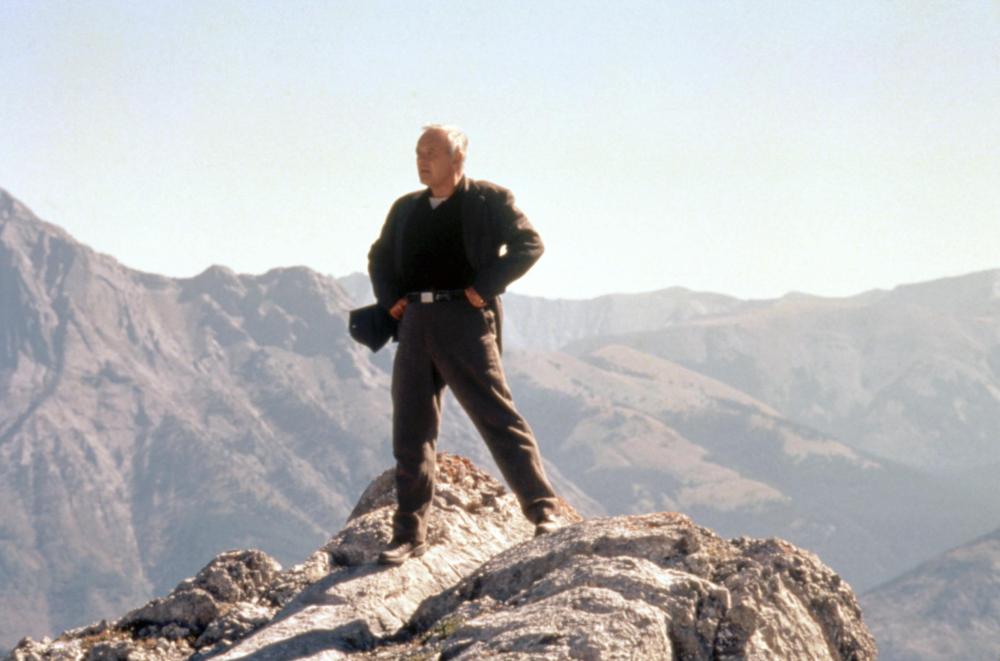
As they continue their journey, Charles climbs up a rock, trying to get his bearings. It also makes him look majestic, as he surveys and appreciates the majesty of the mountains. However, Charles’s overconfidence in his knowledge is a flaw, and they actually wind up back at their original camp. The paperclip was attracted to Charles’s belt buckle, affecting its behavior. Charles didn’t consider this contingency. The implication is that even when using one’s wits, there may be unanticipated possibilities. Stephen is desperate now, saying that they are going to die, that they have nothing to eat. Bob is also upset, but doesn’t break down like Stephen. Charles tries to get Stephen to focus on a task, giving him a long branch, and telling him to sharpen it with his knife to make a spear, so that they can catch fish. He says that they will be rescued, or they will walk out of the wilderness, surmounting the obstacles placed before them. Bob is frustrated and questions whether they will be rescued, even though, as he says, society usually doesn’t like their billionaires misplaced. Charles, being forceful again, asks loudly, what are they supposed to do, lie down and die? That is the alternative to giving into despair.
Unfortunately, Charles’s attempt to give Stephen something to do backfires, since Stephen is an unskilled man in a place that requires skills. The man cuts his leg deeply with the knife. Charles uses a scarf as a tourniquet, and tells Bob to bury the bloody part of the pants. Charles uses the stars to set a course for the next day to head south. Bob says he is gaining a new perspective, commenting how different it is where they now are compared to the world where he photographed beautiful women, and snorted coke off of a girl’s thigh. Charles says jokingly, to ease the seriousness, “In what way?” Struggling to survive makes other inessential activities seem less important.

In the pouring rain, while Stephen moans, maybe because he has an infection, Bob asks what really are their chances of getting back to safety. Charles tries to keep the tone optimistic, saying that the odds are good. To undercut what he just said, Charles then sees the ripped clothing that Bob didn’t bury and only hung from a tree. Charles immediately realizes Bob’s fatal mistake, as there is now blood in the air. The bear is there, he charges, and mauls the helpless Stephen. Charles courageously, though pointlessly, tries to attack the bear with a burning branch, but falls down. It is Bob here who realizes the futility of the rescue. He uses another lit branch to rescue Charles, but they must escape as Charles’s confidence is devastated by the loss of Stephen.

Bob and Charles are in a snowstorm, trying to stay warm, building another fire. Charles, back in cool survival mode, says they will navigate by the stars. He says that they will have to find the river and then follow it back to civilization. Charles uses his knife to fashion a cage and they trap a squirrel to eat. A helicopter flies by, but the angelic Charles is not capable of rising to the occasion to get noticed. Bob is ready to give up, and Charles goes into his pedantic professorial stance, asking how can ice be used to make fire. He is trying to get Bob to not dwell on the negative, but instead to quickly move on. Bob, in tears, rants at him, saying how “moneyed people,” who only seem to be able to play golf at the country club, can actually bloom in emergencies, because they are so “dense” as to the ramifications of the crisis, being so use to success. Charles is able to make a joke even in these circumstances, saying he’s not dense, just has no imagination. Bob laughs, but wants to hold onto the belief that the helicopter will return. But Charles, Mr. Practical, says no, they have scoured the area and will move on. Bob concedes, and asks the practical question about the ice. Charles says one can fashion the ice into a lens to concentrate the sun rays to start a fire. He again shows how thinking can be used to transform a helpless situation into a chance to succeed.

Charles wants to catch fish from the stream. He uses the chain attached to his watch to bait the fish. He says it’s made of gold and the whole world yearns for it. Even among the animal world, there is an attraction to the precious metal, connecting the various species. He uses the thread from his sweater as a line. Here, the rich man must now use his material gains for basic survival. Bob says he isn’t in the mood for humor when Charles mentions how the allure of gold can even attract a fish. He tells Bob, “Don’t go native on me.” Despite the struggle to survive, Charles wants to hold onto the civilized trait of humor. 

As he fishes, the sees that the bear has tracked them there. It charges after Charles, who goes through a bunch of tangled tree branches that impedes the bear’s movement. He gets to Bob and they throw burning branches around them to create a fire barrier against the animal. But his growls are heard in the night, creating a very primal scene of terror. Charles knows that they can’t exit the fire ring. But if they don’t, they will starve. Bob asks if Charles has a plan, and at first Charles is frustrated by how he must be the one who must come up with a strategy. He finally says, “We’re gonna kill him.” In the end, alternatives are reduced to one choice in the wild. It is survival of the fittest, which means in such a situation, one must die for another to live.
Charles says they will lure the bear with blood from a cut on his hand to the spot they want. They will use the creature’s weight against him. As was shown in the survival book, the bear will impale himself on one of the spears that they make as he tries to pounce on one of them. Charles says that Indian youths can kill lions with spears, and Native Americans go up and slap bears. He fires up the doubting Bob by saying that he will kill the bear because, “What one man can do, another can do.” He uses the phrase as a kind of mantra to show that they are as capable of doing what other courageous men have done. Charles looks primal as he has reached an elemental state ready to face his foe.


They have marked an “X” with branches to designate a spot where sharp branches swinging from a tree will pierce the bear. However, the pointy sticks only graze the creature. They have several spears which they use to stab at the animal. The bear knocks Charles away, then whacks Bob, and attacks him. He is injured, but Charles quickly recovers and gets the bear to go after him instead. Charles plants the spear on the ground which impales the bear when he tries to pounce, as Charles planned. The men now eat the dead creature’s meat and use his fur for clothing. They have won the battle in this deadly challenge and use their victim to help with their survival. Charles makes necklaces using the bear’s teeth to symbolize their triumph. Charles says that he always wanted to do something that was “unequivocal,” meaning something that was basic, with no compromises or complications; something that was definite. Bob says that in the past Charles would just call a lawyer to deal with this bear problem, but Charles, again inserting humor, says wittily, “No, I wouldn’t do that to an animal.” As they walk, they look like they have transformed into mountain men, wearing their bearskins, and, in a way now inhabiting the animal’s spirit, Charles says nobody he knows actually changed his life, but after this experience, he says he will start his life again. He is rebooting himself after finally putting all of his theoretical, untested knowledge into practice, and now has a broader perspective on life.


They come across an abandoned cabin. Now that he doesn’t need Charles to fight the bear, Bob finds a rifle, starts to load it, and is ready to put his plan to kill Charles into effect. The bear kills for food, but man kills for self-indulgence involving sex and money. There is a canoe outside, and they check out a map that is in the shack. Bob now feels he can get back on his own because he has directions and a means of transportation. Charles wants to light the stove, and looks for something to burn. He opens the box that held the watch that Mickey gave him. In a bit of plot contrivance, Mickey left the note to the watch inscriber that also contained one addressed to Bob “for all the nights.” This explains why Bob was unwilling to give up his watch, saying it was broken. Bob is drinking a bottle of whiskey in the cabin, trying to acquire liquid strength for his lethal undertaking. He taps a bullet on the rifle, a kind of contemplative gesture to show he is trying to make up his mind as to whether to carry out the killing. He says if he had his camera with him, he would have made his “fortune.” But instead of the camera, he can shoot another object, the rifle, and make his fortune a different way. Charles says, “Can’t do it sober.” Charles says he wants to see Bob’s watch, and now Bob knows that Charles knows about the affair. Bob tries to convince himself to do the deed by saying that Charles had no business with a gorgeous, young woman like Mickey. It was his money that led her to him, he says. Bob orders Charles to go outside. Charles says that he wants to know how long has the affair been going on, because, he finally says, he not only wanted Mickey, he loves her. Charles already told of a deadfall at the previous cabin, and approaches Bob, who falls into one, impaling his leg.
Charles could be brutally savage here, letting his enemy die, but they are not bears, and Charles rescues Bob. He tries to stop the bleeding, but is frustrated this time since he has no real means to help him other than a tourniquet. He puts them in the canoe. They go on shore to start a fire to keep Bob warm. Bob marvels at the fact that Charles is trying to save his life. He asks what he will do when Charles gets back to the lodge. Charles says he may not go back, because what does he have to go back to? All of his wealth has not really made him feel fulfilled, and his wife was unfaithful to him. Bob now uses humor by repeating what Charles said earlier, that he can’t feel sorry for someone who owns a plane. Bob says he is truly sorry and tells Charles that Mickey had no part in the plan to do away with her husband. Charles tells Bob, “don’t die on me.” Bob smartly says, “Don’t tell me what to do.” Charles hears a helicopter. He is able to draw the attention of those on board by adding branches to the fire. But it’s too late for Bob, who dies. Charles returns to the lodge, and his only display of pride in surviving occurs when he says to Styles, “Why is the rabbit unafraid?” Styles acknowledges Charles’s accomplishment when he answers, “Because he’s smarter than the panther.” When he reunites with Mickey, he hands her Bob’s watch which has the inscription, and she now realizes that Charles knows of her unfaithfulness. Charles has, almost like a biblical hero, gone into the wilderness to be purified, and now has returned. There are many reporters there. He generalizes his experience to others that go through their own ordeals when he says to the press, “We’re all put to the test.” When asked how his friends died, he says, “They died saving my life.” In this statement, there is magnanimity, as Charles does not take credit for having survived by his own wits. But, his journey with the other men led him to want to change the priorities in his life. So, in a way, they did save him.

The next film is Key Largo.