Showing posts with label fantasy vs reality. Show all posts

Sunday, October 17, 2021

Belle de Jour

 SPOILER ALERT! The plot will be discussed.


Belle de Jour (1967) deals with a woman who is sexually frigid in her socially standardized life with her conformity adhering husband. For her to physically liberate her passions she experiences fantasies, which she eventually plays out in real life. But, the movie suggests that when one’s inner life becomes very strong, it feels more real and fulfilling than what one outwardly experiences, and the line between fantasy and reality begins to blur.


Severine Serizy (Catherine Deneuve) has sexual fantasies about bondage and even sexual assault, and that would indicate the opposite of a feminist empowerment theme in and of itself. But, as Roger Ebert pointed out in his book, The Great Movies, the feelings are hers, not some man’s. She owns them, and thus, for her, the result is liberating. 


The first shot is of Severine riding through the woods in a horse-drawn carriage with her handsome doctor husband, Pierre (Jean Sorel). Forests are traditionally used in literature as the place where sinful deeds occur (think, The Scarlet Letter and Tess of the d’Urbervilles). Horses are also typically associated with male sexuality. There is a shot upward of a tall tree, picturing it like a phallic symbol. But this romantic scene is undercut as Pierre says things would be “perfect” if she wasn’t so “cold” towards him. She resists his attempt to hug her, and does not want to talk about their intimacy problem. As Ebert points out, the sound of the carriage bell is a sort of personal trigger to ignite Severine’s inner sexual desires. Pierre suddenly becomes a brute and has the men driving the carriage drag her into the woods, whip her and, it is implied, one of the men rapes her. She says something about letting out the “cats,” and this reference recurs. Could it suggest something primal?


The next shot has Severine in bed and Pierre coming out of the bathroom. His wife tells him she was thinking of them riding in a carriage, and we realize the whole opening sequence was a sexual daydream, one she has had at other times, since Pierre comments that he has heard the carriage element before. So, her inner sexual fantasies have been recurring, illustrating her frustration at achieving outward satisfaction. Their one-year anniversary is the next day, and she is affectionate, kissing him. They have separate beds, and when he feels that she is inviting him into hers, his wife abruptly turns him away. It is in her mind that she experiences her physical enjoyment at this point.


 Severine and her husband meet Henri Husson (Michel Piccoli) and Renee Macha Meril) at a ski resort. When Renee says that Henri looks bored, his interesting comment is, “One’s never bored in a bar, unlike in a church, alone with one’s own soul.” Perhaps he is saying that doing something self-indulgent among similarly inclined people allows one to escape the somber examination of one’s psyche. In a way, his inner life is the opposite of Severine’s, at least at this point, who lives in her inner world. Before meeting them, Severine tells Pierre she doesn’t like the way Henri looks at her, which shows her resistance to outward sexual overtures. Henri ogles a couple of attractive women walking by, and Pierre comments that he should seek counseling for his “obsessions,” which Renee attributes to him being “rich and idle.” So, we know Henri is preoccupied with sex, especially the “hunt,” for women. He says that he has a “special weakness for the poor. I think of them when it snows, with no fur coats, no hope, no nothing.” His words are actually condescending, not compassionate, as he cares nothing of those less fortunate than his “rich” self. He only sees them as the victims of his “hunt.” 


Later, Renee tells Severine in a cab that a woman they know, Henriette, has been working as a prostitute at a bordello. She says how horrible it must be, and the cab driver reassures Severine that such places still exist. She seems like she is in a trance, and one can suspect that she may be having one of her fantasies. At her home, the maid says that flowers arrived from Henri. She is disturbed by this act and drops and breaks the vase holding the flowers. Is this a psychologically defensive move because she is worried that real life may cross over into her fabricated one? She repeats the action in her bathroom when she knocks over a bottle of perfume onto the floor. Is there a conflict between her outer reserve and her inner carnal drives? There is a quick scene of a young girl (Severine as a child) while an older man begins to molest her. Is that sexual abuse the incident that has helped to shape her conflicting outlooks on sex?


She asks Pierre if he ever visited a house of prostitution. He admits to having done so in the past. She seems curious about how it plays out in one of those places. He says that you chose a woman, spend some time, and then “you’re depressed all day.” He is implying that it is an emotionally empty experience. But, he says the reason men go to such places is because, “Semen retentum venenum est.” This Latin phrase, as IMDb notes, means that a man’s semen, if allowed to accumulate, acts like a poison on the male body. His explanation sounds like a medieval rationalization, but it also suggests symbolically that males, and their sex organs, are like venomous snakes. That may be why Severine tells her husband she doesn’t want to hear any more. Instinctively, she is drawn to men, but she is also repelled by their toxicity. She does want Pierre to stay with her until she falls asleep. He asks if she will ever grow up. Since we have seen a flashback of what happened when she was a child which may have ended her youthful innocence prematurely, it is no wonder that she wants to make up for some of that lost childhood.


At the tennis courts Severine briefly encounters Henriette. Henri is there, too and he and Severine discuss why a woman would become a prostitute. Henri says it is primarily for money and admits to frequenting high class brothels where he says the women are “complete slaves.” He describes the arrested development level of men who seek only sexual domination over women. However, he would not be able to understand that a woman like Severine is not a slave to men, but to her own passions. Henri makes advances toward Severine, but she resists. However, she remembers the address of where Henri visited the prostitutes.


Drawn by the dark allure of the bordello, she visits the high-class brothel run by Madame Anais (Genevieve Page). As she enters the building, she envisions a church with her as a child where she refuses the priest’s offering of holy communion. Most likely the young Severine felt unworthy to take the sacrament after her encounter with the older man. Madame Anais sizes her up quickly, and says she is “fresh,” which is what the men like. That implies that men enjoy desecrating the inexperienced. They like a woman who is virginal but who they can take credit for arousing her prurient desires. Severine at first wants to flee, but Madame Anais is forceful, appealing to Severine’s desire for dominance, and gets Severine to commit to working at her place. Severine has one condition, which is that she only works in the afternoon. She wants to keep her time in the underbelly of society concealed. Maybe because she feels frightened by what she is contemplating, she goes to see Pierre at the hospital and seeks refuge in his respectable world. But, he is having lunch with his boss, so she is not given the shelter she sought. 


Director Luis Bunuel has a shot of Severine’s shoes as she scales the steps to Madame Anais’s place. Her feet swivel back and forth, which demonstrates her ambivalence in proceeding with her plan. (Ebert suggests that Bunuel here and elsewhere in the movie is addressing foot fetishes). She does knock on the door and Madame Anais reassures her that only well-bred women work there and that is why she had to fire someone who was “vulgar.” One might see that attitude as hypocritical given the services provided there. On the other hand, the story may be suggesting that there are various levels of quality that the business world offers, so why do they not pertain to the prostitution profession?  


Anais gives Severine a kiss, possibly to warm her to what is to come. She says Severine must make up a business name and Anais dubs her “Belle de Jour,” since she is there for the afternoon only. IMDb says that name is the same as a lily that only blooms during the day, which is interesting, since it implies that this sexual adventure allows the repressed Severine to blossom. It is also a play on “belle de nuit,” which is a woman of the night, or a prostitute. But, it can also suggest that she is the special of the day on a menu, like the soup du jour. That take on her name implies the idea of satisfying physical appetites. 


She takes down her hair for the first time, which adds to her shedding her socially restricted compliances. Anais introduces her new employee to a man in the candy business (possibly suggesting what a pedophile uses to attract young girls?). There are other women there and they greet Severine, making her feel at home in this house of ill repute. The man opens a champagne bottle, which denotes the existence of a classy environment. But it also can be taken for a phallic symbol, since, as the liquid spills over, there may be the suggestion of a man reaching a climax. That idea is solidified when he gives one of the women a tin that has paper snakes shooting out of it when it is opened. Severine does not join in with the fun, and when the man starts to try to take her forcefully, she pushes him off as she is wrestling with what she is doing there. Anais seems to recognize that Severine needs a forceful push to get her to submit, and she orders her to go to the client. Severine initially struggles, but surrenders to him, too, when he is demanding. Perhaps her behavior reflects what happened to her as a child, being forced to allow a dominant person to exploit her sexually.


Severine leaves the brothel in her conservative clothes, with her hair tucked under her hat, again assuming the role of a socially acceptable member of society. When she gets home, she washes herself and burns her underclothes, as if she must purge her experience so her husband will not suspect her extramarital actions. There is the sound of bells again, signaling another fantasy. There is a pasture with cows and Severine is bound to a wood frame as Henri shovels mud and tosses it onto her while yelling sexually derogatory words at her. Humiliation is associated with sexual release again, mirroring Severine’s past. 


Severine returns to the bordello after being away from there for a while and Anais is angry with her, saying Severine can’t behave as an amateur if she wants to work for her. One of the prostitutes admits she is only working so her family can have some money, and other jobs are not willing to pay her reasonable wages. Her words can be seen as a criticism as to how women are not properly reimbursed for legitimate jobs. Anais has her goddaughter show up, and she asks about how she is doing in school. The movie suggests that those employed in the sex trade are not automatically devoid of being socially responsible people. 


 Severine’s next client is Professor Henri (Marcel Charvey), who prefers the more sophisticated woman. (It is interesting that he shares the name “Henri” with Husson, implying that beneath the proper surface, all men are sexually obsessed). The Professor has brought a suitcase which contains whips along with other props. He is into role playing, and the confused Severine does not know how to participate in his games. He demands that another woman, Charlotte (Francoise Fabian) attend to him. In the adjacent room, Anais allows Severine to watch through a peephole as to how Charlotte handles herself. (It might remind us of Norman Bates in Psycho as he observes Marion Crane through a hole in his motel office. Hitchcock and Bunuel, here, remind us that we are voyeurs, too, as we spy on the lives of others as an audience). The Professor pretends to be a servant who is secretly in love with his superior, but he can’t do anything right for her. She literally walks on his body and uses his whip on him. It is a lesson in sadomasochism for Severine, which shows her that men, too, have sexual humiliation fantasies. However, when asked, Severine says to Anais that what she witnessed was “disgusting,” and she wonders how anyone could sink so low. But, she has done so in her own mind.


A noteworthy scene from this film now follows where a client has a box which produces a buzzing sound when he opens it, but the audience does not see what is inside. One can only speculate that it is associated with some type of fetish. Bunuel has said that it is left up to the viewer’s imagination what is in the box. But, although another woman there will not agree to the encounter with this client, Severine agrees to participate, showing how far she is willing to deviate from acceptable sexual practices. The man shakes a bell in his hand, reinforcing the idea that the sound is a sexual Pavlovian prompt for Severine. After the man leaves, Pallas (Muni), the maid, comes into the room where Severine lies on the bed. There is a towel that looks like it has blood on it. Pallas says to Severine that the man would have scared her, too. But a sedate Severine, who has not been disturbed by what happened, comments, “How would you know?” Severine has taken a big bite out of the fruit of the tree of carnal knowledge, and basically is saying that one can’t judge what one has not experienced.


The next scene contains a similar carriage that was at the beginning of the film, with the harness bells ringing. It stops in an outdoor setting where people sit at tables. Severine is sitting there, and the man riding in the carriage gets off and approaches Severine. He is dressed properly, but his long umbrella, given the context of the film, suggests a phallic symbol. He sits down next to her and she lies to him when he wants to know how to address her. She says, “Mademoiselle,” indicating her availability. She also gives her prostitute name, Belle de Jour. He says he has a cat named “Dark Beauty.” Again, the cat is mentioned, introducing a hint of bestial drives. He says he will pay her to come to his house for a religious ceremony. He talks of the autumn sun being black and seems preoccupied with death. The men driving the carriage are the same ones that were in the first scene, too. So, we are in another of Severine’s fantasies. 


 He is called the Duke (Georges Marchal) by a servant at his palatial house. The servant takes Severine’s clothes and she wears only a sheer black negligee and a black headdress. He enters with a camera (not unlike the maker of a film who is recording the actions of the actors?). He is creating a mock funeral, as Severine lies in a coffin, pretending to be dead. He calls her his daughter, which makes the whole scene perverse. We hear those cats purring again and the servant asks if he should let the cats in, contributing to the sexual atmosphere given the context of the film. He says he loved her too much. He sinks below the casket, which begins to rock. Severine looks down at him, and we can only imagine that he is perhaps masturbating. Incest and even a version of necrophilia is suggested, and it is another possible reference to Severine’s past trauma. Bunuel has no trouble addressing taboos in this film. As soon as she is done fulfilling the role she was assigned, she is rudely tossed out in the rain by the servant. She was brought in to satisfy the Duke’s decadent perversion, and must now be quickly dispensed with so as not to tarnish the hypocritical upper-class façade that must be maintained.


At home, Severine gets into bed with Pierre and cuddles with him. Although not having sex with her husband, she has warm feelings for him. It’s as if her sexual exploits in her hidden life are helping her overcome her marital inhibitions, at least up to a point. Henri visits Severine, but she refuses to see him. However, that does not stop her from fantasizing about having sex with him under a restaurant table while Pierre and Renee are present. This image suggests that people live two lives, one that is overtly socially acceptable, but beneath that restrained appearance exist primal drives that wish to be satisfied.


Two men, Marcel (Pierre Clementi) and Hyppolite (Francisco Rabal), attack a courier in an elevator to acquire what he is carrying. The scene establishes the rough and disreputable nature of Marcel. They visit the brothel. Hyppolite’s seedy nature is evident as he inquires after the young daughter of the servant Pallas, asking if she is old enough to be touched. Very sleazy. 


Marcel wears a leather coat, which makes him look tough, and he wields a long walking stick (another phallic symbol?). He has metal dentures because he says his front teeth were knocked out. The effect is that it shows him as a man of steel, not tenderness. Severine is submissive, even saying she will not charge him, as he fits into the dominant role of a man that she experienced as a child. He dismisses her because he sees a birthmark on her back, which disgusts him. This real-life humiliation probably reminds Severine of her past, which she recreates in various ways in her fantasies. Marcel, however, stays and we see them after they have had sex. She finds a scar on his back, which is most likely why he did not like the birthmark on her. It may have reminded him of his own flawed life (Hyppolite also has a scar on his face, which fits in with the damaged world that Severine is part of). She admits that he frightens her, and that implies an attraction for what is dangerous.


There is a short scene with Severine and Pierre on a desolate beach, which should imply fertility and sexuality. But it is chilly there, with only the two of them present, suggesting loneliness. Pierre is still struggling with Severine’s continuing aloofness, and he hoped getting away would help their relationship. Severine’s inner monologue reveals how she does not love anyone but her husband, but she is not able to accept sex existing in other than a manner that deviates from the norm.


Marcel is furious that Severine took off for a while when she was at the beach. He hits her with his belt once, but she does not accept that sadistic treatment from him at this point and says if he does it again she will not see him. She says her attraction to him is not like what she feels for Pierre, as she can’t seem to join her physical passion with her feelings of love.


Pierre is finding Severine happier now, but he wishes that she could want a child with him since that is what he most wishes, a way of consummating their love with sex that will result in a family. As they walk toward their car, Pierre sees a wheelchair on the sidewalk that catches his curiosity as to why it is sitting there unoccupied. It is a foreshadowing of what is to come. 


After a long absence, Henri shows up at Madame Anais’s place. He discovers Severine’s secret life as Belle de Jour. She will not have anything to do with him and threatens to jump out of the window if he comes near her. He says something significant when he declares that she likes being humiliated, but he does not. Henri can see what has been motivating Severine. She admits that she must eventually atone for her actions, but she feels powerless to leave this alternative lifestyle that she has adopted. She seems to have no free will to fight her sexual predisposition. She, of course, is worried that he will tell her husband, and decides to offer herself sexually to Henri to keep him quiet. He refuses because he was attracted to her “virtue.” He adds, “You were the wife of a boy scout. That’s all changed now.” Perhaps he made overtures toward her in the past because she represented to him what he could not be, a person of high standards. Did he want to drag her down to his level so as not to feel depraved? Now that he finds that she is just as subject to carnal desires as he is, he does not see her worthy of his debauched hunting. He even lords his own morality over her as he says he will not tell Pierre about her because, “I have principles, unlike you.”


 In another fantasy, Henri and Pierre appear in clothes of a prior century and have a duel, possibly for the favors of Severine. But when they fire their pistols, they miss each other and it appears that Pierre has wounded Severine. She is bound to a tree, another instance of her masochistic tendencies. She is bleeding from the forehead, but the violence only adds to the sexual excitement for her, and Pierre kisses her. It’s as if she will only accept her husband under duress, a sort of punishment for her transgressions. 


Severine tells Anais that she can’t work there anymore. Anais agrees because the dangerous Marcel has become more demanding, wanting to see Belle de Jour also at night, when she is not at the bordello. Anais is worried about how threatening men are when they become obsessive. Anais tells Severine that they were good together, and she seems to want to become friends, asking about contacting each other later. But, Severine shuts down that possibility, as she does not want her undercover life bleeding into her respectable one. Anais works in a socially shunned profession, but she still desires affectionate contact with others, like any other person. Severine seems to feel badly about being so abrupt with her, and appears to want to kiss Anais to make up for her harshness. But, Anais turns her head away after her attempt at making a connection was rejected.


Hyppolite follows Severine after she leaves the brothel, and later Macel shows up at her house, obviously informed of its location by Hyppolite, which shows how difficult and dangerous it is to live in both socially acceptable and unsavory worlds. This point is driven home when he calls her “Severine” instead of Belle de Jour, showing how he has now penetrated her respectable life. He wants her to spend a night with him at a hotel, otherwise he will wait for her husband and tell him everything. Severine at first welcomes the idea of confessing all to Pierre, especially after Henri found out about what she was doing. But she doesn’t want one of her clients around when she tells her husband what has been happening. She kisses Marcel, and, as he decides to leave, he says that he now sees that it is Pierre that is the “obstacle” that is keeping them apart.


 From inside Severine’s apartment we hear three shots being fired. Macel shot Pierre to eliminate the husband who represents the state of marriage in which sex is supposed to be confined. Marcel drives away at a high speed, but gets into an accident. As the police approach him, he fires his gun, and a cop eventually shoots him dead. The film is showing that when the deviant part of society reveals itself, the prevailing lawful part will do its best to eliminate it.


Pierre is now paralyzed from his wounds and occupies the wheelchair which is like the one that disturbed him earlier. He can’t talk or even see. Henri visits and comments on how prim and proper Severine looks, dressed like a schoolgirl, trying to fit in with the socially acceptable role of a supportive wife. Henri wants to tell Pierre about Severine’s work as a prostitute since he feels that Pierre is tortured by having a virtuous wife sacrificing her life tending to him. If he knows she is a tarnished person, Henri feels that Pierre will not feel so guilty about what his wife is doing. Severine said she would have to atone for her sins, and she does not prevent Henri from talking with Pierre. 


After Henri leaves, Severine joins Pierre. The only indication of the effect of learning what his wife has done are the tears running down his cheeks. Severine picks up a bit of knitting, looking very domestic, but which is not convincing for us since we know she can’t hide from the audience, or her husband now, what she has done, which has brought about the violence that has harmed her husband. 


There are the jingling sounds of the carriage again, and the purring of a cat, alerting us to another fantasy. (Ebert suggested that the cat could imply that Severine is operating at the instinctual level, which is more animalistic than human). Pierre now appears to be fine. The couple plan on getting away together for a while. It is only in her dreams that she can actually hope for a happy, conforming life. But, she goes to the balcony as the sound of the bells becomes louder, and there is the same carriage as at the beginning of the story, which brings the tale full circle, suggesting that Severine will always be inhabiting her alternative mindscape.


The next film is Humoresque.

Sunday, June 13, 2021

A Hard Day's Night

 SPOILER ALERT! The plot will be discussed.

Roger Ebert notes in his book, The Great Movies, that A Hard Day’s Night (1964), “was in a different category from rock musicals that had starred Elvis and his imitators.” Indeed, those earlier films did not offer much more than a way to showcase their musical stars playing and singing their songs. But this Richard Lester directed movie, from a script written by Alun Owen, uses witty, surreal dialogue and situations that has The Beatles mirror the anarchic freedom of The Marx Brothers. 


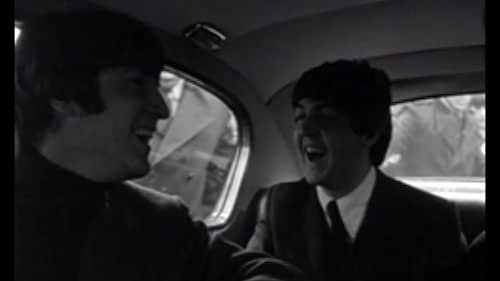
Ebert notes that the black-and-white photography provides a “semi-documentary style” as the film follows a day in the life of the famous quartet as they evade zealous fans, rebel against those who would contain them, and eventually perform at a concert. As Ebert says, the film does not follow standard filmmaking procedures, and instead uses handheld cameras and quick cutting that make it appear as if the shots were “snatched during moments of real life.” But that realistic look is in ironic contrast to the absurd antics of John Lennon, Paul McCartney, George Harrison, and Ringo Starr. 


The title of the film came from Ringo who was describing how rest was needed after a trying day being The Beatles. But it is writer Owen who created “stereotyped” versions of the band members, according to IMDb, after observing them on tour. He depicted Paul as “cute” and “sensible,” John as the “smart-ass,” George as “quiet and shy,” and Ringo as “dim-witted and sad.” In real life, the personalities of these individual musicians were more complex, so the film is a fictional version of the factual people. Larry David does the same thing in Curb Your Enthusiasm


The opening sequence, with the lively title track playing in the background, is one of movement. John, George and Ringo are fleeing from the adoring female fans. They run, jump, and ride to get away. Only Paul, in disguise with a beard and mustache sits still because he is with his grandfather (Wilfrid Brambell) on a bench. (IMDb notes that Paul was indisposed for a while because of a car accident, and William Shears was used as a stand-in. In Sgt. Pepper’s Lonely Hearts Club Band, Paul sings an introduction to the “one and only Billy Shears”). But they all meet up at a station to go on a train, another moving object. This sequence conveys youthful energy, but also a sense that the musical celebrities find it difficult to obtain that sense of liberation. Indeed, when they are not moving they are in confined areas, such as rooms, cars, and train compartments that symbolize how their fame, although allowing them monetary gain and the ability to express their musical abilities, also limited them as individuals.


On the train there is the first of many references to Paul’s grandfather being “very clean.” According to IMDb, the phrase is a reverse reference to actor Brambell’s role in a British TV series entitled “Steptoe and Son” (which was the inspiration for the American show “Sanford and Son”), where Brambell’s character was called a “dirty old man.” John says that they will probably have to look after the old man, but his response is, “I look after meself.” His attitude is unexpected since one would expect the old man to be a conservative type. But the script defies expectations, and Grandfather likes to get into mischief and is a rebel. Paul calls him “a villain, a real mixer.” Paul adds his grandfather, “costs you a fortune in breach-of-promise cases.” That type of dialogue is funny because it sounds formal coming from blokes who came off the streets of Liverpool. 


Shake (John Junkin) and Norm (Norman Rossington), the group's handlers, show up, and Norm immediately wants to put restrictions on the four, saying “let's not cause any trouble.” After Grandfather goes with Shake and Norm for some coffee, a proper looking middle-aged gentleman (Richard Vernon) enters the compartment. The long-haired boys seem to be an existential annoyance to the conservative man, as he views them with suspicion. He immediately tries to control the situation by closing the window (metaphorically implying he does not want fresh ways of thinking to be in his presence). Paul wants the window open, and John points out that the majority there doesn’t want it closed, stressing democracy. But the older fellow argues he has sway because he has been around longer, basically arguing that age outranks youth. He doesn’t want them playing rock music on Ringo’s radio, either. He says he “fought the war for your sort,” and Ringo’s funny response is, “I bet you’re sorry you won,” since the man is so hostile toward those he protected. The Marx Brothers influence at playing with language can be heard when the traveler says, “I shall call the guard,” and Paul says, “Ah, but what?” That response is followed by an absurd shot of the boys outside the train with a bicycle running alongside the man’s window, stressing that he is treating them like little children. 


The Beatles join Shake, Norm, and Grandfather in the dining car. Norm and Shake are arguing over the ridiculous point that Shake is acting taller than Norm. Paul discovers that it’s his grandfather that instigated the conflict, even though the two men never argue. Paul says that Grandfather doesn’t like “unity.” He’s being depicted as an anarchist, just the opposite of the elderly man in the compartment. Grandfather creates more chaos when young girls enter the car. Paul makes a move on them for himself and the others, but then Grandfather says the young men are convicts and the females should flee. In a way, The Beatles were guilty of defying conventional norms. 


Grandfather is unaccounted for, and when asked, John’s nutty comment is that he concealed him about his “person.” It adds to the film’s attack on conventional rationality. Ringo admits to George that he has an inferiority complex, and he plays drums because it’s his, “active compensatory factor.” Here we have more of that out-of-place language that sounds like curbside psychology, which the script is satirizing. John bursts into a compartment that has young girls and asks for a file to free him of supposed handcuffs, carrying on the theme of being in a confining state due to his celebrity status.


Paul and John find Grandfather with a much younger woman. He says he is engaged, another ridiculous moment. The next shot is Grandfather in a cage in the storage part of the train, looking like his free spirit has been imprisoned. But, the Beatles join him, so they, too, are confined by their own fame, as girls show up outside the barrier. We then have the artifice of the movie undermining the documentary feel, as the quartet plays “I Should Have Known Better,” when they are only supposed to be playing cards. 


The “surging” girls are waiting for them at the train station (John asks if he could be “surged,” which again echoes the Marx Brothers’ love of wordplay and also shows the plus side of being a rock star). More physical fleeing takes place suggesting an attempt to escape the suffocation of fame. Shake has to carry the band’s instruments because The Beatles don’t have the luxury of privacy to bring their own. But, for that sacrifice of privacy, they do experience adoration and the freedom to have others do work for them. The film shows the two sides of success. 


Ringo gets an invitation to go to a fancy club, but Norm, trying to control the band’s members so that they don’t become a publicity embarrassment, denies Ringo the opportunity to go. Grandfather steals the invitation, and even though he openly discourages attendance there, he likes the idea of being at a place that has “easy money and fast women.” Norm wants the band to stay in the hotel and answer their fan mail. After Norm leaves, John grabs his jacket to go out, which is his defiant response to being told to stay put, and they go out dancing to their own recorded music. Grandfather, exercising his own rebelliousness, goes gambling at the club. When he goes broke, he unscrupulously pretends to be a waiter and gets a large tip from a patron so he can continue to bet. There is a shot at the dance club that has a young woman resting her booted foot on the hand of a companion as John sits at the table. In Howard Hampton’s essay, “The Whole World is Watching,” this brief image conveys, “the way the cool and wry and fetishistic are all folded into everyday conversation, ordinary life.” It’s a hint of how The Beatles are in the vanguard of “a transformed social world that's being sculpted before your eyes.” However, Norm (an appropriate name for someone who wants things to adhere to the “norms” of behavior so that things appear to be “normal”), shows up and wants The Beatles to leave. 


Norm gets the lads back to the hotel to do the chore of answering their mail. But, they find the butler whose clothes Grandfather took to go to the fancy club, and they use that excuse to break away once more to find the old man. They get into the exclusive club because they are, after all, The Beatles, so celebrity has its privileges. Shake gets into the exclusive club by saying he’s “Ringo’s sister,” so absurdity keeps surfacing in the film.


The next scene has John enjoying himself as he plays like a child unencumbered by adult restrictions while taking a bath. He pretends he is a German U-Boat commander. As he sings, “Rule Britannia, Britannia rules the sea,” he then has one boat bash another, a sort of satiric jab at England’s imperialism. As IMDb points out, John holds a toy submarine and shouts out “Help!” which predicts the subsequent Beatles movies, Help! And Yellow Submarine. When Norm again tries to manage John by telling him to get out of the bathtub, he pulls the stopper, but only John’s hat and the toy submarine remain after the water drains. John walks in harassing Norm to stop fooling around. It’s an absurdist reversal of their roles. 


The band rides to a press conference at the theater where they will perform. When they exit the car they go through a homeless person’s tent and the screaming female fans knock the shelter away, leaving the poor man without his covering. The shot seems to stress how all this fame and money contrasts with the poor people who are left behind in the capitalistic rat race. 


When the musicians enter the reception room, Norm continues his restrictive role by trying to curtail the band’s efforts to indulge in any alcoholic beverages. The film also makes fun of the same tired questions that reporters ask The Beatles. Commenting supposedly about the size of Ringo’s nose, John says, “I never noticed his nose till about six months ago.” When asked how he found “America,” John’s sarcastic response is, “Turn left at Greenland.” When confronted with the extremely obvious question, “Has success changed your life,” George does not dignify the question as he simply says, “Yes.” When asked what he calls the hairstyle he has, George says, “Arthur,” again playing with language. When an interviewer wants to know with whom Ringo identifies between the two warring youthful factions in England at the time, the “mods” or the “rockers,” Ringo’s famous line is “I’m a mocker.” The response shows how he makes fun of the question and the conflicting parties, but also how he implies the best way to resolve differences is through unification. Paul has to keep saying that he is just “good friends” with all the suggestions of romantic connections, which shows how he must publicly comment on all his private social activities. Despite the supposedly factual presentation of the narrative, there are references to the mothers of John and Paul, who, in fact, were deceased at the time of the filming. So, the movie is playing with fact versus fiction.  


As the group goes to the stage for rehearsal, one of the crew taps on Ringo’s symbols, which upsets his sense of musical jurisdiction. George says Ringo is very fussy about his drums because “they loom large in his legend.” It’s another instance of exaggerated word usage to poke fun at the group’s own fame. Even after they perform a perfect version of “If I Fell,” the band receives flak from a snobby TV director (Victor Spinetti), another uppity older person wanting to control them after being urged on by that “mixer,” Grandfather McCartney. 


 Norm wants to lock them away until the performance, but of course they get out through the fire escape as the energetic “Can’t Buy Me Love” plays. What follows is a frenetic rambling by the four as they luxuriate in their freedom in a sports field. The shots from above emphasize the extent of the open-air lack of restrictions. The use of fast-action and slow-motion camera work adds to the playful kinetic liberation. As soon as the song is done, another old-timer enters trying to ground their flight to freedom, saying the area is private property and therefore off-limits.


 George accidentally passes by an office where people in the fashion industry work. They think his look is close enough to a real Beatle that they can use him to sell their goods. Exploitation of The Beatles brand is what is suggested here, with the company employees not able to recognize genuine talent from imitators. George describes certain shirts as “grotty,” which means grotesque. IMDb says the clothing is similar to what the Dave Clark Five wore, the inferior band that followed The Beatles in what was known in the recording industry as “The British Invasion.” The fashion executive says that no matter how “grotty” it appears, the corporate world will make kids want it or else the youths will feel diminished in the eyes of their peers. He says the new trend will be “to care passionately and be right wing.” It’s a sort of indoctrination to gain control, and the individualistic George wants nothing to do with it. He says that their “trendsetter” female spokesperson is a “drag” and people make fun of her. George is thrown out because the fashion boss only wants affirmation of his preconceived views.


When the band members return to their ready room, they are again chastised by Norm for wandering off. John gets on his knees and jokingly begs not to be “caned,” for being “led astray,” a jab at the English boarding school system that overreacted by using corporal punishment if a boy broke the rules. The tailor is measuring Paul who walks away, and John cuts the tape measure and mocks the Queen by using a high-pitched voice, saying, “I now declare this bridge open.” It’s another bit of rebellious humor that pokes fun at the reigning establishment. 


They get more disapproving and controlling static from the Director because the band isn’t on time to practice another tune and he wants them not to move “out of position” once they take the stage. They make fun of his sweater, saying he probably doesn't have a wife because he has such bad taste in clothes. Paul says that the Director’s assistant probably knitted the sweater for him, and then John says, “She knitted him.” It’s a damning line, associating the man in authority with an old-fashioned practice because he can’t keep pace with how the world is changing. 


After a marvelous rendition of “And I Love Her,” they go to the makeup room to make fun of the established order. Ringo is under a dryer as he wears the hairy headgear of a Buckingham Palace guard while he reads a magazine entitled The Queen as John points out that it’s an “in-joke.” Paul drapes a protective shroud around him like a classical actor and mockingly quotes from Hamlet as he says, “Oh, that this too, too solid flesh would melt.” John sports a beard and satirizes a proper gentleman as he mentions shopping at the famous British luxury department store, Harrods, which is situated where “you turn right at the corridor and past the fireplace.” Before going back on stage, John does some exaggerated dance moves to jokingly comment on the traditional way some dancers are performing their rehearsal. Everything about this movie is iconoclastic.


After another song, Norm wants the band to stay put at the theater, but John and Paul are as defiant as ever, and go off with a couple of girls. Norm assigns Ringo to look after Paul’s grandfather, who continues to stir up trouble by harassing Ringo about reading a book instead of going out in the world and living it up. Grandfather keeps playing the part of rulebreaker, as he critiques traditional scholarly pursuits. But he also exploits the teasing Ringo receives from the other Beatles, saying they are taking advantage of his “good nature.” He convinces Ringo to go “parading,” and Ringo takes off right before the show, causing the others to attempt to retrieve him. 


 As Ringo walks about, two girls recognize him and he escapes into a shop where he puts on a coat and hat so he can’t be recognized. Disguised, he then approaches a girl who calls him “shorty” and dismisses him. As an abstract celebrity he is pursued, but as himself, he is rejected, which is a cynical comment on the nature of fame. He tries to take what we now call a selfie by mounting his camera on a rock. When he uses an extension cord to trip the shutter, the camera shoots off into the river. It’s the kind of loser gag Woody Allen will later put to good use. When Ringo chucks a large brick into the river, a cop rides by on a bicycle and reprimands Ringo. It’s another example of too much control being exerted. But then Ringo becomes the old guard when a young boy (David Janson) rolls a tire and Ringo trips on it. The Beatles’ drummer then tells the boy he is causing trouble. The youth has skipped school as part of his rebelliousness. Ringo discovers the boy has three friends (just like Ringo) who also are playing hooky, and Ringo says he, too, is a “deserter.” So, Ringo sees some of himself in the young boy. 


 Ringo continues to play the screenwriter’s lame character as he has to pay for stale food and disrupts men playing some pub games. He even gets his glass of beer smashed by putting it down in the wrong place. He almost hits a parrot with a dart and spears a patron’s sandwich. He’s seen as a “troublemaker” and when he gets thrown out of the pub and kicks some trash onto the street, a policeman is there, of course, sternly observing these minor infractions. But when Ringo tries to be chivalrous by putting his coat over puddles of water for a woman to walk over, he accidentally has her fall into a manhole. Luckily, there is a worker who breaks her fall, but it’s enough for the cop to arrest Ringo.


Meanwhile, Grandfather forged the signatures of the bandmates on a bunch of Beatles photos and tries to pass them off as genuine to the crowd in front of the theater. After causing a commotion, he too is arrested. He rants about police brutality and kicks the policemen at the station. He says he is “a soldier of the Republic,” which IMDb notes refers to the I.R.A. So, Grandfather is associated with a radical group of Irishmen who fought against British dominance. We therefore have more insurrectionist references. The police say they just tried to protect him from the mob of girls, but Grandfather runs off, just like the band members were doing. 


After Grandfather sneaks into the theater and tells John, Paul, and George that Ringo is at the police station, the film has a modern version of a wacky Keystone Cops segment as the officers and the musicians run about while the appropriately fast-paced “Can’t Buy Me Love” plays. While the cops chase the four young men, they overlook a thief trying to break into a car, stressing the authorities lack of fair law enforcement, as one oblivious cop uses the crook in the stolen auto to chase the quartet.


The film ends with a concert that showcases what The Beatles do best, play their songs. The music and harmonies are wonderful, and their compositions continued to evolve into greatness. The uninhibited fans show that they allowed no restraints to be placed upon this younger generation. After the concert the band members are running again, as they did at the onset of the movie, refusing to be contained. They fly off on a helicopter, symbolizing their deserved place among the musical heavens.


The next film is Whose Life Is It Anyway?