Showing posts with label Henry Fonda. Show all posts

Saturday, November 4, 2023

My Darling Clementine

 SPOILER ALERT! The plot will be discussed.

A neighbor of mine loves Hollywood Westerns and that inspired me to write a post on one of director John Ford’s most famous films, My Darling Clementine (1946).

The title of the movie refers to the character Clementine Carter (Cathy Downs). The song that shares the same title, and which plays in the film, is about loss, and that sets a tone of sadness for this story.

Wyatt Earp (Henry Fonda) is herding cattle to California with his brothers, Virgil (Tim Holt), Morgan (Ward Bond, who would star in the TV series Wagon Train), and James (Don Garner). Wyatt runs into the elderly Clanton (Walter Brennan, three-time supporting Oscar winner and later star of the TV show The Real McCoys) and his son Ike (Grant Withers). Clanton tries to buy the scrawny animals, but Wyatt doesn’t want to sell, although he acknowledges the roughness of the land that is depriving his herd of food. That dire observation fits in with the feel of the movie, and so does the name of the nearby town, Tombstone. Despite the welcoming comments by Clanton, the look on his face and that of his son are hostile as they watch the departing Wyatt.

Young James, who is to marry soon, stays with the herd as the other brothers go into Tombstone, which is quite rowdy in the evening. Wyatt goes to get a shave. The barber (Ben Hall) calls his place a “tonsorial parlor,” for which Wyatt needs a translation. When the barber lowers the back of the customer chair, Wyatt nearly topples backward, showing how he is in a precarious position since the chair is a newly acquired acquisition from metropolitan Chicago, an invader from the settled East. Later he is not sure about the city-slicker hair styling he gets and the cologne the barber sprays on him. He may be allowing himself a different look for his attempt to attract Clementine as the story progresses, but this social space is not an area in which he is adept at navigating.

The threatening nature of the locale becomes very immediate as random gunshots bring bullets into what is supposed to be a safe place for male grooming. Indeed, the town of Tombstone is still on the frontier with only a few civilized elements. Wyatt shouts, “What kind of town is this?” and that phrase is repeated by Wyatt when the marshal doesn’t want to confront the drunk man firing his weapon. Wyatt goes into the saloon, punches out the inebriated Native American and kicks him out of the place. The Mayor (Roy Roberts) offers Wyatt the job of Marshal, but Wyatt refuses. The people discover Wyatt’s name and realize he was the marshal of Dodge City, but Wyatt makes it clear that he left that life behind.

But, it appears that past life will not leave him. When the Earps return to their camp they find their cattle gone and their brother, James, dead, shot in a cowardly manner in the back. Wyatt visits the Mayor and says he will be Marshal as long as his brothers are his deputies. He learns from the Mayor that Doc Holliday (Victor Mature) runs the gambling and that Clanton and his sons deal with the cattle business. The film has set the stage for a battle between families, making the conflict very personal. The Clantons arrive in town and Wyatt confronts them, saying his cattle were stolen. Wyatt knows it was the Clantons who are guilty and tells them he is now Marshal. Clanton’s bemused attitude changes when he hears Wyatt’s name, and it’s obvious that Wyatt’s accomplished reputation has preceded him. The darkness of the time of the day and the pouring rain add to the feeling of gloom shrouding the events.

Alone at the grave of his eighteen-year-old brother, James, Wyatt says to his departed sibling that he will be staying there for a while, and “maybe when we leave this country young kids like you will be able to grow up and live safe.” Wyatt hopes that he can achieve that goal, but the filmmakers may be commenting that it is a futile wish since violence has continued into the future.

While at the saloon playing cards, Wyatt avoids the attentions of the saloon showgirl Chihuahua (Linda Darnell), who is the girlfriend of the currently absent Holliday. In retaliation, she sings lines from the title song, stressing the loss of cattle and money, while Wyatt, fittingly, throws in his winless cards. She has helped a gambler discover Wyatt’s hands. Wyatt realizes that, takes Chihuahua outside, and after she slaps him, he dumps her in the horse trowel. The scene shows that Wyatt is no fool and is smart enough to know that a pleasant surface may hide unethical intentions beneath.

Doc shows up and kicks the cheating gambler out of the saloon, which shows that he runs a straight-up game. Wyatt and Doc have a tense conversation which reveals they know about each other’s pasts. Wyatt mentions that Doc has left a trail of graveyards behind him. Doc counters with the observation that there is the largest one right there in Tombstone, and adds, “Marshalls and I get along much better when we understand that right away.” The implication is that there will not be any trouble if the law leaves Doc alone. Wyatt notes Doc has already broken the law by usurping Wyatt’s authority in the town. Doc says they are in “separate camps,” and pulls out his gun, showing how fast he is with the weapon. Wyatt points out his two deputized brothers who are already at the bar with their guns. Wyatt doesn’t arrest Doc, so, it seems there is an understanding, and they seal the deal with a celebratory drink of champagne. But beyond this agreement, Doc’s deadly tuberculosis (symbolically representing the corruption of his soul?), the highlighting of graveyards, and possibly the suggestion that west of the Rocky Mountains can be one huge graveyard, add to the atmosphere of death and loss looming over everything.


That stress on death continues when the visiting drunkard actor, Granville Thorndyke (Alan Mowbray), delivers the “To be, or not to be,” soliloquy from Hamlet. The words ponder the hardships of life, and the possibility of even suicide to escape them, along with the questions of what may follow the end of one’s life. One of the cowboys even addresses the actor as Yorick, Hamlet’s dead court jester, which points to the absurd combination of laughter and loss inherent in mortal life. Thorndyke can’t finish the speech, and the educated Doc completes Hamlet’s words, followed by a coughing fit, reminding us, as does Clint Eastwood’s character in Unforgiven, that “we’ve all got it coming.”

Wyatt is there to acquire the actor for the show at the theater, but the Clanton boys try to stop the Marshal. Wyatt cracks a bottle over the head of one and shoots the gun out of the hand of another. Clanton shows up, and after Wyatt leaves, he beats his boys, telling them if you pull a gun, then you better kill the other guy. There is always a threat to one’s life here.

Clementine arrives on the stagecoach. She is Doc’s former love interest, but he is out of town. The relaxing Wyatt jumps up from his porch chair when he sees Clementine, as if struck by a love lightening bolt. According to Tag Gallagher in his essay, he resides in a different “sphere” than Clementine. That separation is stressed at their first meeting, as he is on one side of a post and she stands behind a rail, the physical objects suggesting how they inhabit different worlds. Wyatt is in black since his road is a dark one that must combat evil. Ford’s heroes are passing through the places they visit, so Wyatt is a wanderer, because he can’t have the comfort of a settled existence as he fights his antagonists.

Gallagher says Ford stops the plot to let us soak in the images of the characters, how they use their eyes, how they walk. Wyatt escorts Clementine to a room opposite Doc’s. She enters the absent man’s place, and the scene is like a nostalgic trip. There is a picture of Doc with a mustache and there is a photo of her there, too. She asks if Wyatt thinks Doc is a good surgeon, but Wyatt says he wouldn’t know. It’s as if they are looking at a photo album of a life that no longer exists.

That idea flows into the scene where Clementine goes to see Doc when he is again in town. She searched for him for a long time after he left Boston. He is coughing and she believes he fled from her because of his ill health. But he says he is no longer the man she once knew. She thinks he is being self-destructive, and she appears to be right, as he is moving away from those who care about him and engaging in dangerous activity. He later looks in a mirror and then smashes it (once again I’ll mention that mirrors can reflect another part of ourselves, mostly negative). Doc goes to the bar and acts surly with Wyatt and the barkeeper, who tells him that drinking will kill him as he grabs a bottle from him. Doc rejects Chihuahua’s attempt to change his mood with a song and a kiss. He tells her to go away, further isolating himself.

Wyatt tells Doc he is a fool for rejecting someone as wonderful as Clementine, and his complimentary statements show that Wyatt is attracted to the young woman. Wyatt also points out Doc’s dangerous drinking habits given his TB. Doc pulls out his gun to indulge his self-destructive tendencies by challenging anyone who confronts him. Wyatt basically accuses him of attempting suicide by attracting those who would boast of killing the infamous Doc Holliday, which would, he says, be easy given his drunken state. Doc shoots down a candle chandelier which starts a small fire. Wyatt knocks Doc out, at least temporarily preventing his demise.

Later Doc is recuperating in bed, but still drinking, and seems to have changed his mind about Chihuahua, saying he’s going to Mexico for a while and is willing to have her come with him as his bride. He learns from her that Clementine is packing to leave and is most likely relieved that he will no longer inflict his current decrepit state on Clementine. The fact that he is willing to attach himself to Chihuahua shows he doesn’t have the same strong feelings toward her if he is willing to expose her to his decline.

Clementine is in the hotel lobby and Wyatt enters singing “My Darling Clementine.” The song is Wyatt’s “yearning,” for her, according to Gallagher, and his hopeless hope for an average prairie life. When he hears she is leaving he says she is giving up too quickly to get Doc back as her love interest. However, he most likely wants her to stick around for himself. He wasn’t planning on going to the church service, but he is happy when she asks him to go with her. (The church is in the process of being constructed, which may imply some hope for a peaceful life in the future). Wyatt tosses away his hat which symbolizes his discarding his detached lawman role, and dances with Clementine, to the surprise of his brothers. Wyatt even seems happy joining in on the supper that follows the church dedication, smiling while carving the meat. Doc interrupts Wyatt’s moment of social joy when Doc yells at Clementine, saying he told her that if she didn’t leave town, he would. Wyat, resuming his attachment to the law, confronts Doc, saying Doc doesn’t have the authority to run anybody out of town. Doc’s adversarial response is that Wyatt should start carrying his gun, which implies that Wyatt isn’t cut out for a peaceful social life. His words also imply the rivalry between the two concerning their feelings for Clementine. But they also remind Wyatt that he can’t escape his role as an agent of justice.

Doc leaves town in a hurry to escape his physical, and thus emotional, proximity to Clementine, throwing a bag of gold to Chihuahua as he darts by. She is devastated since she thought they would leave together after getting married. She runs off to confront Clementine, blaming her for Doc’s leaving. She doesn’t want to accept that Doc doesn’t really love her. As Chihuahua throws Clementine’s clothes out of the closet to ensure her departure, Wyatt arrives and realizes the medallion Chihuahua is wearing belonged to his dead brother James. She says Doc gave it to her.

 Wyatt leaves to confront Doc about his possible involvement in the death of the young Earp. It’s a furious chase as Doc’s extreme driving of the horses reveals his inner drive to escape his circumstances. The extended chase shows the large expanse of the western territory, the hugeness of the land that dwarfs the individuals trying to deal with it. Wyatt catches up with Doc, who refuses to return to the torment he feels in Tombstone. He draws his gun on Wyatt who shoots it out of his hand.

Wyatt and Doc go to confront Chihuahua, who has Billy Clanton ((John Ireland) in her room. After he slips outside, the other men enter, and Doc says he didn’t give her the jewelry that belonged to James Earp. Doc will be charged with James’s murder, so she is persuaded to say that Billy gave it to her after Doc left her lonely and vulnerable. After the divulging of his name, Billy shoots Chihuahua through the window. Wyatt urges Doc to operate on the woman. In a way, Doc is forced to try to revisit his past life before its decline, and is now called “Doctor,” referring to his profession, and not just as a nickname. After the surgery, Wyatt watches Clementine walking out of the saloon, and asks the bartender if he has ever been in love. Wyatt is, but he, like Doc, is clueless as to how to deal with that emotion.

Wyatt wounded Billy as he tried to escape, and he sent his brother, Virgil, to go after him. Virgil shoots Billy as they ride, and Billy dies just outside the Clanton ranch house. The Clantons bring Billy’s body inside and then invite Virgil in after he pulls up. Again, in a cowardly manner, Old Man Clanton shoots Virgil in the back, killing him.

The Clantons drop Virgil’s body in the town, and Clanton says to meet him and his boys at, you guessed it, the O.K. Corral (an ironic name given the situation). Although other townspeople are willing to help, Wyatt tells them, “This is strictly a family affair.” It’s personal, because a son and brothers are dead, and it is now a family feud. But not quite, since Chihuahua dies, and Doc wants his revenge, but he is also feeling like he’ll never revisit his past status as a respected physician. He may be suicidal going to the shootout, but, in a way, he becomes an adopted Earp brother.


The sky has threatening, black clouds, fitting in with the dark deeds happening in Tombstone. Ford builds suspense as the opponents maneuver for position. Wyatt tries the legal way, telling Clanton he has a warrant for his arrest, and asks him to surrender. Clanton admits that he killed the Wyatt brothers, and vows to kill the remaining sibling. Wyatt, his brother, Morgan, and Doc shoot and kill the rest of the Clanton sons. Doc is betrayed by his current disease as he coughs, causing him to drop his guard, and is shot. Clanton surrenders, voicing his pain at the loss of his sons. Wyatt will not kill him, or spare Clanton the relief of an execution. Instead, he says, “I hope you live a hundred years, so you’ll feel just a little what my pa’s gonna feel. Now get out of town, start wandering.” Wyatt knows first-hand about the emptiness of being a wanderer. He wants to condemn Clanton to a childless, homeless existence. But not Morgan. He shoots and kills Clanton as the old man slowly rides away. The clouds are now white, possibly reflecting the eradication of the evil that had infested the town. However, Gallagher says Wyatt’s victory here comes at the price of a high body count, so justice is not triumphant.


Morgan and Wyatt are no longer lawmen, and they begin to ride out to tell their father what has happened. Wyatt encounters Clementine, who will stay on as a schoolteacher. She symbolizes putting down roots. He says he may return and resume his original plan of owning some cattle. He kisses her on the cheek (originally a handshake, which producer Darryl F. Zanuck discarded after a negative response from a test audience) before riding away, suggesting some hope for an eventual happy ending, at least for these two, which he underscores by saying how much he likes the name, Clementine. It is an ironic ending because they can’t be together given their separate worlds. His statement is followed by the words of the title song, bookending the film, which declare eternal love. The feeling of love may be everlasting, but it will not be consummated here.

The next film is Foreign Correspondent.

Sunday, May 9, 2021

Jezebel

 SPOILER ALERT! The plot will be discussed.


Jezebel (1938), directed by William Wyler, with a screenwriting credit attributed to John Huston, came out one year before Gone with the Wind (which did not please David O. Selznick). The earlier film also has a selfish, but strong and defiant Southern belle who longs for an unattainable male close to the Civil War era. Despite its time period and year it was released, the film deals with issues that are present today, including confronting an outbreak of a disease, and the conflict between those wanting to change how to deal with problems and others who value traditional ways of doing things. 


The setting is New Orleans, 1852, where the streets are bustling with vendors and the hotels are elegant. Buck Cantrell (George Brent) is in one of the hotel bars and gets into an altercation when a man named De Lautruc (Georges Renavant) teases him about losing the affections of a woman, Julie Marsden (Bette Davis, winning a best acting Oscar for her performance). Buck wittily attacks De Lautrec’s intelligence when he says he doesn’t like his hat or ears or “anything between them.” They decide to fight a duel, which adds to the atmosphere of combativeness among the population. We find out later that he wounds De Lautrec in their confrontation. (De Lautruc’s first remark is that Buck doesn’t know what day it is. Buck admits to knowing at least the time of day, which means he will get drunk soon. This lack of awareness of what is going on because of self-involvement is shared by other characters who lack a broader perspective of what is happening and the ramifications of events and actions). 


Given the time in which the story takes place, the film depicts Black stereotypes that were perpetrated in the time of slavery, and which are now difficult to watch. For instance, Mrs. Kendrick (Spring Byington) orders her carriage driver around so much that he repeats “Yes, Mam” even when she isn’t saying anything to him. Mrs. Kendrick goes to a party with her daughter, Stephanie (Margaret Early) at the home of Belle Massey (Fay Bainter, winning the Oscar for supporting actress). Belle is upset because her niece, Julie, is late for her own party, which shows her disdain for social rules. Stephanie says she doesn’t have to curtsy anymore according to current social protocol, but her mother tells her not to adopt “Yankee manners.” Mrs. Kendrick also likes to quote old sayings, like “Spare the rod and you spoil the child.” Her attitude shows the resistance of the South to change, which its residents consider an assault on proper behavior. Of course, this is an ironic attitude given the savage way they treated slaves. 


 Ted Dillard (Richard Cromwell), the brother of Preston (Henry Fonda), also known as “Pres,” is in attendance. Stephanie asks Ted if Buck, who is also there, is devastated by Pres winning the affections of Julie. This exchange provides some background about the contention between these characters. Julie arrives riding a horse, not being driven, which illustrates her being an active, not passive, individual. Her aggressive nature shows when she tells the young Black boy who tries to handle her horse that if the animal bites, just “bite him back.” That the country was divided in 1852 is reflected in her character’s behavior as she sometimes embraces new ways and at other times praises tradition. Her lack of compliance (she enters the party in her riding clothes) with how she is supposed to behave has its attractive side since it exhibits freedom. Buck calls Pres a traitor because he went “up north.” Julie defends him, saying he is a banker, not a traitor to the South. Pres’s investment company has offices in New York and Boston, as well as in Europe. Buck reflects Southern hostility to anything having to do with the northern states, since the perception from the cotton-picking states is that Yankees want the ways of the South to be “gone with the wind.” 


There is a shift to Pres at the Dillard office in New Orleans. Pres is a humorless fellow who is not averse to change since he sees the financial opportunities in joining in on the development of railway systems. Others there talk about how the trains disrupt their farms. There is a conflict here between the older agrarian economy of the South and the onset of industrialization. One man brings up a problem that wasn’t pressing then but is now, the pollution caused by the fuel emissions from locomotives. There is also a yellow fever epidemic ravaging the area (sound timely?). Dr. Livingston (Donald Crisp) reminds those present that there was an outbreak in 1830, and that the men there seem to have forgotten how the disease eliminated so many people that there weren’t “enough men alive to bury the dead.” The film is pointing out how people don’t want to be bothered with the inconveniencing and expensive work involving preparation and action on health problems to minimize the risks. 


Just at that moment when the men are discussing important matters, the child Ti Bat (Stymie Beard), Julie’s African American slave servant, interrupts the meeting just because Julie wants to see Pres. Outside, Julie tells Belle she trained Pres “for years,” as if he is a pet, which shows her wanting to control others. Belle points out Julie couldn’t train her horse which threw her. She broke a collarbone and “her engagement” at the time because Pres was angered since he told her not to ride the animal. But Julie’s defiant attitude is shown when she says that Pres, “had no right to tell me what I could ride and what I couldn’t!” She says that since “they both mended ... I was right after all.” She is brave, but also reckless and self-righteous.


After Ti Bat delivers his message that Pres is busy, Julie bursts into the bank and insists on seeing Pres. He can’t get in a word as she goes on about what is most important in her vain world, which is how she will look in her dress at the upcoming Olympus Ball. He was supposed to be present at the fitting. She quickly accuses Pres of only caring about what is most important to him, which is ironic, because she is the selfish one. 


At the dress shop, Julie rejects wearing virginal white, the color Pres likes her in. She picks a red dress, just because it is “saucy” and “vulgar.” She is choosing it to cause Pres to be outraged, as a sort of revenge for his not accompanying her there. But, she also is declaring her independence from past rules, saying it is 1852, “Not the Dark Ages. Girls don’t have to simper around in white just because they’re not married.”


After the meeting at the bank concludes, with Pres successful in his argument, Dr. Livingston notes that Pres has not been handling his personal life so well, referring to his relationship with Julie. He tells Pres that his younger generation doesn’t know how to deal with women. Livingston, too, espouses rules of the past, praising the attitude of the Middle Ages and the Age of Chivalry, that places a woman (notice it is the men doing the placing) on a pedestal because a female is a “frail, delicate chalice” that needs protecting. Yet, he is contradictory in his saying Pres’s father would not tolerate his woman interrupting business, and would have used a “hickory” stick and “flailed the living daylights out of her” for the transgression. Then he would put “lard” on the “welts” and “bought her a diamond broach.” This description sounds like the acts of a domestic abuser who at one moment harms his female partner and then acts like he loves her. It is a condescending, controlling attitude, and one that doesn’t consider Julie’s forceful nature. 
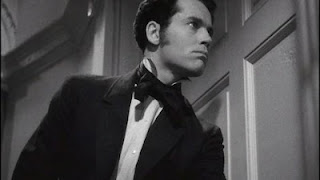


 At Belle’s house, General Theopholus Bogardus (Henry O’Neill), Julie’s uncle, notes to Pres and Belle how “willful” Julie can be, and echoes Livingston’s old-fashioned belief that a rebellious woman needs to be handled with a “firm hand.” Julie sends a message that she can’t see Pres, most likely because she wants to inflict on him what she sees as his earlier rejection of spending time with her. As Pres goes up the steps to confront Julie, he grabs a cane, apparently taking the advice of the other men. He pounds on the door and demands to see her so that they can stop the skirmishes between them. He is reasonable when he says he couldn’t be with her that day and was disappointed about not helping her pick out a dress. But, his yelling and pounding is barbaric. Julie plays it cool, locking the door, showing her control over the situation, and humorously asking, “Who is it?” When she opens the door, the camera shoots from below Pres’s waist and at his side, aimed at Julie’s face, with the cane seen protruding upward. She looks at the cane, and she pauses, probably understanding that he has brought it to ensure her compliance with a threat of violence. It almost looks like a phallic symbol, which joins sex and power in the one image. But, his assertion of his manhood can’t be realized unless she opens the door, a symbol of her control over her sexuality. He says she is a spoiled child, but she reminds him that he used to like her youthful ways. She has made sure her cheeks are flushed and uses her alluring appearance as her weapon. He leans the cane against the door threshold, showing how she has disarmed him. 


They kiss, but she then shows him the red dress, which he finds unacceptable. She reverses her presentation of herself as the innocent child and now is sarcastic about how she must pretend that she isn’t supposed to know that the dress may make her look like the women on Gallatin Street, who are presumably prostitutes. He realizes that she is getting back at him for earlier in the day and asserts that she will do as he wants this time. He says she will wear a white dress or else they will sit at home instead. She acts demurely and agrees, allowing him this supposed victory.


Julie, however, still wants to show her independence and wants to spite Pres by having Buck take her to the Olympus Ball. She wears the low-cut red dress but Buck refuses to escort her because of the commotion she will cause, which upsets her plans. That she does not anticipate the repercussions of her actions is repeated later. He says that everybody has their rules, which Julie scorns. Pres arrives and wants her to change her dress. She questions his courage to defend her if someone insults her for what she is wearing. He agrees to be seen with her as she is, and they leave with Belle and the General.


The ball is a sumptuous affair with an orchestra and dancing. Everyone stares at Julie as they are startled by her flaunting the rules of etiquette with her outfit. Many shun the couple as the two walk the ballroom floor. Julie is ready to leave, feeling the social pressure intimidating, but Pres insists that he wants to dance. However, the other dancers leave the dance floor, distancing themselves literally and figuratively from Pres and Julie. Her lack of conformity now backfires on her as she feels stigmatized, and pleads that she wants to go home. Pres is punishing her for her willful ways, making her appear almost like a destructive disease, similar to the yellow fever plague. 


Pres takes Julie home and simply tells her goodbye. She knows that he doesn't mean farewell just for the evening. When she says it appears he has made up his mind about her, he says, “No, you made up my mind.” He is placing the blame of their separating on her behavior. She tries to maintain a strong emotional appearance, offering to shake his hand before he departs. But then she slaps his face, angry that he is rejecting her. Belle wants her to pursue him, but Julie’s egocentric personality causes her to delude herself and she says that Pres will return to her, despite her aunt’s warning that he will not this time.


One year passes, and men speak of the increasing threat of the epidemic. Dr. Livingston advises Julie and Belle that they should enjoy themselves socially while they can since a public health shutdown is imminent. The physical isolation of a quarantine mirrors Julie’s loneliness brought on by Pres’s absence. She has been withdrawn, channeling her energies into taking care of the house. After she steps out of the room, Belle says to the doctor that Julie still rides her wild horse, which shows her spirit has not been entirely broken. Dr, Livingston says that Julie is like Belle, only more so. Belle says of Julie, “I love her most when she’s her meanest, because I know that’s when she’s loving most.” The contradictory statement implies that Julie is most alive when she exhibits her passionate nature, whether it’s in negative or positive ways. Livingston says there is word that Pres is returning to New Orleans after having left to live up north. The doctor says he is returning to help his hometown deal with the yellow fever outbreak. 


After the doctor leaves, Belle informs Julie that Pres is coming home. Julie is thrilled, believing Pres is finally returning to her as she thought he would. She shows remorse for how she acted and says she will beg his forgiveness for past transgressions. She assumes they will be married this time, and makes plans for all of the family and servants to leave the house to stay at Halcyon Plantation, which she believes is the best place to have a party to welcome Pres and reunite with him. She most likely wants to use the plantation to highlight Pres again embracing her and the Southern life he left behind.


The wealth of these plantation owners is obvious in the luxurious houses they own. Julie is hyperactive in her optimistic preparations for the party. She wears a white dress this time to suggest her willingness to marry Pres on his terms. Buck, the General, and Dick Allen (Gordon Oliver) arrive noting how epidemic restrictions are now in place and the disease has caused the sick to be sequestered and most likely die on Lazaret Island where those who have leprosy are quarantined. Some are not reporting feeling ill so they will not be relocated to the island. The rich however can find sanctuary on their estates, as those did during the Black Death in the Middle Ages. That ongoing practice implies that some things do not change.


Julie’s joy is erased when Pres arrives with his new wife, Amy Bradford (Margaret Lindsay) of New York. Belle mostly hides her shock and is generous in her hospitality toward Amy, offering a place to stay safe from the yellow fever raging in New Orleans. Pres talks with one of the Black house slaves, Cato (Lew Payton), who he has known for a long time and offers to share a mint julep with him. Cato says it wouldn’t be proper but will have the drink in the pantry. Pres already talked of change before he left New Orleans. Upon his return, having stayed in the abolitionist territory of the North, and, in a sense, marrying it in the person of Amy, he is breaking precedents. 


Julie, not knowing about Amy, approaches Pres in her white gown, gets on her knees to ask forgiveness, and professes her love for him. He acknowledges that she looks more “lovely” than ever, which shows she has made a visual impact on him. But, he stops her from going further on her appeals for his affection. Amy then enters and Julie has a difficult time accepting the reality of his marriage as she repeats what she is being told as if in a state of disbelief. She keeps up appearances, however, at least until she exits with Belle. Alone with Belle, Julie’s combative nature takes over, saying she doesn’t want to be “wept over,” but instead must “plan” and “fight” to get Pres back, who she feels has always been hers. She doesn’t recognize his marriage to that “washed-out little Yankee.” She is ready to start her own version of a civil war. When Buck appears, she sees an opportunity to divide and conquer by using him to make Pres jealous. 


At dinner, Julie fawns over Buck as the conversation includes a discussion of the abolitionists and their plans to change the South. Buck talks about hanging some of those northerners who want to end slavery. Pres quotes Voltaire who said that although he may disagree with someone, he would fight to defend the right for that person to say it. Pres is arguing for allowing the expression of other points of view. Buck says it doesn’t make sense because he can’t see tolerating anything that he self-righteously believes is the only way to think. 


Pres says he is preoccupied with remembering his history in New Orleans, but Julie uses his remarks to subtly attack him by saying he is a “forward-looking banker” who should just “kill” those memories. She is implying that she is part of his past and because he has moved away from his original home which included memories of her, then he has no right to cherish those recollections. Here, Julie, as opposed to what she said earlier, is against change since it caused Pres to leave her behind. She says that Pres has adopted ideas that are above “ignorant Southerners” who expect to just act according to their “raising.” She is attacking Pres for being a snob. Buck adheres to the old-fashioned notion that “cotton is king,” so he says New Orleans will retain its greatness. Pres has broken away from the unquestioned insulated views of where he grew up and now sees how things are evolving. He says that the North will prevail economically because there will be a victory of “machines over unskilled slave labor.” Buck accuses him of being an abolitionist, but Pres says he is not, that he is a realist, and sees the “tide” turning against them. He claims that he is still loyal to the traditions of the South, although he says some may question the “value of those customs.” He is open to self-examination and alternatives, unlike Buck, who epitomizes the mind that is closed to other possibilities when he says, “I like my convictions undiluted, same as I do my bourbon.”


After the meal ends, Buck expresses his displeasure with how Pres keeps telling Buck that his desire of “teaching” the North manners will not be that easy. Pres says it’s nothing personal, but he then becomes confrontational by saying that he doesn’t care personally what Buck thinks. The political and private situations seem to be converging so that Pres is feeling he is under attack in both areas. His brother Ted points out in private that Julie seems to be acting like a seductive “Gallatin girl” with Buck. The sullen and wounded Pres makes a sexist remark by saying that Gallatin girls, that is prostitutes, and “great ladies,” those in high society, “have a lot in common.” Pres finds out from Cato that Julie has been isolated for quite a while and Buck has not been around. Pres may be deducing that Julie’s behavior is just another ploy on her part to arouse Pres’s jealousy. 


While Belle plays piano, Pres wanders outside, swatting an evening mosquito, and touching leaves, perhaps reconnecting with his roots. Julie joins him and tries to associate herself with the mockingbirds and the magnolia trees to persuade him that she is part of the home that he felt compelled to return to, the country he “was born to,” and that he “trusts.” She argues that what draws him there is in his “blood,” and he can’t turn away from it. In this metaphor, Amy is the wrong blood type, being from the North, and his nature will reject her. She says that the South “isn’t tame and easy like the North. It’s quick and dangerous, but you trust it … because it’s part of you. Just as I’m part of you, and we’ll never let you go.” She is presenting herself as the embodiment of what is primal in the South. She kisses him but he pushes her away, since, as he said, he loves Amy, and he goes back inside.


Buck comes outside and he makes negative comments about Amy, which pleases Julie. He pledges his support of her, since he most likely sees himself in a good position to press his advantage in trying to win over Julie with Pres being married. They hear cannon fire which is supposed to shift the winds and make the yellow fever less contagious. Pres suggests that it would be better to “drain the swamps and clean up the city.” He is being scientifically practical since the fever is carried by mosquitoes. But Buck is sarcastic of his “Yankee” ideas, another example of trying to hold onto behavior that does not stand up to verifiable evidence. Buck’s anti-North statements cause Pres to defend his wife who comes from New York, and Belle intercedes to quell any arguments at this social gathering. She tries to gain Julie’s support on the matter, but Julie says she would not want to hinder a person’s expression of thoughts. She is encouraging, as she has done in the past, division instead of unity among others out of her own selfish interests. 


Pres is informed that Jean La Cour (John Litel), a bank official, is seriously ill with yellow fever and wants to talk to Pres about important business matters before “it's too late.” Before Pres leaves he tells his brother, Ted, to look after Amy while he’s gone. Julie, creating dissension, says to Amy that Pres doesn’t have his priorities straight since he runs off to the bank, implying he should stay with his wife and friends. She again encourages Buck to add to her negative comments as he then denigrates the banking profession. Ted tells Buck that he is coarse and ignorant of how Julie is manipulating him. When Ted brings up Julie’s name, Buck sees that offense as requiring what duelists would call “satisfaction.” Buck acts as if they are just talking, but Julie realizes she has gone too far in using Buck and tells him not to follow the South’s “stupid code” which is for “fools.” Buck accuses her of wanting to turn away from Southern traditions, as she now is more like she was at the beginning of the story. She changes her stance depending how it will suit her desires. Julie begs the General to stop the duel, but he places the blame on her, stating that her plans have gone “astray.” Belle tells her that women may incite men to fight but can’t stop them once they get started. She, too, is indicting Julie for her actions, but also how the combative nature of men can’t be reined in. Julie then sings with the slaves in a partial attempt to escape her responsibility for what she has instigated, but she is also sorrowful and sarcastic as she talks about the charm of Southern traditions.


 At the duel, Buck tells his second that he just wants to “wing” Ted. He seems to want to comply with the tradition of the faceoff but only to put Ted in his place. The General urges Ted not to participate because Buck is willing to accept an apology and doesn’t really want to fight. But they have their duel, and the camera only shows the gunshots but not the men as the audience is kept in suspense as to the outcome.


Back at the plantation, Amy joins the silent women and accuses the Southerners of being savages for allowing a duel to take place. Julie enters after gathering flowers and she seems to be in fine spirits, reverting again to admiring the Southern way of allowing men to be able to face one’s enemy and settle scores. Amy says the flowers Julie is enjoying may be used on Ted’s grave. But the shaken Ted enters and tells Julie that Buck is dead, and before he died he told Ted he knew that he was a victim of Julie’s scheming, which deflates Julie’s high spirits. After the others have left, Julie can feel that Belle is judging her and, when asked, Belle says she was thinking of the Biblical Jezebel “who did evil in the sight of God.” Julie knows she is being compared to the woman in the Bible who promoted rebellious ideas and partisan turmoil, and has come to represent a wicked woman. 


Just then a gunshot is heard, and a man was shot by the authorities outside the house for not adhering to territorial restrictions mandated to hinder the spread of yellow fever. (And we think wearing a mask is bad!). This violence adds to the disintegration of what is happening in society as a whole and which is mirrored in the lives of the individual characters. The next scene stresses this theme as the epidemic is creating financial and interpersonal chaos in New Orleans. Wagons go through the streets to gather the sick and dying as soldiers patrol the city. Men fill the bars to drink alcohol, which was considered a way of treating the disease, another fake traditional belief that seems to be a justification to become intoxicated. Pres and Dr. Livingston drink for alleged medicinal purposes, but Pres is already not feeling well. After hearing that Ted killed Buck he passes out, and all the Southern gentlemen scatter, none of them showing the courage or loyalty they espoused to help Livingston carry Pres out. 


 Back at Halcyon, word comes that Pres is sick and staying at Julie’s house below the quarantine line in New Orleans to avoid being shipped to the leprosy island. Julie, most likely seeking redemption, decides to join the slave who brought the message and sneak past the guards by boat to New Orleans to help Pres. Julie risks becoming infected by getting in close contact with Pres. She finds him delirious in bed with a burning fever. She helps apply cool compresses and fans him to keep the fever down. The General acquired an exemption and Amy, Belle, and Ted travel to Julie’s house. Livingston says that he told the authorities that Pres was sick. The doctor sees the bigger picture and says there would be even more anarchy if there is one set of laws for the rich and another for the poor. He feels that the honorable Pres would agree to going to Lazaret Island. 


When Dr. Livingston tells Julie that she’s worn out and needs rest or she might get sick and wind up on Lazaret Island, there is an alert look on Julie’s face that shows she has decided she must go there with Pres. Amy has the same idea as she joins them and pleads that she must be allowed to accompany her husband to the quarantined location. Julie begs Amy to let her go to the island because she says she knows Creole words and how to deal with the slaves so that she is more equipped to take care of Pres. She says she is the stronger of the two women and can get Pres the drugs, food, and water he will need. She promises to make sure he will live, admitting that Pres loves Amy, not her. She only wants the chance to prove that she “can be brave and strong and unselfish,” She is asking Amy to help her be “clean” again, which suggests a sort of baptism to wash away her past sins.


As men come to take Pres away, Amy gives her consent, and Julie rides in the wagon with Pres and the other infected. These two characters, like the land they come from, are caught between a fading past and a changing future. There are canons going off and the last camera shot is that of a fire burning in a trash can, symbolizing the destructive war to come between the old and the new.


The next film is Miller's Crossing.

Sunday, January 31, 2021

The Grapes of Wrath

 SPOILER ALERT! The plot will be discussed.

The Grapes of Wrath (1940), directed by John Ford, who won an Oscar for this movie, is based on the acclaimed novel by John Steinbeck. There are many modifications to appease the censors of the time, but Steinbeck was especially pleased by the performance of Henry Fonda. Ford was difficult to classify politically. Here he focuses on the plight of migrants during the depression and the fight against larger interests, including business and the government, who conspire against the less powerful. The story accomplishes its goal by focusing on one family’s odyssey of suffering from Oklahoma to California, and shows examples of some who are selfish and others who work together for the good of all.

The film starts with a long shot of a solitary man walking in the distance looking small against the vast emptiness of the rural road and land. The effect is to stress loneliness. The contrast between the size of the individual and the large area around him suggests the struggle to survive against overwhelming odds. The black and white cinematography adds to the starkness of the events of the story and the gritty existence of the characters.

The man is Tom Joad (Fonda). He stops at a market meaningfully called the Cross Roads, which suggests that the main character has reached a life-changing point in his life. He asks a trucker for a ride even though the sign on the vehicle says no hitchhikers allowed. Tom asks anyway and says a nice guy wouldn’t give into what someone else wrote on his truck. Here Tom is able to give the driver an excuse to give him a ride by blaming the rigid rule on someone else. It also shows how Tom doesn’t submit to practices that limit his freedom. 


The scene in the truck provides some backstory. Tom says he is going to his father’s sharecropper farm. The trucker asks questions about Tom’s trade and what he’s been up to, noticing that Tom’s hands look as if they have been using a pick or an axe. Tom is angry about how he is being interrogated and frankly tells the trucker he was in a penitentiary for the last four years after being sentenced to seven years. Tom almost enjoys justifying the man’s fears when he tells him he was in prison for homicide. Tom’s status in society appears to many others to be that of an untrustworthy outsider.

Walking on the road to the family farm Tom encounters the ex-preacher, Jim Casy (John Carradine), who recognizes Tom and reminds him that he baptized Tom. He says he’s not a cleric anymore because he lost the calling. However, he seems proud that he baptized many, which points to his ability of showing others a different way of seeing existence. The hard times appear to have shaken his faith as he says now, “I ain’t so sure of things.” He claims that maybe there aren't abstract ideas of “sin” and “virtue” but “just what people does.” The emphasis here is that how individuals behave shows the quality of people, not what they profess. Or, as the saying goes, “actions speak louder than words,” and from the looks of things, those actions haven’t been very beneficial for most folks. Tom catches the man up on his past. Tom killed a man with a shovel in a dance hall after the other guy stuck him with a knife. Even though it was self-defense, Tom was convicted, and he has no regrets about what he did, and would do it again if the circumstances presented themselves. Tom is obviously a man that will not be intimidated.


Stacy walks with Tom as the wind starts howling. The dust storms of the time were devastating for the poor people living in the heartland of the United States. The Joad house is dark and desolate. There are items that belonged to Tom’s family around the house, making the place seem like the decaying remains of a corpse. Tom discovers the stubborn and ominously named Muley Graves (John Qualen) seeking shelter in the dark. He says that Tom’s folks went to Tom’s Uncle John’s place two weeks prior. But, Muley says that everybody there will have to leave, because outside forces are “blowing” them off their land, like the strong winds. It’s not only the economics but the primal forces of nature, like a Biblical scourge, that is sending them away. Tom notes that after living on that farm for fifty years, he finds it difficult to believe that they must go away after putting down deep family roots into the land. He points out how feisty his mother is and wonders how she could not have fought off those trying to remove her. But, Muley says the family received their “notice” to vacate, so the implication is that there wasn’t much that she could do. They are migrating to California. However, Muley says defiantly that he will not leave. A flashback shows how the tenant farmers couldn’t earn enough to pay their rents and the representative of the company that owns the land said that with modern tractors the landowners would be able to pay far fewer people to harvest the crops. So, the farmers were being evicted. When asked who is responsible, the sharecroppers get the runaround so they can’t focus their anger on one individual. The company and the associated bankers are faceless entities as the whole system is conspiring against the average person. Muley echoes Tom’s indignation when he says that the land belonged to them since they were born there, worked on the farms, and even died on them.

Muley says that men came with large caterpillar tractors to force him and the other families off of their properties, leaving them with nowhere definite to live. We see the large wheels of the machines, and the caterpillar name suggests a mechanical plague invading the territory, rolling over everything in sight. The company smartly hires some of the farmers to run the tractors, undermining opposition. One of the operators of the machines says that Muley wouldn’t kill him because Muley would be put away for murder, and besides there would only be someone else to replace him. There is an inevitability to the onslaught, as Muley watched his house bulldozed. There is a shot of the tracks of the tractors making their imprint on the land, and all that is left are the shadows of those who must leave, looking like the ghosts of those who once inhabited the land. Muley, and his neighbors, have become unanchored, and now are wanderers. Muley stayed behind, but he feels that he is “just an old graveyard ghost,” which adds to the funeral feel of the place. After the storm, Muley tells Tom he has to get out of there because he is on parole and he is now a trespasser on his own land in this upside-down world. They hide as the authorities approach, looking for the squatting Muley. Tom can’t believe he would “be hiding out” at his own home.


At Uncle John’s place, Ma Joad (Jane Darwell, in an Oscar-winning Best Supporting Actress role) cooks for the family. (The name Joad sounds like Job from the Bible, who, along with his family, are tested by God and suffer greatly). Grandpa Joad (Charley Grapewin, an appropriate name for the film) fantasizes about all the grapes and oranges he will be able to eat once he gets to California, where they can earn money picking fruit. (These grapes of sustenance later become those of vengeful “Wrath” as noted in the movie’s title and in the Bible’s book of Revelation). Grandpa is trying to grasp some optimism out of these pessimistic times. Ma sees her son outside and just hopes that jail hasn’t perverted Tom into someone who has been hurt so much that he has become mean. The thrust here is that treating people with fairness is better than using oppression which has the effect of producing a threat to society. Noah (Frank Sully), Uncle Joad (Frank Darien), young Ruthie (Shirley Mills), and Pa Joad (Russell Simpson) greet Tom. Al Joad (O. Z. Whitehead) arrives in a truck with Tom’s pregnant sister, Rosasharn Rivers (Dorris Bowden) and her husband Connie (Eddie Quillan). Many of the men would like to think Tom escaped from prison, maybe because they want a hero to show that someone can beat the system. This joyful reunion is dampened by the arrival of the authorities telling the Joads that they have to vacate by the next day.


The family loads up their truck in the night which mirrors their dark fate. The truck is so weighed down that it’s questionable if it will be able to literally or figuratively carry all that the family has accrued in objects and memories over the many years there. Ma burns some old news articles and correspondence which shows the mournful letting go of her past life. She has a pair of earrings that remind her of better times, and decides to keep those as a remembrance. Despite his earlier attempt to rationalize that the move to California would be advantageous, Grandpa now refuses because “this is my country and I belong here.” The point here is that not all transplants are successful. They spike the old man’s coffee since being unconscious of what is happening to him is the only way to suppress his strong attachment to the land. Despite their heavy load, they generously invite ex-preacher Casy to go with them. A strong wind blows through the farm as if again signaling how the place is now like a ghost town without those who kept it alive.


They head out on Oklahoma Highway 66. They don’t have much money saved from selling stuff and working extra chores, so they must camp outside. They lay Grandpa on the ground and he feebly still says he isn’t leaving. He grabs a handful of dirt and dies. It’s as if his spirit will not allow him to leave, and his grasping of the soil symbolically shows his holding onto the land that he remains loyal to, even in death. Tom writes a note to be left on the old man’s body that says he died of a stroke and the family couldn’t afford a funeral, so they buried him. Tom says the note will show Grandpa was not killed in case the law digs him up. Tom’s sarcastic comment is that “the government’s got more interest in a dead man than a live one.” He indicts the system for its apathy toward the living while it pursues its own warped version of justice postmortem. Casy says at the burial site that there are words from a poem which read “all that lives is holy,” so he really prays for the living who “don’t know which way to turn.” In this world of pain, he seems to be saying that the dead have peace, relief, and a clear-cut road ahead of them, unlike those still above ground.


At a campsite, the Joads meet many other poor people. There is a man who bursts their hopeful balloon by saying he was already in California and there weren’t close to as many fruit-picking jobs there that would accommodate all the people who read the flyers and head out west. He says he lost his wife and two children to starvation because of false dreams. The government, represented by the coroner, covered up the real problem of hunger because it would be disgraceful, and recorded the deaths as heart failure. His story is a chilling indication that the Joads and others are on a road to unavoidable tragedy.


The truck is overheating and they stop at a gas station in New Mexico. The owner quickly asks if they have any money for gas. Tom doesn’t like the way the man treats them as if they were “bums.” The film shows that poverty fosters animosity from some as people are pushed to only caring about themselves to survive, and the lack of money undervalues an individual’s feeling of self-worth. Grandma (Zeffie Tilbury) pleads to get out of the truck as the journey is hard on someone of her advanced years. Pa asks for some bread for a dime for her at the diner there. The waitress is scornful, saying they only sell sandwiches, which the Joads can’t afford. But, countering the waitress is the generous owner who tells her to give Pa the bread. When two of the young Joad children enter, the waitress finds her humanity and sells them candy for a couple of cents. The truck drivers who stopped there leave her a big tip. The movie implies that the only way to get through punishing times as a nation is to help each other. 


 When they enter Arizona they encounter a border guard who is intimidating as he asks what they are carrying, and wants to make sure they keep moving so as to exit the state as soon as possible. He most likely does not want another group of needy people adding to the state’s number of impoverished inhabitants. The lack of hospitality from another public employee here again depicts the government’s indifference to the plight of the citizens. The local Highway 66 sign labels it a Will Rodgers road. It is ironic that the entertainer who was noted for saying he never met a man he didn’t like is referenced as people are treated with such negativity.


The Joads stop just before crossing into California, and they are not impressed as the picture postcards exaggerated the beauty of the state when compared to what they see. Grandma’s response is to spit out the window of the truck. It gets to the point where hopes are not realized, and they keep going just to have somewhere as a destination instead of simply giving up. At another gas station, the attendants there who have a job are judgmental about the “Okies,” saying it isn’t human to be so miserable, and the travelers don’t have any sense to cross a desert to a place where they only believe they can get work. But, as Tom suggests, when there isn’t any other alternative, the “nerve” to do something that seems outrageous is the only choice one has left. Meanwhile, Grandma is very ill and calls for her deceased husband. The movie implies that it is harder for elderly people to survive relocation from a place where they have become accustomed to living for so many years. 


California state workers stop them, and the harassment is extreme here as they are told to unload the mountainous amount of belongings to pass inspection. Again, luckily, there is a sympathetic man who sees how ill Grandma is and lets them go so they can get her to a doctor. The truck runs out of gas and they have to push it along the road, like Sisyphus struggling with his rock. They finally see fruit groves and haystacks, but that joy is undercut when Ma tells Tom that Grandma was already dead when the inspectors checked the truck. Ma pretended that she was deathly ill so that they could keep going without removing all their gear. The situation is so dire that people need the dead to help the living.


They push the truck into a city but the policeman there says that there isn't any fruit picking to be done there, and the work has moved further south. It seems that they will never find an end to their plight. The cop came from Oklahoma, too, but he tells them he has no choice but to send them to a transient campsite outside of town or else he will have to arrest them. He says that the real culprit is the person that sent out the flyers with false promises, which is symbolic of the American Dream turning into false advertising for these unfortunate people. The gas station attendant is also hoping for some monetary relief, but when Tom says all they can afford is one gallon, the look of dejection on his face shows how bad times are contagious.


The camp is full of broken-down shacks and downtrodden residents. As Tom says in a huge understatement, “it don’t look none too prosperous.” The looks on the Joad family members are ones of despair as they see that many have traveled to this supposedly lucrative land and wound up in the same situation from which they tried to escape. They set up a tent and Ma starts to make a stew. Several sad children come around offering to help for some food since they haven’t eaten anything but fried dough the day before. Ma feeds the family first but there is guilt about the children going hungry. Ma says that the children can have what’s left and they grab cans from a trash heap and scramble around the heated pot for the meager amount of leftovers. We have another example of sharing by those that can’t afford to give up anything. In the absence of a national effort to help the country as a whole, there is a chaotic surge for the little that is available.


 A hiring agent arrives in a nice suit and car with the local sheriff and asks if they want to work. But he will not say how much he’s going to pay. A man there says he has to show a license to hire people and put down in writing what are the wages. Otherwise, he can exploit the poverty of many by getting the job done with many men and paying a tiny amount of money to each one. This situation is where a union would protect the worker. The agent cues the cop to consider the man questioning the hiring tactics to be considered an “agitator,” and possibly resembling a thief in the area. The cop tells the man to get into the car. Tom, no stranger to injustice, says they don’t have any proof the man did anything wrong. The cop then threatens Tom. When the cop tries to apprehend the man, the man knocks down the policeman and runs. The cop fires his gun and hits a woman standing nearby, as she becomes collateral damage to the injustice of the authorities. The courageous men there come to the rescue of their comrade and knock the cop out when he chases the man. Casy tells Tom to hide since he is on parole and then he unloads the sheriff’s gun and tosses it away. He then unselfishly sacrifices himself, saying he was the one that got into a scuffle with the sheriff. Casy smiles since he probably feels that he is actually doing something to help others which he couldn’t do when he was a preacher, removed from what was going on outside his church. 


Tom comes out of hiding to warn the family that men in the town plan on burning the camp. Is this their way of removing the blight that proliferates all over the country so they don’t have to see it? Or, is it a punishment, blaming these people for their predicament, and thus washing their hands of responsibility? In addition, Tom’s brother-in-law, Connie, abandoned the family, basically saying he didn’t sign up for this grief. Tom’s sister, Rosasharn, cries over Connie’s leaving, and Tom tries to comfort her, which is not something he is accustomed to doing. She tries to rationalize to deal with her loss by saying Connie left to get some books to prepare for a job, and Ma encourages this fantasy to ease her daughter’s pain.


The camp disbands as the people there flee from the threat from the town. One may see this movement as similar to the book of Exodus in the Bible where the Jews escaped torment and began wandering for a promised land. But here that oasis is supposed to be California, which has not been what these searchers were looking for. Tom says that he is becoming angry because he sees the world trying to break their “spirits” and take away their “decency,” and Ma is worried as she was at Tom’s return that he might give into his “wrath.” He almost surrenders to his anger as he grabs a tire iron when they are confronted by a mob of men who don’t want the Joads to enter their town. But, he relents, and the men tell them to turn around because they don’t want anymore “Okies” there. The individual communities seem to be losing any sense of caring about fellow Americans, and the poverty of the country causes division in the nation as each place just cares about itself first. 


 As they fix a flat tire and Ma worries about their dwindling food supply as Tom shows concern about his sister getting close to her baby’s due date, a man driving by stops and gives them temporary hope about jobs picking peaches nearby. It is important to stress these people are always looking for work and are not seeking a handout. They arrive at the Keen Ranch, but there is a commotion with people lining the road and a fleet of policemen present. The cops ask if they are looking for work and direct them to proceed. The Joads do not hear it, but one man calls those arriving “scabs.” We realize that there is a labor strike happening, and the Joads are being recruited as strikebreakers. The impersonal bosses just see them as tools to do the work, as Tom sarcastically says they, “sure do wanna make you feel at home here, all right.” 


They are assigned to a tiny, dilapidated shack and don’t even get a chance to unload before they have to join a marching army of men, women, and children into the fields. As is shown in the film Matewan, which focuses on coal miners (analyzed on this blog), the company has the only store where the workers can buy supplies. The store dictates the cost of items, so the company gets back what it pays the employees, and keeps the fruit pickers impoverished so that they can’t get financially ahead and leave. 


 Despite Ma’s concern about him getting into trouble, Tom wants to find out why there was a problem at the gate of the ranch. A man wearing a badge confronts him, and he looks like a real cop but is a hired security guard. He tells Tom he can’t walk around and will be forcibly returned to his cabin. The place is run like a prison camp, so it’s as if Tom never left his incarceration. Tom says he will go back, but sneaks away and finds some men near the riverbank. Casy is among them and he tells Tom he wasn’t sent to jail, just expelled from town. The men there say a strike is going on, and they inform Tom that the five cents a bushel was what they were offered, but then it was cut to $2.50, which, as Casy says, results in, “one ton of peaches picked and carried for a dollar.” The extortion here is brutal. They say that they started to strike, and the company then attracted others to come, is paying them the five cents temporarily, and as soon as the strike is quashed, the wage will be $2.50 again. They tell him when the harvest is done, the bosses will let the workers go, and they will continue scrounging for work. Casy asks Tom to join the strike so that they can negotiate a higher wage. But, Tom reflects the plight of the hungry by saying at least that night they had some meat to eat, basically implying they can’t afford to worry about the bigger picture. The men press their argument by saying that the security men have been harassing the strikers, threatening to beat them up and “run us out.” 


 They hear men coming so the strikers along with Tom try to escape, but the security guards ambush them. Because Casy was considered a leader, and now tells the guards that they are taking the food out of the mouths of children, one man strikes Casy with a large stick, killing him. Tom can’t check his fury, and clubs one of the guards, killing that man. Tom is also hit and sustains a broken cheek before he can run off and get back to the cabin as sirens wail in the background.


The next day, Ma tends to Tom’s wound, and says that the guards are telling a different story which says nothing about Casy being killed first. There is talk of lynching the man who killed the guard if they catch him. Tom says he will leave to protect the family. Ma is nostalgic for when they had their own land where “there was a boundary,” which implies security. The longevity of the family was reinforced by the place they settled on and became identified with. As Ma says, “old folks died off and little fellas come.” They came to feel “kind of whole and clear,” knowing who they were and what their purpose was. But that clarity that brought unity is splintering as they have lost their place in the world. They have already surrendered two to death, Connie has left, and Ma says Al, Uncle John, and Pa don’t see themselves as part of a whole anymore. As Ma says, “they’re cracking,” and the rest are lost because they have “nothing to trust.” The film suggests the country has welched on its promise to protect the “general welfare” of its people and relinquished the “pursuit of happiness.” So Ma doesn’t want more dissolution of the Joads and begs Tom not to leave so he can help her hold the family together.


They hear a truck passing by and one of the ranch’s representatives tells the arriving family that they are now offering $2.50 a bushel. Despite the complaints as to how it’s impossible to live on that wage, the heartless response is to take it or leave it since more starving people are headed to Keen Ranch and they will be willing to take the low payment. Tom sees that what Casy told him was the truth, and he says the man was like a “lantern,” in essence enlightening him as to the exploitation that was happening. Casy may have achieved making the difference he hoped for.


The family tries to sneak away at night, hiding Tom under some bedding. Some guards stop them and ask about the other man who was with them. The Joads use the impersonal nature of the employers against them. Since there was no attempt to really know who was working on the ranch, the hired guards believe the family when they say that the other man was a hitchhiker who left. They still don’t have a promising destination to head toward, but instead keep running away from one hostile place after another. Adding to their problems, the truck finally breaks down and they use the grade in the highway to coast the vehicle. 


They arrive at the Farmworkers' Wheat Patch Camp. The difference here is that this place is run by the Department of Agriculture, and the camera zooms in on the sign to stress this point. The place is designed to take care of all of those in need, as opposed to local municipalities just protecting their own interests. A man greets them and says that there was a speed bump that slowed down their vehicle. He says it’s meant to protect children. We know that they are in a place that cares about the welfare of others. Here they are assigned to an area that has a “toilet, showers, washtubs.” There are schools here and they elect their own officials. Ma is amazed probably because here is a spot that demonstrates what a government is supposed to do to safeguard its citizens. Tom finds out that no cops can come in without a warrant. The place even has Saturday night dances. A licensed agent comes in to help with jobs. When Tom asks the pertinent question as to why there aren’t more places like this one, the man signing them in doesn’t know, because there isn’t any logical answer as to why there isn’t more help for victims of a cruel system that forgets about its people in jeopardy. 


Tom shuts off the water of an outside faucet that a woman neglected to close as he now feels a responsibility toward a place that shows respect for its residents. The Joad children aren’t familiar with inside plumbing and when they pull the chain on a toilet and hear the water flushing, they think they broke it. It is a funny and sad moment combined since it shows how deprived these young people are of simple conveniences. 


Tom has secured a job digging ditches on a farm. The owner likes him and the men working with Tom and warns them that there will be an attempt to stir up a fight at the next Saturday dance. The purpose is to give the sheriff cause to put the camp under the control of the local authorities. The reason is they are afraid of “reds” causing problems. Tom doesn’t even know that the term refers to communists, which shows how innocent people were lumped together with revolutionary political groups so as to undermine the legitimate claims for economic opportunities. 


The people at the camp are ready for the agitators and they spot them since the man they said invited them denies their claim. One of the residents saw men on the road nearby with guns, so they know that the sheriff’s department is ready to quickly intervene when trouble starts. They don’t want any evidence of violence on their part discovered that would allow for police intervention of their self-governing community. As soon as the outsiders try to start a brawl, the local men round them up and secretly constrain them. When the deputy sheriffs show up because there is supposed to be a riot they have to leave since everything looks peaceful. We have an example here of unity of purpose as an employer, employees, and fellow citizens band together to prevent injustice.


Police do show up at the camp at night because they are investigating the death of the security guard at Keen Ranch and find the Oklahoma license plate on the Joads’ truck. They say they will be back with a warrant. Tom overhears their conversation as a train whistle sounds in the background, and we know he has to leave to protect himself and his family. Ma wakes up and seems resigned to what must be. Tom then delivers his famous speech. He says he has been thinking “about our people living like pigs,” and the disparity in wealth that allows for “maybe one guy with a million acres and 100,000 farmers starving.” He says that “as long as I’m an outlaw anyways, maybe I can do something.” His is implying that his outsider status allows him to take risks to help others since he has no self-interests to protect. He states the transcendental belief that each person doesn’t have a separate soul but there is “one big soul that belongs to everybody,” that we are all bound together and therefore harm to one hurts all, as does good for one benefits all. If he is no longer a separate entity, then he is part of a universal force of existence. That is why he says, “I’ll be all around in the dark. I’ll be everywhere, wherever you can look. Wherever there’s a fight so hungry people can eat, I’ll be there. Wherever there’s a cop beating up a guy, I’ll be there. I’ll be in the way guys yell when they’re mad. I’ll be in the way kids laugh when they’re hungry and they know supper’s ready. And when the people are eating the stuff they raise, and living in the houses they build, I’ll be there, too.” He says goodbye to Ma and walks off. There is a shot that bookends the opening, with Tom again walking alone. But now the shot is looking up at the vast sky and after what he learned from his travels and what he said, we know that Tom is not alone. He isn’t wrapped up in his own troubles, but instead feels himself part of the struggle and fulfillment of all things.


The family heads out for work in Fresno. Even though Ma admits that she was afraid about how things would turn out, feeling everybody was against them, she says she doesn’t feel fear now. She says that for a woman, life is like a “stream” that flows and has “little eddies and waterfalls, but the river, it goes right on.” So, even though there are setbacks along the way, they can get back on track. Pa says they have had it rough, but Ma says it makes them “tough,” and they will not be beaten. She cheers their resilience as she declares that, “We’ll go on forever, Pa, because we’re the people.” Her last words end with a paraphrase of the U. S. Constitution, which begins with a message of inclusiveness.


The next film is The Great Santini.