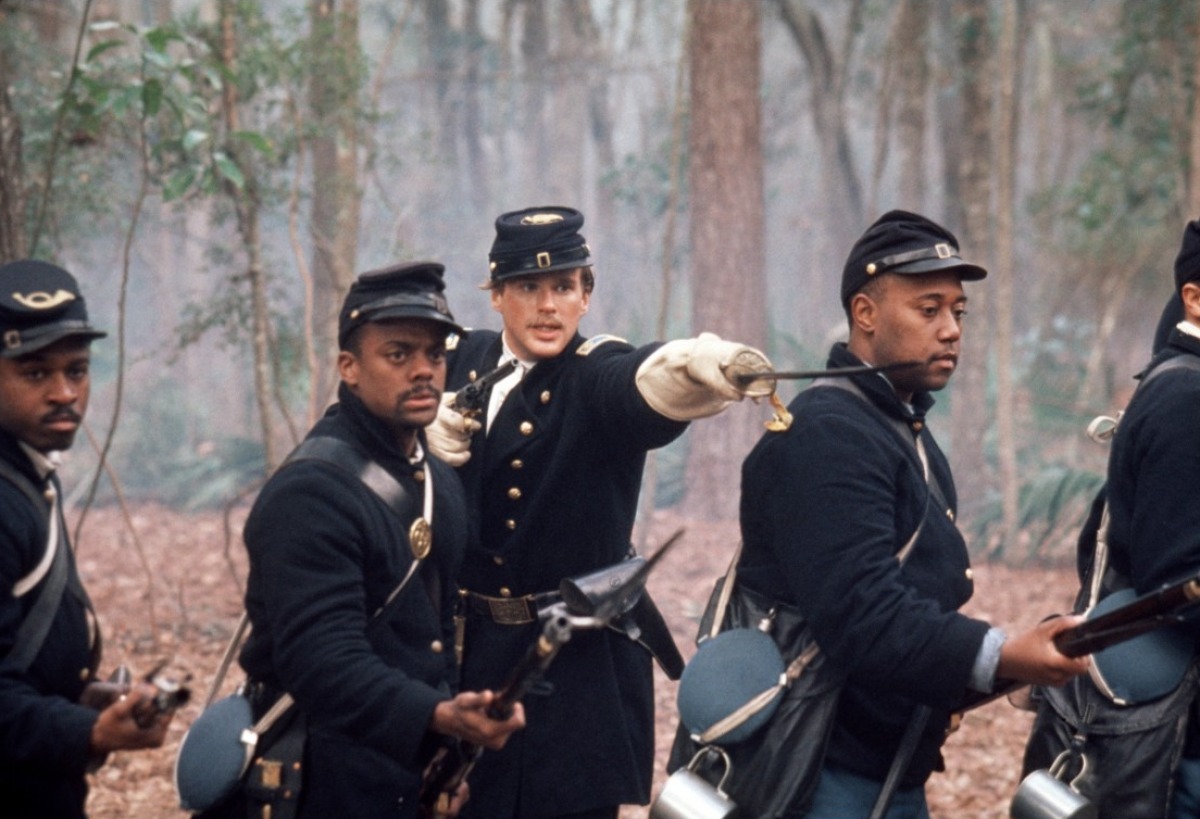
Showing posts with label Morgan Freeman. Show all posts

Tuesday, October 3, 2023

Satisfactory Movie Endings

 A friend of mine complained that she has watched many movies and streaming TV series that did not provide satisfactory conclusions to the stories. She urged me to write about ones that ended well. So, before analyzing the next film, here are a few well known motion pictures that have noteworthy endings.

The Shawshank Redemption

I’m not talking about how Tim Robbins’s character Andy escapes from Shawshank Prison and acquires the corrupt warden’s money, although that is something the audience has reason to cheer about. I want to focus on the very end of the film when Morgan Freeman’s Red has finally received his release from incarceration. He has become what he calls an “institutionalized” man, meaning he has spent so much time behind bars, he doesn’t know how to deal with the outside world. But, Andy left him a note and some money so he could join him on a beautiful beach in Mexico, restoring boats for tourists. Earlier, Red spoke about how dangerous it was to hope in prison, because those dreams would just be crushed. Now he can finally allow himself to look forward to something. He says, “I hope I can make it across the border. I hope to see my friend and shake his hand. I hope the Pacific is as blue as it has been in my dreams. I hope.” Some of the best lines ever spoken at the end of a movie.

Casablanca

How could I not include the ending to this movie. It’s not just because of the rounding up of the “usual suspects” line that allows Humphrey Bogart’s Rick to escape arrest for shooting Major Strasser. And yes, the surrendering of Ingrid Berman’s Ilsa to Paul Henreid’s noble Victor as Rick gives his “hill of beans” speech is a wonderful scene of romantic aching. But the ending filled with baptismal rain is a scene of redemption for Rick and Claude Rains’s (appropriate name give the scene) Louis Renault. United now, their “beautiful friendship” will go on to symbolically point toward the movement away from isolationism to battling the Nazi threat before them.

The Maltese Falcon

This film contrasts fantasy with reality, as film noir characters dealing with the seedy underbelly of life seek escape by acquiring an almost mythical object that they hope will transport them away from their dark realm. When Gutman (Sydney Greenstreet), Cairo (Peter Lorre), and Brigid (Mary Astor) realize that the black bird they have sought is a fake they come crashing back to the real world. Brigid must take “the fall” for her crimes, and she boards the elevator, going down, of course, to be arrested. The elevator grating looks like prison bars, so she already appears imprisoned. Humphrey Bogart’s private detective, Sam Spade does not buy into the delusionary vision of the others (his last name reminds one of calling “a spade a spade,” a saying that appreciates facing facts). The quote he uses to describe the phony falcon is perfect for the film. He borrows it from William Shakespeare’s The Tempest, as he says the object is, “the stuff that dreams are made of.” The stress here is on the imagined ideal world versus the harshness of transient mortality.


When Harry Met Sally …

At the end of all Hollywood romantic comedies, one person either runs, takes a cab or airplane, whatever, to reconnect with that individual’s love interest, leaving the audience with the fairy tale “They lived happily ever after” ending. This film is no different in that way. Harry (Billy Crystal) is alone on New Year’s Eve and finally decides he wants to be with Sally, so he runs to the party where she is. What’s great is the speech, by screenwriter Nora Ephron, he gives that finally wins her over, which, in my opinion, is the best dialogue about loving another person. Harry delivers it not in a sweet manner, but like he’s delivering an argument to make a point. It’s almost like he wishes the illogical truth weren’t so, but he can’t escape it. He says, “I love that you get cold when it’s seventy-one degrees out. I love that it takes you an hour and a half to order a sandwich. I love that you get a little crinkle right there when you’re looking at me like I’m nuts. I love that after I spend the day with you, I can still smell your perfume on my clothes. And I love that you’re the last person I want to talk to before I go to sleep at night. And it’s not because I’m lonely. And it’s not because it’s New Year’s Eve. I came here tonight because when you realize you want to spend the rest of your life with somebody, you want the rest of your life to start as soon as possible.” Doesn’t get much better than that.

The film actually ends, appropriately, on the couch where throughout the film couples briefly state how their long relationships began. Harry and Sally now are included among those others.

The Graduate

This whole film appears to be about protesting the false values of the white upper-middle class, with Benjamin (Dustin Hoffman) realizing the banality and hypocrisy of his world, and revolting against it. The conclusion of the film has him driving and running (there it is again) to unite with his love, Elaine (Katharine Ross). He is a Christ-figure, presenting a crucifixion image as he bangs on the glass partition of the church’s second floor as Elaine is about to be wed to a clone of the established order. When she calls out to him he springs into action, wielding a crucifix (director Mike Nichols stressing the Christian symbolism). They run off, supposedly toward that fairy-tale ending.

But wait. Despite taking action here, throughout the film, Benjamin looks like he is passive, letting the world’s current carry him along. We first see him on a conveyor belt at the airport, and he exits the building through the wrong door. He floats in the family pool, and later appears to be running in place as he approaches the church. Is he really able to escape the forces around him holding him back? When he and Elaine get on the bus to take them away, the looks they present are not joyful, but appear to show what is to follow is a letdown. They may be wondering: What do we do now? They are leaving on a bus (again, passively being carried forward), but Simon and Garfunkel’s “Sounds of Silence” plays, as it did in the beginning, repeating its pessimistic message, implying that, in the long run, no progress has been made.  

Sunday, August 9, 2020

Glory

 SPOILER ALERT! The plot will be discussed.


Glory (1989), directed by Edward Zwick, is sort of a Civil War version of Profiles in Courage. It tells the story of the 54th Massachusetts Volunteer Infantry Regiment, which was the first of its kind to consist of only African American foot soldiers. The film is a character study of some of the individuals involved, including the white commanders, and depicts the obstacles they had to overcome and how they changed to face those challenges and grow as human beings even though it cost them their lives. The title of the film lets us know that the story is about earning praise and honor.


The movie begins with notes saying that Captain Robert Gould Shaw (Matthew Broderick) was twenty-three, and the son of Boston abolitionists, when he enlisted to fight in the Civil War. So we know that he came from a family that was strongly opposed to slavery. He wrote letters home to his parents and these are the basis for the story in this film. (When I first watched this film I felt Broderick was miscast in this role but have come to realize that his lack of maturity as a commander is necessary at the onset of the story to show his personal growth later).


The first images are those of a Union military encampment and soldiers marching off to war while Shaw’s voice-over narrates a letter to his mother, Sarah Shaw (Jane Alexander). He is noble but naive since he says none of them will be killed because their numbers are so large an attack against them would be “insane.” His quest is one that his family would admire since he wants the country united and free, “so that all can speak.” His initial idealism shows as he compares the present conflict to the Revolutionary War, implying that they are trying to ensure what that earlier conflict achieved will be preserved. He finds it noteworthy that many of his fellow soldiers have never seen an African American before, but they now witness roads, “choked with the dispossessed.” So, the abstract purpose of their fight has become concrete. Even though Shaw received word of a recent defeat he keeps his positive attitude. He quotes the transcendentalist words of Ralph Waldo Emerson which state that “love can overcome all odds.” Though inspiring, Emerson’s teachings are difficult to put into practice in the midst of human bondage and the violence surrounding it.


The barbaric reality that crashes down Shaw’s positivism occurs at the Battle of Antietam, where his formally marching troops go headlong into a bloody encounter with Confederate soldiers armed with cannons. Before this battle the fighting seemed more like a gentleman’s aspiration to Shaw. He receives a superficial neck wound. Later gravedigger John Rawlins (Morgan Freeman) finds him on the battlefield, an ironic act by someone who usually is disposing of dead bodies, not helping live ones. The smoke rising from the discharged weapons blots out the sun, symbolically suggesting how war eclipses even the sustenance of the life-giving star. Shaw looks in astonished horror at the battlefield, and sees the limbs of soldiers being amputated. 


 He returns to a sophisticated social gathering at his parents’ home, but the scene contains slow motion camera work and distorted music, suggesting that the party seems unreal to him now after experiencing the absence of civilized behavior in the war zone. He meets a friend, Thomas Searles (Andre Braugher), a free educated African American who helps Shaw’s father, Francis George Shaw (Peter Michael Goetz) with abolitionist work. Shaw’s white privileged life, where his father hosts the state governor, John Albion Andrew (Alan North), contrasts with that of another guest, famed black abolitionist Frederick Douglass (Raymond St. Jacques). Douglass has convinced the governor that there should be a black regiment to bestow, “pride and dignity to those who have known only degradation.” Governor Andrew has decided that Shaw be made a colonel and should lead the black infantry. Shaw says he is grateful, but seems flustered at hearing this news and excuses himself. 


Outside the house, Shaw’s friend in the military, Major Cabot Forbes (Carey Elwes), joins him, and implies that leading a “colored” regiment is a tough way to become a colonel. But Shaw’s unsteadiness turns to resolve, and he states that he is determined to take on the assignment. He also wants Forbes by his side, which gratifies Forbes, who is surprised that he would be put in charge of anything. His response demonstrates his current lack of self-confidence. The bookish Thomas, who one would not initially think was soldier material, joins them and exuberantly says he will be Shaw's first volunteer. 


Many others follow Thomas in wanting to help fight in the war, including Rawlins, the gravedigger. Shaw enters the area where many African American males congregate. He rides his horse, literally and figuratively above them, so despite their chants of wanting to beat the “Rebs,” they know that white men are still in charge. Shaw does say how he is pleased to see them, and is inspirational when he tells them that the courage they show will restore the union. He gets cheers by being inclusive when he says he hopes that God will bless “them all.” They then begin to form companies, but there is confusion as to who belongs where, so the soldiers get off to a shaky start.


As they head out, Thomas gets to know Jupiter Sharts (Jihmi Kennedy), and their conversation demonstrates how Thomas’s education stands out as compared to the lack of learning provided for most black people. But it also illustrates that given the opportunity, African Americans can excel scholastically. As Shaw and Forbes lead their regiment through town, the local white people spout racial slurs, showing how bigotry was not reserved for the Confederate States. So the African Americans may be fighting against slavery here, but their battle for equal rights under the law is a much broader one. 


Thomas, Rawlins, and Jupiter share a tent with Trip (Denzel Washington, who won a Best Supporting Actor Oscar for this role). Trip is a cynical, self-centered man who is sarcastic to others. But he has an admirable defiant strength in him, and his character develops during the story. Thomas says he would be happy to help Trip with educational pursuits, but Trip mocks Thomas’s cultivated speech, calls him a “snowflake,” and is generally contemptuous toward Thomas’s white-assimilated manner. He gets them all laughing, though, when asked what he has been doing since he ran away from the plantation. He says he ran for President, and adds he “didn’t win, though.” The idea that Barack Obama would become the country’s chief executive would seem like science fiction to these men.


Shaw, sticking to established military procedures despite the special circumstances, tells Forbes that there shouldn’t be “fraternization” between Forbes and Thomas, since the latter is an enlisted man. He calls in Sergeant Mulcahy (John Finn) who drills the men using numerous racial insults, many of which are ridiculous since he calls the soldiers “Hindus” and “Mexicans.” The degrading boot camp manner is difficult enough for white folks, but especially egregious since African Americans have already been abused. Forbes points out the harshness of Mulcahy’s behavior to Shaw, who is more concerned about getting uniforms and guns. His view of fairness seems to be wanting his men to be as effective as any white regiment, which would also reflect well on him. 


After a vigorous run, Thomas falls to the ground, coughing. Mulcahy kicks him, saying he was not dismissed. Shaw calls Mulcahy aside and notes he may be pushing the men “too hard.” Mulcahy asks if Thomas is Shaw’s friend, and the Colonel says the two grew up together. Mulcahy’s advice is to let Thomas “grow up some more.” Shaw seems to understand that Thomas’s studious upbringing has not prepared him to be a soldier, and so making his training easier may not be beneficial for his companion.


Shaw’s private thoughts are more empathetic as revealed in his voice-over letter to his mother. He says that the African American soldiers learn even quicker than white men, and are capable of self-discipline. But, when the drilling is over, they seem to be able to relax, and that “it gives them great energy” to enjoy themselves. He attributes this fact to being released from having to perform “inhuman” work while living in servitude. He believes that they will be as fine a group of soldiers as any that comes from Massachusetts. His spirits are dampened (literally, since the next scene is in the pouring rain) when he receives a message and must tell his troops that the Confederacy issued a proclamation that states that any black Union soldier captured by Confederate troops will be “put to death,” and that also goes for white officers leading the African American soldiers. President Lincoln has offered that anyone falling into those categories can leave military service honorably. The morning weather is sunny, which again echoes Shaw’s mood, who, expecting few men to remain, is inspired to see a full brave regiment of African American soldiers still in attendance. His surprised and grateful exclamation is “Glory hallelujah,” referencing the movie’s title.


Thomas tells Shaw that there is a rumor that the black regiment is only for show, and they will only perform manual labor. He says the men want to fight. The soldiers receive their muskets, and pretend to fire at each other, with some falling to the ground, as if they were shot. The images are a foreshadowing and the look on Shaw’s face as he observes their actions reveals worry. Because of his concern, he shows how the accurate shooting of Jupiter might be fine for firing at “squirrels,” but under the pressure of battle, he must use his weapon with quickness and accuracy. Shaw yells at him to reload and discharge his weapon with speed while Shaw shoots a revolver off around him. Jupiter is shaken by the simulated stress. Shaw sternly tells Forbes that he better teach the men so that they will be ready for combat.


Shaw shows his prowess as a soldier as he can slice watermelons as he rides through a practice field. Forbes wants to talk to him, but asks that he dismount, implying that Shaw should get off of his high horse, and not be condescending toward him. Forbes wonders why Shaw is being so demanding of the men since Forbes says they will never get to see any action. Shaw counters by saying he owes it to them to get them ready to fight since they gave up their freedom to be in the military. He says he owes them his life, and also that of Forbes (more foreshadowing). Shaw knows that Thomas is not a good soldier, and that point is driven home unmercifully by Mulcahy during bayonet practice as he disarms Thomas and whacks him with the man’s own rifle. The sobbing Thomas puts Shaw in a difficult position as the private wants to talk to him as an old friend, not as his commanding officer. Shaw sticks to protocol and tells him he must get permission through the chain of command before speaking with him. 


Back in their tent, the men have varying views on Shaw. Jupiter says Shaw is tough but by leading them he is in as much danger as are the black soldiers. Trip disagrees, and says he only became a colonel because of his white parents. Thomas doesn’t want to talk about Shaw because he thought that even in the military they could act as childhood friends. Trip mocks Thomas saying he thought Shaw was different, but he is like all racist white men. Despite Thomas’s education, Trip says “you in real school now,” suggesting his books did not teach Thomas what it’s like to live in the harsh reality he is now experiencing. 


Again narrating a letter to his mother, Shaw shows his insecurities, saying he doesn’t know how to bond with the men because their culture is so different from his own. He also has misgivings about his weaknesses and possible lack of leadership skills. He hopes he isn’t letting the men down in their attempt to fight for their cause. He is not a gung ho warrior, and misses being at home where there is “the smell of the sea.” He encounters Thomas as the snow comes down and his black friend does not use their past relationship to garner favor. He simply wishes Shaw a “Merry Christmas,” as Thomas seems to realize Shaw is just doing his job and can’t show favoritism.


Trip from the beginning complained about the deteriorating condition of his feet and how he needed some new shoes. He heard there was a woman on a ranch nearby that would give a man a good meal and some new shoes. So, Trip goes AWOL, but gets caught. Shaw feels that he must punish Trip like any other deserter, and orders him to be whipped. Of course, that is exactly the punishment a slave would receive on a cotton plantation, and thus, there is irony in the fact that Shaw is using the same punishment that the people he is fighting employ. In fact Trip has the scars from his prior whippings, which even causes Mulcahy to look at Shaw for permission to proceed. Forbes points out sarcastically in a slave accent that Shaw is now the new “boss man.” Trip stares at Shaw as he receives the lashing stoically which seems to drive the irony of the situation home. The one tear that he sheds is more powerful than if he wailed in pain, since it shows how much he is suffering despite his being used to getting whipped. 


Shaw’s outward by-the-book attitude begins to crack after witnessing Trip’s punishment. He later asks Rawlins to confide in him about the men, most likely so he can see them more as human beings and not just soldiers to use to feed his pride as a commander. Rawlins hesitates to open up to Shaw, but then says the men need shoes immediately and that was the real reason for Trip leaving. Rawlins says that Trip wants to fight possibly even more than the others, and was not looking to desert. Rawlins shows Shaw how damaged and bloody the feet of the men are. 


Shaw, who encountered Kendric (Richard Riehle), the quartermaster, before at a Christmas party where the man showed an unsympathetic regard for the need of supplies for Shaw’s regiment. He said that they had shoes for those that would actually be fighting, and that the blacks would not complain because compared to the way they had been treated they never had it so good. His statement drives home how poorly even free African Americans were treated. Shaw now is angry and confronts Kendric. He calls him all kinds of names, including a “piece of rat filth,” and starts to knock over his supplies. He demands shoes and socks for his men. When he exits, he smiles at Rawlins, showing he got what he came for. The men are thrilled that they have new shoes, and morale soars. But, there is a cut to the recuperating Trip and a guilty Shaw. The colonel probably now realizes that he acted without having all the facts surrounding Trip’s running off just so he could have the simple ability to walk without pain.


More bad news follows as racism in the Union persists. There is an announcement that, because they are a “colored” outfit, the enlisted men will receive less pay than initially promised. As they line up to receive their reduced wages, Trip shows he is undeterred in his resistance to unfairness. Only here he is not just thinking of himself. He pushes for all the African American soldiers to refuse agreeing to receive the cut in pay. At first Rawlins is willing to acquiesce, but when the man doling out the money gives him some attitude, he joins the resistance. Trip shouts that his body can stop a bullet just like a white man’s, letting everyone know that the black regiment is willing to put their lives on the line, too. He is witty in his sarcasm as he says, “Uncle Abe got hisself a real bargain here!” He is pointing out the hypocrisy of the Union Government supposedly fighting against slavery but still willing to oppress African Americans. All of the soldiers start to yell “Tear it up!” as they rip their scripts to receive the money. Even Thomas, who identified more with the white world than his own cultural background, loudly joins his people in protest. Shaw gets their attention by firing off a round from his revolver. But instead of following the usual military role of demanding discipline, Shaw shows how justice should prevail. He says if the men will not accept the pay, then he declares that none in the regiment will. He tears up his script, too, and Rawlins leads the men as they cheer for their colonel. Shaw helps hand out the newly arrived Northern uniforms. They are now becoming an integrated, unified group, and march by a stand in Boston which includes a proud Frederick Douglass.
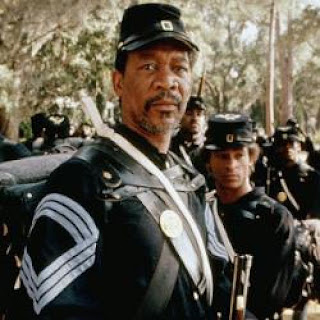
 

They head on a boat toward the South, the place where many of the soldiers were enslaved. They carry that pain with them, but now they come to end that enslavement. Forbes calls the men to attention and notes the racist order that there can only be white commissioned officers leading the men, but nothing was said about noncommissioned officers. So, he tells the regiment that Rawlins is now a sergeant-major, quite an accomplishment, but one he is not sure he wants, which he whispers to Shaw, who says he knows how he feels. They both know that to command also means making tough, sometimes unpopular decisions. And Rawlins, being a black man, must deal with resistance from both black and white men.


They march through liberated plantations and young African American boys are thrilled to see them. Rawlins proudly tells them the soldiers left as slaves but have returned as fighters. It is interesting that Rawlins has to translate the dialect of a liberated local black man for Thomas, which shows how the educated northerner is getting a reeducation, as Trip suggested. The regiment now is under the command of General Harker (Bob Gunton), who only needs the “coloreds” around to scare the Confederates, and does not anticipate having the black soldiers participating in any fighting. Harker has a group of children singing “Let Freedom Ring,” whose idealism does not reflect the African American past, its present during this time, and, many African Americans would probably say, not even the future. 


General Harker introduces Shaw to Colonel Montgomery (Cliff De Young), who invites Shaw and his black unit to help on a maneuver with other African American soldiers. Shaw proudly tells Thomas to let the men know that they will be marching into action the next day. On the way, Montgomery says he is originally from Kentucky, and had a few slaves, so he is impressed that Shaw, coming from Boston, seems to know how to handle the black men. There is irony here in the fact that a high-ranking officer in the Union Army once owned slaves and belittles the African American men.


In Darien, Georgia, they find no rebel soldiers, so Montgomery tells the black soldiers that they can “liberate” the town, basically by looting and destroying it. Shaw is outraged that they fire at some civilians. Montgomery sees the blacks as inferior fighting men, and just gives them a chance to let out their aggression in a non-confrontational way. When one of the black soldiers manhandles a resistant white Southern woman, Montgomery shoots the soldier. He calls the black men “little monkey children,” which shows the rampant prejudice of white people, no matter which side of the war they are on. He orders the burning of the town, which Shaw initially refuses to do, calling it an immoral act. But he backs down when Montgomery says Shaw will be removed from his command, and Montgomery will take over his troops. To protect his men, Shaw allows the town to be incinerated.


In his letter to his father, Shaw’s voice-over says he made many requests to have his men be allowed to fight instead of doing what amounts to forced labor unrelated to their roles as soldiers. Meanwhile, Trip gets into an argument with white soldiers passing by, antagonizing them by saying that the black soldiers could do a better job of fighting the rebels. Rawlins intervenes to stop the confrontation. He restrains Trip and orders the white soldiers to move on. Forbes comes by, but Rawlins does not want to inflame the situation, so he says it was just a small fight. As the white soldiers keep marching, they make racial slurs, again revealing the bigotry espoused by white men, no matter the army.


Trip’s animosity toward Thomas flares up again after this event as he tells Thomas that no matter how much he acts like a white man, he will never be accepted by him, and will only be seen as “an ugly-ass chimp in a blue suit.” Trip pushes Thomas until they are ready to fight, but Rawlins interrupts the confrontation. Trip then starts in on Rawlins saying that because he was promoted, Rawlins acts like a slave owner ordering people around like he is “the massa.” He calls Rawlins “the white man’s dog.” Rawlins smacks Trip across his face and tells him he is so full of hate he sees everybody as the enemy. Rawlins notes that white soldiers have been dying by the thousands to fight for someone like Trip. Rawlins was a gravedigger, so he knows about their sacrifice. He tells Trip to stop using the “n-word” referring to his own people, suggesting he is belittling his own race with his behavior. He says they must now act like “men,” and have to “ante up and kick like men,” implying it is their turn to fight their own battle. Rawlins brings insight and inspiration to the men. 


Shaw and Forbes approach General Harker, who lives in comfort in an appropriated Southern mansion while Montgomery plays the harpsichord. They sit in luxury while soldiers are dying. Shaw says he wants his regiment to go into combat. He tells Harker that he has written a letter to his influential father to contact the state governor and President Lincoln to persuade them to let his regiment fight. The General says that he needs the black soldiers for his operations which Shaw has learned involves looting the region for Harker’s own profit. Shaw has the guts to tell Harker that he will report the general to the War Department unless he sends his men into battle. Harker easily agrees, probably feeling he can allow some African Americans to die so he can continue his illegal operations.


They are sent to James Island, South Carolina. In a battle involving rifles and bayonets, both sides inflict numerous casualties on their enemies, but the Union men send the Confederates into a retreat. Thomas is wounded but is still able to save Trip, his tormentor, by bayoneting a rebel soldier. The scene suggests that people can come together to fight a common enemy. Shaw says Thomas will be able to return home to the comforts of his old life. But, there is no retreat for the new Thomas. He now sees a larger endangered world beyond his books in Boston for which he must fight to liberate. He makes Shaw promise not to send him home.


Shaw talks to Trip alone, the first time since his punishment, and praises him on his fighting. He wants him to carry the battle flag colors, which is considered an honor. Honest as always, Trip says he doesn't see his people gaining anything after the war is over, while people like Shaw can go back to the comfortable lives they had before the fighting. In other words, African Americans have to start from scratch. Shaw comments that Trip “won’t get anything if we lose.” To Shaw’s credit, he now doesn’t paint a phony rosy picture, but instead stresses that their fight is worth it. They both agree that, generally, the whole situation “stinks.” Trip says the only way to get clean is to, “ante up and kick in,” which mirrors what Rawlins told him. What he suggests is a sort of trial by ordeal, a purification of the soul through personal commitment.


General Strong (Jay O. Sanders) tells the leaders of the regiments that Charleston Harbor must be taken by capturing the highly fortified and manned fortress, Battery Wagner on Morris Island. Unfortunately, there is only a narrow strip of sand that must be covered to reach it, and only one regiment at a time can approach given the spatial limitation. Even though the Union Navy has continued a constant barrage against the site, Strong warns that there will be many casualties. Shaw takes Trip’s words and applies them, volunteering his men to go first. They have not rested in a couple of days, but he says they have the “character” to lead the assault. 


The night before the battle the soldiers have a spiritual gathering where they sing a religious song and voice their feelings. Rawlins confesses that he left his family when he ran away from being a slave, but he says he wants their folks to know that if they die, “we went down standing up!”  He wants their families to understand, “we died for freedom.” Rawlins encourages the reluctant Trip to speak, who eventually says that he never really knew his parents and the only family he has consists of these fighting men. He admits to loving them, which is quite a surprising announcement from the cynical Trip. He says that whatever happens to them, they have shown that they are “men,” which implies that no black male should ever be called a “boy.”


As the regiment marches toward their doom, even the white soldiers show respect for what the African American men are about to do by cheering them on. Shaw gives the journalist, Pierce (Christian Baskous), letters for his parents and says that he should remember what happens here, which emphasizes the significance of the moment. And it has been remembered, since we can watch a movie about the story of these men. 


Shaw looks at the limitless ocean and seems to know that his life has led to this moment where he will join with that which is eternal. He no longer sees himself as above his fellow soldiers, so he gets off his horse which symbolizes his new humility. He now fights on the ground with those that were once just part of an abstract moral mission but with whom he has forged a brotherhood. His old friend Thomas volunteers to carry the regiment’s colors if the standard-bearer should fall, which shows how far Thomas has traveled from his bookish world up north. 


They charge into an onslaught of cannon fire, which kills many of the men. As dusk turns into night, the Confederate soldiers shower them with bullets from their rifles and attack them with explosives. Shaw leads the charge and is shot and killed. Trip, after seeing Shaw fall, now picks up the colors he refused to carry, but he, too, dies, near Shaw. Some, including Forbes and Rawlins, make it to the fort, but there are just too many enemy soldiers and firepower, and they are killed. 


The calm following the deadly storm is seen on the quiet beach the following day. The Confederate soldiers roll the dead Union warriors into mass graves. Shaw’s body slides down the sand next to his fellow fighters, with Trip next to him, as they all come together in death as they did in life. The notes at the end of the film state that half of the regiment was lost, and the white soldiers also suffered heavy casualties before withdrawing. The fort was never taken. But the courage of the men became well known and over 180,000 African American men volunteered to fight. President Lincoln stated that their contribution helped “turn the tide of the war.” Glory was achieved.


The next film is Murder, My Sweet.

Sunday, February 4, 2018

Million Dollar Baby

SPOILER ALERT! The plot will be discussed.

I’m not much of a sports fan, but I do enjoy films about sports. It may be difficult for some to say they “enjoyed” this very sad Oscar winning movie for Best Picture of 2004, but there is much to admire about it, and it somehow is able to find humor despite the tragic nature of its tale. The story is one about people with punishing pasts and how they deal with the physical and psychological blows they have sustained.
I talked about the successful use of a voice-over last week in Goodfellas, and director Clint Eastwood (Oscar winner for his direction here) uses it effectively by having the character Eddie “Scrap Iron” Dupris (Morgan Freeman, Oscar winner for Best Supporting Actor) provide it here (Eastwood must have decided that Freeman’s narration was such a positive part of The Shawshank Redemption that he would try it again). As in  Goodfellas, the narration does not replace the visual, but enhances it. Scrap’s words provide information about the fight game, but he also has a bigger picture wisdom that adds insight to the movie’s characters and events. Scrap (whose nickname can imply that all that has been left him are life’s “scraps,” or that he is “scrappy”) informs us that Frankie Dunn (Eastwood) is a great “cut” man, fixing up boxers in the corner between rounds. Scrap says there are times one can’t do anything about how the fight is going, the cut is too close to the bone, or there has been a severing of a vein, and that all our efforts can’t make a difference. Of course, Scrap’s words can apply to life in general. But Frankie would work every angle he could to turn a bad situation around in the ring. We see a fighter bleeding badly from a wound near his eye. Frankie’s seemingly contradictory advice to his fighter is to let the opposing boxer hit him. The punch pushes the coagulant Frankie administered go deeper into the wound so as to stop the bleeding.
Yet, even though, as Scrap says, boxing exists because those in the fight game know that people support the sport because of a love of violence, Frankie has retreated from confronting the savagery of the sport by playing it safe with the prize fighter he is managing. Big Willie Little (Mike Colter) wants his shot at the championship, but Frankie keeps telling him he is a couple of fights away from that goal. Scrap says that in boxing, sometimes you step backward to deliver a punch, “but step back too far and you ain’t fighting at all,” in boxing and in life. Frankie has been trying to play it safe in a sport that, by its nature, defies safety. Scrap knows Frankie understands the nature of boxing because Frankie has said that “boxing is an unnatural act, that everything in boxing is backwards.” Scrap illustrates this point by showing how a fighter must defy what his body knows is best for him: “The body knows what fighters don’t: how to protect itself.” When a guy is getting beaten up, the body says to him, “Hey, I’ll take it from here because you obviously don’t know what you are doing. Lie down, now, and rest, and we’ll talk about this when you regain your senses.” So, even though the fighter should stay down for his own good after getting knocked to the canvas, the true boxer will rise up to continue the battle. He will persevere, which Scrap says is the “magic” in boxing, because, battling, “beyond cracked ribs, ruptured kidneys, detached retinas,” there is a risking “of everything for a dream that nobody sees but you.” We have here a metaphor for how we must continue to fight as we focus on our dreams while enduring the batterings that life can deal us. Willie, although very grateful for what Frankie taught him, goes with another manager, and wins the championship. Scrap tells Frankie that the real reason that Willie left him was because Willie didn’t feel that Frankie believed enough in him. From a broader view, sometimes we need the support of others to help us triumph over the punches that life lands on us.


We see Frankie saying his prayers, so we know he is a believer. But, maybe because he is a fighter at heart, he battles the impatient priest, Father Horvak (Brian F. O’Byrne), over concepts in the Catholic religion such as the Immaculate Conception and the Holy Trinity. One scene which is funny occurs when Frankie sarcastically likens this latter concept to “Snack, Crackle, and Pop all rolled into one big box.” The weary and indignant priest responds by saying, “You’re standing outside my church, comparing God to Rice Krispies?” But despite the humor here, Frankie’s questioning springs from the conflict between believing in the ideals of his religion and reconciling those precepts with his real life negative experiences. He is estranged from his daughter, to whom he writes every week, only to have the mail returned unopened, like unanswered prayers. We later learn that in Scrap’s last fight, the manager was drunk and absent, and Frankie felt it was his responsibility, as the cut man, to stop the contest, even though he had no authority to do so. Scrap lost an eye due to the beating in the match. Despite their bickering with each other, Frankie has stayed close to Scrap, having him work in his gym (the “Hit Pit,” a name that doesn’t sound encouraging), and allowing him to live there. Father Horvak says that Frankie’s showing up every day for mass for twenty-three years indicates he “can’t forgive himself for something,” and Frankie’s guilt has made him fearful, which is counterproductive in a dangerous sport.


Maggie Fitzgerald (Hilary Swank, winning her second Best Actress Oscar here) shows up at the gym. Scrap’s voice-over tells us that she came from an impoverished, tiny town in the Ozarks of Missouri, “Somewhere between nowhere and goodbye.” Not exactly a place one wants to call home. Scrap says Maggie grew up knowing her whole life that “she was trash.” Given that perception it seems fitting that we watch her pick up other people’s garbage, leftovers from the meals she serves them, that she then wraps up for herself, telling the boss it’s for a dog she doesn’t have. But she gathers these food remnants because she has a plan to emerge from the trash. She is saving money by scrimping on buying food and collecting tips to pay her dues at the gym. She has relocated because she wants Frankie to manage her. Frankie’s first response is that he doesn’t want a girl in his gym, and tells Scrap to return her dues. But, she has paid six months in advance, and the gym is not doing well financially. Maggie’s drive to succeed is obvious as she stays after closing time to practice. Scrap, despite the setbacks in his life, wants to encourage the hopes of others. He allows “Danger” Barch (Jay Baruchel), a skinny, mentally challenged young man, who was abandoned by his mother’s boyfriend, to work out for free. His nickname is at odds with his appearance, but, like Maggie, he wants to rise above his disadvantages. Scrap allows Maggie to stay late at the gym and gives her some tips, as well as Frankie’s old speed bag for practice.

Frankie’s first response to Maggie is a sexist one. She tells Frankie she wants him to manage her. After she says she is tough, he says, “Girlie tough ain’t enough.” A sign on the gym wall says that winners are those who are willing to do what losers won’t. Maggie is that kind of winner. This film is about female empowerment, where women fight not only to beat opponents, but to gain respect as formidable individuals in an area which accepts male toughness as the basis to exert power. One male fighter, Shawrelle Berry (Anthony Mackie) is a bully, and he harasses both Danger and Maggie because they don’t fit the usual requirements for boxers. He makes fun of Maggie’s small breasts, but Maggie shows she can hold her own. She undermines his macho stance and reverses his put-down, pointing out his mammary obsession by telling him, “I saw your last fight, Shawrelle. Spent so much time face down I thought the canvas had titties.” Scrap tries to encourage Frankie to help out Maggie, saying she has something. Frankie’s funny reply is, “Yeah, she’s got my speed bag.” Frankie tells Maggie that she’s too old to try and become a prize fighter. She is thirty-one, and it takes five years to train properly, and then she will be going up against stronger and faster twenty-year-olds. Frankie discovers she has been working out after hours one night and she says that it’s her thirty-second birthday, and she is celebrating. She lets on about how she comes from a world of losers when she says, “I spent another year scraping dishes and waitressing which is what I have been doing since thirteen … my brother’s in prison, my sister cheats on welfare by pretending one of her babies is still alive, my daddy’s dead, and my momma weighs 312 lbs. If I was thinking straight, I’d go back home, find a used trailer, buy a deep fryer and some Oreos. Problem is, this is the only thing I felt good doing. If I’m too old for this, then I got nothing.” This speech presents how the hopelessness of Maggie’s world could lead to accepting the deaths of a young child and that of a parent as routine, and acknowledging that one is only worthy of getting a “used trailer,” and succumbing to an unhealthy lifestyle. Maggie is willing to fight against what seems like the inevitable. She tells Frankie that she doesn’t want pity, and is willing to work to earn her way. She says, “I want a trainer. I don’t want charity, and I don’t want favors.”
After losing Willie, and a chance at getting a title shot, Frankie decides to help Maggie, but only until she is ready to be managed by someone who handles female fighters. Maggie wants Frankie to believe in her, just as Willie did, but with Maggie and Frankie, it is more like a father-daughter relationship. Maggie lost her father at a young age and feels alienated from her family. Frankie no longer has any contact with his daughter. So these two are drawn together now in an attempt to fill the familial void. As Maggie improves in her training, she keeps asking Frankie if it’s time for her to have a fight. Frankie has already shown a fear of putting boxers in danger based on what happened to Scrap, and that anxiety is increased with his new boxer, Maggie. But he also fears getting too close to her and being hurt again, which is what happened with his real daughter. When he sees a manager at the gym who handles female fighters, Frankie abruptly dumps Maggie onto the other manager. He has continually told her to protect herself when in the ring, but he is now trying to protect himself emotionally, and, ironically, hurts Maggie by betraying her. She goes with the new guy who promises her a fight. Scrap and Frankie attend the match, but Frankie can see that the new manager has failed to prepare her for the fight. Scrap says he learned that Maggie was being set up to lose in order to build up the reputation of the other boxer. Frankie’s paternal instinct kicks in and he butts in, telling Maggie how to deal with her opponent. Maggie fires the new guy, saying it wasn’t a “good fit.” When the referee asks Frankie if Maggie is his fighter, he says yes, finally committing himself. Maggie knocks the other girl out. After the fight, Maggie repeats Frankie’s words about always protecting oneself, and asks if he was protecting her by dropping her. He said no, and when asked if he will leave her again, he says, “never.” Frankie is now all in.
Maggie is extremely successful, to her own detriment. No manager wants to embarrass his fighter by having her knocked out in the first round. So Frankie actually has to pay the men representing other fighters to set up matches with Maggie. In the voice-over, Scrap says that Frankie had to do want he feared - he moved Maggie up in class, exposing her to more dangerous fighters. In one fight her nose is broken, and she is bleeding profusely. This event echoes what happened to Scrap, and Frankie wants to throw in the towel. Maggie shows her determination, gets Frankie, the cut specialist, to stop the bleeding temporarily, but she must win quickly, or the blood will start to gush. She does, but they must go to the hospital afterwards. While waiting to be treated, Frankie is reading as he often does. He was previously seen reading Gaelic. Scrap asks him what he is reading now, and he says Yeats. Scrap’s funny line is, “Why don’t you talk a little Yeats to her. Show her what a treat that is.” But despite the humor, Scrap is concerned for Frankie after seeing Maggie hurt, and asks how he is doing. Frankie tries to avoid anything emotional by asking why is Scrap asking him, since Maggie is the one that is hurt. In the voice-over, Scrap’s statement about some wounds being too close to the bone fits metaphorically here. Frankie bleeds internally from the emotional wounds inflicted in his past.

Maggie has twelve straight knockouts and she is becoming well known and earning money. Frankie gets an offer to fight Billie “The Blue Bear” (Lucia Rijker), the welterweight champion, for the title. She is considered the dirtiest fighter in the ranks, and we see her grinding her glove in an opponent’s eye, and punching her when she is still on the mat. But she gets away with her infractions because the crowds love her. This fact points to how boxing cashes in by catering to the unevolved, brutal nature of humans, who support the beating of people to experience the vicarious adrenaline thrill of knocking someone else down to build themselves up. Scrap says at one point that boxing is about gaining respect for oneself by taking it away from another. It is a nasty way of gaining respect, but the boxers are putting their well-being on the line, while the spectators risk nothing. Again, in order to protect Maggie, he passes on the bout with Billie.

Scrap knows that holding back a boxer with Maggie’s drive is not what she wants. He takes her for her birthday to a diner, tells her about Frankie feeling guilty about Scrap losing his eye, and says that maybe Frankie isn’t the guy to get her to a title. He has the manager who took over Willie’s career show up at the restaurant. But Maggie is loyal to Frankie, and tells him politely that she will not leave him. Frankie does agree to have Maggie fight the British boxer, who Billie recently beat, in England. Frankie gives Maggie a robe with the Gaelic saying, “Mo chuilse” on the back. The crowd chants those words as a welcome and it becomes associated with Maggie, whose last name, as does Frankie’s, indicate they have Irish roots. There is an ethnic community feeling here from a people of battlers who have had to fight famine and poverty, and in the film it becomes universally symbolic of the struggles of all downtrodden people. As Scrap says, “Seems there are Irish people everywhere, or people who want to be.”

Maggie wins that fight and others all over Europe, and her reputation grows. But despite her victories, she cares about the health of a fighter who sustained a concussion in their fight. Frankie, knowing the nature of the game, says she can’t worry about that, and sarcastically says if she is so concerned why doesn’t she offer the other boxer the prize money. However, Maggie’s ability to show compassion despite the violence of her occupation shows what an admirable person she is. Frankie is starting to feel confident again about the chances of being part of a championship team, and his fear for Maggie fades as he negotiates a fifty-fifty split of the purse in a bout with Billie.
Frankie once told Maggie that when she had enough money she should buy her own house free and clear. Maggie, still wanting parental approval, unfortunately seeks it from her deadbeat family. She buys a house for her mother not far from where Maggie grew up so that her mom and sister’s family can live there. She makes this purchase a surprise. When she meets her family at the house, her relatives just complain. Instead of expressing gratitude, the sister says there aren’t appliances, which Maggie says are on their way. The mother says that if she has a house in her name she will lose her welfare check and Medicaid assistance. Disappointed at their reaction, Maggie still promises to send money to her mother to help with expenses. Her mother, Earline (Margo Martindale), says that people just laugh at the fact that Maggie is a boxer, a profession that is considered not fit for a woman from where she comes from, and tells her to get a man to support her. Maggie’s family of damaged people can’t find it within themselves to admit that someone like Maggie has found a way to escape their situation when they haven’t. They don’t allow themselves a chance to work their way up in the system, so they exist by scamming it. Earline won’t concede that there is a chance in the modern world for a woman to rise up on her own, because that would invalidate her own life, and so she still endorses the backward belief that a woman needs a man to get by. (This story about a woman with talent trying to rise above her low-life world is similar to the current film, I Tonya).
On the way back from the unhappy meeting with her family, Maggie sees a smiling girl with a dog at a gas station. She tells Frankie that they had a dog when she was young. The animal became sick and lost the function of its legs, dragging itself around. Her father, who was also sick (it seems all living things suffer in Maggie’s world) took the dog away one day and brought his shovel with him. When he returned, he came back alone (This story is a foreshadowing of what is to come). After the way her family just acted, Maggie says that now all she has is Frankie. He says, “Well, you’ve got me.” So the movie doesn’t get too sentimental, Frankie jokes by saying at least until they can find her a manager. Maggie has Frankie stop at a little restaurant where her father took her, and where she enjoyed some sanctuary amid the tough times of their everyday life. She remembers that Frankie wanted some good homemade lemon pie, and here he enjoys a slice that he can relish. He wonders if the place is for sale, and says he has some money now stashed away (another foreshadowing). Maggie loved her father, the one happy thing about her childhood, and that one gift was taken away from her at a young age. She here tries to recreate that feeling of happiness with her new surrogate dad.

They go to Las Vegas for the championship bout with Billie. The purse, which they will split fifty-fifty, is a million dollars, and because Maggie is the real draw, she is a million dollar baby. Even though Frankie invites Scrap to come along, he feels he has to maintain the gym. He has been reduced to janitorial work, fixing up a clogged toilet. But, the plumbing problem is a diversion so Shawrelle can get Danger in the ring and he badly beats the skinny youth. When Scrap goes to Danger’s aid, Shawrelle taunts Scrap about his age. Scrap takes one of Danger’s gloves and flattens the bully. In Scrap’s mind, he always felt he had one more fight in him, and he feels that his career is now complete. There is a feeling of satisfaction here that Scrap wins one for the underdog, which is what Maggie has done with her battles.

In the title fight, Billie again fights dirty, grinding her glove into the eye and hitting Maggie after she is practically thrown to the ground. Maggie battles back and knocks Billie to the mat for a count of nine. However, after the round is over, Maggie turns her back on Billie as she goes to her corner. Billie slams her with a blindside punch which sends Maggie falling to the mat. Unfortunately, the corner stool was placed on the mat at the end of the round. We have a slow motion sequence that has Maggie falling and Frankie reaching for the stool, trying helplessly to do what he wanted for his boxer, to protect her. Maggie’s head strikes the wood, breaking her neck and leaving her a quadriplegic. She can only breathe with the help of a respirator.

Frankie has many doctors do consultations, but Maggie’s condition is considered permanent. Maggie is not bitter nor does she break down emotionally. She is of such a generous nature that she worries more about how hard Frankie is taking things, and blames herself for turning her back on Billie. Frankie at first lashes out at Scrap for pushing him to manage Maggie, because, he says, then she wouldn’t have been placed in jeopardy. Frankie feels so guilty about another person he cares about getting hurt that he must blame someone else to lessen his feelings of responsibility. Maggie shows no anger, and can even joke with Frankie about how she said she wanted to fly to Vegas and return by car, and that’s what happened, only she came back in an ambulance. Scrap and Frankie visit often, with Frankie spending most of his time at the rehabilitation facility, saying he would just be reading somewhere else anyway, so Maggie won’t think she is taking up his time. He keeps up hope, getting a college catalog, saying she can go back and take courses. She says he should retire and get a cabin somewhere. He wants her to come, and she says sure, she will bake him pies and he can read. To hear them pretend to plan for a future that will never happen is extremely sorrowful.

Frankie tried to get in touch with Maggie’s family, leaving messages, but they show no concern as they fail to respond. They finally do show up at the hospital after spending an extended time at a nearby hotel, wearing clothes from their visit to Disneyland, paid for out of the money Maggie has been sending her mother. Instead of showing how much her mother cares about her daughter’s condition, the first words out of her mouth are a criticism, saying how Maggie’s hair looks so “greasy.” Earline has brought a business manager with her and wants Maggie to sign an agreement that would turn over the handling of her assets to the family so that her estate will, according to her mother, be preserved. Maggie asks her if she saw her last fight. Her mother says she doesn’t watch that sort of thing, and besides, she points out, Maggie lost. She doesn’t want her daughter to succeed, but feels better about herself if she labels her a loser, like herself. She can’t comprehend the possibility of her child trying to live a better life than her own. In a particularly cruel act, she puts the pen in Maggie’s mouth to sign the document. But Maggie, despite wanting her mother’s acceptance, is made of sterner stuff. She lets the pen drop out of her mouth. She tells her mother that because she was afraid of losing her welfare checks, she never signed the house’s ownership papers. Maggie tells them to get out and never come back or she’ll sell the house right out from under her mother’s “fat, lazy, hillbilly ass.”
As time goes on, Maggie’s skin develops ulcers because of the pressure building up due to lack of movement. One on her lower leg becomes badly infected, she develops gangrene, and her leg has to be amputated. As she declines in health, she asks Frankie if he remembers the story about her father and the sick dog. Frankie says he can’t help her die. She tells him that after having people chant for her, and seeing herself in magazines, she can’t live such a helpless life. She tells him that her weight when she was born was a little over two lbs, and she has had to fight her whole life to survive. She tells him, “I got what I needed. I got it all. Don’t let ‘em keep taking it away from me. Don’t let me lie here ‘till I can’t hear those people chanting no more.”

Because Frankie said no, Maggie tries to end her own life by biting her tongue, trying to bleed out. They stitch her up and she does it again. They stop her from doing it another time, but at this point it is almost like torturing a suffering person. Frankie struggles with Maggie’s request, knowing terminating her life is a sin in his faith, but letting her live is like killing her, too. He goes to Father Horvak, who of course says Frankie can’t commit this sin, but even if religion is taken out of the equation, the priest says Frankie will not be able to recover mentally from committing this act. Frankie tells Scrap that he knows the ex-boxer didn’t bring this suffering to Maggie. Frankie says he’s the one that killed her. Scrap says no, that Frankie gave her the chance to be what she wanted in her life. He says there are many people who die every day who never got a shot at what they wanted. Scrap is glad he had that chance. He says to Frankie, “Because of you, Maggie got her shot. If she dies today you know what her last thought would be? I think I did all right.”
Frankie sneaks into the clinic at night. He finally tells Maggie that mo chuilse means, “My darling, my blood.” He picked that robe to show how much he loves her, and really sees her as a daughter. With this admission, he then shows her what he feels is mercy by disconnecting her breathing tube, and giving her a shot to ease her into death. Frankie then disappears. Scrap says that Danger, after disappearing himself following his beating, resurfaces and comes back to train, showing how he can deal with his past and move on. Scrap and Maggie came to terms with their pasts, and carried on, no matter how horrible the struggle. But can Frankie?
We now see the source of the voice-over. Scrap is writing a long letter to Frankie’s daughter, trying to tell her what kind of man her father is, hoping that maybe she will open and read a letter from him, if not from her father. Scrap writes that he does not know what happened to Frankie. He offers that maybe there was “nothing left in his heart. I just hope he found someplace where he could find a little peace … somewhere between nowhere and goodbye.” The last shot we see is of that restaurant close to where Maggie grew up, where she shared some good moments with her father, and where Frankie ate the lemon pie. We see a figure that could be Frankie through the curtains in the window. Perhaps he could still feel connected to Maggie in the one place where she found peace by sharing her love with the fathers in her life.

The next film is Throne of Blood.