Sunday, July 31, 2022

If....

 SPOILER ALERT! The plot will be discussed!

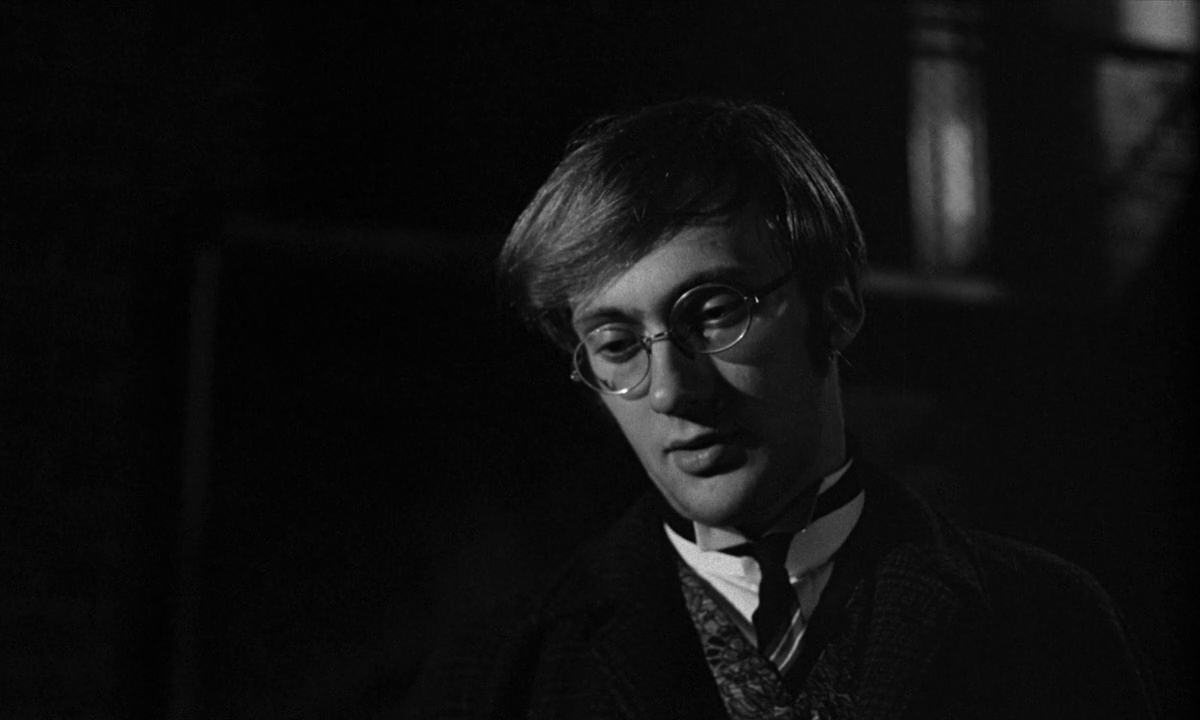
If …. (1968), directed by Lindsey Anderson, has as its primary theme that abuse by those in power can initiate a violent reaction against such extreme authority and, ironically, produce the type of chaos the ruling class wants to suppress. The title comes from the Rudyard Kipling poem and its upper-class superior tone of reining in freedom is what the film takes aim at.

The story is set at an English boarding school, and Anderson said he likes stories that are a microcosm of society. A note at the beginning urges the need for knowledge, but the result of what these students learn is the opposite of what the educational establishment desired. The somber words of the school song are sung, and they brim with loyalty and duty. As the credits roll, the music is replaced with disruptive sounds of boys in contrast to the lyrics, showing that there is a desire to fight rigidity and just enjoy their youth. The film breaks the story into chapters with different headings and some begin with religious readings and singing which then contrasts with the actions of those in charge and those that revolt against them.

The seniors, or “Whips,” rule as prefects over others. This oppressive hierarchy is entrenched in British custom. At the beginning of the school year, those returning to the school call the first-year students “scum,” and remind them they have no right to address the older students. One Whip tells a new student to carry the senior’s belongs to his room, and in a very derogatory command tells the youth to warm up his toilet seat. Basically, they treat the first-year students as slaves.

When the rulers are not present, the young boys are loud and fight with each other, showing that attempting to overly contain natural impulses only leads to an equal and opposite reaction. New student Jute (Sean Bury) is taken to the “sweat room,” where he finds his circumscribed cubicle that must contain his belongings. The students must not keep food that does not subscribe to ridiculous rules. The new students must not move slowly. Rowntree (Robert Swann), the Head Whip, tells them to “run in the corridors,” to meet the time restraints of their tasks. Also, haircuts must meet certain requirements. The film was made in the ‘60’s when long hair was considered an act of defiance.

When Mick (Malcolm McDowell in his film debut) arrives, he has a scarf over his mouth and nose. He looks like a bandit, and it fits his outlaw-like personality. He is actually hiding a mustache, a forbidden form of appearance. Stephans (Guy Ross) says, referring to Mick, “God, it’s Guy Fawkes back again.” The reference to the British revolutionary is a foreshadowing here. Mick says he grew the mustache to “hide his sins.” Actually, it seems to reflect his inner lawbreaking self, and when he shaves it now, it may imply that the bare face is a pretense to conformity. He shares what he did during the summer with his friend Johnny (David Wood), telling him he spent time with a girl frequenting pubs. It seems that he enjoys living a rowdy life and when a bell rings, he wants to know when they get “to live,” instead of enduring regimentation.

The students gather in a hall and are told that they should “work,” and “play,” but “don’t mix the two.” I guess these students aren’t supposed to whistle while they work. They are urged to see themselves as a family, which as it turns out is quite dysfunctional. Those in charge believe “discipline” will contribute to helping the entire school which, in turn, will help each individual. Sounds good in a speech, but in practice, the result is not what is hoped for.

Rowntree is a sadist who relishes his power over the others. He threatens them if they repeat the prior year’s slackness, and reminds them that they are restricted from going into the nearby town. Bells sound before each activity, used almost like a Pavlovian type of behavior modification. What follows is a humiliating inspection for venereal disease. The boys must drop their trousers and the matron (Mona Washbourne) inspects their genitals with a flashlight.

The dormitory inspection ranks with what the U. S. Marines must endure. The Whips go to each room and the students must be in their beds. Jute can’t even keep his diary there, but must leave it in the sweat room, such is the absurd strictness of the institution. There is “lights out” ridiculously early and “no talking.” After the Whips leave, Mick sarcastically applauds and tells Stephans what a good job he has done, mimicking the Whip’s compliment. Mick’s pals echo Mick, and one says, “One night we’re gonna massacre you, Stephans. I’ll do it for free.” At the time it sounds like an exaggerated schoolboy threat, but it turns out to be more foreshadowing.

There is more religious singing which is offset by the students complaining about the denial of access to girls at another school. The more the institution denies these youths adequate freedom, the more irreverent they become. The history teacher (Graham Crowden) introduces a bit of unorthodox behavior as he rides his bike into the classroom while singing a traditional song, undermining the lyrics. He also opens the windows as if to let fresh ideas enter the minds of the students as he questions them about their ideas. Perhaps his actions suggest that history offers a basis to question the present. However, the film also depicts the corruption of power by showing the geometry teacher, who is also the chaplain (Geoffrey Chater), as someone who preaches proper behavior while hitting students and otherwise manhandling them. There is a stark contrast as he teaches geometric rules while breaking those of human decency. The Headmaster (Peter Jeffrey), while teaching a class, acknowledges that some of Britain’s rules are “silly,” but necessary, nonetheless. However, he does not provide an adequate defense of the statement. He goes on to say that “Britain today is a powerhouse of ideas, experiment, imagination.” He says that the schools must “meet” the “challenge” of dealing with all the changes that are occurring.

But the Headmaster has an idealistic approach to his job, calling it “exciting.” The school is entrenched in regimented behaviors that are anything but adrenalin inducing. What follows his speech is an indoctrination of Jute to learn, in addition to his regular studies, all the jargon and slang that Rowntree requires. That perversion of education includes misogyny, as the Head Whip wants town girls to be called “tarts.” Brunning (Michael Newport), a fellow student, tells Jute that, “it’s not just a matter of knowing the answers. It’s how you say it.” If he fails then they all “get beaten.” Such is the extreme nature of how power can corrupt a child’s school life.

Mick has pictures of soldiers plastered all over his room, and is cutting out photos of ferocious animals, including lions. IMDb points out that there are also pictures of Che Guevara and Geronimo who represent icons of revolution. Later Mick’s tendency toward violence becomes manifest as the means not only to create revolt against oppression but as an end in itself. Despite the desire of the school to clamp down on unacceptable behavior, or maybe because of it due to modeling or as a need to release their frustration with containment, students act sadistically toward other classmates. For example, a group of boys grab Biles (Brian Pettifer) and dunk his head in a toilet.

Denson (Hugh Thomas) chastises his fellow Whips for their “homosexual” remarks about the scums. Given the power arrangement it is more like sexual abuse. Rowntree calls in the nice-looking blonde underclassman Philips (Rupert Webster) to tempt Denson, trying to show that he isn’t as upright as he pretends. Rowntree is right because when he assigns Philips to be Denson’s servant, the latter does not object. The move is trying to show the falseness of the surface integrity of those in charge.

While with his pals, Mick says, “the world will end very soon.” He adds, “There is no such thing as a wrong war. Violence and revolution are the only pure acts … War is the last possible creative act.” He is an anarchist with an apocalyptic vision that seems to say that society is corrupt beyond redemption and must be purged. Wallace (Richard Warwick) complains about going bald, having bad breath, and concerned about becoming senile before he gets out of the institution. He says that his “body is rotting.” His comments add a sense of urgency to break free of the school’s dominance. Mick’s response to Johnny reading the newspaper headline that a person in Calcutta dies of starvation every eight minutes is that “eight minutes is a long time.” His remark heightens the desire to rush into action. When he is presented a picture of a beautiful naked young woman Mick says the only thing you can do with her is make love in the sea and then die. This is one dark fellow who seems to find joy in the moment followed by oblivion. Later, Mick and his pals do some fencing and Mick is ecstatic as he yells “War” and is almost orgasmic when he sees his own blood on his hand from a wound. (Mick seems to have some qualities of McDowell’s character in the later A Clockwork Orange).

Mick hears someone approaching and the young men hide their vodka (a reference to the Russian revolution?) and pornography, assuming the phony upright appearance of what is expected of them. Denson enters and although he suspects transgressions, he can’t prove anything. He still says they will take cold showers for their long hair. It’s as if he must exert some form of punishment as part of his position. Mick does provide one visible act of nonconformity, wearing a necklace of teeth that Denson notes still have blood on them. The image adds to the animal ferocity bubbling beneath the surface of Mick. Denson makes Mick spend a sustained amount of time in the cold shower the next morning, which, instead of cooling Mick down, only inflames his anger.

Mick and friends sit next to the soft-spoken Mrs. Kemp (Mary Macleod), the wife of the House Master of Mick’s dorm, Mr. Kemp (Arthur Lowe). As the boys ask if she wants anything, such as ketchup, with her meal, Mick adds his element of perverse violence by asking if she wants some “Dead man’s leg.” Mrs. Kemp touches her bare throat and the edge of her clothes in a sort of combination of worrying about modesty and experiencing sensuality.


Mick and Johnny escape to the town in defiance of the prohibition against going there and cavort playfully on the sidewalk as they enjoy their freedom. Mick then steals a motorcycle (a car would be too tame) and he and Johnny ride off into the countryside (a precursor to Easy Rider?). They arrive at a restaurant where they are served coffee by a pretty waitress. Mick, fittingly, stresses that he wants his coffee “black.” Then he contrarily dumps a ton of sugar into the cup just to be extreme. He grabs the girl and kisses her. She responds with a slap. This type of male abusiveness is abhorrent, but Mick has found a connection with this young lady. She touches his shoulder as he plays music on the juke box. She tells him it’s okay to look at her body but also says she’ll “kill” him. She says when she looks in the mirror her eyes get large like a tiger and she says, “I like tigers,” and growls at him. He sniffs at her and they act like snarling animals. This type of ferocity is a call to the wild for Mick. The scene abruptly shifts surrealistically to the two grappling on the ground clawing and baring their teeth, naked and making love. (There is a shift here from color to black and white. IMDb notes that economics and technicalities forced Anderson to sometimes shoot in monochrome. However, he then liked that the shifts added a sense of disorientation and movement back and forth between reality and fantasy. The style is consistent with the feeling that the status quo is being disrupted by Mick. Also, the title of the film is If… which suggest a possibility, not a reality. Usually when a work of art calls attention to itself as not realistic it implies that the art form is presenting a fiction that points to aspects of reality).

Philips watches as Wallace practices his routine on a parallel bar and it is a sweetly erotic scene slowed down slightly that allows the audience to marvel at the interaction between the athlete and the observer. The two become close and they share a prohibited smoke together. They are in the armory room that is filled with rifles, a surrounding full of danger if there ever was one. Philips says he wants to be a criminal lawyer, which shows he wants to argue cases against the establishment and points to his anti-authoritarian stance. He says that it will take him twenty years to reach his goal. Wallace says ominously that they’ll be dead by then. Philips accuses Wallace of having no ambition, and Wallace agrees. He is a follower of Mick, which means living only in the moment. We later find the two of them in bed together, which is consensual and out of caring as opposed to the exploitative way the Whips viewed Philip.

Mick is so obsessed with death that he practices his own demise, putting a bag over his head as Johnny times him to see how long he can last without running out of air. Mick wonders what’s the worse way to die, and he, Johnny, and Wallace suggest different ways. Johnny says cancer is bad because his mother endured six months of suffering before the end came. He seems upset by this fact, but Mick shows morbid fascination about how nasty death can be, which shows how pathologically dangerous he is. He even comments that “the night’s dead,” which indicates how he sees lifelessness in everything.

Led by Rowntree, the Whips control Mr. Kemp and get him to allow them to administer strict discipline to those in his dormitory who they see as trying to rock the boat, even if their brutal actions turn the ship into the Titanic. After singing their religious songs the students can indulge themselves in some dessert. But, the deceptively sedate Mrs. Kemp comes down hard on one lad as she yells that he was trying to pick up another bun. She does not want the boys to indulge their appetites.


The Whips call Mick, Johnny, and Wallace into their office. They say they will be punished for being a “nuisance,” and having an “attitude.” Denson criticizes Mick for his “slouching about,” with his hands in his pockets. These so-called offenses present no real harm. Rowntree says that Mick and his mates “have become a danger to the morale of the whole house.” Talk about the crackpot calling the kettle black. Rowntree wants to make an example of the three to ward off anyone who might follow in Mick’s off-road footsteps. Mick’s sharp retaliation is, “The thing I hate about you, Rowntree, is the way you give Coca Cola to your scum and your best teddy bear to Oxfam and expect the rest of us to lick your frigid fingers the rest of your frigid life.” He is attacking Rowntree, and the other privileged members of society, who give crumbs off their table to those deserving souls who need compassion and then expect to be praised for their minimal generosity.

The Whips take the boys to the gym and administer a “caning” punishment. The Whips live up to their name as Rowntree whacks the boys viciously on the buttocks with a slender cane that cause bleeding. Wallace and Johnny receive four lashes each, which we do not see, but only hear the slamming of the cane. After enduring this vicious infliction, the boys must humiliate themselves by shaking Rowntree’s hand and saying, “thank you.” Mick, however, as the ringleader, gets ten lashes, and we do witness this brutal punishment as Rowntree runs up to the bent over Mick so that he can maximize the impact of the beating. The other boys in the school can hear the punishment. One is looking at germs under a microscope, which seems to symbolize how cruelty is like a dangerous virus that spreads when allowed to exist.

While the other students celebrate the winning of a trophy and cheer College House, Mick, in contrast, is alone in his room as he loads a paint gun and shoots at pictures on the wall of British celebrities and even of the Houses of Parliament. His defacing of all things famously English shows his scorn and violence toward the establishment in power. He takes a blood oath with Johnny and Wallace by saying the words, “Death to the oppressor.” The spilling of blood seems to be what intrigues Mick as it appears to represent to him the ultimate example of nonconformist behavior. He says, “One man can change the world with a bullet in the right place.” Mick presents them with “real bullets.” He is talking about assassination of tyrants. However, negative results, can result from a bullet such as in the killings of Lincoln, Gandhi, Martin Luther King, and the Kennedys.

There are scenes which illustrate how people acting pious in public hypocritically indulge in socially inappropriate behavior in private. While Mr. Kemp sings in his bedroom about love and mentions Venus, the goddess of that emotion, and his wife plays the recorder, the school’s matron reacts by becoming sexually aroused. The shot of the bedroom shows husband and wife have separate beds, suggesting an abstinence of sexual activity whose suppression can manifest itself in objectionable ways. Later, Mrs. Kemp walks naked through the student residence as the boys are outside, and touches soap and towels. Again, that sexual suppression finds a way to the surface in an inappropriate manner.

The next section, called “Forth to War,” begins with the chaplain giving an onward Christian soldiers speech, framing devotion to peace-loving Jesus ironically as a call to arms. The students are dressed as soldiers and march as if going off to war. They proceed to engage in war games where they practice “the yell of hate.”  Not quite what Christ intended. This melding of religion and combat gives spiritual justification to violence and sends a message to the students that backfires (gun reference intended). Mick uses real ammunition to fire close to the students and the chaplain, who, despite the call for bravery earlier, now cowers on the ground when he actually faces danger.

The Headmaster tells Mick, Johnny, and Wallace about how the reverend could have been hurt. As he says these words, a bit of surrealism occurs. The Headmaster opens a large drawer in which the chaplain is stretched out as if resting in a coffin. He then rises and shakes the hands of the three students as a sign of accepting their apologies. Again, Anderson is jarring the audience out of the comfort of a standard narrative to show that their status quo is under siege. The Headmaster then says that although he knows that acts of youthful individualism are to be expected, there are limits to that expression. However, he then gets petty about the limitations, focusing on hair length. He spouts the platitude that “Those who are given the most also have the most to give.” However, this statement is not about generosity being disbursed to the needy. Instead, he assigns the boys manual labor as a way of “giving” back to the school and they must clean out the church basement.

Philips joins them, and one object they find during their chore is a stuffed alligator. It could be that the dangerous animal symbolizes what evil can lurk below the surface of a benign exterior. Ditto the deformed fetus they discover in a locked cabinet. The waitress suddenly appears in this scene, another bit of taking us out of the normal course of the narrative. Together they find a large supply of military weapons, including mortars, hand grenades, and various types of guns. The grinning Mick tells us without words what he plans to do with these destructive tools.

The next section is called “Crusaders,” which calls to mind the combatants of the Middle Ages whose wartime exploits were blessed with religious justification. That merging of religion and war is emphasized at a school assembly on Founders Day where parents and dignitaries assemble. General Denson (Anthony Nicolls) and a church bishop are in attendance. The general, most likely the father of the student of the same name, goes on about how some are belittling traditional rules and obedience, and that they must defend those qualities to preserve freedom. What his words imply contradictorily is that one must give up freedom to hold onto it. He then adds the need for warlike actions to preserve liberty. That justification for violence can be used by others who feel that their freedom is being deprived by those in power. That interpretation can encourage insurrection.

Cue the new “crusaders” who start a fire under the auditorium (reminiscent of Guy Fawke’s history) and the smoke causes those assembled to cough and flee from the gathering. As those in attendance emerge outside Mick and his followers open fire from the roof onto the people below. Those on the ground acquire weapons from the school armory and fire back. The Headmaster urges a ceasefire, but it is too late for peace. Mick’s girlfriend takes a pistol and shoots the Headmaster through the forehead.

The film ends with a closeup of Mick firing his machine gun directly at the camera as if telling the audience they better fix things or this story might turn into real life. His image is followed by a dark screen with the word “If …” painted in blood red. The movie has delivered its warning shot.

The next film is Angel Heart.

Sunday, July 3, 2022

Night and the City

 SPOILER ALERT! The plot will be discussed!

The first shot of Night and the City (1950), directed by Jules Dassin, is, of the London Tower Bridge. It is nighttime and we see only the silhouettes of people, as if just the dark sides of individuals exist here. The opening voice-over announces, “The night is tonight, tomorrow night, or any other night. The city is London.” The joining of continual darkness and the setting of a city epitomizes elements of film noir, where the underside of humanity thrives (although Dassin, in a 2004 interview, said he didn’t know about film noir elements when he made the movie).


The first scene after the credits starts with an overhead shot showing a person running, trying to escape from danger, which is always present in this world. The image of “running” and the repetition of the word becomes a motif in the film. (Dassin said producer Darryl F. Zanuck warned him to leave the country because he would be targeted by the House Un-American Activities Committee and its “blacklist” of alleged Communist sympathizers, so he fled to London. That running away had its influence on the film).  The fleeing man is Harry Fabian (Richard Widmark). He runs through narrow, twisting alleys and streets. The impression is one of a maze, a puzzle that is meant to thwart a solution.


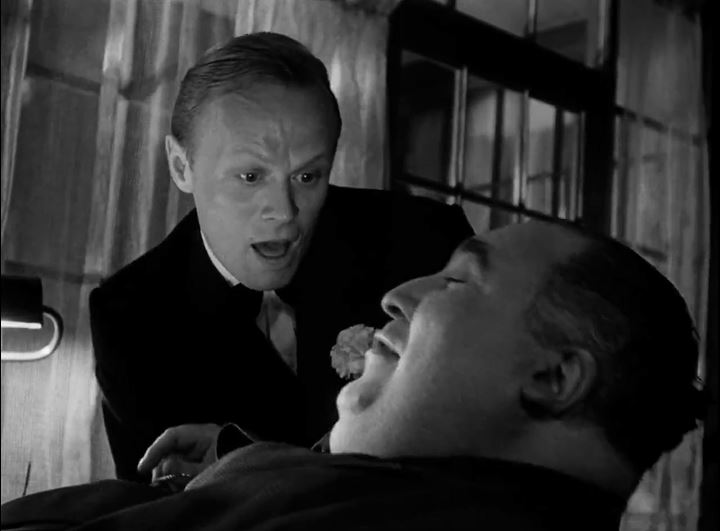
Harry’s pursuer follows him to his flat and stays outside. Harry places a flower in his lapel that he dropped on the street. It’s as if he is trying to clean up for appearance’s sake the dirty part of himself. He enters the flat and calls for his girlfriend, Mary Bristol (Gene Tierney). (Zanuck, unlike some of the characters in the story, showed compassion by wanting to help Gene Tierney who was suicidal after a disastrous love affair. He wanted her cast in the movie, according to Dassin). When she doesn’t answer, he picks up her purse. She then surprises him, saying there isn’t money there. We immediately realize that she is aware of his seedy nature, but, contrarily, still is with him, showing how illogical relationships can be. His first response is anger, and his face is ugly as he accuses Mary of spying on him, as if she is the one doing something wrong, not him. He then quickly switches to a charming smile and tries to cover up his transgression by saying he was just looking for a cigarette. It’s a lame excuse since there is a whole glass full of smokes next to the purse.

She asks who he was running from now, and he acts like that doesn’t happen to him, although we know otherwise. She was worried that he was the victim of foul play since he was gone for three days. He says he was away trying to become a partner in a greyhound racing track operation. She knows he wants her money for the investment. She says they have been through this routine “a thousand times.” It appears that Harry is always looking for a get-rich-quick scheme at the expense of others to satisfy his selfish wants. In contrast to Harry’s pie-in-the-sky activities, she is working hard at a bar to make a decent living. She holds up a happy picture of the two of them in a boat. She describes them as if they were strangers, good people who wanted to lead “decent” lives. It’s as if they have left that part of themselves behind, and what’s left are just empty shells of their former selves. However, the boat they are in is still an object of movement, suggesting the hope for stability was an empty dream. His response to her words is, “I just want to be somebody,” a self-centered statement given that she was talking about their life together.

Mary knows Harry is hiding from Phillip Nosseross (Francis L. Sullivan) and she sees the man Nosseross sent to follow Harry at a phone booth below the window of their place. (“Nosseross” sounds a bit like “rhinoceros,” a large, dangerous, charging animal, something one would run to escape from. Harry says that Nosseross is heavy, equating him with the large creature).

Harry needs five pounds to discharge his debt to Nosseross. While Mary goes out of the flat to see if she can get some money from a neighbor, Harry appears sad as he looks at the photo of the two of them that Mary held, and probably sees something of his past self in that picture. Mary goes to the flat of Adam Dunn (Hugh Marlowe) who has burned his spaghetti and Mary helps douse the flame. He is a designer, and he may have designs on Mary since he says he wishes that they had different schedules. He works during the day (which probably means he is not a creature of the night, like Harry). Does the fire show that he has the “hots” for her, and only she can douse his passion? She works at night at Nosseross’s club, not because she wants to go to the dark side, but has been dragged there by Harry.

Mary says it’s difficult to resist Harry’s charismatic imagination and zeal for his projects. Adam says, “Harry is an artist without an art.” He explains that Harry wants to express himself but doesn’t have the “means,” the specific skill or outlet, to put his imagination into concrete form. Adam says that can “make a man very unhappy,” creating a frustration that may be “dangerous.” He is suggesting that the search to make Harry’s dreams a reality can lead him to the criminal underside of society. In contrast, Adam is artistic in his designs of objects, including figurines and a replica of a bank that holds his money and plays music. Adam has been able to focus his imaginative skills in a creative and not destructive way.

Harry goes to Nosseross’s club, the Silver Fox, where his wife, Helen (Googie Withers), firmly sets the rules for the young women workers as to how to get the male customers to spend more money. The attractive women are the pleasant exterior which hides the mercenary practices in which they are engaged. Nosseross also assigns Harry to engage in a deceptive practice of drumming up business for his club. Harry gets information about a trio of successful American businessmen at a venue. He acts like he found a lost wallet, which is really his, and turns it over to one of the employees there, who is on the take. This action makes it appear (the operative word) that Harry is an honest fellow. He then pretends that he knows an acquaintance of the three men, and thus bonds with the men. It is then he suggests they go to a “private” club for some entertainment. Harry retrieves his wallet just before the three gentlemen depart for Nosseross’s club.

Harry goes to a wrestling match to hustle more customers. However, a bouncer recognizes him and prepares to toss Harry out. Harry says it’s a public place, and the bouncer says, “so is the morgue,” a darkly witty line that suggests that is where Harry may end up. There is an outburst by a man named Gregorius (Stanislaus Zbyszko), a once world-famous wrestler who is there with a young wrestler named Nikolas (Ken Richmond). He yells at his son, Kristo (Herbert Lom), for bringing them to an inferior match. Gregorius blames his son for the extent to which wrestling has declined.

Harry sees a financial opportunity in Gregorius’s displeasure, and stages an outburst where he demands his money back for such a terrible “spectacle” as Gregorius and Nikolas pass by. His rant and some subsequent flattery endear him to the ex-champion. He gets them to have a drink with him. Meanwhile, at the Silver Fox, Nosseross gives a silver fox fur to his wife and asks for a kiss in return. Helen is looking away from him and displays a look of revulsion, but she allows the kiss. The large Nosseross grabs her and is rough with her as she breaks away from him. His base nature here rises and transforms his sophisticated surface.

Harry bursts in and says he can control professional wrestling in London, but Nosseross loudly laughs at him, and Helen wants Harry thrown out. Harry is angry at the dismissive way Nosseross treats him, and says he will get 200 pounds on the condition Nosseross will match it for the investment. Harry goes to the underbelly of society seeking funds from beggars, forgers, and those operating in the black market since he resides in the illegitimate area of finance.

There is a scene where Nosseross and Mary do not know where their romantic partners are. Harry is at a bar and Helen finds him there. Harry is angry at her for forcing him to put up the 200 pounds before Nosseross will commit to supplying some cash. Helen kisses Harry, and we realize there was an intimate connection between the two, and that is why Harry feels betrayed by Helen’s prior statements. However, she has the 200 pounds which causes Harry to be elated. But, she wants him to get the other 200 from her husband to get her a license for her own nightclub which she bought unknown to Nosseross. She can’t tolerate her husband anymore and needs to break away. She says she knows all about running a nightclub since she currently does all the work. She wants Harry to scam her husband and Gregorius. He says he’ll go along with her schemes, but we wonder if he will. So, there is deception upon deception here.


Fergus Chilk (Aubrey Dexter), Kristo’s lawyer, along with a henchman, pay a visit to Nosseross. The attorney tells the club owner that Kristo is “disturbed” by Harry’s attempt to be a rival wrestling promotor, and Chilk wants to meet with Harry. (Nosseross’s office looks like a cage, with bars for its ceiling. The design conveys a feeling of entrapment, as if those dwelling in the darkness of the city create paths that lead to confinement. Similar images are in Alfred Hitchcock’s The Birds, where people, instead of the winged creatures, are caged. Think of Tippi Hedrin in the phone booth, the car, the attic, etc.).

When Helen returns, her husband says he wants to sell the club, and that he has more wealth than she knows. He wants them to travel and enjoy life. But, escape from the world he has attached himself to is not possible. He’s a parasite feeding off a dark part of society, and he can’t leave the host. Helen latched onto him and doesn’t want to leave, since she wants to draw what she can from his nefarious enterprises to start her own. Harry shows up with the money and expects Nosseross to match the sum and they will be wrestling promotion partners. But Nosseross is suspicious as to how Harry attained the cash, and finds that some of his stash is missing. He concludes that Harry and Helen are conspiring against him. Nosseross gives Harry the money, but says he is to be a “silent partner,” and wants the business only in Harry’s name. He doesn’t want any evidence that he was competing with the powerful Kristo. Nosseross rips up the lawyer’s card as he talks to Harry. Nosseross is preventing Kristo’s warning from reaching Harry and is supplying the rope for Harry to hang himself.

It appears that Harry has double-crossed Helen as he has established Fabian Promotions and has his own office and gym for wrestlers to work out. Gregorius and Nikolas are there. He is thrilled to get a desk sign in the mail that announces he is in charge, since feeding his ego has dominated his life. One of Kristo’s wrestlers, The Strangler (Mike Mazurki), shows up to intimidate the men there on behalf of Kristo, but Harry gets him thrown out. However, Kristo shows up in person with his lawyer and tells Harry that he can’t promote matches in England. Kristo rips up Harry’s promotional contract for an upcoming match just like Nosseross ripped up the lawyer’s card that Nosseross was to hand to Harry. The tearing image suggests how there are no ruled to abide by in the world of film noir. However, Kristo thought his father left for Greece and doesn’t know that Gregorius is now Harry’s partner. When Harry reveals this fact, Kristo tells his father that Harry is a swindler. His dad takes no heed of this warning and Kristo tells Harry that if he continues to do business, he better not try and cheat Gregorius. As Harry and Kristo talk, Harry hits a punching bag and Kristo tries to grab hold of it. The action shows the violent interaction present, and the situation is so precarious that even the relationship between father and son takes on sinister connotations.

Harry calls Helen and says that he has her nightclub license, but then tries to dodge a meeting to hand it to her since he is not telling the truth. She is talking to Harry secretly, thinking her husband is asleep (more deception). But Nosseross overhears the conversation, which adds evidence to how Harry and Helen are working against him. Harry pockets the fee from Helen that he says he needs to secure the license, but instead he gives her a forged paper. Everybody here is using everybody else for personal gains.

Despite Nosseross trying to keep his name out of Harry’s business to avoid repercussions, Kristo knows Nosseross’s money is behind Fabian Promotions. Kristo says Harry has promised to conduct wrestling matches in legitimate Greco-Roman fashion. Kristo says Harry will fail from a business standpoint because the public wants showmanship type of wrestling matches. His cynical observation shows how corruption is preferred and prevails in the dark side of life. But economic failure is not enough for Kristo. He wants to defame Harry in Gregorius’s eyes so that Kristo’s father will leave Harry. Nosseross no longer fears Kristo because he openly wants to help him reach this goal.

To do Kristo’s bidding, Nosseross tells Harry that he is pulling out and will not provide extra money for licensing. He says that Greco-Roman wrestling be a failure financially. He says he will only back Harry if he has big names in a match, and suggests booking The Strangler. Harry knows that Gregorius hates The Strangler’s style that panders to the audience’s baser instincts and will leave Harry’s business. Nosseross knows that Harry is only in it for the cash and has no ethics, so Harry promises to set up a match with The Strangler.

Harry attempts to create enough animosity between The Strangler and Gregorius that the latter will agree to a match between The Strangler and Nikolas. At a restaurant he makes The Strangler overhear his remarks about how Gregorius scared The Strangler away at the gym, and that Gregorius demeaned him. The Strangler runs to the gym, threatens Gregorius, and wants to fight right there. Harry passionately tells Gregorius that they should have Nikolas crush The Strangler in the ring and end The Strangler’s cheap form of wrestling that dishonors the sport. (There’s no argument here that Widmark really chews up the scenery in this role). Gregorius agrees. So, Nosseross was right – Harry is a swindler and will lie and manipulate for his own selfish reasons.

Harry goes to Nosseross to supposedly tell him the good news that he has The Strangler signing up for a match that Harry is promoting. Nosseross makes a call to talk to Kristo to Harry’s shock. Nosseross says that he will tell Kristo that Harry stole The Strangler from Kristo. There is now honesty as Nosseross admits that he wants Harry dead because he stole something he paid for. Harry understands that he means Helen, which her husband views only as dehumanized goods. Of course, Helen only married Nosseross so she could inherit his wealth. There is no morality to be seen anywhere. Harry reveals that Gregorius wants the match, so Kristo didn’t put a wedge between his father and Harry. But, Nosseross refuses to give Harry the money to pay The Strangler’s manager for his client’s participation. Without backing, everything Harry planned will fall through. Nosseross calls Harry, “a dead man,” and this conclusion about Harry continues in the story.


Again not caring about the feelings of others, Harry calls Mary to say he’s in trouble to get her out of the flat so he can steal her money to make the wrestling match possible. But Adam sees Harry go into the apartment after Mary leaves and when he runs into Mary tells her that he saw Harry at their building. When she finds him rummaging through her things, she warns him that others are “killing” him. This remark is another reference to declaring Harry as a dead man figuratively and literally in a foreshadowing way.

Harry goes back to the gym and The Strangler is there, drunk, and he taunts Gregorius who is training Nikolas. They begin to fight (the restrictive area of the wrestling ring is another symbol of imprisonment). In an attempt to protect Nikolas, Gregorius tosses him out of the ring, accidentally breaking Nikolas’s wrist. The Strangler’s agent, Mickey Beer (Charles Farrell), says they can’t stop them now because the wrestlers are “like mad bulls.” Civilized rules have been stripped away in this underworld zone and only brutality remains. Gregorius gets The Strangler in a bear hug (more animal imagery) and causes his opponent to temporarily pass out. Kristo arrives and Gregorius says that is what he does to his son’s “clowns.” But the fierce struggle is too much for the older wrestler and he dies. Before that happens he tells Kristo that he should preserve the “art” and “beauty” of Greco-Roman wrestling. Gregorius comes to represent the lofty accomplishments of ancient cultures that have fallen into decay in the modern world, which is mirrored by his own descendant’s corruption.

Harry doesn’t stick around. Krsito does not seem to blame The Strangler. He most likely sees Harry as using him as a tool in to implement his schemes. Beer confirms this suspicion when he confesses to Kristo that Harry taunted The Strangler by making up antagonizing remarks that he attributed to Gregorius. Harry gave The Strangler booze, adding fuel to his irrational rage. The Strangler hears what Beer says and he sees that Harry manipulated him. Kristo puts a bounty on Harry’s head of 1000 pounds and the word goes out to the denizens of the underworld to hunt Harry (an earlier equivalent of what happens to John Wick).

The Strangler barrels through Nosseross’s china shop club like that mad bull that Beer called him. The image of him wrecking the place is very effective in showing how the dark drives of humans can subvert the attempt to suppress them. The Strangler warns Nosseross that he better not be protecting Harry, and says it was not himself but Harry that killed Gregorius. Harry’s selfish ambitions have caused a domino effect that has destroyed lives.

Helen is packed and tells Nosseross her club permit is now her “birth certificate,” implying she can be reborn into a new life. When she tells her husband that she will partner up with Harry, he doesn’t go into details, but he tells her there is no future with Harry. She says she can control Harry, another instance of how people in the film noir story seek power over others. He tells her she will fail and come crawling back to him. But he does not show anger here; it is more like describing the sad inability to escape the vicious circle which the darkness of the city inflicts upon individuals.

That futility in not being able to break free from this dangerous wheel of fortune is stressed by seeing Harry running again through the rat maze of the city streets, repeating his activity at the beginning of the movie. Harry reaches out to Figler (James Hayter), the leader of the city’s beggars, for help. Harry has not shown caring for others so there is no help for him. Figler is just as deceptive as Harry. Even though he pretends to offer sanctuary for Harry, he calls Kristo with information about Harry, hoping to collect the reward.

As Helen prepares to open her new club a police officer stops by saying he received no word that the establishment was cleared for business. Helen shows him her license and offers him a drink. The officer says he is on duty, but he can have some ginger ale. He remarks that he is a new recruit. He represents innocence that has not been corrupted, at least not yet. When he puts his glass down its condensation blurs the print on the license and he concludes that it may be fraudulent. He says he will have it checked out. A dejected Helen returns to the Silver Fox, trying to renew her prior meal ticket, just as Nosseross predicted. But, Nosseross has committed suicide, death apparently being the only way to escape the festering corruption thriving here. Molly (Ada Reeve), a lowly, older worker at the club, who Helen treated badly earlier, informs her that Nosseross left his estate to her. Perhaps it was Nosseross’s last attempt at to repent for his sins. Helen’s hope of being born into a better life is aborted.

Harry goes to Figler’s place. Harry knows the selfish ways of people, it taking one to know one. When Figler acts too protective of him, assuring Harry it wouldn’t be safe if he should leave, Harry gets suspicious. After Figler receives a cryptic phone call, Harry knows he is being sold out and knocks out Figler and leaves. He winds up at the shack of Anna O’Leary (Maureen Delaney) near the riverfront. He is exhausted and says he has been running his whole life, from “welfare officers, from thugs, my father.” It appears that his whole life has felt like a trap from which he has tried to escape. He says he can’t run anymore, and in this fallen world with no way out, that makes him a dead man walking.

Harry mourns the fact that he was so close to achieving the acclaim he sought, but then “an accident” occurred (the fight between the wrestlers) and “everything fell apart.” The best laid plans, etc. But, Harry set those wheels of chaos in motion. He seems to get some insight into his bad actions, repeating, “The things I did.” He says that he hurt Mary, who loved him.

Mary shows up and Harry can’t even look at her. He is so ashamed, as he says to her, “Don’t be kind to me” when she offers him money to get out of London. Admiring his “brains” and “ambition, she generously tells him, “You could have been anything, anything.” (Her words sound like Marlon Brando’s speech in On the Waterfront,” when he says he could have been a “contender,” instead of a “bum”). However, Harry always chose “the wrong thing.” The implication is that when one goes down certain paths a person can lose one’s moral way.

Harry tells Mary he can sacrifice himself and make it look like she betrayed him so she can collect the 1000 pounds. He is duplicating what Nosseross did, attempting a last act of repentance for his misdeeds. She, being a decent person, tells him goodbye, wanting no part of the blood money. Harry still tries to get her the reward by yelling so that Kristo will believe that Mary deserves the bounty. The Strangler appears and lives up to his name, choking Harry and throwing him into the river, granting Harry’s death wish. Adam arrives with the police who supposedly will arrest The Strangler who again has been treated like a tool used by others.

Kristo observes all this activity standing high up on a bridge, like a demonic god ruling over this fallen place where even those who survive are still tainted by the darkness of the nature of this world.

The Next film is If….

Sunday, June 5, 2022

The Breakfast Club

 SPOILER ALERT! The plot will be discussed!

The Breakfast Club (1985) is a study in group dynamics among high school students that focuses on how others, including adults and peers, stereotype individuals. The story demonstrates that although it is comforting to find a secure place to exist, it’s also possible to transcend limited viewpoints. The film is witty, irreverent, and touching, quite an accomplishment for writer/director John Hughes.

The opening sequence contains the hit song “Don’t You Forget About Me,” which stresses the desire of these youths to not just go gentle into that good night. There is a quote shown from rocker David Bowie’s “Changes” that also emphasizes the need for individuality. The lines are followed by glass breaking the camera image, as if to stress the iconoclastic need to destroy being placed in prefabricated molds.

Brian Johnson (Anthony Michael Hall) narrates a letter addressed to Richard Vernon (Paul Gleason), the disciplinary principal that he writes at the end of this detention on Saturday morning in 1984. The assignment from Vernon was to state who they are. Brian says that Vernon pigeon-holed them “in the simplest terms” as “a brain, an athlete, a basket case, a princess, and a criminal.” He admits that is how they even saw themselves, because they were “brainwashed.” As he speaks, we see a destroyed locker. It is Brian’s, and we later learn why it exploded. There are also scribblings displayed that repeat the word “Help!” in a notebook. The movie implies that the plea pretty much sums up the feelings of alienation of adolescent youth.


Claire (Molly Ringwald) arrives in a BMW. IMDb notes how the students come to detention is meaningful. Claire and Allison (Ally Sheedy) ride up in expensive cars, showing their affluent backgrounds. We don’t see Allison’s parents, and the car drives away making it appear as if she is an abandoned child. Brian and Andrew pull up in middle-class vehicles, which hints at the possibility that the parents hope their boys will one day move up in the world. John Bender (Judd Nelson) walks to school, indicating that he is at the bottom of the social hierarchy here with no caring parents, and which may suggest why he shows the most anger being the outcast. (His last name suggests he is someone who “bends” the rules imposed on him).

Claire, feeling privileged, wonders why her father couldn’t use his influence to get her out of the punishment. Brian’s mother orders him to find a way to study during the detention, piling on the pressure to succeed. Andrew’s father tells him that he will not get an athletic scholarship if he becomes “a discipline case,” but doesn’t offer an ethical model, since he says his son’s mistake was getting caught, not doing something wrong. The most enigmatic character is Allison, who not only arrives in a Cadillac, but also wears an expensive coat under which she has clothes that make her look like a homeless person. Definitely a person of at least two minds. Her car almost hits Bender who is oblivious to the danger as he walks in front of it, not caring about what others do or think, or what happens to himself. He may be self-destructive, which we learn derives from his home experiences.


They gather at the school library. Bender comes in knocking stuff around on the librarian’s desk and taking a paper pad, as he broadcasts his dismissal of following any rules. He makes Brian move for no other reason than to intimidate the youth, and uses two chairs to elevate his legs to show he does not take the situation seriously. Allison scurries to the back, stressing her outsider nature.

Vernon comes in and has nothing but contempt for the young people, which, of course, just leads to feelings of resentment and intimidation on their part. Vernon requires them not to move from their seats or talk for nine hours, ridiculous demands. It is here that he tells them to write the essay about who they think they are. Bender goes out of his way to be gross by spitting and catching his own spit as it falls back into his mouth. He is against anything that is socially acceptable. But if he is anti-social, why does he do things that draw the scrutiny of others? Does it show the need for attention that he has not received? It is interesting that he wears layers of clothing. Is it symbolic of armor, the desire to protect himself from the pain he has endured? (Gene Hackman’s character in the movie Scarecrow did something similar). In fact, there is shedding of outer garments by others which symbolizes removing emotional shielding as the story unfolds.

Allison is the real loner. She starts making loud noises as she bites her nails, but she doesn’t do it to draw attention. She is used to being alone. Bender says wittily to her, “You keep eating your hand you’re not going to be hungry for lunch.” Her nonverbal, primal response is to spit a fingernail at him.

Bender continues to be outrageous to shock others, his way of interacting. He acts like he has to pee and pretends he will urinate in the library. He then says they should close the door and, “We’ll get the prom queen impregnated,” a reference to Claire. Lines like that make it difficult at times to feel compassion for his character. (Molly Ringwald has spoken out that she felt upset about these references to implied rape). Andrew shows the proper amount of outrage at Bender’s statement and threatens him. He says that Bender is a nobody and would never even be missed. Bender’s face shows how upsetting that thought is. Claire tells Andrew to ignore Bender, to which Bender says, “You couldn’t ignore me if you tried.” It is a response that can resonate in different ways. Bender wants to make an impression, even if it is a negative one. But, it also suggests the desire of young people to not be dismissed or ignored, and to want to count for something. According to IMDb, Ringwald said this movie is about, “the universal feeling we all have, especially in high school: that we are all outsiders; we all feel alone; and yet we all want to be accepted.”

The topic of connecting with others continues. Claire says to Bender that no school clubs would take him. He, of course, says he wouldn’t want to be members of any of the organizations because they consist of “assholes.” While they are talking, Brian states that he belongs to different academic clubs which shows he is accepted in certain circles. Allison continues her nonverbal responses by forming a gun with her hand and pretends to shoot the awkward, rambling Brian. Bender asks if Claire attends any of the groups with which Brian is associated, and she scoffs, implying they are only for nerds. Bender criticizes her for being elitist. Bender is also sarcastic toward Andrew for competing in wrestling, saying he wants to be just like Andrew, so he needs to get, “a lobotomy and some tights.”  

Bender stops the room door from staying open, instigating the appearance of Vernon, who demands to know who closed the door. Allison’s asocial response is to make squeaking sounds. Bender says a screw must have fallen out of the door. Vernon demands the screw from Bender, who says screws fall out all the time because it’s an “imperfect world.” It’s a funny line, but it also mirrors teenage angst about the world they will inherit. In the face of a common enemy, Vernon, Claire actually backs Bender, asking why he would want to steal a screw. When Vernon asks Andrew to get up to help him keep the door open, Bender mocks attempts by the adult to make things work when he says if they all get up there will be “anarchy.”

Bender continues his sarcastic attacks against Vernon and incurs two months’ worth of detentions. Again, Claire wants to help him out, telling him to stop aggravating Vernon and incurring more punishment. Vernon might actually be right when he tells Bender that he should stop trying to get attention in this negative way. But, IMDb suggests that it’s possible Bender knows that if he is in detention on weekends it’s less time to spend with his abusive father. He may also be acting tough as camouflage so others will not see him as a victim of family trauma.

The students try to amuse themselves individually with juvenile activities, but Allison reveals that she is quite an artist as she sketches a winter scene of a covered bridge in the country. She wears her hair in front of her face, hiding herself from the rest of the world. She uses her own dandruff to create the impression of snow on the drawing, a gross act which offsets her talent and again sets her apart from others.

They finally get around to talking about their parents when Claire says she thinks that her mother and father use her against each other. Allison finally speaks and yells “Ha” as if to question Claire’s take on her family. It is ironic that Claire then tells Allison to “Shut up!” since the girl hasn’t said anything up to then. Bender asks Andrew how he feels about his parents and Andrew sees the Catch-22 in the question for teenagers. He says, “If I say Yes, I’m an idiot, right?” Bender says if he says he gets along with his parents, he’s a “liar.” Bender might want everyone to be like him, deprived of a happy family, which makes him less isolated. The suggestion is that you are a freak if you truly do have a good parental relationship. So, when studious Brian says that his parents’ idea of compassion is “wacko,” Bender tries to invalidate good student Brian’s attempt at joining the anti-parent club by saying to him, “You are a parent’s wet dream.”

Bender starts to get very suggestive with Claire, asking her if she ever was sexual with anyone, and claims he knows that she is an uptight virgin. Claire seems embarrassed by the talk, but she also seems a bit envious that she hasn’t had any physical experiences. Andrew again feels he must become the female defender. He gets Bender in a wrestling hold and then tells him not to talk to Claire. Bender says that he is trying to help her. He probably thinks he is attempting to liberate her from social restrictions that have repressed her freedom.

Carl (John Kapelos), the janitor, arrives in the library and Bender asks how Andrew might get into the “custodial arts.” (Andrew doesn’t think that’s funny because we already heard his father predict failure for him if he lets up on the path to success). Carl cuts right through Bender’s sarcasm and says that he knows everything that goes on in the school, most likely because others ignore him. So, he knows what they talk about and what’s in their lockers, which creates concern on Bender’s face. Perhaps a stash of controlled substances is in his locker. On his ways out Carl notes that the clock there is twenty minutes fast. A smile of respect appears on Bender’s face as he realizes there is much more to Carl than is on the surface. That realization is at the heart of the theme of this story that explodes stereotypes.

The group puts aside their differences and they join together when dealing with a common enemy, which is Vernon. He says it’s lunch time, and they object that they must stay in the room to eat. They at least want milk. Claire says she needs the liquid or she dehydrates. Andrew humorously says, “I’ve seen her dehydrate sir. It’s pretty gross.” Vernon chooses Andrew and Allison to help with the milk retrieval. When asked what she likes to drink, Allison tells Andrew she drinks “tons” of Vodka. In her own way, she likes to shock like Bender. She evades the reason why she is at the detention (we never really find out) and asks Andrew the same question. He evades, too, by talking about his athletic status, and she calls him on his not answering her question. They are not ready to be honest with each other just yet.

Bender, again using sexual outrageousness, tries to open up the buttoned-down Claire and Brian about their sexual experiences. Bender may be trying for honesty, but he also could be looking for weaknesses in others since he feels as if he is always being judged. Brian doesn’t want to admit that he is a virgin and at first lies about his carnal exploits, indicating he didn’t want to talk about them in front of Claire. Bender twists his response to make it seem Brian is indicating he had sex with Claire. Once Brian admits his celibacy, Claire legitimizes the lack of sexual experience and praises Brian for his abstinence. In this way she reverses the usual admiration for males being sexually experienced and, again, undermines a stereotype.

Lunch is very funny, as food matches the perceptions of the youths’ positions in the student hierarchy. Claire is eating sushi, Andrew has an abundance of choices to feed his athlete’s diet, and Allison makes a wacky sandwich consisting of Pixie Stix and Cap’n Crunch cereal. Bender points out that Brian has the standard “nutritious” lunch consisting of apple juice, soup, and a peanut butter and jelly sandwich with the crust cut off. He jokingly asks if his mom married “Mr. Rogers,” to which the naïve Brian says, no, “Mr. Johnson.”

Bender then gets nasty by imitating what he considers to be the bland, superficial conversation that occurs in Brian’s home. He ends the dialogue with a punch to the imaginary face of one of the family members to show his distaste for the banality of Brian’s conforming family existence. He is narrowly categorizing Brian’s life as others do. When Andrew asks what Bender’s home situation is like, Bender depicts a savage, abusive picture, where his father calls him, “worthless, “stupid,” and a “jerk,” to which his mother adds “ugly,” “lazy,” and “disrespectful.” He then imitates his father punching him. Andrew says Bender made up the scenario to match his reputation. But Bender shows them a cigar burn mark on his forearm that he received for spilling paint. Because he feels he is not understood by the others there, he then withdraws into his alienated state. He climbs up onto the landing to the upper level like an animal and looks caged as he puts his head near the steps.

There is a lapse in transition at this point as Bender is now with the others as he leads them out of the library when Vernon leaves his jailer’s post. They go to Bender’s locker in a combined desire to break free of their Saturday prison. Bender retrieves marijuana from his sloppy locker to the outrage of the straight Brian. The quirky Allison steals Bender’s locker lock, which fits in with her outlandish persona. When they hit a dead end getting back to the library, Bender sacrifices himself by singing in the halls and playing basketball in the gym to distract Vernon so the others can get back to the library undetected. He has the least to lose since he is already considered a lost cause and he uses that impression to protect the others.

Back at the library, Vernon reveals that Bender is in detention because he created a false fire alarm. Vernon has a point when he says that it wasn’t a funny act because people rely on the warnings to prevent real catastrophes. He tells the others they shouldn’t find Bender entertaining because in five years Bender will be a total loser. That fear of the future haunts Vernon as we see later. He takes the defiant Bender, who pushes things off desks, out of the library. He brings Bender to a closet and says when he is out of school he will find him and beat him up. Bender is stunned by the violent threat from this so-called model of discipline. Vernon says that nobody will believe Bender over Vernon, who has an upstanding reputation. It is here that the film shows how appearances can be deceiving and thus a person’s dignified façade may hide a monster beneath.

Not one to be confined, Bender escapes the closet through a ceiling panel and crashes through another on his way back to the library. Again, the group coalesces when Vernon enters asking about the “ruckus.” Bender hides under Claire’s desk and continues his sexual harassment of her by putting his head between her legs. Bender retrieves his pot from Brian who he used for his unsuspecting appearance. Thus, he used stereotyping as a weapon against itself. Andrew warns Bender against smoking the weed there, but peer pressure exerts itself as Claire, and then the others, follow Bender.

The following sequence shows how they get to know each other. The marijuana removes inhibitions as Brian sports sunglasses, and the result is to make his look cool instead of nerdy. Maybe he really has a cool side hiding underneath the dorky exterior. Andrew does an energized athletic run around the second floor which includes jumping over bookcases and doing cartwheels which relieves him of inner restrictions. He goes into a room and screams and the glass in the door shatters. The image mirrors what we see at the beginning of the film which symbolizes breaking constricting barriers. Bender goes through Claire’s purse, and the act is symbolic of delving below the surface to see what’s hidden from others. Allison burrowed into Brian’s life, and reveals that she has learned Brian’s height, middle name, Social Security number, etc., because she stole his wallet. Andrew finds a bad fake ID in the stolen wallet, and Brian says that he had one made, not to get booze, but to vote. So, his rule-breaking action, which is contrary to his programming, was really in the service of civic responsibility. Brian, like the others, turns out to be a complex individual.

Allison wants to join in the unmasking and empties the numerous contents of her bag in front of Brian and Andrew. She says that she carries so much stuff as backup if she needs it. When Brian asks if she is going to live on the streets, she says, “I can run away to the ocean, I can go to the country, I can go to the mountains. I can go to Israel, Africa, Afghanistan.” Her words show her desire to escape the confines of the life dictated for her, which is probably one reason why she acts so unconventionally. Brian asks why she must run away at all, and her response is that her life is “unsatisfying.” Andrew’s take is that all young people have unsatisfying lives or else they would never leave their parents’ homes. He is seeing it as a universal situation for everyone growing up which shows that no matter how different they may seem they share a similar fate. Allison however doesn’t seem to want her uniqueness diminished and responds with hostility before departing. As Brian says, “The girl is an island unto herself.” But Andrew tries to break through Allison’s anger and connect with her. He asks if she has problems. She, probably feeling signaled out as defective, counters by saying he has a problem because he does whatever he is told to do. Andrew senses that Allison, by dumping out her bag’s contents, is reaching out to make a connection. He asks if she has problems with her parents and she seems surprised that he has hit upon what is bothering her. When he asks what they did to her she says they “ignore” her. Her outlandish, isolating persona may be a result of her parents’ rejection.

Vernon and Carl have a conversation after Carl finds Vernon snooping through confidential files. Carl says he will not expose Vernon, but he now has leverage over the man despite his seemingly menial job as a custodian. (IMDb points out that in the opening montage Carl’s picture shows he was “Man of the Year” when he attended the school, showing how the future can sometimes be unfulfilling). Vernon says the kids have turned on him, changed, and it worries him that they will take over the country when they are adults. Carl tries to make him see that all teenagers see adults as adversaries. Carl is probably hoping Vernon will have some understanding about the kids and not aggravate the divide between authority and youth. His argument appears to be that if Vernon doesn’t let up on his animosity, he should not “count” on the youth of today taking care of Vernon when he is older.

The students talk about what they would do on a dare, and Allison shocks again by saying she’ll do anything sexual. She says she is a nymphomaniac, and had sex with her psychiatrist, who is married. Claire is disgusted by this admission, and refuses to answer the question about her own sexual history. Allison points out the double sexual standard when she says that if Claire is a virgin, she is considered a prude and if she had sex, she’s defined as a “slut.” Allison implies that the standards that society uses to label people are a “trap.” She says that a girl who acts sexually but does not consummate is considered a “tease.” Andrew then generalizes and says that all girls are teases. His statement shows how society instills its views on its members. The group puts pressure on Claire until she finally shouts out that she never “did it!” Allison now admits that neither has she, and that she is “a compulsive liar.”

Claire is outraged how she was manipulated, and calls Allison “bizarre.” Andrew then stresses the theme of the story when he says that they all are bizarre but “some of us are just better at hiding it.” The suggestion is that what we present to others may disguise who we really are. Andrew then admits, with Allison’s prodding, that he can’t think for himself. He was in detention for taping a boy’s “buns together.” It sounds like a youthful prank, but it caused the boy to lose some skin when the tape was removed, and the victim was humiliated. Andrew realizes that he did this act because of his father, who always brags about the wild stuff he did when he was young. He keeps pressuring Andrew to be “number one,” and that Andrew always has to “win.” Andrew grew up with his father dictating that boys don’t show “weakness.” The boy Andrew attacked was skinny and weak, so Andrew practiced what his father preached. He can’t conceive now how to apologize for what he did and says he hates his dad for being his role model. Andrew reveals that he isn’t some dumb jock, but instead is sensitive and insightful below the macho surface. Bender realizes he isn’t the only one there that has suffered parental abuse and shows his kinship now with Andrew when he says, “I think your old man and my old man should get together and go bowling.”

Brian says he must meet high academic standards, but failed shop because he couldn’t make a lamp. He thought he was taking an easy class, saying “dopes” take shop. His condescension angers Bender who says he took shop. Brian may know trigonometry, but Bender points out the fallacy of social bias when he says without lamps there would be no light. He implies workers are needed to turn intellectual theories into reality.

After the confessions about individual limitations there is a segue into confidence building. Allison, trying to diffuse the tension between Bender and Brian, says her talent is to eat, brush her teeth and play piano with her feet. Brian boasts that he can cook spaghetti. Bender wants to know Claire’s special talent as he says everyone has something to be proud of. She is embarrassed but proceeds to put a lipstick between her breasts and colors her lips without using her hands.

Instead of laughing along with the others, Bender ridicules Claire for the superficiality of her “talent.” She is hurt and when she says she has feelings just like him, he is outraged by the comparison. He mocks her affluent family and says he was given a carton of cigarettes for Christmas. Andrew then voices a cautionary concern when he says, “My God, are we gonna be like our parents?” Claire, showing how Bender’s attack hit home, answers, “Not me, ever.” Bender’s nod acknowledges that he made an impression on Claire. But Allison says it’s inevitable that they will turn into the adults they despise. She says, “When you grow up, your heart dies.” Her pessimism implies that maturity brings with it the end of youthful sensibility.

Brian says he considers them to be his friends now and wants to know what happens when they see each other in school. He hopes that they will continue the friendship they built (which only could have come about by extracting them from the environment they are used to being in). Claire says that they will go back to their old cliques. The others are upset with Claire for submitting to the dictates of peers and her stating that the others will do the same. She says she hates the way things are but tells Brian that he doesn’t understand the pressure exerted on her. Brian starts to cry when he says that he knows the effects of “pressure,” and shows how he is connected to Claire by his feelings of pressure. He admits that he is at detention because he had a gun in his locker. He admits he contemplated suicide because of the “F” he received. But, it turns out that he had a flare gun and it ignited, setting fire to his locker. They all laugh, including Brian, at the lame action, and get hysterical when Allison says she committed no offenses, but is there because she didn’t have anything better to do.

The group cuts loose as Brian plays rock music and they start to lose their inhibitions as they dance wildly. They decide to let Brian write the answer to Vernon’s assignment about who they are. In this way the group speaks as one, united, a far cry from where they were at the beginning of the movie. Claire gives Allison a makeover pushing her hair away from her face and applying make-up. Allison asks why is Claire being nice to her, and Claire says, “’Cause you’re letting me.” It is a meaningful statement. Once Allison allows someone to approach her, lets her defenses down, she can receive friendship, something she previously denied experiencing. Claire’s statement also shows that the attention is not forced upon Allison, who makes the decision to accept a connection. The new look catches Andrew attention. (Ally Sheedy didn’t like the message the makeover sent which is that the girl had to change to get the guy. One could say her character accepted the dictates of what a boy should find attractive which would be contrary to the theme of not going along with conformity. Or, it could be that what she looked like before was the costume, and the transformation brings out that part of her that was lurking behind the surface).

Bender sneaks back into the closet where he was supposed to have remained. Claire surprises him and kisses him. One can argue that he brought down her resistance to someone from his social class and liberated her. However, one could object that he shouldn’t be rewarded for being nasty and a sexual bully.


When they leave the school, Allison and Andrew kiss goodbye and she takes a patch off his jacket as a token of their connection. The same happens between Bender and Claire. She gives him one of her earrings (in front of her father, which is courageous) and he wears it in one of his piercings. Brian narrates what we heard at the beginning which is a repudiation of the roles assigned to them by others. Brian says they discovered their complexity, that each of them is a brain, an athlete, a basket case, a princess, and a criminal. The essay from the Breakfast Club is a declaration of youthful independence, which visually is echoed by Bender’s raised fist as he walks on by.

The next film is Night and the City.