Tuesday, April 11, 2023

Donnie Darko

 SPOILER ALERT! The plot will be discussed!

Donnie Darko (2001) has the theme of sacrifice to save others, but the demonic rabbit costume in this cult favorite has become iconic, so the movie also has an anti-Easter feel to it, too.

The film starts ominously in a dark outdoor setting with thunder in the background. The name of Donnie Darko (Jake Gyllenhaal) fits the setting. He has been lying on a mountain road in his pajamas next to his bicycle. It’s an odd place to have bedded down for the night. He appears to be waking up from a strange dream. His smile seems to contrast with the threatening situation, which points to the opposing forces in the film.

The contrasts continue as what follows is a sunny day with the title of the film then shown, the character’s name offset by the brightness of the image. Donnie rides his bike past a sign announcing a Halloween event, a fitting notice for this spooky tale. The soundtrack song is sung by Echo and the Bunnymen. Rabbits are important to this story, and give a decidedly anti sweet, Easter feel to the tale. Here a rabbit may suggest the White Rabbit in Alice in Wonderland and the idea of going down the nightmarish rabbit hole. (In Celtic folklore, there is the character of a pooka, a kind of ghost, that sometimes manifests itself as a hare, and can bring about good or bad occurrences, which fits in with the contrasting theme of the film). If you want to see all the times that a rabbit appears, go to IMDb.


On a supposedly proper suburban lawn Donnie’s father, Eddie Darko (Holmes Osbourne) uses a leaf blower, but abruptly points it jokingly at his teenage daughter, Elizabeth (Maggie Gyllenhaal) as she strolls by. The phallic-shaped tool adds a twisted incestual suggestion to the scene, sort of like the garden hose at the beginning of Blue Velvet, implying something dark below the tranquil suburban setting. Donnie’s mother, Rose (Mary McDonnell) is outside at the back of the house reading the Stephen King book It, another creepy image undermining the possibility of safety. (IMDb notes that this novel’s nemesis is dressed like a clown, and much later there is a clown in Frank’s car that is dressed likewise. It adds to the Halloween motif). Donnie walks past his mother weirdly not saying a word considering a note is written on a piece of paper on the refrigerator which says, “Where is Donnie?” (Who would post such a message about a missing family member this way? It adds to the surreal nature of the movie).

At the dinner table Donnie is sarcastic and combative with his sister, Elizabeth, who reveals that Donnie has not been taking his medication. We discover he has a history of schizophrenia accompanied by violence and is prone to sleepwalking, which explains why he woke up on a country road. After dinner, Rose confronts her son about where he goes off at night. He is very hostile telling her to get out of his room, and he calls her a “bitch.” She says she doesn’t recognize him anymore, and that may exhort him to later take some of his medication.

Later in the night we hear a distorted, deep voice telling Donnie to wake up. Donnie sleepwalks again, following the voice to the hedges at the back of the house. He sees the image of a man wearing a grotesque rabbit costume with long upright ears. The rabbit, who is called Frank (James Duval), says he has been watching Donnie and announces, “twenty-eight days, six hours, forty-two minutes, twelve seconds … That is when the world will end.” Donnie took his meds. Is he seeing clearly, and this apocalyptic vision is real, or is his mental illness defying treatment?


The night scene cuts to a TV displaying static in front of the sleeping Eddie, an image representing a lack of communication and comprehension (and possibly a reference to the TV in the ghostly film Poltergeist). Elizabeth comes in the door and immediately thereafter the house shakes as a loud noise sounds. Eddie awakes and runs in slow motion adding to the unreal happening. The film abruptly shifts to the daytime and Donnie is asleep on a golf course, another contrasting image of oddness appearing amid suburban tranquility. That same unnerving jolt out of the ordinary occurs when Donnie gets home and finds a jet engine being hoisted off his house. His family is outside and his younger sister, Samantha (Daveigh Chase) tells Donnie that the large piece of debris fell in his room. If it wasn’t for his sleepwalking, his dive into the surreal, his real world would have ended, but in a bizarre way. Elizabeth tells Donnie about the airplane engine, “They don’t know where it came from.” Now that’s very weird, because there is usually a plane around when one of its engines gets detached.

The FAA arranges for the Darko family to stay at a hotel. Eddie remembers about a young man who died on his way to his high school prom, and says people said the boy was “doomed.” Eddie wonders if that could be Donnie’s case. But his son escaped his fate. Or did he?


Back at school Donnie is sort of famous for escaping death. Teacher Karen Pomeroy (Drew Barrymore) is the defiant teacher who worries about losing children to “apathy,” and the principal later fires her for her counter-culture ways. Here she discusses “The Destructors” by Graham Greene. (October 2 is the day on which Frank tells Donny the world will end. That is Greene’s birthday, according to IMDb. It is thus fitting that the man who wrote about destruction is tied to demise here. In the fiction piece, children break into a house not to steal money but to burn it. Donnie comments that it is an act of rebellion to change things. His comments fit with his antisocial, hostile attitude toward the world as it is.

Another strange incident occurs when Eddie drives Donnie to his therapist, Dr. Lillian Thurman (Katherine Ross). A disheveled old lady with fly-away gray hair stops in the middle of the road and checks her mailbox, which she does every day, and there is never any mail. It’s sort of like a Waiting for Godot scenario, where meaningless action perpetuates. Her name is Roberta Sparrow (Patience Cleveland), also known as Grandma Death. Her appearance fits that nickname. When Donnie gets out of the car to see what’s going on, she whispers something to him, which Donnie does not divulge at this time. We later learn that she pessimistically stresses how every living creature dies alone. Since dire events center around Donnie, it makes sense that a reaper-like person should be contacting him.

Donnie tells Thurman that his new imaginary friend, Frank (the guy in the weird rabbit costume), told Donnie to follow him “into the future.” Donnie says that Frank telling him that the world would end soon was “stupid.” Yet, he calls Frank a “friend,” which sounds as if he is conflicted about Frank’s presence.

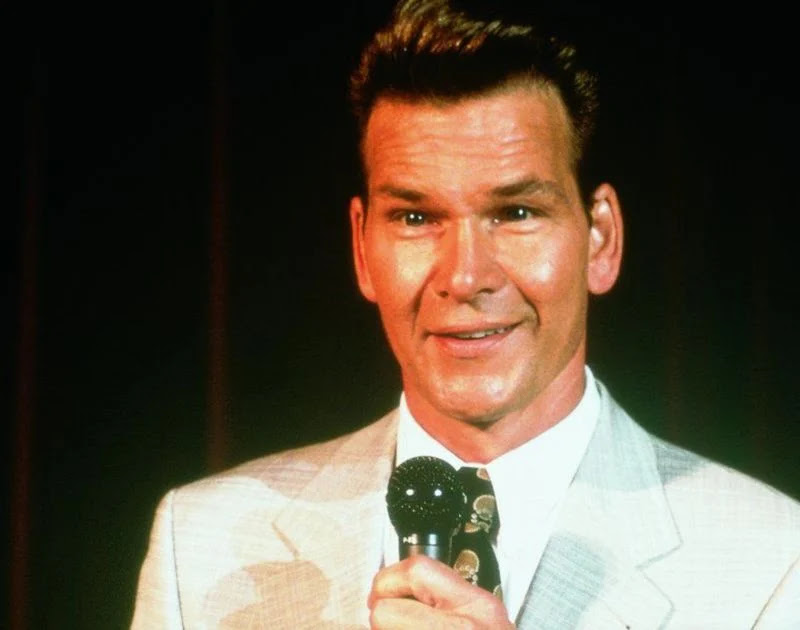
In a class, the health teacher, Kitty Farmer, an uptight person, doesn’t teach but plays videos featuring Jim Cunningham (Patrick Swayze) which focus on overcoming fear. There is an atmosphere of foreboding in this film right from the opening scene, followed by Donnie’s personality, the scary rabbit, and the airplane engine accident. (By the way, the movie Harvey deals with James Stewart’s character talking to a human-sized rabbit that is invisible to everyone else. This film is a dark version of that scenario).

Spooky Frank wakes up Donnie again and Donnie appears to be sleepwalking (sleepwalking is a kind of twilight area between waking and sleeping). This time he is carrying an axe. Later, the school’s mascot, which is represented by a large statue of a bulldog, has the axe buried in its head. And the words. “They made me do it,” are written in paint on the sidewalk. Since Donnie committed the vandalism, his free will seems to merge with the dictates of the supernatural that charts the destiny for everyone. However, his words also sound like what a schizophrenic would say. The danger surrounding his personality permeates the movie. He also uses the axe to flood the school by breaking a water main. Donnie fits in with the Greene short story since he is a destructor forcing change to occur.

Donnie gets to know the new girl at the school, Gretchen Ross (Jenna Malone). Since she has just arrived, she is an outsider, like Donnie. Her past adds to her lack of normalcy. Her father is at-large for having stabbed her mother and she and her mother changed their names and are in hiding. Donnie says he was once in jail for accidentally burning down a house, which shows his antisocial past, and a foreshadowing (there is a fire in the Greene short story, remember). She comments that his name sounds like a comic book hero. He responds by saying, “What makes you think I’m not?” He is being funny, but the dialogue adds to the unreal nature of the story, and points to Donnie maybe having special abilities. (If you have watched “the Big Bang Theory,” you know the talk about how comic book characters have alliterative names: Peter Parker, Bruce Banner, Clark Kent, etc. As IMDb points out there are many alliterative names in the film and references to comics, which contribute to the film’s imaginary worldly nature). Donnie shows his intelligence by helping her with an assignment. She comments that he is “weird,” and Donnie has heard this before and feels he is being dismissed; but, she tells him it was a compliment. This story inverts what most consider to be positive and negative. He says that if the school hadn’t closed their moment together here would not have happened. His comment suggests the idea of various timelines. The two quickly decide to be a couple since they are compatible in their nonconformity.

In another session with Dr. Thurman, Donnie repeats how he looks in many of his scenes. His head is bent forward and he looks up, unblinking. Jake Gyllenhaal said, according to IMDb, that he used this look to appear more psychotic. Thurman hypnotizes him, but even his subconscious is rebellious as he refuses to answer her questions, dwells on sexual topics, and is about to masturbate when she terminates the session.

At a PTA meeting, Kitty Farmer rants about the teaching of “The Destructors” because the young people in that book break a water main and flood a house. Since the police suspect that students may have been involved with the vandalism that included flooding the school, Kitty is connecting the dots. Teacher Karen Pomeroy defends her selection by saying the story is “ironic,” suggesting the tale is not a “how to” act piece. Rose questions if Kitty even knows who Graham Greene is, and Kitty reveals her ignorance by citing the TV show “Bonanza,” whose star was Lorne Greene. While the PTA meeting takes place, Frank again visits Donnie, telling the youth he got away with his axe-wielding actions. Donnie continues to take his medication which implies Frank’s appearance is real. Frank says he can do anything, and so can Donnie. The will of the one merges with that of the other. When Donnie asks where Frank came from, the crazy rabbit asks Donnie if he believes in “time travel,” which becomes what the movie revolves around.

Kitty is again teaching her class based on Cunningham’s videos. Donnie has a card that notes a hypothetical character finding a wallet. He is supposed to fit her actions onto the evaluation line that stretches between fear and love. Donnie complains how the whole exercise is meaningless because everything cannot be reduced to these two emotions. Later, in the principal’s office, where we learn Donnie’s test scores show him to be brilliant, Kitty reveals that Donnie, basically, told her to shove her exercise card up her ass. Donnie continues to be the defier of social convention.

Donnie asks science teacher Mr. Monnitoff (Noah Wylie) about time travel. He talks about wormholes, and then gives Donnie a book entitled The Philosophy of Time Travel, which was written by Roberta Sparrow, the strange mailbox lady, who once was a nun, and then a schoolteacher where Donnie attends. Her character is a merging of science and spirituality. Donnie relates to Thurman that Frank mentioned time travel and now he finds out about Roberta, so he concludes the linking of the two is not a coincidence. Donnie takes the “alone” part of the message Roberta whispered to him as meaning that it is absurd, given life’s inevitable solitude in death, to search for the existence of God, and thus, the general meaning of life.

Donnie is waking up from a nap in a chair in his house while his father and pals watch a football game. Donnie seems to be between the awake world and the sleep world most of this movie, and just like Edward Norton’s character in Fight Club, it’s difficult to tell whether or not he is in a dream state. He sees fluid-filled tubes coming out of Eddie’s chest, and also out of Elizabeth and himself. They point to where a person is going. In a way they are predictors. IMDb notes that director/ writer Richard Kelly got this idea from watching John Madden make illustrations of where players will go in a play. So, it’s appropriate that Donnie sees this effect while a football game is playing. Donnie follows his tube and it takes him to his father’s closet where he finds a handgun. As Anton Chekhov said, once you introduce a gun the writer better fire it later.

Donnie would like to kiss Gretchen since they have been going out for two weeks, but she wants it to be at a time that the world shows its beauty. She coincidentally mentions time travel now, stating her wish to be able to go back and replace troubling images with lovely ones. Even though they are in a beautiful park there is a “fat guy” as she puts it, watching them while smoking a cigarette. In this place, it is difficult to maintain the beauty Gretchen seeks. Donnie does not share Gretchen’s hope for that wonderful moment. The next scene is that of Dr. Thurman telling Donnie’s parents that their son is becoming more detached from reality because he finds life increasingly “threatening.” She recommends more therapy and medication for his schizophrenia. This scene is intercut with shots of Donnie using a knife to stab at Frank’s eye across an invisible force field that he seems to be penetrating. Is he trying to destroy his hallucination? Or, is he trying to cut across the barrier between the world we know and the one beyond?

Jim Cunningham presents his personal growth spiel to the high school students. He talks about a struggling individual named “Frank.” Could this reference point to Donnie’s own struggle? Cunningham says that fear is intertwined with premarital sex, smoking, and drinking alcohol. IMDb notes Donnie engages in all three in the movie, showing that he defies the restrictions on these temptations. Donnie gets to the microphone and admits to feeling lost and afraid (probably because of his loneliness), but he says Cunningham is “the antichrist,” a guy who is profiteering on the anguish of others, and not offering any real solutions.

Donnie tells Gretchen that what he has been seeing is described in Roberta Sparrow’s book, so he says what is happening to him is not random. He discusses his theory with Mr. Monnitoff that these tube-like projections show one’s destiny, and that are a way of seeing the predetermined future. The teacher says if someone could see his or her destiny, a person could then change it, negating predetermination. But Donnie sees, or wants to see that we are not alone, and that the future paths can’t be altered by individuals since they are part of God’s cosmic plan. Monnitoff wants to stick to science and not religious matters, implying he could lose his job if it appears that he is influencing a child’s faith.

Donnie now finds Cunningham’s wallet and knows where he lives. So, he is in the position of how to act that duplicated the exercise in Kitty’s class that was based on Cunningham’s teachings. Gretchen and Donnie do a presentation to the science class with illustrations about getting parents to put these glasses on their kids when they sleep. They call them IMG’s which are infant memory generators. Gretchen argues that pleasant images will be shown to instill positive memories in the children. Two guys say the nightmare of this dream proposal could occur if parents might show satanic visions, and they mention Gretchen’s violent father. It’s as if Gretchen wants to create a parental experience that would counter her own life events. Gretchen runs out of the school and Donnie follows her, apologizing for the boys’ statements. She then kisses him, maybe because she is realizing she shouldn’t wait any longer for a perfect moment to happen, since it probably never will.

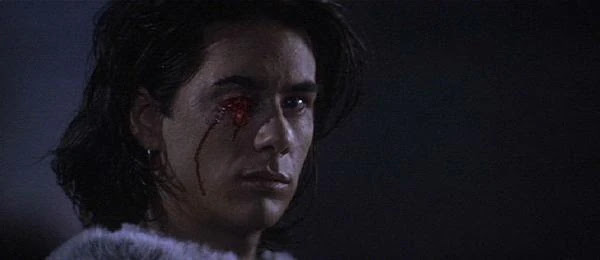
Again, keeping with the Halloween holiday, Donnie and Gretchen go to the movies to see a horror film, The Evil Dead. But that movie is shown in conjunction with The Last Temptation of Christ. It is a foreshadowing since that movie deals with sacrifice to save others. Gretchen falls asleep. It appears Donnie may be nodding off also, and then Frank appears. Dream or reality? Donnie asks Frank, “Why are you wearing that stupid bunny suit?” To which, Franks says, “Why are you wearing that stupid man suit?” What is really below the surface? Is it man or beast? The lighter and darker sides of reality join here as Frank takes off his headpiece and reveals the eye injury that Danny inflicted upon him. Frank apologizes because he knows what’s coming. A portal opens and Cunningham’s house appears. Frank tells Donnie to burn it down.

Even the dance presentations of children for a Star Search competition show contrasting images. One girl awkwardly dances to an angelic soundtrack and then the performance of the young girls called Sparkle Motion (which includes Samantha Darko) is more rock and roll. Cunningham hosts the event, which we find adds a creepy element. The fire reveals a secret room, a “kiddie porn dungeon” in the house. The police arrest Cunningham. The fire, a destructive act, brings to light a horrible crime. The scene reminds us of the opposing movie titles on the marquee and suggests that there must be sacrifice to set things right. It also reflects what Donnie said about how the Greene story shows that “destruction” is a form of “creation.”

Kitty is not willing to see the facts and remains loyal to Cunningham (does his name show he is a cunning fellow, fooling others, another example of false appearances?), thinks there is a conspiracy to frame her beloved idol (the film showing relevance to current events). She will work to defend Cunningham, and, despite Rose’s animosity toward her, she asks the other woman to fly with Sparkle Motion for a competition. This request brings up the airplane aspect of the story.

Rose sees a calendar with an illustration of the scary bunny on it. The days are crossed off, which we know is the countdown to Frank’s “end of the world” prediction. Rose is concerned about Donnie and wants him to be okay. He asks what it’s like to have a “wacko” for a son. She says it feels “wonderful.” Her allegiance reminds us of how Gretchen feels about Donnie’s questioning mind.

In a session with Thurman, the hypnotized Donnie confesses to his crimes and says he must do what Frank says so he can figure out what is happening. He sees Frank (again as he crosses into dreamland) looking upward. Donnie says he must build a time machine. He says, “the sky’s gonna open up.” Here is another reference to the airplane and its missing engine.

There is one day left until Frank’s predicted day of death. Eddie is away on business and Rose is with Sparkle Motion. Donnie and Elizabeth decide to throw a Halloween party with their parents gone. Everyone is wearing a costume except Donnie, whose “man suit” is a costume hiding his nightmarish self. Gretchen arrives distraught because her mother took off. She says, “I guess some people are born with tragedy in their blood.” Obviously, she is a perfect match for Donnie. They make love while Rose does not receive Dr. Thurman’s phone warning about Donnie since the mother is away. There is also a call from Rose saying that she and the girls will be returning on a late flight. Later, Donnie has on a skeleton outfit, which shows the tragedy intertwined with his life.

Donnie sees those fluid tunnels again, which point to what will happen, and he knows that time is running out since it is one hour to Frank’s deadline. He and Gretchen go to Grandma Death’s place. He knows that time travel connects Grandma Death to Frank. Karen Pomeroy wrote on the board before leaving the school the words “cellar door,” which someone said were the best combination of words in English. There is a cellar door at the house. We are going below the surface again to reveal what hides in the shadows. The school bullies are there, with stockings over their faces trying to hide the nastiness underneath. They drag Donnie and Gretchen outside. One puts a knife to Donnie’s throat and Donnie utters, “Deus ex machina.” In Greek theater, the gods were supposed to reside above the stage and when the playwright wanted to resolve conflicts the “god” would be lowered in a box to dispense supernatural abilities. It has come to be a negative term to show resolution by contrived means. Here the film is playing with the idea, since time travel is the story’s “deus ex machina,” and that is why Donnie calls it the “savior,” which also recalls “Christ” mentioned in the film title on the marquee.

A car approaches at a high speed. Grandma Death is in the road, presiding over the events. Gretchen is thrown into the road and the car strikes and kills her. The car stops and turns around. The driver is Frank. He is wearing the scary bunny outfit. He takes his headpiece off. Donnie has his dad’s gun and shoots and kills Frank. Again, the site of the wound is the eye, a frequent symbol in films (Blade Runner, Chinatown, Bonnie and Clyde). Here, it can refer to the terrible visions that Donnie has been seeing. It’s as if the dead Frank came back through time to inform Donnie of the horrors that would occur.


Donnie takes Gretchen’s body with him to his house and kisses his sister goodbye. Donnie envisions dark clouds forming a time tunnel in the sky. He drives to where the film began on a hillside road. We hear Monnitoff’s words about all you need for time travel is a wormhole and a metal craft entering it. Donnie also remembers Gretchen saying that it would be nice to go back in time to make things better. The plane that Rose is on hits the turbulence of the time tunnel, and we see the engine going into the tunnel. Donnie also goes into the tunnel. He comes out laughing in his bed. He is not out of the house as before when the engine hits. He is killed this time.

Donnie wrote a letter to Grandma Death, saying that he hopes the answers to his questions “will come to me in my sleep. I hope that when the world comes to an end, I can breathe a sigh of relief, because there will be so much to look forward to.” He does get his information while asleep, and it is his world that comes to an end. Perhaps he is now at peace, and he may feel that he will survive in some spiritual form, and that those alive will lead good lives.

The camera glides over all the characters in the story, as the song “Mad World plays with the fitting lyric, “The dreams in which I’m dying are the best I ever had.” Those words could fit what happens to Donnie. Gretchen, who in this corrected timeline didn’t meet Donnie, is alive. She rides by on her bike, and exchanges a sad look with Rose, and a wave. It was a worthy sacrifice.

The next film is Lost in Translation.

Sunday, March 12, 2023

Stand By Me

 SPOILER ALERT! The plot will be discussed!


Stand by Me (1986), which shares its title with the great Ben E. King song, was directed by Rob Reiner and is based on a story by Stephen King (two kings make a great pair here). The tale takes place in the summer of 1959 in the form of a reminiscence by the narrator who is The Writer (Richard Dreyfuss). He thinks about the first time he saw a dead body after reading about a death in the newspaper. Even though it’s been many years since he was twelve years old, the memory has haunted him his whole life.

The main characters are young boys who are in a transition period between being children and becoming adults. The Writer is the grownup Gordie Lachance (Will Wheaton). They play cards in a tree house as kids will do, but Chris Chambers (River Phoenix) and Teddy DuChamp (Corey Feldman) smoke cigarettes, showing they are rebelling against childhood norms. The screenplay is effective as they engage in trashy put-down comments which fit their age group. The Writer notes that “finding new and preferably disgusting ways to degrade a friend’s mother was always held in high regard.” The Writer comments that Teddy acted crazy for a reason because his violent father almost burned off the boy’s ear once. Chris, their leader, came from a “bad” family also, and according to The Writer, was expected to have a “bad” life (unfortunately true for the actor River Phoenix, whose early death was a shocker). The film suggests that external factors can abnormally thrust children out of their carefree innocence.

One of the boys’ crew, Vern Tessio (Jerry O’Connell) enters the treehouse with news. While searching for where he buried his coins under the house porch, Vern overheard from his brother, Billy (Casey Siemaszko) and his pal, Charlie Hogan (Gary Riley) the location of a young dead boy, Ray Brower, who went missing. The older teens stole a car and that was why they were near the train tracks where they found the dead boy. Since Billy and Charlie are staying clear of the police, the younger boys think they can get credit for finding the body. Youths enjoy pretending to be heroes and these boys sing the title songs of old TV shows that told cowboy stories, which shows that desire.


As the kids concoct alibis to free them up for their quest, The Writer notes that his mother (Frances Lee McCain) and father (Marshall Bell) were traumatized by the death of Gordie’s older brother, Denny (played in flashback by John Cusack) in a car accident, another initiation into the harshness of the world. Gordie’s dad is disappointed in Gordie for not having friends as admirable as Denny’s pals. So, these boys have something to prove to themselves, let alone others, that they are not losers.


Chris catches up with Gordie on their way to meet the other boys. He took his dad’s handgun, and Chris accidentally fires off a round into a trash can behind a restaurant. The firearm holds adult fascination for the boys, but its explosive deadliness also is frightening, which again stresses their cusp of adulthood predicament. The boys encounter Chris’s older brother Eyeball (Bradley Gregg), and Ace Merrill (Kiefer Sutherland), who overpowers the younger boys and steals the New York Yankees cap Denny gave to Gordie. That act is particularly hurtful to Gordie who loved his brother, and Ace’s theft is a desecration of Gordie’s memory of Denny. The preteens wish they were older and bigger so they could defend themselves (a foreshadowing), which stresses their in-between stage of growth. (There is a short later scene where Ace and the other teenagers drive a car and knock mailboxes off their posts with a baseball bat. Subsequent scenes with these older boys show that the next stage of maleness is full of rebelliousness, egotism, obsessions over sex, foolishness, and danger).

The boys follow the train tracks with their gear and are supposed to travel around twenty or thirty miles, quite a stretch for these youths. They act like adventurous men, but are not responsible enough to remember to bring any food. Vern says he remembered to bring a comb, which is funny, but also stresses immaturity. A locomotive approaches, but Teddy wants to play “dodge train,” waiting for the last moment to get off the tracks. He pretends he is meeting the enemy at Normandy on D-Day. The scene is reminiscent of playing “chicken” in Rebel Without a Cause, where the adolescents head to a cliff in cars and are supposed to jump out at the last minute. Here is the same combination of adult male bravado and youthful recklessness. Teddy’s father, who was a hero in the war at Normandy, went insane, possibly due to war trauma, and is now in a mental institution. There may be a subconscious desire to prove his bravery so he can measure up to his father’s war heroics. Chris saves Teddy from himself by pulling him off the tracks.

The young boys flex their rule-breaking potential by scaling a junkyard fence despite the warning not to trespass. They use the water pump there to hydrate and then goof around. The child in each of them still watches The Micky Mouse Club, but their budding manhood focuses on Annette Funicello’s breasts. Gordie loses the coin toss, and he has to go to the store nearby for food. The grocer recognizes Gordie as Denny’s brother. He also lost a brother, only in Korea. He quotes the Bible that says death is there amid life. Tragedy seems to be something that we never outgrow.

The grocer talks about what a great football player Denny was. That remark triggers a dinner table memory where Gordie’s father is obsessed with Denny and his ball playing. Denny goes out of the way to talk about how good a writer Gordie is, but the father ignores the praise for his other son. Older males, like Mr. Lachance and the grocer, don’t see writing as masculine, so they focus on the athletic, muscular nature of sports.

By the time Gordie returns to the junkyard, the owner, Milo Pressman (William Bronder) has returned, and the rest of the boys are on the other side of the fence. Gordie runs with all his might and climbs over the barrier just in time to escape the junkyard dog, Chopper. The animal was supposed to be this fearsome creature, but he turns out to be not that threatening. The Writer says it was his first revelation about how myth did not measure up to reality, another growth moment.

After getting upset when Pressman recognizes him and ridicules his father, Teddy says he is spoiling his friends’ fun. But the maturing Gordie says maybe they shouldn’t be treating their journey as a “party” since they are going to “see a dead kid.” So, this journey is a symbolic one, a rite of passage which leads away from childhood.

Chris gives Gordie a speech, similar to the one Ben Affleck gives Matt Damon in Good Will Hunting, about how Gordie has to use his brains and take academic courses while his pals are in shop classes. Chris realizes Gordie’s writing potential, unlike Gordie’s dad. Chris says, “God gave you something, man, all those stories you can make up.” He says that it’s like God is telling Gordie not to lose those tales as he grows up. (And he doesn’t since it is the grown Gordie who is telling this story). Chris is more of a father figure here and is actually more mature than Gordie’s real dad. At the same time, Teddy and Vern talk about who is stronger, Superman or Mighty Mouse. These contrasting conversations further stress how these boys are in a maturity transition.

The boys come to another challenge as they approach a trestle. To not go far off their route they must cross it without any room to avoid a train that might be coming. Vern loses his comb, which is sort of a child’s safety blanket. They start to walk over the tracks when Gordie spots the smoke coming from the stack of an approaching train. Chris and Teddy make it to the other side. The overweight Vern is not as quick as the others and Gordie tries to urge him to move faster. They jump off onto the dirt embankment, just in time to avoid the train. They have leapt over another hurdle on their perilous road to adulthood.

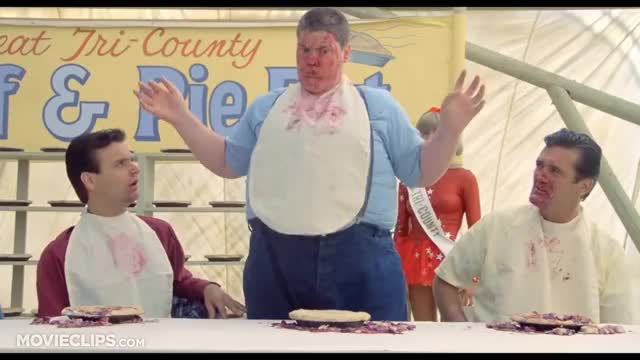
At a campfire, the boys want Gordie to tell a story. His tale is about a heavy boy who has sustained ridicule for his size. The town calls him Lardass (Andy Lindberg). He gets his revenge at a pie eating contest before which he consumed a bottle of castor oil and a raw egg. After eating several pies he initiates a cascading vomiting scene to exact his revenge on the nasty citizens. The story fits the mindset of these boys, and vicariously allows them to feel justice since they, too, feel like outsiders. But, Teddy’s demons rise again and he wants a better ending where Lardass goes home and kills his father, and then joins the Texas Rangers. His reaction shows his pathology which has sprung from his divergent feelings about his father.

After falling asleep, howling coyotes awaken the boys. They take turns standing guard, and despite Teddy’s acting like a military sentry, and Vern’s exaggerated startle response to every sound, the scene is disturbing since they are pointing Chris’s handgun. The next scene depicts the outcast feelings of Gordie and Chris. Gordie has a nightmare where he pictures himself at the grave of his brother and his father tells Gordie it should have been him in the casket. He wakes up and joins Chris, and suggests to his friend he can also take college classes. Chris says that the community considers his family dangerous lowlifes, and presume they are guilty instead of innocent if a transgression takes place. He stole the school milk money, implying that being law-abiding would not better his family reputation because of the residents’ prejudices. But he gave the money back to the teacher who showed up with a brand-new skirt she had been eyeing. Chris begins to cry since he found out how crushing it was to find that even a schoolteacher can be so devious. It is an example of losing innocence and moving toward cynicism concerning life’s realities. Chris says he wishes he “could go someplace where nobody knows me,” which would allow him to live without others unfairly judging him.

There is a scene where Gordie is alone sitting on the train track rails. A doe comes out of the forest, pauses, and the boy and the animal exchange looks. Stephen King said that the story is about discovering the world, and this moment is magical for Gordie, since he says he never shared it with anyone before. It appears that Gordie is feeling a oneness with nature. Since it is a young deer, perhaps it is on the same journey of learning about life. Both are shedding their past lives.

The older boys led by Ace find out about the dead boy from Billie and Charlie. Ace decides that they will get the praise for finding the missing boy. On their drive, Ace races against a group of boys in another car. When a truck hauling lumber heads straight at him, Ace refuses to exit the lane. The trucker goes off the road to avoid a collision, losing his cargo. Ace says, “I won,” as if beating death is a contest. Ace’s toxic masculinity will most likely grow stronger as he gets older, and the scene shows the destructive road men may travel down because of the macho attitudes that society fosters.

Meanwhile, the kids, abandoning the safety of the train tracks that can represent civilization, cut through a forest as a shortcut. In literature, writers have used forests as the places where unlawful or dangerous activities take place (think The Scarlet Letter, Tess of the D’Urbervilles, The Princess Bride). They misjudge the depth of a river they cross and find themselves in water up to their shoulders. Teddy starts to be mischievous and dunks Vern. Chris tells him to “act your age.” Teddy rightfully says he is acting his age. The boys, except for the anti-party Gordie, start dunking each other. They are in a perilous situation which calls for adult thinking, but they are still playful children in that place. When they discover that leeches have attached themselves to their bodies, the serious nature of their quest sobers them up as they pull the creatures off their bodies.

They finally find the body of the Brower boy off the side of the train tracks they reconnect with after their shortcut. The boy was hit by a train. The Writer says the boy was not asleep, not sick, which is what the boys experienced in their previous youthful life. He is dead, which ushers them into the next stage of their maturity. Encountering this brutal end of a life prompts Gordie to question why bad things happen to some people. After all, they dodged trains twice on this trip, but Brower couldn’t escape the danger. The low self-esteem that Gordie’s father instilled in the boy causes Gordie to tearfully tell Chris (they have now exchanged sorrowful confessions) that he deserved to die instead. Chris consoles his friend in a compassionate parental way (unlike Gordie’s real dad) by telling him he’s wrong, and accurately states that Gordie has a life ahead of him being a writer.


At that moment, Ace and his gang show up and threaten to beat up the youngsters if they don’t give up the body. Chris will not back down. Ace starts to cross that legal line that the remote forest removes, and pulls a knife. As he is ready to cut Chris, Gordie shoots off a warning shot from the gun, playing its part as the equalizer, which Chris brought. Gordie aims his wild card weapon with a steady hand at Ace, who decides to fold. But, Ace issues a warning about the boys’ futures (a foreshadowing).

After besting the older boys, the younger ones probably feel the quest was what was important and they no longer have the need to get credit for finding the body. They leave it there and decide to make an anonymous phone call to have it found. They head back to their town, which, according to The Writer, “seemed smaller.” They have grown up some on their journey and things aren’t as large or magical when one revisits a childhood place.

The Writer says that Gordie and Chris didn’t see as much of Vern and Teddy as they grew up. Many of us lose track of friends who we bonded with when younger as life’s situations place us on divergent roads. Vern settled into the grownup world, getting married, having four kids, and working as a forklift operator. Teddy couldn’t get into the military because of his vision defects and ear injury, courtesy of his father. He was also in jail a few times. Some sins of the father can’t be erased from the marks they leave on the children. Chris did escape the judgment of the town, going to college and becoming a lawyer. But he went into a fast-food restaurant, tried to break up a fight, was stabbed in the throat, and died. He couldn’t escape that knife that threatened him in his youth. It was his death that Gordie was reading about that initiated the memory of finding the body. The Writer, the adult Gordie, has a boy of his own now, as the cycle continues, is finishing typing the memoir we have been hearing. He had not been in touch with Chris for over ten years, but he knows will miss his best friend “forever.”

The last lines he types say that he never made friends like the ones he had when he was twelve, and asks, “Jesus, does anyone?” Don’t we all hold onto those days when we shared our early years with precious others while we were in that state of becoming?

The next film is Donnie Darko.

Tuesday, February 14, 2023

The Cincinnati Kid

 SPOILER ALERT! The plot will be discussed!

I recently watched The Cincinnati Kid (1965) for the first time in many years and decided to write about it after realizing how much talent is involved in the production. It has Steve McQueen, looking like Mr. Cool, as usual. The supporting cast includes Edward G. Robinson, Ann-Margret, Karl Malden, Tuesday Weld, Joan Blondell, Jack Weston, Cab Calloway, and Rip Torn. The story was adapted by Ring Lardner Jr., and Terry Southern. And Norman Jewison directed the film. Not too shabby.

The film opens with The Cincinnati Kid (McQueen) walking next to a New Orleans funeral, which, of course, is not a somber event, with a band playing. Does this scene symbolically predict that the Kid will be participating in his own figurative burial? He meets a young shoeshine boy who has challenged him at pitching coins before and asks for another chance. The Kid beats him and says the youth is not ready for him yet. In a subsequent scene, he bests the boy at a coin toss and says the same thing about being ill equipped to beat the Kid. At this point the Kid is an undefeated winner.


The movie is a sort of card gambling version of The Hustler, with McQueen playing the Paul Newman role and Robinson assuming the position of the Jackie Gleason character. The Kid is the upstart, a pretender to the crown worn by the best stud poker player. He has marks on everybody since he has beaten everyone, but he still lives in a lowly apartment since he hasn’t really cashed in on the big time yet. In contrast is senior citizen Lancey Howard (Robinson), the reigning poker king. He dresses stylishly and stays at a luxurious New Orleans hotel, where everybody knows his name. A one-time great player is Shooter (Malden), who is known for his honesty and ethical behavior. He is the go-between who wants his friend, the Kid, to get his shot at Lancey.

The Kid has a girlfriend, Christian (Tuesday Weld). She is not living a chaste life with the Kid, but her name is significant since she represents the possibility of the Kid leading an ethical life with her. She tells a salacious tale in which men “cared more about their lives than they did about their honor. Does that seem right to you?” His response is a selfish one as he says, “what good is honor if you’re dead.”

The story is a battle between the ethical, generous world and the selfish one. Shooter is married to the seductive Melba (Ann-Margret). (Shooter’s name suggests he is a “straight shooter, a righteous man). But he has married Melba who goes through the movie in sexy outfits and plays the archetypal Eve role, chomping on an apple. She is putting together a puzzle by trimming the pieces so they will fit. She is a cheat in more ways than one. She goes shopping with Christian, who is tempted to follow in Melba’s path. But she is reluctant to go down that road as she tells Melba that she can’t see herself wearing a provocative bathing suit.

Shooter arranges a card game with a rich, arrogant man named Slade (Torn). After he loses to Lancey, his arrogance gives birth to revenge in his mind, and he wants to pay Shooter a large sum of money to help the Kid when he plays Lancey. Shooter is very reluctant, but he knows he can’t hold onto Melba, who he already suspects of cheating on him. Indeed, she attempts to seduce the Kid, who shows some morality in not succumbing to her charms so as not to betray his friend. Shooter has business and asks the Kid to take Melba to a cock fight (a sexual reference to show Melba’s carnal nature?). The brutality of the event is repulsive as people show how ugly they can be as they bet on which bird will kill the other. After the event, the Kid brings Melba back to her place where she says she needs a drink because of “all that dust at the pit. I always feel so dirty after one of those things.” The Kid knows what type of person Melba is and says, “Brings out the best in you, Melba.” The best of the worst.

Christian, realizing the Kid loves card playing more than he could a woman, leaves him. He appears distraught by her decision, but when he hears her intention, he grabs her bag to help her on her way out. His selfishness is showcased here. Christian comes from a pastoral life and goes back to be with her parents, who are farmers. It represents the moral, upstanding life in the country as opposed to the decadence of the city. Eventually the Kid visits Christian at the farm. It’s as if he is torn between the world of spirituality and materialism and selfishness. Christian’s parents are stern and judgmental concerning their daughter’s relationship with the Kid. However, the Kid wins them over with a card trick. It’s as if he has brought trickery with its seductive aspect that has the potential to corrupt this innocent environment.


 The anticipated game between the Kid and Lancey begins. Just as with the game involving Slade, Shooter is the dealer because of his highly regarded reputation. The Kid does quite well, and at one point Lancey’s age seems to catch up with him as he almost keels over. But, he is a resilient man and keeps playing. The Kid is no dummy, and he realizes he has been getting too many good hands. He gets Shooter alone who confesses that he has been bought by Slade to swing the game. The Kid is honorable enough (despite his earlier negativity toward honor) to want to only win on his own merits. He tries to get some sleep between poker rounds. Melba slips into his bed and since his hero, Shooter, has become corrupted, he no longer values the friendship, and he has sex with Melba.

In a case of exceptionally bad timing, Christian returns to be with the Kid and arrives at the room just as Melba is leaving. She leaves too and it seems that all the Kid has left is the game. In a conversation, Lancey advises the Kid that to be the top gambler one can’t get involved in serious attachments. Lancey may be the best there is, but he is in the end a lonely man.

To keep the game above board, the Kid says Shooter was sick all night and there should be another dealer. Lady Fingers (Joan Blondell) takes over, and the game reaches a climax when Lancey has a possible straight flush and the Kid has a full house with aces on top. The Kid goes all in and loses because Lancey indeed has the straight flush.


The Kid exits the game broke and mentally defeated. The shoeshine boy asks him to play once again at coin toss. The Kid decides to compete to desperately show himself that he hasn’t turned into a loser. But the boy beats him and throws his words back at him, telling the Kid he isn’t ready for him yet. In the original version, that is the end of the film, with the Kid walking away. A subsequent version has him walk and run into Christian. She embraces him. This ending adds a redemptive quality to the story by suggesting The Kid had to undergo a Fortunate Fall, He had to reach rock bottom in order to be saved from a corrupt life.

The next film is Stand by Me.