Sunday, April 12, 2020

The Killing


SPOILER ALERT! The plot will be discussed.
The Killing (1956), one of director Stanley Kubrick’s earlier projects, starts with a horse race, something to gamble on. One wants to make a “killing,” that is, to win big when betting on something. That is the legal variation on the definition. The illegitimate side refers to scoring a large sum of money on an illegal act. Of course “killing” may also involve the non-wagering reference to ending someone’s life. All of these meanings are presented in this film. The movie has a Dragnet narrator like Jack Webb in the old TV series, who supposedly is just telling you “the facts.” But, the voice-over adds stylistic embellishments at times in this story. The narration lends a documentary feel to the story, but it can feel intrusive, and Kubrick inserted it when the studio insisted upon it, according to IMDb.


Marvin Unger (Jay C. Flippin) doesn’t care about gambling, but places a bet on every horse in a race, which usually means a person will lose money. His action is the opposite of what a person does to test one’s luck and skill at predicting an outcome. But his action shows early on that he has the cash to bet on something else, a robbery that is in the works. He goes to the track bartender, Mike O’Reilly (Joe Sawyer), and Unger gives the man an address and time written on the racing program, which stresses that what they are attempting, despite planning, is a gamble. Unger then gives the winning ticket to the cashier, George Peatty (Elisha Cook, Jr.), which has the same information written on it. The narrator says that Unger saw himself as a small piece in a jigsaw puzzle that can only be understood when all the pieces fit together, and the complete picture comes into view in a “predetermined” plan, just like the plot of a movie. But the unpredictability of people and events shows another theory of the universe at work, that is Murphy’s Law, which says whatever can go wrong probably will go wrong. (As IMDb points out, Kubrick revisits the theme of humanity’s failure to control existence through technology in Dr. Strangelove and 2001: A Space Odyssey).

Earlier that day policeman Randy Kennan (Ted De Corsia) goes to a club where he sees an acquaintance, Leo (Jay Adler), a loan shark. Kennan owes Leo $3,000 but says he is broke. Kennan says he has something in the works that will pay out big, like a slot machine. So, Kennan is also one of the cogs in the mechanism, but the reference to a slot machine shows how unreliable gambling can be, no matter the strategy one uses. He wants a two-week extension, which Leo grants. 
The narrator introduces Johnny Clay (Sterling Hayden) as the “the most important thread in the unfinished fabric.” He’s actually the designer. It is another metaphor that implies things are coming together, like the assembling of a puzzle. But that which is woven can unravel. The name Clay implies someone who can mold things, maybe people and events. But, there is the possibility of a religious allusion, since being made of clay suggests fallibility. He is talking to his girlfriend, Fay (Coleen Gray), who he helps dress, suggesting they had just slept together. He says how the men he has assembled don’t have any criminal records, which makes them difficult to investigate. He says, “They’ve all got jobs. They all lead seemingly normal, decent lives. But, they’ve got their problems and they’ve all got a little larceny in ‘em,” Thus, they are capable of illegal activity. Clay uses the word “seemingly,” and there is a theme in the film that appearances can be deceptive.

He notes that Unger owns the building Clay is staying at so he can run the operation from there. Unger is also a bookkeeper, which is one of those legitimate jobs Clay spoke of. Unger handled money the socially accepted way before now. But, he is using his capital in an illegal manner here, like Leo, the bookie, which shows how one can easily cross the line from abiding by the law and breaking it. Fay has known Clay since they were young, and has been waiting for five years for him to get out of prison. He says that people get locked up no matter what the crime, so one should go for the big score. His words may comment on how the justice system isn’t very just, if petty crimes are severely punished. But, he may also be saying that getting locked up is a terrible experience to endure, so one should take the risk of getting imprisoned for something worthwhile. She says he was locked away, but she felt “locked out.” She has low self-esteem, and says she isn’t pretty or smart, so she is all in, to use another gambling phrase. When it comes to Clay, she will “go along with anything” he says. (Their names even rhyme, showing the couplet connection between the two). He seems to really care about Fay, and wants her to stay away except to make a plane reservation (the getaway), and to tell her boss she is going away to get married, which is the couple’s intention. He reassures her that “Everything's gonna be alright,” but this turns out to be a promise that can’t be relied upon. Unger arrives and reassures Fay that there’s “nothing” he wouldn’t do for Clay, which resonates later in the story.
Earlier, O’Reilly the bartender, comes home to his wife, Ruthie (Dorothy Adams). She is asleep and there are medicines next to the bed, so his motivation is that he needs money to take care of his spouse. A little later Peatty, the racetrack cashier, comes back to his apartment. Sherry (Marie Windsor) is his wife, and she is very attractive, and one would think would be out of her husband’s league. She knows that, and as she leisurely lounges while reading a magazine, she is condescending and sarcastic to Peatty. He says his stomach isn’t feeling well (anxious about the robbery?), but she says maybe he has a hole in his stomach that matches the one in his head. She orders him to make her a drink because she is starting not to feel well, implying his presence makes her sick. He tries to tell her he observed a couple that were sweet to each other, suggesting how that is the way a husband and wife ought to be. She continually interrupts him and gives him odds, “seven to five,” that she knows how the story ends. Here is another reference to gambling, trying to use one’s knowledge of the past to take a chance on predicting the future. She is very witty in her comments, which is consistent with film noir dialogue. She basically is telling him he is giving her a headache, but then says, “if people didn’t have headaches, what would happen to the aspirin industry anyway?” He wonders why she married him, and she reminds him that he promised her a lavish lifestyle. When he says he will be coming into a large sum of money, she says he hopes he put the right address on his letter “to the North Pole,” equating his hopes of getting rich with the chances of having Santa Claus granting his wish (in other words, the odds are bad here). However, she knows he doesn’t lie to her, and she manipulates him by implying she will go out and possibly be unfaithful to him until he gives in and she gets him to tell her what he is up to. At this point, we don't hear the operation’s details, but we do know that telling them to Sherry is risky. The relationship between these two contrasts with the mutual affection between Clay and Fay. 

While Peatty goes out to meet with his co-conspirators, Sherry is also involved in another type of unethical arrangement. She visits Val Cannon (Vince Edwards), obviously the man with whom she is having an affair. (Does his name suggest his power and danger?) In this relationship, Cannon appears to have the leverage, as Sherry questions why she couldn’t reach him and notes he is out a great deal. He says he is his own man and doesn’t like being questioned about his activities. She says she loves him, so now she is the one wanting attention, although he suggests that she isn’t honest with him either, saying she told him she went to an afternoon movie and came home late at night. Again, appearances may be inaccurate as she may have another lover, too. There is some stylized dialogue here, as she shows she enjoys the passion between them. He tells her not to be greedy, but she says she is a “glutton” when it comes to him. He says it sounds like she is “going to eat” him “alive.” She then says she just might do that. She is the femme fatale character here, and the linking of eating and sex demonstrates the need to satisfy primal appetites, with her sounding almost like someone capable of devouring others. 

There is a break, which suggests the two were intimate between the scenes. Sherry tells Cannon that he found out from her husband that he's involved with a gang to rob the racetrack where he works. She says she has been preparing to leave her husband (although Cannon says she has been saying that for a while, so maybe she has been stringing him along). But now, she says she wants Cannon to get Peatty’s share after the heist. But, Cannon (the big gun) is thinking on a larger scale, wanting to find out more so he can rob the robbers. Sherry found the note containing the address of the meeting, which they can use for their purposes.
The meeting takes place between the men as they discuss the project. (The influence on Quentin Tarantino’s Reservoir Dogs is evident in this film, not only in this scene where the perpetrators gather, but also, according to IMDb, in the non-linear plot). Clay says there are two more men that the others don’t know about but who are reliable and who will receive flat rates as they don't know about the details of the job. They still will be taking chances (gambling?) as to how well these other two men perform their tasks, one starting a fight, the other using a gun, and keep their roles secret. Unger is footing the bill up front and Clay hopes for a two-million-dollar payoff. Clay is meticulous and knows about the security involved. But as he ticks off all the blocks, his flow is interrupted by a sound at the door, which of course means there’s always that monkey wrench someone is ready to throw into the machinery. 

Clay goes to investigate. The other men hear a brief struggle and a slap. They find Sherry unconscious. Peatty acknowledges that it’s his wife, but despite threats, and Kennan smacking him, he lies by saying he told her nothing. Kennan gets off a good sarcastic film noir line by saying Sherry is really just the building inspector “measuring the keyhole.” The tear in that “fabric” the narrator noted is starting to open up. Kennan is the only one that strikes Peatty, showing his impulse to harm others. Peatty covers up by actually guessing that Sherry found the note with their location, but then makes it seem like she was checking up on him to make sure he wasn’t cheating on her (quite a reversal of the truth). Clay orders Kennan and O’Reilly to take Peatty home. Clay tells Unger to take a walk while he interrogates Sherry. This is one of the incidents that makes Unger feel useless except for the money he is contributing to the heist. Outside, Cannon waits in a car with another man, as the kinks are starting to appear in the plan.
As soon as she wakes up, Sherry, instinctively, puts her femme fatale tools to work. Clay compliments while he threatens, saying she has a pretty head on her shoulders, and it would be a shame if it were knocked off. She sees that he is interested and says wouldn’t it be better if her head was on his “shoulder.” She seems to corroborate her husband’s story, but Clay isn’t buying it. He knows, given her looks and Peatty’s mousy character, that she couldn't care less about the possibility that her husband was unfaithful. He says to her, “You’re a no-good nosy tramp.” But, he sees she is cunning and is right when he says he can “read” her “like a book.” He knows she’s interested in money and says she has “a great big dollar sign there, where most women have a heart.” He says that if she keeps her mouth shut, she’ll get her husband’s share. Clay knows Peatty will only keep enough money for a cheap cigar and spend the rest on her. Sherry shows the extent of her selfishness when she says she won’t even let her husband have the cigar. She’s like a monetary vampire. Clay says if she talks, they won’t pull off the job, and she’ll get nothing. She tries to seal their deal with a kiss, but he backs off, resisting her seduction, and tells her to leave. 

Sherry isn’t just Peatty’s Achilles’s heel, she stretches his weakness all the way up to his head. He is talking to Sherry back in their place, while she applies cosmetics to her face, like a carpenter sharpening the most efficient tool. He questions the intentions of his cohorts, given the way they turned on him. He shows his lack of self-respect when he asks what Sherry was really doing at the meeting, knowing full well she knows no other woman would take an interest in him. He is also worried that something happened between Clay and Sherry. His insecurity matches that of Fay, which causes both of them to allow the stronger partners to have control over them. Sherry dismisses his fears, saying that his partners wouldn’t hurt him or her because of his job at the racetrack. But he is too upset and says he’s dropping out. She urges him to stay part of it, and says that if he quits it shows he doesn't really love her. He’s her puppet and she knows how to pull his strings. She gets him to believe that she will always love him with a mind-blinding kiss. He agrees to not withdraw from the robbery. 
The narrator says it’s three days later and Clay is making “the final preparations.” He is at the Academy of Chess and Checkers, suggesting the moves and counter moves needed to win not only games of strategy but also contests between criminals and the law. He meets up with Maurice (Kola Kwariani), who is barking at the shortcomings of two men playing chess, revealing that Maurice knows how to play the game, but the movie shows that skill isn't always enough to win at life. Maurice is a bit of a philosopher and tells Clay that safety is in “mediocrity,” and Clay hasn’t learned that. He says for most of the world, “individuality is a monster and it must be strangled in its cradle” so that the rest of society feels unthreatened by the superiority of certain talented people. Maurice likens artists to gangsters, probably because they challenge restrictions placed on those with exceptional ways of expressing themselves. He warns, “They are admired and hero-worshipped, but there is always present the underlying wish to see them destroyed at the peak of their glory.” The implication here is that those that think outside the box are admired but also envied and feared by those living inside that box. Clay wants the burly Maurice to start a fight with the bartender O’Reilly to distract the racetrack cops. Maurice wants a piece of whatever the enterprise is, but Clay says the $2,500 is enough to keep Maurice in the dark and assure him of a relaxing time for his brief jail sentence for disorderly conduct if used wisely. Maurice accepts the offer.
Clay then visits Nikki (Timothy Carey) to hire him as the gunman. Nikki lives in a secluded, run-down place which shows his poverty. But at least he doesn’t get into trouble there, he says. It does not stop him from being interested in what Clay has to say. Nikki lets Clay try out a high-powered rifle, and he provides targets to practice on. Yet this peddler of violence carries a cute little puppy, possibly an ironic touch. Especially since his job is to shoot the favorite horse in a high stakes race from a somewhat remote location. The idea is to not have the favorite win so the racetrack won’t pay out on bets because the race will be invalidated and there will be more cash on hand to steal. Also, there will be a major distraction. Clay convinces Nikki the $5,000 is worth the risk.

Clay rents a cabin from a friend of his roommate in Alcatraz. Four days later, the day of the robbery, Sherry is acting nice to Peatty to encourage her husband to follow through on the heist. But, she is also working an angle to get Peatty to not trust Clay so she can keep a hold on her power to manipulate him. She implies that Clay forced himself sexually on her, as she tugs on those puppet strings that control her husband’s jealousy. 

The narrator offers a possibility that this day may be Clay’s last, which adds to the theme of the unpredictability of events. He visits Unger and tells him everything is in place. He does, however, allow for the possibility that things can go sideways, so he tells Unger the same thing he told the others, that is, to keep silent. Unger says he wishes he could do more and says he sees Clay as being like a son to him, and tells Clay he’s had bad luck and maybe made a few mistakes, but he can start new after he gets his share of the money. He tells Clay he will have a rich and fulfilling life afterwards. (To make sunny forecasts is foolish, since the film is saying that predictions are unreliable in a chaotic world). Even though Clay says they won’t see each other after they split up their stash of cash, Unger says he wishes that the two of them could go off together. One gets the feeling that Unger has led a lonely, boring life and participated in this caper for some excitement and a chance to connect with Clay. Unger also seems to warn Clay that getting married can be risky because it is difficult to find the right person to share life with. He sees Fay as his competition (could there be a gay attraction subtext at work here?). The offer of the two of them sticking with each other is dismissed good-naturedly by Clay. He just smiles and rubs the older man’s head, as Unger looks sad as Clay leaves.
Clay confirms his reservation at the airport for him and Fay. He goes to the florist to pick up a box that will hold the rifle he received from Nikki. He tells the motel operator that Kennan will drop off a “bundle” later. He then puts the flower box containing the rifle in a storage locker at a bus station. Clay then puts the key to the bus locker in O’Reilly’s apartment mailbox. 

O’Reilly is very attentive and sweet toward his sick wife, urging her to eat her breakfast to keep her strength up. He says someday they will have a nice house and she will get the proper medical care (another wish that will not be granted). Their love is seen in details as he promises to bring home magazines to read and she says he should not drink too much beer when he has a get-together with some friends later that day. All of these men are trying to fix what has gone wrong in their lives and there is a tender side in each of them, except possibly the one who should be the most caring about others, the cop Kennan. But they try to rectify their lives at the expense of the laws that are supposed to protect others.

O’Reilly takes the key from his mailbox and goes to the bus station, picks up the flower box, and takes a bus to the racetrack before starting his bartending shift. As he tells fellow workers in the locker room that the flowers are for his wife, Peatty is in another row pulling a handgun out of his lunch box, (another deceptive container) which shows he has plans of his own, derived from the lie that Sherry told him. Another seam opening up in the fabric of the scheme occurs when a drunk Unger appears and approaches O’Reilly’s bar counter. Kennan calls into the precinct to say his car radio isn’t operating properly so he’ll have an excuse for not being reached. A woman approaches his police car asking for help, saying people are trying to kill each other. Kennan ignores her and coldly drives away, showing his lack of caring about anybody but himself, but also demonstrating how the plan’s timetable has priority over other people’s lives. 

Earlier in the day, Maurice tells the man running the Academy of Chess and Checkers to call a number if he does not return at a designated time. When the man asks about the mysterious request, Maurice says with a smile on his face that asking questions is like looking into the sun for too long and becoming blind. It is said as an anecdote, but it is really a threat underneath the pleasant surface, just like the rifle inside the flower box, and the seemingly meek Peatty. There is a suggestion here that when humans try to control their fate because they are arrogant and fly too high toward the realm of the gods, they will be like Icarus, and will fail.

Maurice and O’Reilly start their fight and Maurice draws all of the guards to take his beefy body away. While the security force leaves their office to stop the fighting, Peatty allows Clay to sneak into the area reserved for employees only. Nikki shows up at the parking lot where he’s supposed to shoot the horse. Even though the lot is closed, he convinces the parking attendant (James Edwards) to let him park there and watch the races because he is a wounded war veteran, and he gives the man a good tip. He is nice to the man after finding out the attendant served in the military. But the fellow keeps coming around, telling Nikki how he appreciates the way Nikki treated him. In order to get rid of him Nikki tells the man harshly to get lost and uses the “n” word since the man is an African American. The attendant had brought him a horseshoe for good luck, another reference to gambling and how nothing is a sure thing. After the ethnic slur, the attendant angrily leaves, throwing the horseshoe on the ground, possibly signifying that Clay’s chances of success are dwindling. Nikki gets off his shot, but he has trouble backing up his car. A security cop, one of those variables not accounted for, shows up and shoots Nikki, killing him. The horseshoe had punctured the tire of his car as it ran over it, demonstrating the bad luck now affecting the crime. 


Clay retrieves the rifle from O’Reilly’s locker and puts on a clown mask, but there is nothing funny about Clay’s true intentions beneath the harmless surface. (Earlier, when the men discover Sherry outside their door, Kennan calls Peatty a “clown”, implying he is a fool. As the story unfolds, Clay turns out to be the real clown for trying to pull off this heist, and the joke is on him). He enters the room where the money is and gets the employees there who have no security to protect them to give him the cash. He makes them stay behind another door, takes off outer clothing, and has a different set of clothes underneath. (Appearances again are deceptive). He hides the removed apparel, his mask, and the gun in the large bag holding the cash and throws the bundle out of the window where Kennan is waiting to retrieve it. However, when Clay exits the door leading out to the public area, a guard stops him, another unexpected occurrence, and Clay knocks him out and blends into the crowd. 

The men are waiting for Clay at the agreed upon time and place following the robbery. Kennan dropped the money at the motel where Clay was staying so it wasn’t in the cop’s patrol car when he went back to the police station. They hear on the radio that two million dollars was stolen from the track. Peatty complains that the punctual Clay is strangely late for the dividing up of their shares and walks into another room for a drink. Then Cannon and his pal show up with guns, as they know about the plan from Sherry. Peatty comes in with the gun we saw earlier in the locker room. He shoots Cannon, guns then go off, and everyone gets killed, except Peatty, who is seriously wounded. 

Clay was late because of traffic. He goes to the wrong cabin at the motel before correcting himself. The incident shows how even the cool Clay can be shaken and is making mistakes. When he arrives at the meeting place, the shooting has already occurred, and Peatty stumbles out, bleeding, as he goes to his car. If it wasn’t for an unforeseen event, the traffic, Clay could have been on time for the meeting and might have been killed, too. It’s just another factor that couldn't have been taken into account, and just happened by chance. There was an arranged consideration among the robbers that if anything didn’t go as planned, then whoever had the money should hold onto it. Clay drives away and buys a large suitcase which he stuffs with the stolen money. However, the key doesn’t lock the bag, another glitch in the machinery. 

Peatty arrives home and asks why Sherry double-crossed him. She starts to lie, then drops the pretense, saying he should have just let things play out, and he better go away because she is expecting Cannon. When he asks her to get him an ambulance, she cruelly tells him to leave and get a cab. Peatty shoots and kills Sherry before he dies, so her scheme also ends in failure.


Fay greets Clay at the airport. There are cops there staking out the area to see if anyone suspicious is trying to leave following the robbery. When the couple go to check in under assumed names, Clay runs into another unexpected problem. The bag holding the money is too large to be carried into the passenger section of the airplane. Clay is now very rattled and has to let the airline check the bag. There is a woman with a dog on the tarmac waiting for her husband and the dog unpredictably jumps out of her arms and causes the man driving the luggage tram to swerve so as not to hit the animal. The dominoes keep falling as these unexpected events lead to the unlocked cash bag falling off of the vehicle, spilling the money all over the ground, and the wind blows the loot around the area. Clay looks like he has been blind-sided, and Fay tries to lead them out of the airport. But, she can’t even get a cab to stop for them (another stumbling block) before the police hear from an airline employee that the bag of money belongs to Clay standing just outside the doors. 
Fay tells Clay he has to run. He stays still as the cops come through the doors. His comment is, “What's the difference?” The film appears to be saying that no matter the effort, trying to impose one’s order onto a world filled with multiple, incalculable possibilities is a fruitless act.

The next film is The Asphalt Jungle.

Monday, April 6, 2020

Apocalypse Now


SPOILER ALERT! The plot will be discussed.

When does reality become so bizarre that it begins to feel like a surreal experience? Francis Ford Coppola’s Apocalypse Now gives us a film that uses the Vietnam War to create that scenario. The movie goes beyond that theme by using Joseph Conrad’s Heart of Darkness as its source, and dives into the abyss at the center of the human soul and portrays the mythic ritual of sacrifice and regeneration, not of man’s hope but of his bestiality. (I am using the 1979 original film, not the Redux version, because I find the one with added footage slows the narrative and thus impacts the power of the story). 


The film begins with a shot of the jungle, both natural in its beauty and deadly in its hidden dangers, as is the nature of humankind. Helicopters fly slowly like mechanistic dragons, in unreal movement, as bombs reign napalm over the foliage. The fires of hell are brought to mind. Given the title of the movie, the soundtrack appropriately plays “The End” by The Doors. The lyrics talk about how “all elaborate plans” are now useless, which fits with the way the war was waged, and how we are in a “desperate land,” running out of options as to how to go on. The propellers of helicopters are then replaced by the ceiling fan blades of the room occupied by Captain Benjamin Willard (Martin Sheen). We see his face superimposed over the jungle fires as the external destructive forces are becoming internalized in this character. The song’s line, “All the children are insane,” stresses the deranged state of war.
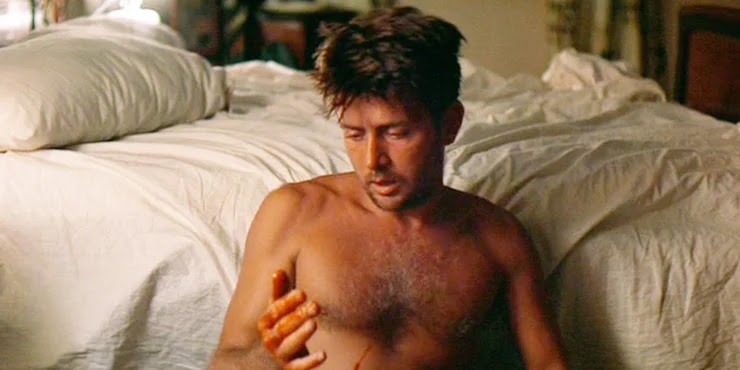
Willard is the narrator and he is disoriented, as is the effect of this war on those personally touched by it. He is in Saigon, but keeps thinking he’ll wake up in the jungle, because after being immersed in the uncivilized part of the world his mind can no longer adapt to society’s conventions. Like many veterans (as shown in The Hurt Locker, discussed on this site) Willard says how difficult it was to wake up when he returned home, unable to deal with the transition from the theater of war to peace at home. He shows how he is being torn when he says when he was in Vietnam he wanted to be home, but when back in the United States, “all I could think about was getting back into the jungle.” He is both repulsed and drawn to the horror (a word that will be stressed) of the place that symbolizes confusion and danger. He keeps waiting for a “mission” a purpose, and the waiting makes him “softer” and “weaker.” He is feeling like a pacified civilian, which undermines the animal ferociousness he needs to survive in the jungle, as the enemy in the “bush” gets “stronger.” He feels the walls of his hotel room are getting closer, caging the animal in him. He practices martial arts in the room, and at one point smashes a mirror with his fist, and bleeds. Mirrors, as was noted in other films, can signify the darker sides of oneself, and here the breaking of the looking glass demonstrates how the more sinister side can betray and harm a person. 

Willard says he wanted a mission, “and for my sins, they gave me one.” It is an enigmatic statement that can mean he was rewarded by getting what he desired. But, ironically, the orders he receives will also be a punishment, a penance for those “sins” he has already committed, almost like giving a junkie a fix. The foreshadowing of the terrible task becomes obvious when Willard’s voice-over says that when the operation was over, he “would never want another.” 

He says he didn’t realize it at that time but he was going to the worst place that existed, far away from any protected community, up a river “that snaked,” a demonic, ominous reference to Satan in the Garden of Eden, toward “Kurtz,” the object of the mission. When he arrives to receive his orders, Willard the narrator says, “It was no accident that I got to be the caretaker of Colonel Walter E. Kurtz’s memory.” Very early on in this long tale the film informs us of the almost mythical force of fate that will define Willard’s future role. He says that there is no way of telling Kurt’s story without telling his own, and Kurt’s “confession” (an announcement of sins but also an intimate revealing) is also his. The story implies that Willard and Kurtz are doubles, resembling each other’s characteristics and paths, one younger, one older, as their ages will eventually define what must play out.
Harrison Ford, following his Han Solo role, plays a small part here as Colonel Lucas, (a reference to George Lucas who was supposed to direct this movie) one of the commanders issuing Willard's orders. Lucas questions Willard about his work in counterintelligence which included assassinations. But because he is a covert operative, Willard is reluctant to discuss his past, and the fact that he will not acknowledge his secret exploits, which were performed outside the parameters of acceptable rules, may be a test to make sure he will not divulge any aspects of the current assignment. General R. Corman (G. D. Spradlin, whose character’s name invokes director Roger Corman) and a quiet man in civilian clothes only referred to as Jerry (Jerry Ziesmer, the film's assistant director) are in attendance, and the General invites Willard to a nice lunch which contrasts with the distasteful mission. 

Lucas plays an intercepted audio transmission from Cambodia which is of Kurtz’s voice. Kurtz says that he has a “dream” which is also a “nightmare” of a snail crawling along the edge of a razor and surviving, suggesting what Kurtz will later call accepting the “horror” of life to be victorious. Kurtz also talks about killing and burning animals, villages, and armies, and then wonders how the “assassins” can “accuse the assassin” of wrongdoing. He is questioning the hypocrisy of those who do horrible things but cover them up with “lies” and pretenses of “mercy.” Corman says that Kurtz was a brilliant officer, a humanitarian, and a man of “wit.” But he, like Willard, joined the Special Forces, and his “method” and “ideas” became “unsound.” The suggestion here is that Kurtz became detached from being anchored to a superimposed ethical base, which he found phony. Since Willard’s military history is compared to that of Kurtz, the question is raised as to whether Willard is on the same track. 

Lucas says Kurtz has gone into Cambodia with a Montagnard army (Vietnamese mountain people) that follow him “like a god” and they do whatever he says. The implication is that without any restrictions, anything is permissible. Corman says that Kurtz is guilty of murder for killing Vietnamese intelligence assets he considered “double agents.” Willard is confused probably because he doesn’t see how murder can be a consideration in war where the point is to kill people. Corman admits in an understatement that in a war, things can get “confused out there.” Corman says there is a conflict in people “between the rational and the irrational, between good and evil, and good does not always triumph.” He admits that sometimes the “dark side” wins (this statement must have sounded familiar to Ford after Star Wars). Corman says that everyone has a breaking point, and Kurtz reached his and has gone “insane.” But, there is the sound of a helicopter in the background reminding us of the irony of Corman delivering these insights because, the film may be arguing, that everyone involved in war is somehow complicit in insanity. Corman talks of Kurtz going beyond the bounds of decency at the same time he is ordering the murder of a military colonel.  Lucas then uses official language as he tells Willard that he must board a Navy patrol boat to find Kurtz, “infiltrate” his base and “terminate the colonel’s command.” Thus, Lucas is giving Willard unchecked authority to kill. Jerry, probably a CIA man, finally speaks to drive home the goal when he delivers one of the movie’s memorable lines, “Terminate with extreme prejudice.” It is euphemistic, but he is actually saying Willard is the executioner who must carry out the already decided sentence of death without a moment of hesitation. 

As he approaches the Navy boat (whose name is the Erebus which was the name of the Greek god of darkness, as IMDb states, and which fits with the title of the Conrad novella), Willard wonders how many people he has killed. Thus, he questions the validity of his orders when he says charging Kurtz with murder, “was like handing out speeding tickets at the Indy 500.” The film asks the question how can a country enter a situation that at its base involves killing and then state it’s against the rules to do so? Because Willard sees the hypocrisy of the mission, and the fact he has been ordered to murder an American officer makes him admit that he isn’t sure what he will do when he finds Kurtz. For Willard, the story eventually suggests, killing Kurtz would be like destroying himself.


One of the tragedies of war is that young people are put in a deadly situation, as Willard points out when he says some of the boat's crew were, “rock and rollers with one foot in the grave.” Willard observes that Jay “Chef” Hicks (Frederick Forrest) “was wrapped too tight” for Vietnam, suggesting that the man is jittery and can’t coolly deal with the pressure of the battle. Lance B. Johnson (Sam Bottoms) is using a reflector to get an even tan, and Willard narrates that the young man was a Los Angeles surfer. He looks like he’s at home on a beach instead of on a boat to hell. (There are many examples in the movie of Americans trying to escape the terrible circumstances they are in by mentally recreating the comforts of their lives before becoming soldiers). Tyrone “Clean” Miller (a very young Laurence Fishburne) came from a Bronx ghetto, and Willard says the sharp contrast of the “light and the space of Vietnam really put the zap on his head,” implying the whiplash effect of such a switch in the man’s life was disorienting for him. Chief Phillips (Albert Hall), according to Willard, made sure everyone knew that he had jurisdiction over the boat and crew. (Good writing usually uses actions and words to show who the characters are. The film is long, and possibly Coppola wanted to save time here with these summations, but it is legitimate to question his decision).

The Chief warns that they will be going through dangerous waters controlled by the enemy. He says he brought a man who was on a special operation once before, saying that man was “regular Army, too,” thus comparing the soldier to Willard. The Chief follows by saying that fellow shot himself. He is providing a cautionary tale for his self-assured passenger. The radio is playing which mentions how the local government wants to keep Saigon looking clean so soldiers should not hang their laundry outside. It is a sort of distracting statement to place domestic activities as a priority so as to not face the daily deadly realities that exist. “Satisfaction” by the Rolling Stones plays on the radio, and these men are trying to get some of what the song laments about not having. Clean dances to the song as Lance water skis behind the boat as they try to hold onto a piece of their old lives. But Lance creates large waves that buffet the Vietnamese on the beach and in the river, showing how the out-of-place American presence overpowers the lives of the locals. 

In contrast to this diverting activity, Willard somberly reviews the information on Kurtz, as the soundtrack now matches his mood. The documents show that Kurtz graduated at the top of his class at West Point, following a family tradition of attendance there. He received a master’s degree in history from Harvard and wrote a thesis on foreign policy in Southeast Asia, interestingly on the Philippines Insurrection, which shows he knows about rebellion. He also received many decorations and it appeared he was being readied for a top spot in the military. But when he reported his observations about Vietnam, those in power apparently did not appreciate what he had to say. It is at this point that Kurtz started to become alienated. 

Along with the Conrad story, the raft ride on the river which turns out to be a journey of discovery brings Huckleberry Finn to mind here. But, this story is a demonic version of that tale as the characters’ revelations are of an earthly apocalypse of the human soul. They meet up with the Air Cav that is to be the boat’s escort to the “mouth of the Nung River.” As Willard and his men go on shore, Coppola himself plays the head of a TV team as he says, “Don’t look at the camera … Go on. Keep going.” Here is an example where reality and illusion join. There is an actual war going on and the TV man/Coppola tells the soldiers to pretend like they are not being filmed for TV audiences and urges them to look “like you’re fighting.” But that is exactly what a director would want for his actors to do, that is to simulate reality, since this is not a true war, and actually is a bit of fiction - a movie. In essence, the make-believe actions are reversed depending on how we approach what we are seeing. 

The military outfit is “mopping up,” adding the finishing touches to an attack. Willard meets the commanding officer here, Lt. Colonel Kilgore, an appropriate name for this war lover played by Robert Duvall. Kilgore throws playing cards onto dead enemy bodies to let the Viet Cong know who killed their men, making it seem like war is some sort of game. There is a young American soldier sitting on a wall who looks overwhelmed by the carnage. Kilgore’s incredibly inappropriate comment to the youth is, “Cheer up, son.” The bombing devastated the area, yet a voice over the loudspeaker contradictorily declares to the locals that the military is there to help them. Although Kilgore is fighting for the U. S., he would be passionate about waging battle whatever side he was on. He says of one of the enemy soldiers who is holding his guts in after being wounded that the man deserves to drink from Kilgore’s canteen. Kilgore admires the battle experience in general. Kilgore is thrilled to meet Lance because he is a famous surfer, and the commander already has two surfers under him. As he leads Lance away, prayers are uttered in the background by a chaplain conducting a church service, which seems like a strange place to be trying to provide sanctity. 

Kilgore airlifts in steaks and beer as he turns the base of operations into what Willard says is a “beach party.” Willard’s cynical tone increases as he progresses toward views held by Kurtz. Willard says, “the more they tried to make it just like home, the more they made everybody miss it.” But, this desire to transform this land also can be seen as an imperialistic drive to Americanize a foreign country. Willard says Kilgore had a “weird light around him. You just knew he wasn’t gonna get so much as a scratch.” Willard seems to be comparing Kilgore to some kind of war god that leads his soldiers into battle but is not really risking any harm to himself. Kilgore becomes convinced to take Willard’s boat to an enemy stronghold because one of his men says it’s the best spot for surfing. The interest in surfing goes along with trying to recreate the United States so far away. Kilgore wants to defy the odds against safety by drawing an odd superior distinction between the Americans and the enemy when he says, “Charlie don’t surf!” 
Kilgore wears a western cavalry hat that lives up to the Air Cav name, which is also stressed by having his bugler sound the Old West cavalry charge as his fleet of helicopters lift off. He also plays Wagner’s “The Ride of the Valkyries” loudly to scare the Viet Cong. The Valkyries are female entities from Norse mythology that fly and announce who will die. It is a fitting and chilling metaphor for these mechanistic death birds of prey who destroy the villages below. The front of the helicopter in which Kilgore is riding has “Death from above” written on it which fits in with the literal and supernatural connotations. Children on the ground coming out of school and peasants run for their lives along with armed enemy fighters who try to defend themselves. It is difficult in a guerrilla war such as this one (and in the conflict in The Hurt Locker) to distinguish who is the real threat. American soldiers are deployed from the helicopters, and some become casualties. As a helicopter tries to airlift out wounded Americans, a seemingly innocent woman hiding a grenade blows up the copter. Kilgore calls the enemy “savages,” but the film implies that savagery occurs on both sides of war to one degree or another. 

Bombs go off around Kilgore as he stands while the soldiers dive for cover. The image fits with Willard’s indestructible vision of the man. Instead of being empathetic about the loss of life and danger surrounding them, Kilgore is only interested in the way the waves break. He tells his surfing men that they either surf with bullets flying all around, or fight, giving them the frying pan or the fire choice. He calls in a huge napalm bomb strike that totally consumes the enemy area. It is here that Kilgore delivers the film’s memorable line: “I love the smell of napalm in the morning... It smelled like victory.” He then says that someday the war will end, and he sounds disappointed. The burning fires of hell are again suggested here to mirror the opening shot of the movie, and one wonders if Kilgore is announcing the way the devil can claim “victory” over the world through man’s lust for killing.

Willard takes in all of these happenings with an outsider’s viewpoint now, a Kurtz outlook, and ponders the reason to want to take out Kurtz when there was already “insanity and murder” in abundance there. He says the men on his boat just want the war to end, unlike Kilgore, and wish to go home. Narrator Willard says he’s been back to the states, and realizes there isn’t a way home anymore, because a soldier takes the jungle with him. They resume their trip up the river's artery to that heart of darkness. 
While stopping along the shore, Chef wants to look for mangos and Willard goes with him for protection. As they walk through this alien land, Chef reveals his nickname comes from his training to be a saucier in New Orleans. However, the military dampened his desire to be a cook in the service by the way the Navy ruined food, showing how refined living was left behind when war is the priority. The conversation of a faraway civilized world contrasts with the current locale. The discrepancy is emphasized as the trees and other vegetation completely dwarf them, symbolizing the power of uncontrollable nature over human beings. The ferociousness of the jungle literally appears when a tiger emerges, which suggests that humans are part of nature and violence is a basic drive in all animals. After the two men escape, Chef shows how he is “wrapped too tight” as he freaks out, screaming he’s never leaving the boat (the way to navigate around the danger inside and outside everyone?). Narrator Willard echoes what Chef says about staying on the boat, “unless you were going all the way,” that is, to accept the truth about the horror behind existence. He says that Kurtz got off the boat, meaning he left war’s false morality behind. He began to decide to wage battles on his own and initiated attacks without authorization. He had great success with Operation Archangel, the name suggesting that Kurtz saw himself as an instrument of supernatural wrath. Willard says the “bullshit” piled up so high in Vietnam, one needed wings to stay above it (like a flying archangel?). It is telling about the progression of Willard’s mentality that as he continued to read about Kurtz the more he “admired” him.

Willard and his men dock at a site that is out of place in the jungle. It has bright spotlights and a stage. They need fuel, and when there is some bureaucratic hold up, Willard violently grabs the soldier handling supplies in a threatening way to get what he needs. Willard is already practicing Kurtz’s rejection of rules. There is a show that night featuring three Playboy Bunnies. We again have reality turning into escapist fantasy. It is noteworthy that the locals must watch behind an enclosed fence. Even though the South Vietnamese were American allies, here they are not really accepted by the occupiers, and the military fosters the impossible idea that the soldiers can separate themselves literally and mentally from their surroundings. The women dance suggestively, using guns as phallic symbols. The attempt to put on a peaceful show of titillation fails, as the instinctual sexual urges of the hundreds of men are unleashed and they start to overrun the stage, clawing at the scantily dressed women, who must be evacuated. Willard, the observer, comments that the enemy had no rest and recreation, implying there was no reason to dream of home because they were home and couldn’t escape that truth. For them, their R&R was rice and rat meat to eat. They had only two options, “Death or victory,” and the implication is that is what makes them very hard to defeat by conventional means. 

Along the way they encounter other American boats. They play diversionary games by sailing too close to each other and one member throws an ignited object onto the covering of Willard’s craft. Chef has to put out the fire. Just like the Playboy Bunnies incident, escapism veers very close to dangerous activity, as the less admirable elements of people come to the surface. Speaking of those uncivilized aspects, Willard continues to read Kurtz’s dossier. The independent Kurtz, waging his own war, assassinated Vietnamese individuals, two of which were in the South Vietnamese Army. Since enemy resistance dropped in his sector, Kurtz had identified South Vietnamese spies, showing again how the enemy can come from anywhere. Then Kurtz disappeared into the Cambodian jungle, a place that now suited him. Kurtz wrote home saying he has been accused of murder, but he says that being “ruthless” many times is an act of “clarity,” that shows one what needs to be done. He wrote, “I am beyond their timid, lying morality.” Kurtz had decided to answer to nobody but himself, an understandable reaction considering the handling of the war, but a dangerous stance that can lead to crossing that line that General Corman talked about, and the committing of atrocities. 

As Willard reads the letter, the boat passes by dead bodies in trees, and a burning helicopter that crashed into another tree (of course, fire is again present). It is like they are passing by a grotesque graveyard. The Chief tries to keep order amid chaos as Chef and Clean argue. They come across a Vietnamese boat. The Chief says he has to check it out to make sure it isn’t a Viet Cong vessel, since, as was noted, the enemy may be anyone, including, metaphorically, oneself. Willard tells him not to stop, but the Chief says he has his orders. He forces the reluctant Chef to board the other craft and he acts roughly and loudly with the people there. Tension rises and Clean goes dirty as he loses control and starts firing his machine gun, killing all but one of the Vietnamese. There is a woman who is alive and she was only heading for a hidden puppy, not a weapon. The Chief wants to take the wounded woman to get medical assistance. Willard kills her, knowing that rescuing her will only delay his mission. The brutality of hysterical irrationality meets up with dispassionate violence in this scene as war strips away civilized behavior.

Willard narrates that he realized that the American occupiers told themselves that they needed to put a positive spin on their deeds. But, for Willard, it was like treating the Vietnamese by “cutting them in half” and then giving them a “band-aid.” He sees this action as a “lie” and the more he becomes like Kurtz the more he hates the “lies” inherent in American policy. The boat approaches the last American outpost situated at a bridge. It is totally lit up with rockets going off like fireworks. Lance, who has painted himself green as camouflage, but which symbolizes becoming one with the jungle, says he took the hallucinogen LSD. He carries the puppy retrieved from the boat they shot up. The cute dog is a symbol of innocence, like many of these young men, caught in a whirlwind of destruction. Lance says the place looks beautiful, and it appears at a distance like a theme park at night until there is a closer look. (Lance receives a letter from home about going to Disneyland and says where he is now is better than that amusement resort, which stresses the upside-down world he is now in). This scene very much adds to the theme of life losing its grounding in reality as rationality becomes insanity. Soldiers swim toward the boat asking to go home, which is all the soldiers really want as noted earlier, but which Willard said they can’t really do mentally once being in the war zone. Willard is given a communication by a man on another boat who then says he now can gratefully leave because Willard has reached “the asshole of the world.” This excremental view of humankind mirrors that of satirist Jonathan Swift.

Willard and his men go ashore and the soundtrack sounds like harsh circus music played in hell. They come across a bunker ironically called “Beverly Hills” where rock music plays and the men smoke pot, still trying to escape the nightmare. To stress the chaos of the situation, Willard asks a man firing his weapon wildly who is his commanding officer. The soldier asks, “Ain’t you?” His confusion represents that of all those there. The Chief questions the point of going forward, noting the cyclical nature of the war as they keep rebuilding the bridge there and each time the enemy blows it up again. But Willard is determined to find Kurtz, because the mission has also become an inner quest to meet the man who now reflects parts of himself.

The information Willard received is that someone else was sent on a similar mission before Willard. The man’s name is Captain Richard Colby (Scott Glenn, with no dialogue in this version) and he has joined the Kurtz cult. He tried to send a letter to his wife telling her to sell the house, the car, and “the kids” because he was “never coming back.” Once sucked into the black hole of this heart of darkness, there is no getting out. Lance plays with a smoke bomb, adding to the hallucinogenic fun ride theme park the war has become for him. But the smoke of his diversion turns into trails of incoming fire from the enemy on shore, coming out of the hostile jungle. Clean is hit and killed while a tape that arrived from his mother plays, adding to the tragedy as she speaks of the young man coming home and eventually giving her grandchildren. 

The journey continues as the boat goes through a fog (the fog of war?) which shows the clouded morality of the conflict. Lance has his arms up behind him as he leans against the craft and screams. The image reminds one of Odysseus who asked to be bound so he could hear the seductive song of the Sirens who lured ships to their destruction. Willard, almost psychically linked to Kurtz now, says he feels that the man is close. He says it was like the river was paradoxically (irrationally?) being sucked back into the jungle, (which adds to the black hole metaphor). A spray of arrows flies toward them, but here again the danger is misleading, since they are toy weapons, just meant to scare. But the Chief and Chef fire at the natives on the shore. A real spear then penetrates the Chief, as weapons now become more primal, barbaric, from a place removed from modern influence. In his dying action the Chief tries to pierce Willard with the point of the spear coming out of his chest in his own attempt to stop the madness.

Willard tells Chef his mission, which boggles Chef’s mind since it involves killing someone on their side of the war. Willard is ready to go on land on his own, but possibly because there has been so much sacrifice for the mission already, and he needs to hold onto some purpose amid the craziness, Chef tells Willard they will get him to where he is going. Lance has one of the toy arrows looking like it is going through his head, something that the comedian Steve Martin used to do. The image adds to the theme that reality has become so strange it feels like an illusion.


To add to that feeling, a Halloweenish landscape appears as there are skeletal heads propped up on spikes in a hellish graveyard. Willard narrates that more than his fear was the desire to confront Kurtz (and to face that part of himself that is like Kurtz?). They finally sail into Kurtz’s jungle kingdom. There are many natives standing on boats looking at the strangers arriving. They part, allowing the boat to dock, as if they expected the visit. The natives appear to be covered in some kind of mud-like substance, as if they sprouted from the land as offshoots of the jungle, which adds to the surreal atmosphere. There are many more armed local inhabitants on the grounds of what looks like an ancient temple, which contributes to the mythological aspect of the conclusion of the story. The soundtrack has thumping bass sounds that remind one of a loud beating heart that director John Carpenter later puts to great effect in his version of The Thing.
We now get one of the craziest characters ever put on screen, a sort of court jester in the form of Dennis Hopper’s stoned hippie photojournalist. He acts friendly like a cruise tour director in this nightmarish theater of war. He tells Chef to blast the boat siren which disperses the natives, since modern sounds are frightening to these people from the jungle. The photojournalist warns of mines and biting monkeys in an upbeat voice which contrasts with the suspended naked dead men near the docking area. The photojournalist says that the people there are Kurtz’s children who are afraid Willard and his men are going to take Kurtz away. He is a disciple, trying to pave the way to meeting Kurtz. He calls Kurtz a “poet warrior” who has “enlarged” his mind, which may have swelled to madness with the dispensing of insight into humankind’s soulless state. He babbles, trying to quote Kurtz who said, “keep your head when all about are losing theirs and blaming you.” This statement sounds darkly humorous since Kurtz is literally beheading people. He says he is a little man and Kurtz is great, and then quotes from T. S Eliot’s “The Love Song of J. Alfred Prufrock,” a poem that reflects Eliot’s themes of the decay of civilization, a view most likely held by Kurtz. Even this weird devotee admits that Kurtz “can be terrible, and he can be mean,” but he can be “right.” An unrestrained god is free to do good and terrible things. The photojournalist carries cameras and is recording what Kurtz does, but as he says later he does not see himself as the person who will present the gospel according to Kurtz. But he also says that Kurtz threatened to kill him for taking his picture. Perhaps a photograph would render Kurtz as something too concrete and trivial for what he sees as his exalted purpose.
The photojournalist escorts Willard past armed men, including Colby, the man sent before him. The American soldier stares intensely ahead with unblinking eyes, appearing as if he is under a spell. The photojournalist notes the heads of victims present. He is Kurtz’s apologist, saying sometimes Kurtz goes too far, and he even tries to show that Kurtz knows that he has committed atrocities when he says, “He’s the first to admit it.” But the man has drunk the Kool Aid and says, “No!” when Chef says Kurtz is crazy.

Kurtz is not there now as he has gone into the jungle, his true home now. Back at the boat Chef wails about Kurtz being insane and promises to help Willard with his mission. The camera pans over Kurtz’s people and the words, “Apocalypse Now” appear painted on a wall, stating Kurtz’s belief that the end of the so-called civilized life as we know it is happening. Willard says he will go with Lance to look around for Kurtz and tells Chef that if he isn’t back by 10 pm, he should call in an airstrike, with the code “Almighty.” It is an appropriate title for what Kurtz had become to those under his rule, but which can also affirm the established military’s superior strength. 


Willard narrates that the bodies of Vietnamese and Cambodians there convinced him that Kurtz was insane. He realizes that Kurtz wants him alive since his men do not harm him. They do drag him into the mud, an almost symbolic act to prepare him by being in touch with the primordial jungle before meeting their leader. Inside Kurtz’s hideaway is what Willard says is the “end of the river” which involves “slow death,” “malaria,” and “nightmares.” There is no pretense here of hope for the future. Kurtz (Marlon Brando) is filmed in shadows which fits the mysteriousness of this person. He washes himself as he talks about freedom from the opinions of others, and even one’s programmed opinion of oneself, as he seems to be cleansing himself of those judgments. Kurtz already knows that Willard is there to, as Colonel Lucas euphemistically stated, “terminate his command.” Willard admits that his superiors said Kurtz was insane and his “methods were unsound.” When asked if that is so, Willard finds no “method” in Kurtz’s madness. When asked if he is an assassin, Willard says he is a soldier, which is his excuse for killing another. Kurtz’s response won’t give him the satisfaction of either title, saying Willard is a lowly, servile “errand boy sent by grocery clerks to collect the bill.” 

The photojournalist gives water to Willard who is now in a bamboo cell. He says that Kurtz is “clear in his mind, but his soul is mad.” Kurtz has seen the wrongdoings of man and the mental self-deceptions that followed, and that knowledge and trying to deal with those insights has brought on an insanity. The photojournalist says that Kurtz is dying and when he goes the response will not be to praise him because of his violations of accepted behavior. He tells Willard that Kurtz has a plan for Willard, implying the man who has come to kill Kurtz will carry the man’s message forward. 


Chef says he is asleep and dreaming on the boat, but he is actually awake, talking to himself, which again shows that blurring of illusion and reality. He tries to make the call that Willard ordered him to initiate. There is a quick shift to the bound Willard visited at night by the silent Kurtz, whose face is painted with that camouflage green that Lance used. Is he showing he has become one with the jungle or is he mocking the soldiers for pretending that they can artificially blend into their surroundings? As Kurtz walks away, one of his minions drops the head of Chef into the lap of the screaming Willard. The action reveals to Willard Kurtz’s mad soul in a personal way as he kills someone who Willard came to know. In a bizarre way he is mentoring Willard. 

Kurtz’s people now free Willard after his cleansing of civilized notions, and give him drink and food. Kurtz reads from Eliot’s “Hollow Men,” which deals with those who have lost their souls, are empty inside, and despite knowing that they are broken, seem powerless to act either for their condemnation or redemption. The last famous lines of the poem are, “This is the way the world ends/Not with a bang, but a whimper.” It is this passivity, this abdication of will that Kurtz seems to despise. The photojournalist tries to interpret the poem for Willard in a roundabout way, saying nothing should be done part way. But, Kurtz throws a book at him, calling him, “Mutt!” since he sees the journalist as a type of lap dog, not as an alpha male. 

Willard narrates that he was not under guard but did not leave and stayed with Kurtz for days. He says that Kurtz knew he wasn’t going and was aware of what Willard would do more than he did himself. He says these words as the camera reveals books in Kurtz’s cave. One is The Golden Bough by James G. Frazer which is a study of ancient religions and fertility rites. This book recounts how religion mirrors the cycle of death and rebirth in nature through the seasons. A king or god is sacrificed only to be reborn again in many religious belief systems. A version of this ritual is what follows. 

Willard sees how Kurtz has been torn apart by what has happened around him and committed by him. Kurtz says he has seen “horrors” as has Willard, so they are likened by experience. He admits that Willard has the right to choose to kill him but not a right to call him a “murderer” or “judge” him, since he suggests that society’s rules are arbitrary. Kurtz says that “horror and moral terror are your friends. If they are not, then they are enemies to be feared.” He tells a story of having gone into a village when he was in Special Forces to inoculate the children against polio. But, the inhabitants, not accepting any shielding from the ravages of the disease, cut off all of the vaccinated arms. His first response was to cry. Then, instead of seeing this action as superstitious ignorance, Kurtz says he realized these men had the will to do such an act. He says to win a war there must be those who can kill “without feeling, without passion, without judgment.” He seems to advocate that one must embrace the darkness or else be defeated by it, since it is overpowering and should be met with honesty and not denial. In very simplistic terms it’s like saying one must fight fire with fire. 


Kurtz tells Willard that he is afraid his son would not understand what he has done and he gives Willard a new mission which is to tell Kurtz’s boy why his father acted the way he has and to tell the youth of what Willard has seen. As the radio on the boat tries to communicate with him, Willard’s voice-over says he wasn’t even in their army anymore since what he does is not dictated by the orders given to him. Willard emerges headfirst from the river at night like some kind of phantom, as the natural and the supernatural blur. “The End” again plays which is appropriate because as the natives slice to death a water buffalo, Willard sacrifices Kurtz the same way, as the old god is killed and the new one comes to life. But it is a deity from the void that is born. Kurtz’s last words are “the horror,” which is what he teaches is either a friend or else an enemy. 
Willard walks out covered in the mud of the jungle into Kurtz's followers with his scythe, carrying Kurtz’s writings which have a note about killing everyone. Kurtz’s people let him pass, even bow down to him, and throw down their weapons as Willard and Lance leave on their boat. The last image is that of Willard’s face next to a superimposed statute of an ancient god, possibly one ushering in the apocalypse now.

The next film is The Killing.